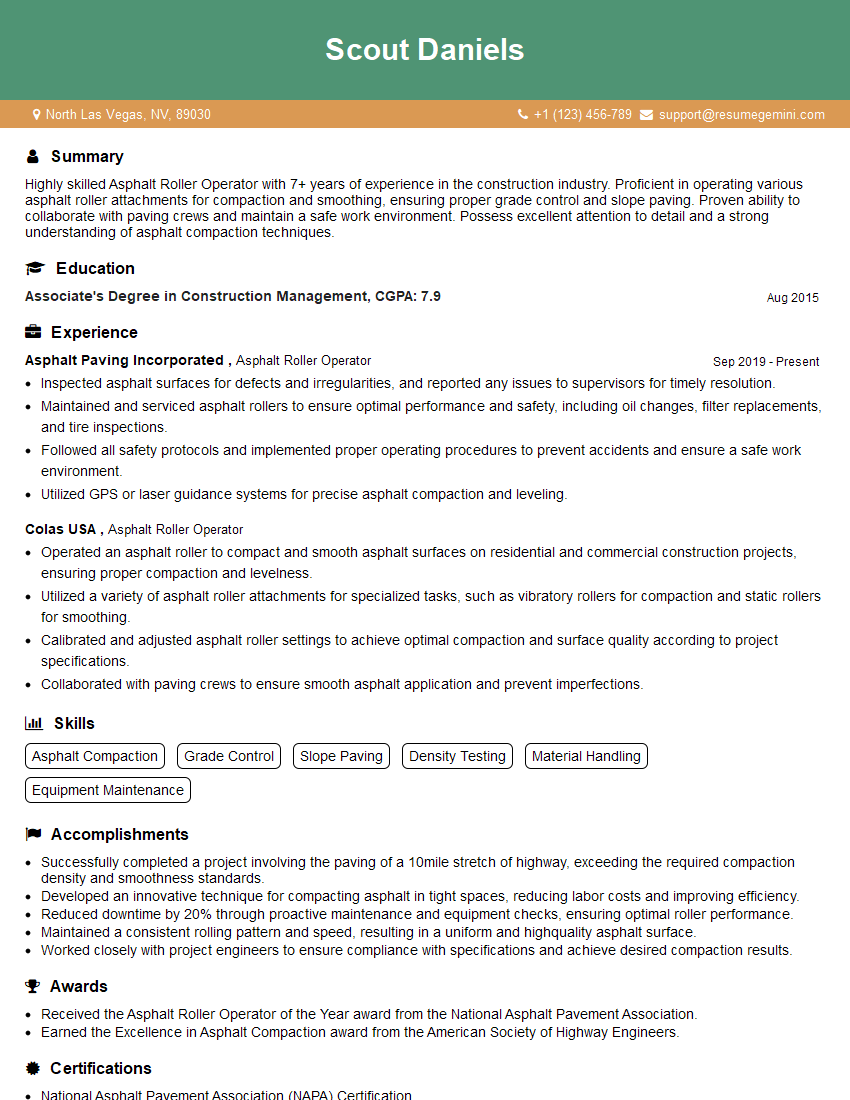
Feeling lost in a sea of interview questions? Landed that dream interview for Asphalt Roller Operator but worried you might not have the answers? You’re not alone! This blog is your guide for interview success. We’ll break down the most common Asphalt Roller Operator interview questions, providing insightful answers and tips to leave a lasting impression. Plus, we’ll delve into the key responsibilities of this exciting role, so you can walk into your interview feeling confident and prepared.
Acing the interview is crucial, but landing one requires a compelling resume that gets you noticed. Crafting a professional document that highlights your skills and experience is the first step toward interview success. ResumeGemini can help you build a standout resume that gets you called in for that dream job.






Essential Interview Questions For Asphalt Roller Operator
1. How would you ensure the asphalt roller you are operating is functioning properly?
- Conduct daily inspections before operating the roller to check for any leaks, damage, or loose parts.
- Verify that the engine is running smoothly and that all controls are functioning correctly.
- Check the tires for proper inflation and tread depth.
- Inspect the hydraulic system for any leaks or malfunctions.
2. What are the different types of asphalt rollers and their uses?
Static Rollers
- Used for initial compaction of asphalt layers.
- Provide high force and low vibration.
Tandem Rollers
- Compacted asphalt in intermediate layers.
- Have two drums, one in front and one in the rear.
Pneumatic Tire Rollers
- Used for final compaction of asphalt layers.
- Provide kneading action that improves asphalt density.
Vibratory Rollers
- Used for high-density compaction.
- Produce vibrations to increase compaction efficiency.
3. How do you determine the proper compaction pattern for an asphalt surface?
- Consider the type of asphalt mix being used.
- Determine the desired compaction density.
- Select a roller type and weight appropriate for the job.
- Establish an overlapping pattern to ensure uniform compaction.
- Adjust the roller speed and vibration settings as needed.
4. What are the signs of over-compaction of asphalt? Explain how to address it.
- Signs: Cracking, rutting, loss of flexibility.
- Address: Stop rolling immediately and allow the asphalt to cool and set. Avoid further compaction in the over-compacted areas.
5. What safety precautions should you take when operating an asphalt roller?
- Wear appropriate safety gear, including a hard hat, safety glasses, gloves, and reflective vest.
- Conduct a site survey to identify any potential hazards.
- Ensure the roller is in good working condition and properly maintained.
- Be aware of your surroundings and avoid working near other equipment or personnel.
6. How do you handle working with different grades of asphalt?
- Adjust the roller speed and vibration settings to match the asphalt grade.
- Use a lighter roller for softer grades and a heavier roller for stiffer grades.
- Adjust the compaction pattern and the number of passes to achieve the desired density.
7. Describe the importance of proper joint compaction in asphalt paving.
- Ensures a smooth and seamless surface.
- Prevents water infiltration and subsequent cracking.
- Improves the overall strength and durability of the pavement.
8. How do you troubleshoot a hydraulic leak in an asphalt roller?
- Locate the source of the leak.
- Clean the area around the leak to improve visibility.
- Tighten any loose fittings or connections.
- Replace damaged hoses or seals as needed.
9. Explain how you would prepare an asphalt surface for a new layer of asphalt.
- Clean the surface by removing any debris or loose material.
- Apply a tack coat to improve adhesion between the old and new layers.
- Allow the tack coat to dry thoroughly before applying the new asphalt.
10. What is the role of density testing in asphalt paving?
- Ensures that the asphalt is compacted to the specified density.
- Helps to identify areas that may require additional compaction.
- Provides documentation for quality control purposes.
Interviewers often ask about specific skills and experiences. With ResumeGemini‘s customizable templates, you can tailor your resume to showcase the skills most relevant to the position, making a powerful first impression. Also check out Resume Template specially tailored for Asphalt Roller Operator.
Career Expert Tips:
- Ace those interviews! Prepare effectively by reviewing the Top 50 Most Common Interview Questions on ResumeGemini.
- Navigate your job search with confidence! Explore a wide range of Career Tips on ResumeGemini. Learn about common challenges and recommendations to overcome them.
- Craft the perfect resume! Master the Art of Resume Writing with ResumeGemini’s guide. Showcase your unique qualifications and achievements effectively.
- Great Savings With New Year Deals and Discounts! In 2025, boost your job search and build your dream resume with ResumeGemini’s ATS optimized templates.
Researching the company and tailoring your answers is essential. Once you have a clear understanding of the Asphalt Roller Operator‘s requirements, you can use ResumeGemini to adjust your resume to perfectly match the job description.
Key Job Responsibilities
Asphalt roller operator plays a crucial role in the construction industry. Key job responsibilities include:1. Operate Asphalt Roller:
- Drive and maneuver asphalt roller to compact and smooth asphalt surfaces
- Adjust roller settings based on asphalt type, temperature, and desired compaction level
2. Prepare Work Area:
- Inspect worksite to identify any obstacles or hazards
- Remove debris, level soil, and apply tack coat as necessary
3. Monitor and Maintain Roller:
- Monitor roller’s performance and adjust settings as needed
- Perform routine maintenance, including cleaning, lubrication, and minor repairs
- Report any malfunctions or issues to supervisor promptly
4. Ensure Safety and Quality:
- Follow all safety protocols, including wearing protective gear and operating equipment safely
- Ensure that asphalt is compacted to meet specifications and quality standards
- Inspect completed work and address any deficiencies
Interview Tips
To ace an interview for an asphalt roller operator position, consider the following tips:1. Research the Company and Industry:
- Familiarize yourself with the construction company and its projects
- Stay updated on industry trends and best practices
2. Practice Your Skills and Knowledge:
- Review basic principles of asphalt compaction and roller operation
- Practice answering common interview questions related to safety, roller maintenance, and quality control
3. Highlight Your Experience and Skills:
- Emphasize your experience operating asphalt rollers and compacting asphalt surfaces
- Showcase your knowledge of different roller types and their applications
- Highlight any certifications or training you have in asphalt paving or related fields
4. Be Prepared to Discuss Safety:
- Demonstrate your commitment to safety by explaining how you prioritize safety on the job
- Describe your experience with safety protocols and accident prevention measures
5. Ask Thoughtful Questions:
- Ask questions about the company’s safety record and training programs
- Inquire about the equipment you will be operating and the types of projects you will be involved in
Next Step:
Now that you’re armed with the knowledge of Asphalt Roller Operator interview questions and responsibilities, it’s time to take the next step. Build or refine your resume to highlight your skills and experiences that align with this role. Don’t be afraid to tailor your resume to each specific job application. Finally, start applying for Asphalt Roller Operator positions with confidence. Remember, preparation is key, and with the right approach, you’ll be well on your way to landing your dream job. Build an amazing resume with ResumeGemini