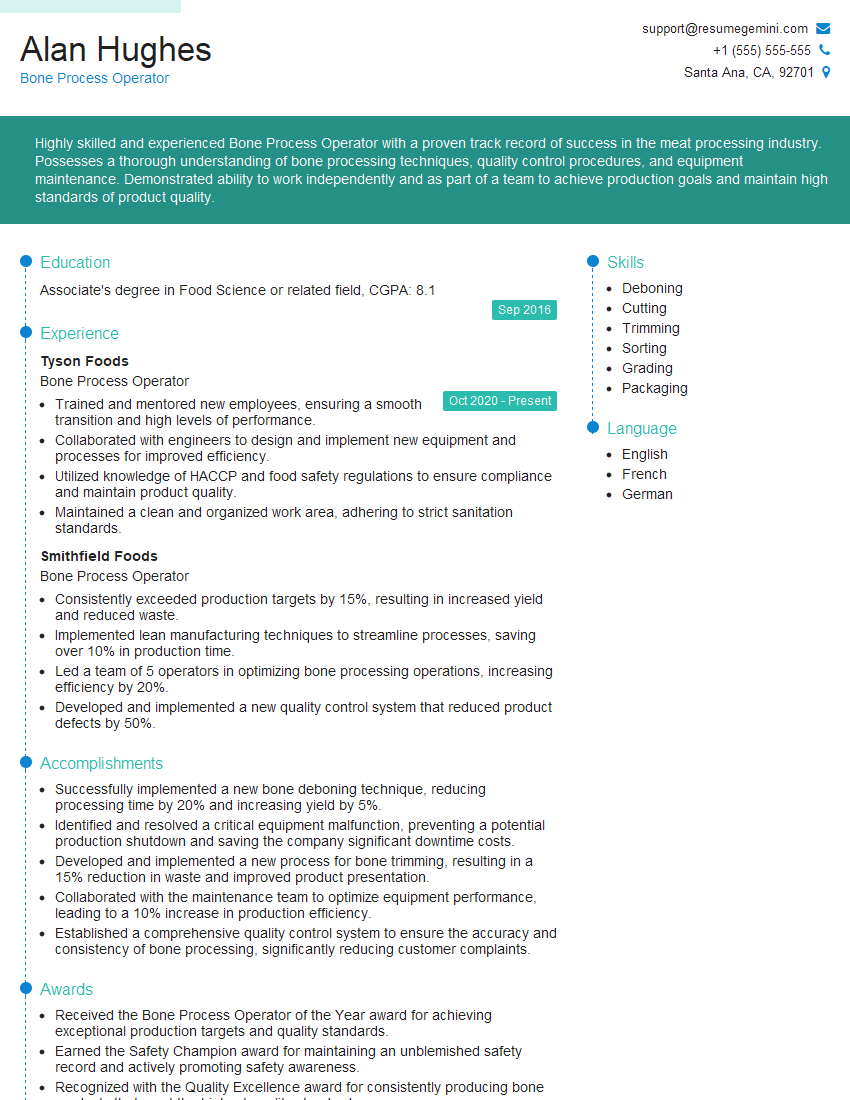
Are you gearing up for a career shift or aiming to ace your next interview? Look no further! We’ve curated a comprehensive guide to help you crack the interview for the coveted Bone Process Operator position. From understanding the key responsibilities to mastering the most commonly asked questions, this blog has you covered. So, buckle up and let’s embark on this journey together
Acing the interview is crucial, but landing one requires a compelling resume that gets you noticed. Crafting a professional document that highlights your skills and experience is the first step toward interview success. ResumeGemini can help you build a standout resume that gets you called in for that dream job.






Essential Interview Questions For Bone Process Operator
1. Describe the key responsibilities and duties of a Bone Process Operator?
As a Bone Process Operator, I would be responsible for the following key tasks:
- Operate and monitor bone processing equipment to extract and process animal bones
- Ensure that the equipment is running smoothly and efficiently
- Monitor the quality of the finished product and ensure that it meets specifications
- Clean and maintain the work area and equipment according to established procedures
- Follow all safety and regulatory guidelines related to the operation of bone processing equipment
2. What are the different methods used for bone processing?
Mechanical Processing
- Grinding
- Crushing
- Sawing
Chemical Processing
- Alkaline hydrolysis
- Acid hydrolysis
- Enzymatic hydrolysis
3. Explain the process of bone degreasing?
Bone degreasing involves removing excess fat from the bones to produce a leaner product. The process typically involves the following steps:
- Initial mechanical processing to remove large pieces of fat
- Heating the bones to melt the fat
- Separating the fat from the bones using a centrifuge or other method
- Further processing to remove any remaining fat and produce a clean, degreased bone product
4. What are the safety hazards associated with bone processing?
Working in a bone processing plant can involve several safety hazards, including:
- Sharp objects (knives, saws, etc.)
- Moving machinery (conveyors, grinders, etc.)
- Slippery surfaces (due to water or fat)
- Chemical hazards (from degreasing or cleaning agents)
- Biological hazards (from handling animal bones)
5. How do you ensure the quality of the finished bone product?
To ensure the quality of the finished bone product, I would follow established quality control procedures, including:
- Regularly inspecting the equipment and making adjustments as needed
- Monitoring the temperature, pressure, and other process parameters
- Conducting product testing to ensure that it meets specifications
- Maintaining accurate records of all quality control checks
6. Describe the different types of equipment used in bone processing?
- Grinders
- Crushers
- Saws
- Conveyors
- Centrifuges
- Degreasing tanks
- Ovens
- Packaging machines
7. What are the environmental regulations that apply to bone processing operations?
- Air quality regulations (to control emissions from degreasing and other processes)
- Water quality regulations (to control wastewater discharge)
- Waste management regulations (to ensure proper disposal of bone waste)
- Health and safety regulations (to protect workers from hazards)
8. Explain the process of bone sterilization?
Bone sterilization is a critical step in the bone processing industry to eliminate harmful microorganisms and ensure the safety of the final product. There are several methods of bone sterilization, including:
- Autoclaving: Using high-pressure steam to kill microorganisms
- Gamma irradiation: Exposing bones to high-energy radiation to kill microorganisms
- Chemical sterilization: Using chemicals such as ethylene oxide or hydrogen peroxide to kill microorganisms
9. What are the key quality attributes of bone meal?
- Protein content: The amount of protein in the bone meal, which is important for animal nutrition
- Fat content: The amount of fat in the bone meal, which should be low for optimal quality
- Moisture content: The amount of moisture in the bone meal, which should be low to prevent spoilage
- Particle size: The size of the bone meal particles, which affects its digestibility and absorption
- Color: The color of the bone meal, which can indicate the degree of processing and quality
10. How do you optimize the efficiency of a bone processing operation?
- Regular maintenance of equipment: To prevent breakdowns and ensure smooth operation
- Optimization of process parameters: To improve yield, quality, and energy efficiency
- Effective waste management: To minimize waste and improve sustainability
- Automation: To reduce labor costs and improve productivity
- Employee training: To ensure that operators are skilled and knowledgeable
Interviewers often ask about specific skills and experiences. With ResumeGemini‘s customizable templates, you can tailor your resume to showcase the skills most relevant to the position, making a powerful first impression. Also check out Resume Template specially tailored for Bone Process Operator.
Career Expert Tips:
- Ace those interviews! Prepare effectively by reviewing the Top 50 Most Common Interview Questions on ResumeGemini.
- Navigate your job search with confidence! Explore a wide range of Career Tips on ResumeGemini. Learn about common challenges and recommendations to overcome them.
- Craft the perfect resume! Master the Art of Resume Writing with ResumeGemini’s guide. Showcase your unique qualifications and achievements effectively.
- Great Savings With New Year Deals and Discounts! In 2025, boost your job search and build your dream resume with ResumeGemini’s ATS optimized templates.
Researching the company and tailoring your answers is essential. Once you have a clear understanding of the Bone Process Operator‘s requirements, you can use ResumeGemini to adjust your resume to perfectly match the job description.
Key Job Responsibilities
Bone Process Operators play a crucial role in the food processing industry, ensuring the efficient processing and handling of animal bones. Their responsibilities encompass a wide range of tasks, including:
1. Bone Preparation
Preparing bones for further processing by removing excess meat, fat, and connective tissue.
- Utilizing manual tools such as knives and saws to cut and trim bones
- Operating specialized equipment for automated bone preparation tasks
2. Bone Separation
Separating bones into different categories based on their size, shape, and quality.
- Operating conveyor systems and sorting equipment to segregate bones
- Manually inspecting bones to ensure proper separation
3. Bone Processing
Further processing bones according to customer specifications, which may involve:
- Breaking bones into smaller pieces using bone crushers or saws
- Grinding bones into powder using bone mills
- Mixing bones with other ingredients to create bone meal or other products
4. Quality Control
Maintaining high standards of quality by:
- Inspecting bones for defects and contaminants throughout the process
- Adhering to established quality control procedures and regulations
- Documenting bone processing operations and maintaining accurate records
5. Equipment Maintenance
Keeping equipment used in bone processing in good working condition by:
- Performing regular maintenance tasks such as cleaning, lubrication, and adjustments
- Reporting equipment malfunctions and coordinating repairs as needed
Interview Tips
To ace a job interview for a Bone Process Operator position, it is essential to prepare thoroughly and present yourself in a professional and knowledgeable manner. Here are some valuable interview tips to help you succeed:
1. Research the Company and Industry
Take the time to research the company you are applying to and the bone processing industry. This will demonstrate your interest in the position and the company and show the interviewer that you have a basic understanding of the field.
2. Practice Your Answers
Prepare for common interview questions related to your skills, experience, and knowledge of bone processing. Practice answering these questions out loud to improve your delivery and ensure your responses are clear and concise. Consider using the STAR method (Situation, Task, Action, Result) to structure your answers and provide specific examples of your abilities.
3. Highlight Relevant Experience
Emphasize any previous experience you have in bone processing or related fields, such as food processing, slaughterhouse operations, or meatpacking. Quantify your accomplishments and use numbers or metrics to demonstrate your impact. For instance, instead of simply stating that you “operated bone processing equipment,” say “Successfully operated bone saws and grinders, increasing production efficiency by 15%.”
4. Show Your Enthusiasm
Convey your enthusiasm for the bone processing industry and express your interest in the specific role you are applying for. Explain why you are passionate about bone processing and how your skills and experience align with the company’s needs. Be prepared to discuss your long-term career goals and how this position fits into them.
Next Step:
Armed with this knowledge, you’re now well-equipped to tackle the Bone Process Operator interview with confidence. Remember, preparation is key. So, start crafting your resume, highlighting your relevant skills and experiences. Don’t be afraid to tailor your application to each specific job posting. With the right approach and a bit of practice, you’ll be well on your way to landing your dream job. Build your resume now from scratch or optimize your existing resume with ResumeGemini. Wish you luck in your career journey!