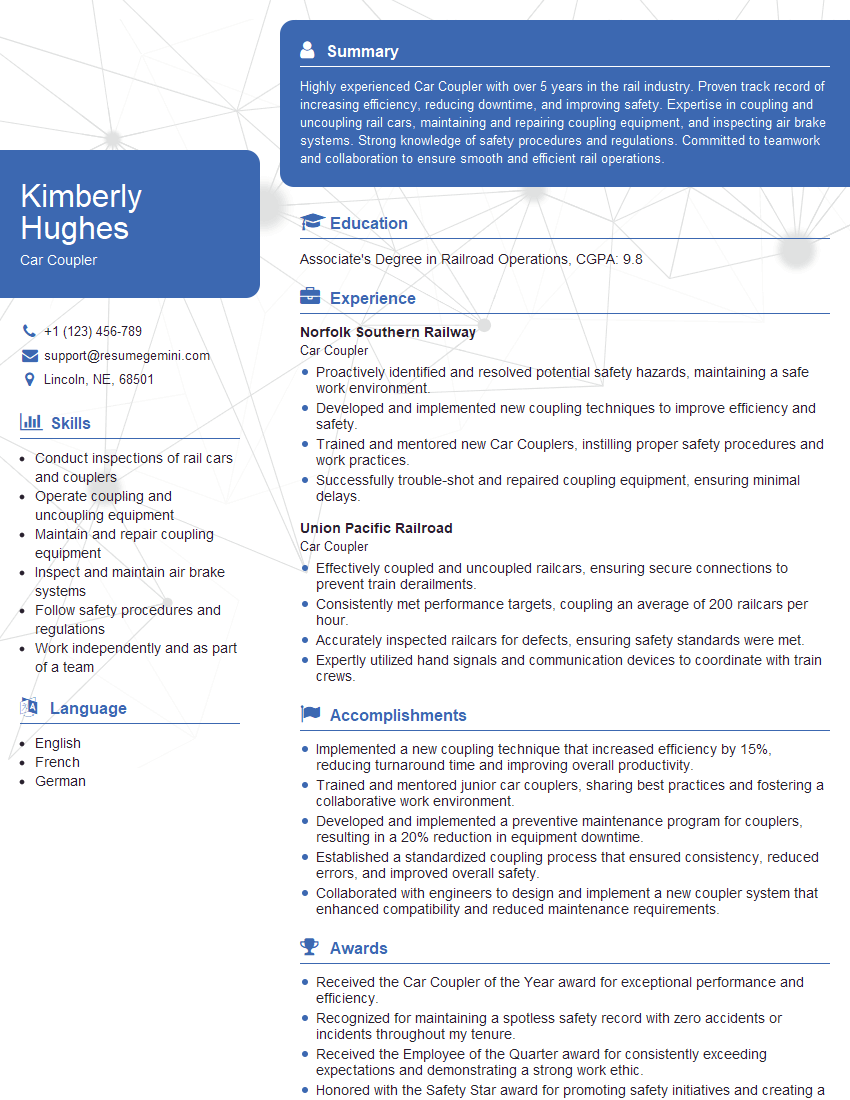
Are you gearing up for a career shift or aiming to ace your next interview? Look no further! We’ve curated a comprehensive guide to help you crack the interview for the coveted Car Coupler position. From understanding the key responsibilities to mastering the most commonly asked questions, this blog has you covered. So, buckle up and let’s embark on this journey together.
Acing the interview is crucial, but landing one requires a compelling resume that gets you noticed. Crafting a professional document that highlights your skills and experience is the first step toward interview success. ResumeGemini can help you build a standout resume that gets you called in for that dream job.






Essential Interview Questions For Car Coupler
1. Describe the process of coupling and uncoupling railroad cars.
Answer: Coupling railroad cars involves aligning two cars and connecting them using a knuckle coupler. I would first ensure that both cars are aligned properly and then raise the coupler on one car using the operating lever. Once the couplers are aligned, I would move the lever to engage the couplers and secure them together. To uncouple cars, I would reverse the process, releasing the couplers using the operating lever and lowering the coupler to disengage the cars.
2. How do you inspect railroad cars for defects?
Visual Inspection:
- Examine the exterior of the car for any visible damage, cracks, or leaks.
- Check the wheels, trucks, and undercarriage for any signs of wear or damage.
Mechanical Inspection:
- Test the brakes and ensure they are functioning properly.
- Inspect the coupler and draft gear for any damage or defects.
Documentation:
- Record any defects found during the inspection.
- Report any major defects to the appropriate personnel for further assessment.
3. What are the safety precautions you take when working with railroad cars?
Answer: I prioritize safety by adhering to established railroad regulations and guidelines. Here are some key precautions I take:
- Wear appropriate safety gear, including gloves, safety glasses, and a hard hat.
- Stay clear of moving equipment and maintain a safe distance from railroad tracks.
- Inspect railroad cars thoroughly before coupling or uncoupling them.
- Follow proper procedures for handling hazardous materials and ensure they are secured safely.
- Communicate effectively with other crew members to coordinate operations and ensure safety.
4. What are the different types of railroad couplers and their advantages and disadvantages?
Knuckle Coupler:
- Advantages: Automatic, easy to couple, and uncouple.
- Disadvantages: Can be prone to wear and tear.
Vertical Hook Coupler:
- Advantages: Less prone to wear, suitable for heavy-duty applications.
- Disadvantages: Manual operation, less efficient than knuckle couplers.
Janney Coupler:
- Advantages: Designed for passenger cars, provides a smooth ride.
- Disadvantages: Not suitable for heavy-duty applications.
5. What are the common problems that can occur with railroad couplers?
- Coupler Misalignment: Can occur due to improper handling or wear and tear.
- Coupler Breakage: Can be caused by excessive force or overloading.
- Coupler Pin Failure: Can result in uncoupling of cars.
- Coupler Wear: Over time, couplers can experience wear and tear, affecting their performance.
- Excessive Slack: Loose or worn components can lead to excessive slack, compromising coupler effectiveness.
6. How do you troubleshoot and repair common problems with railroad couplers?
- Coupler Misalignment: Inspect the coupler and adjust its position as needed.
- Coupler Breakage: Replace the damaged coupler and ensure proper alignment.
- Coupler Pin Failure: Replace the failed pin and check the coupler for any other damage.
- Coupler Wear: Replace worn components and lubricate the coupler as necessary.
- Excessive Slack: Adjust or replace components to reduce slack and ensure proper coupler engagement.
7. What are the different types of railroad car brakes and how do they work?
Air Brakes:
- Description: Utilize compressed air to apply braking force to the wheels.
- Operation: When air pressure is released, the brakes engage.
Hand Brakes:
- Description: Manually operated brakes used as a backup or for parking.
- Operation: Applied by turning a wheel or lever.
Dynamic Brakes:
- Description: Convert the kinetic energy of the train into electrical energy.
- Operation: Utilized in conjunction with other braking systems to reduce wear and tear.
8. What are the safety regulations and procedures for coupling and uncoupling railroad cars?
- Proper PPE: Wear appropriate safety gear, including gloves, safety glasses, and a hard hat.
- Clearance: Ensure sufficient clearance around the cars before coupling or uncoupling.
- Inspect Couplers: Examine couplers for any damage or defects before operation.
- Communication: Establish clear communication with other crew members to coordinate actions.
- Follow Procedures: Adhere to established railroad regulations and procedures for coupling and uncoupling.
9. What is the importance of proper communication and teamwork in railroad car coupling operations?
Answer: Effective communication and teamwork are crucial in railroad car coupling operations. Clear communication ensures that all crew members are aware of the plan and can work together seamlessly. Teamwork fosters coordination, improves efficiency, and minimizes the risk of accidents. By working together and communicating effectively, the crew can ensure the safe and efficient coupling of railroad cars.
10. How do you handle emergency situations while coupling or uncoupling railroad cars?
- Assess the Situation: Remain calm and quickly assess the situation.
- Notify Others: Inform the crew and relevant personnel about the emergency.
- Take Action: Follow established emergency procedures and take appropriate action to resolve the situation.
- Prioritize Safety: Ensure the safety of yourself and others involved.
- Document the Event: Record details of the emergency and report it to supervisors.
Interviewers often ask about specific skills and experiences. With ResumeGemini‘s customizable templates, you can tailor your resume to showcase the skills most relevant to the position, making a powerful first impression. Also check out Resume Template specially tailored for Car Coupler.
Career Expert Tips:
- Ace those interviews! Prepare effectively by reviewing the Top 50 Most Common Interview Questions on ResumeGemini.
- Navigate your job search with confidence! Explore a wide range of Career Tips on ResumeGemini. Learn about common challenges and recommendations to overcome them.
- Craft the perfect resume! Master the Art of Resume Writing with ResumeGemini’s guide. Showcase your unique qualifications and achievements effectively.
- Great Savings With New Year Deals and Discounts! In 2025, boost your job search and build your dream resume with ResumeGemini’s ATS optimized templates.
Researching the company and tailoring your answers is essential. Once you have a clear understanding of the Car Coupler‘s requirements, you can use ResumeGemini to adjust your resume to perfectly match the job description.
Key Job Responsibilities
The Car Coupler plays a crucial role in ensuring the safe and efficient movement of railroad cars by performing the following key responsibilities:
1. Coupling and Uncoupling Cars
Manually connects and disconnects railcars using coupling devices, ensuring proper alignment and safety.
2. Inspecting and Maintaining Equipment
Regularly inspects and maintains coupling equipment, such as knuckles, pins, and hoses, to ensure their proper functioning.
3. Operating Signals and Switching Devices
Uses hand signals and switches to control the movement and positioning of railcars.
4. Safety Compliance
строго соблюдает safety regulations and procedures to prevent accidents and injuries.
5. Communication and Coordination
Effectively communicates with train crews, other railroad employees, and yard personnel to coordinate operations.
Interview Tips
To ace your interview for the Car Coupler position, follow these tips and prepare accordingly:
1. Research the Company and Industry
Learn about the company’s history, operations, and safety record. Understand the importance of rail transportation and its role in the industry.
2. Highlight Relevant Experience
Emphasize any prior experience in railroad operations, especially in coupling and uncoupling cars. Mention safety certifications and training.
3. Showcase Physical Fitness and Stamina
Car Couplers must be physically fit and able to withstand demanding conditions. Highlight your endurance and ability to perform strenuous tasks in various weather conditions.
4. Practice Communication Skills
Effective communication is crucial for Car Couplers. Practice your ability to give clear instructions and follow directions both verbally and using hand signals.
5. Prepare for Safety-Related Questions
Be prepared to discuss safety procedures and regulations related to coupling and uncoupling operations. Explain your understanding of the importance of safety in railroad operations.
6. Dress Appropriately
For the interview, dress professionally and wear appropriate footwear for the job. This shows respect for the interviewer and the position.
7. Show Enthusiasm and Motivation
Express your enthusiasm for the Car Coupler role and explain why you are interested in working in the railroad industry. Highlight your passion for safety and your dedication to excellence.
Next Step:
Armed with this knowledge, you’re now well-equipped to tackle the Car Coupler interview with confidence. Remember, preparation is key. So, start crafting your resume, highlighting your relevant skills and experiences. Don’t be afraid to tailor your application to each specific job posting. With the right approach and a bit of practice, you’ll be well on your way to landing your dream job. Build your resume now from scratch or optimize your existing resume with ResumeGemini. Wish you luck in your career journey!