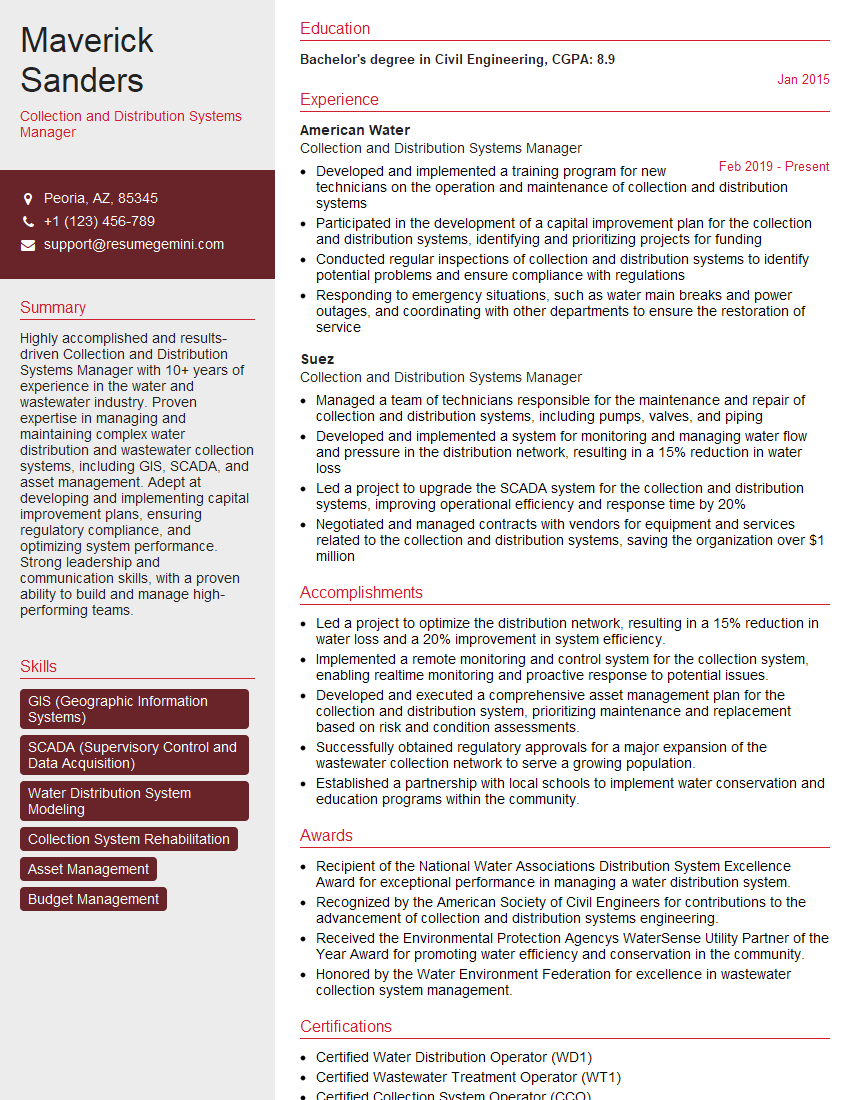
Are you gearing up for a career shift or aiming to ace your next interview? Look no further! We’ve curated a comprehensive guide to help you crack the interview for the coveted Collection and Distribution Systems Manager position. From understanding the key responsibilities to mastering the most commonly asked questions, this blog has you covered. So, buckle up and let’s embark on this journey together
Acing the interview is crucial, but landing one requires a compelling resume that gets you noticed. Crafting a professional document that highlights your skills and experience is the first step toward interview success. ResumeGemini can help you build a standout resume that gets you called in for that dream job.






Essential Interview Questions For Collection and Distribution Systems Manager
1. What are the key responsibilities of a Collection and Distribution Systems Manager?
As a Collection and Distribution Systems Manager, my primary responsibilities include:
- Planning, designing, and implementing collection and distribution systems for water and wastewater
- Managing the operation and maintenance of these systems to ensure efficient and reliable service
- Supervising and directing staff responsible for system operations, maintenance, and repairs
- Developing and implementing capital improvement plans for system expansion and upgrades
- Monitoring system performance, identifying areas for improvement, and implementing corrective measures
2. How do you approach the design of a new collection and distribution system?
Consideration of System Requirements
- Analyze population growth, water demand, and system capacity
- Determine the type of system (gravity-fed, pumped, or a combination)
- Establish design criteria for pipe materials, diameters, and flow rates
Route Selection and Optimization
- Identify potential routes using GIS and field surveys
- Evaluate routes based on factors such as topography, soil conditions, and property access
- Select the most cost-effective and environmentally friendly route
Hydraulic Modeling and Analysis
- Utilize hydraulic modeling software to simulate system performance
- Analyze pressure, flow rates, and velocities under different operating conditions
- Optimize system design to meet performance requirements and minimize energy consumption
3. What are the latest technologies used in collection and distribution systems management?
- Smart meters and sensors: Monitor and collect real-time data on water usage, pressure, and leaks
- SCADA systems: Control and monitor system operations remotely, providing real-time visibility and automation
- GIS mapping: Visualize infrastructure locations, maintenance history, and customer information
- Flow modeling software: Optimize system design and simulate scenarios to improve efficiency and reliability
- Asset management systems: Track and manage infrastructure assets, including maintenance records and replacement schedules
4. How do you prioritize capital improvement projects for a collection and distribution system?
- Assess system condition and identify critical needs through inspections and data analysis
- Evaluate projects based on factors such as public health and safety, regulatory compliance, and cost-effectiveness
- Prioritize projects that address immediate risks, improve system performance, and enhance resilience
- Develop a capital improvement plan that aligns with strategic goals and available funding
- Collaborate with stakeholders to secure funding and support for project implementation
5. How do you manage and resolve emergencies in a collection and distribution system?
- Establish emergency response protocols and train staff on their roles and responsibilities
- Maintain a list of emergency contacts and resources, including contractors and regulatory agencies
- Monitor system performance and respond promptly to alarms and notifications
- Coordinate with other departments and agencies to ensure a comprehensive and effective response
- Document emergency events, actions taken, and lessons learned to improve future response
6. What strategies do you use to engage with the public and stakeholders about collection and distribution systems?
- Develop and implement public outreach programs to educate the community about system operations and maintenance
- Participate in community meetings, presentations, and workshops to gather input and address concerns
- Maintain a website and social media presence to provide updates and information on system projects
- Collaborate with local media to share news and public service announcements
- Establish partnerships with schools, universities, and non-profit organizations to promote water conservation and stewardship
7. How do you stay up-to-date with the latest advancements in collection and distribution systems management?
- Attend industry conferences and workshops to learn about new technologies and best practices
- Read technical journals and publications to stay informed on research and development
- Participate in professional organizations and committees to network with peers and exchange knowledge
- Seek continuing education opportunities, such as graduate courses or certification programs
- Collaborate with universities and research institutions to explore innovative solutions
8. Describe your experience in using hydraulic modeling software to design and optimize collection and distribution systems.
As a Collection and Distribution Systems Manager for the past 5 years, I have utilized hydraulic modeling software extensively for system design and optimization. I am proficient in using industry-standard software such as WaterCAD and SewerCAD.
- For a large-scale water distribution project, I used WaterCAD to simulate system performance under various demand scenarios
- I identified pressure imbalances and optimized pipe diameters to ensure reliable water supply to all customers
- In a wastewater collection system design, I utilized SewerCAD to model flow rates and velocities
- I evaluated alternative designs and selected a cost-effective solution that minimized the risk of overflows and backflows
9. How do you ensure the safety of workers and the public during construction and maintenance activities on collection and distribution systems?
- Develop and enforce safety protocols for all construction and maintenance operations
- Provide proper training and personal protective equipment (PPE) to workers
- Conduct regular safety inspections and audits to identify potential hazards
- Establish clear communication channels and emergency response plans
- Monitor work zones and implement traffic control measures to protect the public
10. Walk us through your process for developing a comprehensive asset management plan for a collection and distribution system.
- Inventory and assessment: Conduct a thorough inventory of all system assets, including pipes, pumps, valves, and reservoirs
- Condition assessment: Evaluate the condition of assets using inspections, data analysis, and predictive modeling techniques
- Prioritization: Determine the criticality of assets based on their condition, performance, and impact on system reliability
- Maintenance and replacement planning: Develop preventive and corrective maintenance schedules to extend asset lifespan and minimize failures
- Budgeting and resource allocation: Estimate costs and identify funding sources for asset maintenance, replacement, and upgrades
Interviewers often ask about specific skills and experiences. With ResumeGemini‘s customizable templates, you can tailor your resume to showcase the skills most relevant to the position, making a powerful first impression. Also check out Resume Template specially tailored for Collection and Distribution Systems Manager.
Career Expert Tips:
- Ace those interviews! Prepare effectively by reviewing the Top 50 Most Common Interview Questions on ResumeGemini.
- Navigate your job search with confidence! Explore a wide range of Career Tips on ResumeGemini. Learn about common challenges and recommendations to overcome them.
- Craft the perfect resume! Master the Art of Resume Writing with ResumeGemini’s guide. Showcase your unique qualifications and achievements effectively.
- Great Savings With New Year Deals and Discounts! In 2025, boost your job search and build your dream resume with ResumeGemini’s ATS optimized templates.
Researching the company and tailoring your answers is essential. Once you have a clear understanding of the Collection and Distribution Systems Manager‘s requirements, you can use ResumeGemini to adjust your resume to perfectly match the job description.
Key Job Responsibilities
A Collection and Distribution Systems Manager oversees the operation of a water and/or wastewater collection and distribution system, ensuring efficient and cost-effective delivery of services to customers.
1. System Operations and Maintenance
Supervises and coordinates the operation and maintenance of water and/or wastewater collection and distribution systems.
- Develops and implements maintenance schedules and procedures.
- Inspects and evaluates system components for proper operation and efficiency.
2. Asset Management
Manages the lifecycle of collection and distribution system assets, including planning, design, construction, and rehabilitation.
- Assesses and prioritizes asset needs and replacement schedules.
- Develops and oversees capital improvement projects.
3. Regulatory Compliance
Ensures compliance with all applicable regulations and standards governing the collection and distribution of water and wastewater.
- Monitors and reports on system performance.
- Prepares and submits compliance reports and documentation.
4. Emergency Response and Management
Leads emergency response efforts in the event of system failures or disruptions.
- Develops and implements emergency response plans.
- Coordinates with emergency responders and other stakeholders.
Interview Tips
To ace an interview for a Collection and Distribution Systems Manager position, candidates should prepare thoroughly and demonstrate their knowledge and skills related to system operations, asset management, regulatory compliance, and emergency response.
1. Research the Organization and Position
Gather information about the organization, its mission, values, and current projects. Review the job description carefully to understand the specific responsibilities and qualifications required for the role.
2. Highlight Relevant Experience and Skills
Emphasize your experience in managing and maintaining water or wastewater collection and distribution systems. Provide specific examples of successful projects or initiatives you have led.
3. Demonstrate Knowledge of Regulatory Compliance
Show your understanding of the relevant regulations and standards governing the industry. Discuss your experience in ensuring compliance and any challenges you have faced.
4. Showcase Emergency Response Planning and Execution
Highlight your ability to develop and implement emergency response plans. Share instances where you have successfully led or participated in emergency response operations.
5. Prepare Industry-Specific Questions
Prepare questions that demonstrate your knowledge of the industry. Ask about the organization’s approach to system optimization, asset management, or regulatory compliance.
6. Practice Interview Answers
Practice answering common interview questions related to the role. Use the STAR method (Situation, Task, Action, Result) to structure your responses and provide specific examples.
Next Step:
Armed with this knowledge, you’re now well-equipped to tackle the Collection and Distribution Systems Manager interview with confidence. Remember, a well-crafted resume is your first impression. Take the time to tailor your resume to highlight your relevant skills and experiences. And don’t forget to practice your answers to common interview questions. With a little preparation, you’ll be on your way to landing your dream job. So what are you waiting for? Start building your resume and start applying! Build an amazing resume with ResumeGemini.