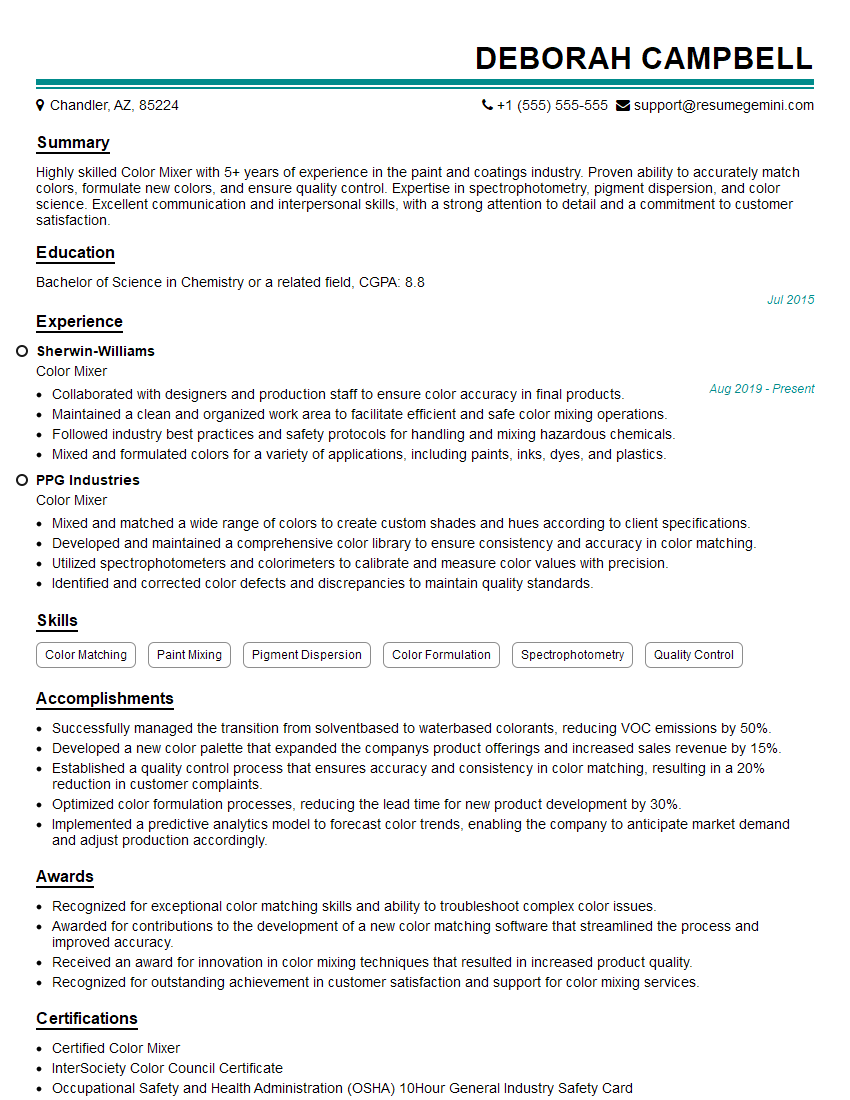
Ever felt underprepared for that crucial job interview? Or perhaps you’ve landed the interview but struggled to articulate your skills and experiences effectively? Fear not! We’ve got you covered. In this blog post, we’re diving deep into the Color Mixer interview questions that you’re most likely to encounter. But that’s not all. We’ll also provide expert insights into the key responsibilities of a Color Mixer so you can tailor your answers to impress potential employers.
Acing the interview is crucial, but landing one requires a compelling resume that gets you noticed. Crafting a professional document that highlights your skills and experience is the first step toward interview success. ResumeGemini can help you build a standout resume that gets you called in for that dream job.






Essential Interview Questions For Color Mixer
1. Explain the role of a Color Mixer in the printing process?
A Color Mixer plays a crucial role in the printing process by combining different color pigments or inks to create the desired hues and shades. Their primary responsibilities include:
- Mixing and blending colors according to specified formulas or customer requests.
- Matching existing colors and creating new ones using color wheels and reference guides.
- Ensuring consistency and accuracy in color reproduction throughout the printing process.
- Calibrating and maintaining color mixing equipment, including spectrophotometers and mixers.
- Monitoring and adjusting color output during printing to meet quality standards.
2. Describe the different types of color mixing techniques used in printing?
- Subtractive color mixing: Used in printing, involves mixing colored inks (cyan, magenta, yellow, and black) to create a wide range of hues.
- Additive color mixing: Primarily used in digital displays, combines light sources (red, green, and blue) to create different colors.
- Spot color mixing: Involves using pre-mixed colors (such as Pantone colors) to achieve specific shades and is often used for branding materials.
3. Explain the importance of color theory in color mixing?
Color theory provides a framework for understanding how colors interact and relate to each other. It helps Color Mixers:
- Identify and create harmonious color combinations.
- Comprehend how colors behave when mixed in different proportions.
- Use color effectively to convey specific emotions and messages in printed materials.
4. How do you ensure accuracy and consistency in color mixing?
- Using spectrophotometers: Measure and analyze colors precisely, ensuring consistency across batches.
- Following standardized mixing procedures: Adhering to established formulas and guidelines to avoid errors.
- Regularly calibrating equipment: Adjusting spectrophotometers and mixers to guarantee accurate measurements.
- Maintaining a clean and organized workspace: Minimizing contamination and ensuring accuracy.
5. Describe your experience in troubleshooting color mixing issues?
- Identifying the source of the problem: Checking equipment, materials, and procedures for any deviations.
- Analyzing color output: Using spectrophotometers and visual inspection to determine the discrepancy.
- Adjusting mixing parameters: Modifying proportions, mixing techniques, or equipment settings as needed.
- Retesting and verifying results: Confirming the effectiveness of troubleshooting measures.
6. How do you stay up-to-date with advancements in color mixing technology?
- Attending industry workshops and conferences: Networking with experts and learning about new techniques.
- Reading trade publications and online resources: Staying informed about the latest developments.
- Exploring new products and equipment: Evaluating potential improvements and incorporating them into workflows.
7. Explain how you handle complex customer requests for specific colors?
- Consulting with the customer: Clarifying their expectations and preferences.
- Matching existing colors: Using spectrophotometers or color guides to create identical shades.
- Creating new colors: Experimenting with different pigments and formulations to achieve the desired hue.
- Collaborating with other departments: Involving designers, press operators, and quality control to ensure accuracy.
8. Describe your approach to maintaining a safe and efficient work environment?
- Adhering to safety regulations: Following proper handling procedures for chemicals and equipment.
- Maintaining good housekeeping: Keeping the workspace clean and organized to prevent accidents.
- Performing regular maintenance and inspections: Ensuring equipment is functioning correctly and reducing downtime.
- Communicating effectively: Sharing safety concerns and best practices with colleagues.
9. How do you contribute to improving the overall quality of the printing process?
- Ensuring color accuracy: Maintaining high standards of color mixing to produce consistent and high-quality prints.
- Participating in quality control measures: Regularly monitoring and adjusting color output to meet customer specifications.
- Suggesting process improvements: Identifying potential areas for optimization and implementing solutions to enhance efficiency.
- Collaborating with other team members: Working closely with prepress, press operators, and finishing departments to ensure seamless color reproduction.
10. How do you measure the success of your work as a Color Mixer?
- Customer satisfaction: Receiving positive feedback on color quality and accuracy.
- Consistency in printing results: Maintaining high standards of color reproduction across multiple print runs.
- Adherence to specifications: Meeting or exceeding customer color requirements.
- Recognition from colleagues: Receiving praise or awards for exceptional work.
Interviewers often ask about specific skills and experiences. With ResumeGemini‘s customizable templates, you can tailor your resume to showcase the skills most relevant to the position, making a powerful first impression. Also check out Resume Template specially tailored for Color Mixer.
Career Expert Tips:
- Ace those interviews! Prepare effectively by reviewing the Top 50 Most Common Interview Questions on ResumeGemini.
- Navigate your job search with confidence! Explore a wide range of Career Tips on ResumeGemini. Learn about common challenges and recommendations to overcome them.
- Craft the perfect resume! Master the Art of Resume Writing with ResumeGemini’s guide. Showcase your unique qualifications and achievements effectively.
- Great Savings With New Year Deals and Discounts! In 2025, boost your job search and build your dream resume with ResumeGemini’s ATS optimized templates.
Researching the company and tailoring your answers is essential. Once you have a clear understanding of the Color Mixer‘s requirements, you can use ResumeGemini to adjust your resume to perfectly match the job description.
Key Job Responsibilities for Color Mixer
Color Mixers play a crucial role in various industries, including manufacturing, textiles, and the arts. They are responsible for creating and mixing colors to meet specific requirements.
1. Color Matching and Formulations
Color Mixers analyze color samples, match existing colors, and formulate new colors using pigments, dyes, and other chemicals.
- Develop color recipes and ensure accurate color reproduction.
- Maintain color consistency and quality across different batches.
2. Mixing and Blending
They use various mixing equipment, such as blenders, mixers, and applicators, to combine different pigments and chemicals to achieve the desired color.
- Operate and maintain mixing equipment to create uniform and consistent color blends.
- Monitor mixing processes to ensure color accuracy and prevent contamination.
3. Quality Control and Testing
Color Mixers conduct quality control tests to ensure that the colors meet the required specifications.
- Perform color measurements and analysis using spectrophotometers.
- Maintain records and documentation of color formulations and quality control tests.
4. Collaboration and Communication
They work closely with designers, engineers, and production teams to achieve the desired color outcomes.
- Communicate color requirements and specifications to stakeholders.
- Collaborate with other departments to ensure color accuracy in final products.
Interview Tips for Color Mixers
To ace an interview for a Color Mixer position, candidates should:
1. Highlight Relevant Experience and Skills
Emphasize previous experience in color matching, mixing, and quality control.
- Provide specific examples of projects where you successfully matched and formulated colors.
- Demonstrate proficiency in using mixing equipment and color analysis tools.
2. Showcase Attention to Detail
Highlight your ability to pay close attention to color shades, variations, and consistency.
- Describe your meticulous approach to color matching and quality control procedures.
- Explain how you maintain accurate color records and documentation.
3. Demonstrate a Good Eye for Color
Interviewers will want to assess your ability to distinguish and manipulate colors effectively.
- Explain your understanding of color theory and the principles of color mixing.
- Bring a portfolio or examples of your work that showcases your ability to achieve desired color outcomes.
4. Prepare for Technical Questions
Interviewers may ask technical questions about color matching, mixing, and testing.
- Research common color mixing techniques and measurement methods.
- Review industry standards and regulations related to color quality.
Next Step:
Armed with this knowledge, you’re now well-equipped to tackle the Color Mixer interview with confidence. Remember, preparation is key. So, start crafting your resume, highlighting your relevant skills and experiences. Don’t be afraid to tailor your application to each specific job posting. With the right approach and a bit of practice, you’ll be well on your way to landing your dream job. Build your resume now from scratch or optimize your existing resume with ResumeGemini. Wish you luck in your career journey!