Are you gearing up for an interview for a Component Inspector position? Whether you’re a seasoned professional or just stepping into the role, understanding what’s expected can make all the difference. In this blog, we dive deep into the essential interview questions for Component Inspector and break down the key responsibilities of the role. By exploring these insights, you’ll gain a clearer picture of what employers are looking for and how you can stand out. Read on to equip yourself with the knowledge and confidence needed to ace your next interview and land your dream job!
Acing the interview is crucial, but landing one requires a compelling resume that gets you noticed. Crafting a professional document that highlights your skills and experience is the first step toward interview success. ResumeGemini can help you build a standout resume that gets you called in for that dream job.






Essential Interview Questions For Component Inspector
1. Explain the key responsibilities of a Component Inspector?
As a Component Inspector, I would be responsible for:
- Inspecting and testing components to ensure they meet specifications and quality standards
- Identifying and documenting any defects or non-conformances
- Using precision measuring instruments to verify dimensions, tolerances, and other critical characteristics
- Complying with established inspection procedures and industry standards
- Providing feedback to production and engineering teams to improve processes and product quality
2. Describe the different inspection techniques used for component inspection?
Visual Inspection
- Examining components visually using magnifying glasses, microscopes, or cameras
- Checking for surface defects, scratches, cracks, or other imperfections
Dimensional Inspection
- Using calipers, micrometers, and other precision instruments to measure dimensions
- Verifying that components meet specified tolerances
Functional Inspection
- Testing components to ensure they operate correctly
- Simulating real-world conditions or using specialized test equipment
3. How do you handle components that do not meet specifications?
When I identify a component that does not meet specifications, I would:
- Document the defect or non-conformance using clear and detailed descriptions
- Isolate the defective component to prevent it from being used in production
- Notify the appropriate personnel, such as the production supervisor or quality engineer
- Cooperate with the team to determine the root cause and implement corrective actions
4. How do you stay up to date with industry standards and best practices for component inspection?
To stay up to date with industry standards and best practices, I would:
- Attend industry conferences and workshops
- Read technical journals and publications
- Participate in online forums and discussion groups
- Consult with experts in the field
5. What is your experience with using inspection software and equipment?
I have experience using a range of inspection software and equipment, including:
- Coordinate Measuring Machines (CMMs)
- Optical Comparators
- Digital Microscopes
- Inspection Software (e.g., Q-DAS, PC-DMIS)
6. How do you prioritize your workload and manage your time effectively?
I prioritize my workload based on the following criteria:
- Urgency and criticality of the inspection
- Availability of resources
- Deadlines and turnaround times
To manage my time effectively, I use techniques such as:
- Time blocking and scheduling
- Delegation and teamwork
- Prioritizing tasks using the Eisenhower Matrix
7. How do you work as part of a team and collaborate with others?
In a team environment, I am a collaborative and communicative team player. I contribute by:
- Sharing my knowledge and expertise
- Supporting colleagues and providing assistance
- Actively participating in team discussions and problem-solving
- Maintaining open communication and providing regular updates
8. How do you deal with pressure and tight deadlines?
When faced with pressure and tight deadlines, I remain calm and focused by:
- Breaking down large tasks into smaller, manageable chunks
- Prioritizing tasks based on importance and urgency
- Optimizing my workflow and eliminating distractions
- Communicating regularly with stakeholders to manage expectations
9. What are your strengths and weaknesses as a Component Inspector?
Strengths:
- Strong attention to detail and accuracy
- Excellent visual and analytical skills
- Proficient in using inspection equipment and software
- In-depth knowledge of industry standards and best practices
Weaknesses:
- Can be overly perfectionistic at times, which may slow down inspection processes
- Still gaining experience in the use of advanced inspection techniques, such as non-destructive testing
10. Why are you interested in this Component Inspector position?
I am enthusiastic about this Component Inspector position because it aligns with my skills, interests, and career goals. With my passion for quality control and my commitment to delivering accurate and reliable inspections, I am confident that I can make a significant contribution to your team. I am eager to apply my knowledge and experience to support your organization’s objectives and ensure the delivery of high-quality products.
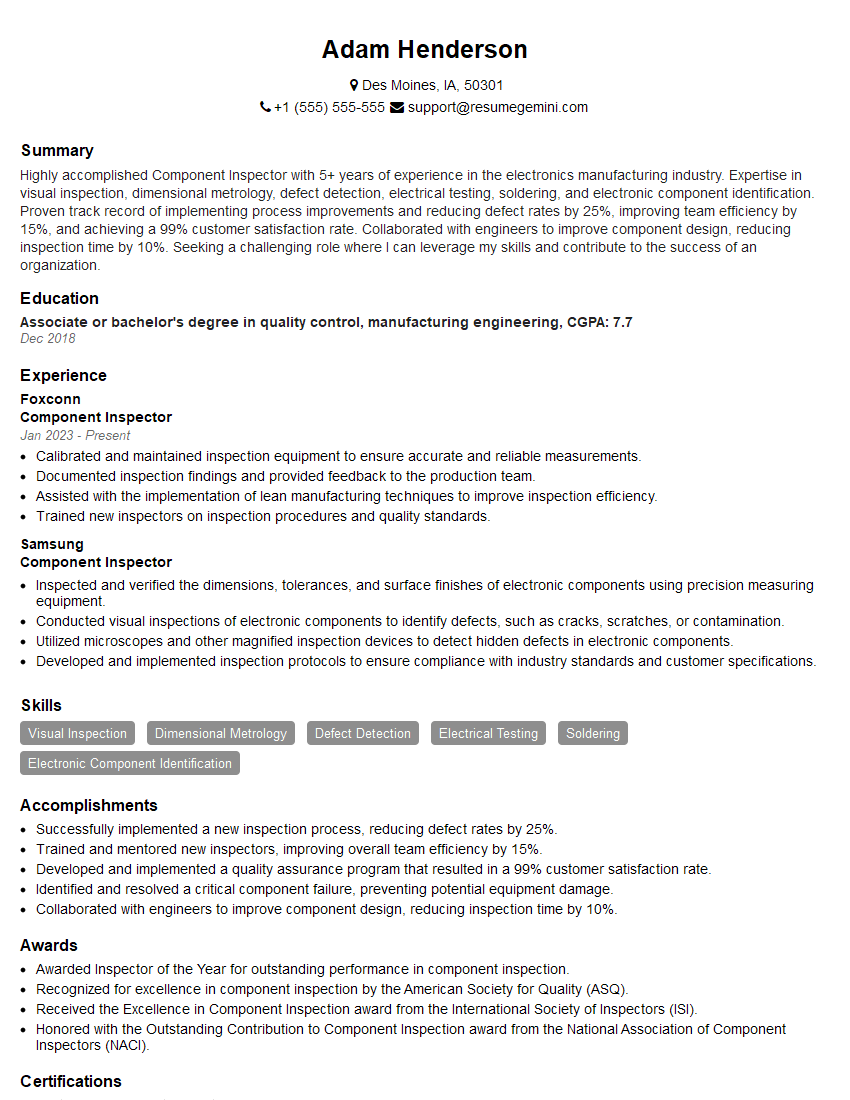
Interviewers often ask about specific skills and experiences. With ResumeGemini‘s customizable templates, you can tailor your resume to showcase the skills most relevant to the position, making a powerful first impression. Also check out Resume Template specially tailored for Component Inspector.
Career Expert Tips:
- Ace those interviews! Prepare effectively by reviewing the Top 50 Most Common Interview Questions on ResumeGemini.
- Navigate your job search with confidence! Explore a wide range of Career Tips on ResumeGemini. Learn about common challenges and recommendations to overcome them.
- Craft the perfect resume! Master the Art of Resume Writing with ResumeGemini’s guide. Showcase your unique qualifications and achievements effectively.
- Great Savings With New Year Deals and Discounts! In 2025, boost your job search and build your dream resume with ResumeGemini’s ATS optimized templates.
Researching the company and tailoring your answers is essential. Once you have a clear understanding of the Component Inspector‘s requirements, you can use ResumeGemini to adjust your resume to perfectly match the job description.
Key Job Responsibilities
Component Inspectors are responsible for ensuring that the components used in the manufacturing process meet the required specifications and quality standards. They play a crucial role in maintaining the quality and safety of products, and their responsibilities typically include:
1. Inspecting Components
Inspecting components visually using magnifying glasses or microscopes to identify defects such as cracks, scratches, dents, or discoloration.
- Measuring components using calipers, micrometers, or other precision measuring tools to ensure they meet dimensional specifications.
- Testing components using specialized equipment to verify their electrical, mechanical, or other functional properties.
2. Analyzing and Reporting Findings
Analyzing inspection results and identifying any non-conforming components. Recording inspection data and preparing reports to document findings.
- Communicating inspection results to production personnel, engineers, or management to initiate corrective actions.
3. Monitoring Production Processes
Monitoring production processes to ensure that components are being manufactured according to specifications.
- Identifying and addressing potential quality issues before they result in defective products.
4. Maintaining Inspection Equipment
Maintaining and calibrating inspection equipment to ensure accuracy and reliability.
- Following established inspection procedures and adhering to quality standards.
Interview Tips
Preparing for an interview can be daunting, but with the right strategies, you can increase your chances of success. Here are some interview tips to help you ace your component inspector interview:
1. Research the Company and Position
Before the interview, take the time to research the company and the specific position you are applying for. This will give you a better understanding of the company’s culture, values, and the role you will be expected to play. You can find this information on the company website, LinkedIn, or other online sources.
- Read the job description carefully and identify the key skills and qualifications required for the position. This will help you tailor your resume and cover letter, and demonstrate your alignment with the company’s needs.
2. Practice your Answers to Common Interview Questions
There are certain interview questions that are commonly asked in component inspector interviews, such as:
- “Tell me about your experience in component inspection.”
- “What are the most important qualities of a successful component inspector?”
- “How do you handle inspecting high-volume components?”
Practice answering these questions in advance so that you can deliver clear, concise, and well-thought-out responses during the interview.
3. Highlight your Skills and Experience
During the interview, make sure to highlight your skills and experience that are relevant to the component inspector position. This includes your ability to:
- Inspect components visually and using measuring tools
- Test components using specialized equipment
- Analyze inspection results and identify non-conforming components
- Communicate inspection results to production personnel and management
Provide specific examples of your work experience to demonstrate your abilities and how you have contributed to the success of previous organizations.
4. Be Enthusiastic and Professional
First impressions matter, so make sure to arrive at the interview on time, dress professionally, and maintain a positive and enthusiastic attitude throughout the interview. Be respectful of the interviewer’s time and answer questions honestly and thoughtfully. Ask questions at the end of the interview to show your interest in the position and the company.
- Thank the interviewer for their time and express your interest in the position.
5. Follow Up
After the interview, send a thank-you note to the interviewer, reiterating your interest in the position and thanking them for their time. This is a simple but effective way to stay on the interviewer’s mind and show your appreciation for the opportunity to interview.
- You can also use the thank-you note to address any questions or concerns that you may not have had the opportunity to discuss during the interview.
Next Step:
Armed with this knowledge, you’re now well-equipped to tackle the Component Inspector interview with confidence. Remember, preparation is key. So, start crafting your resume, highlighting your relevant skills and experiences. Don’t be afraid to tailor your application to each specific job posting. With the right approach and a bit of practice, you’ll be well on your way to landing your dream job. Build your resume now from scratch or optimize your existing resume with ResumeGemini. Wish you luck in your career journey!