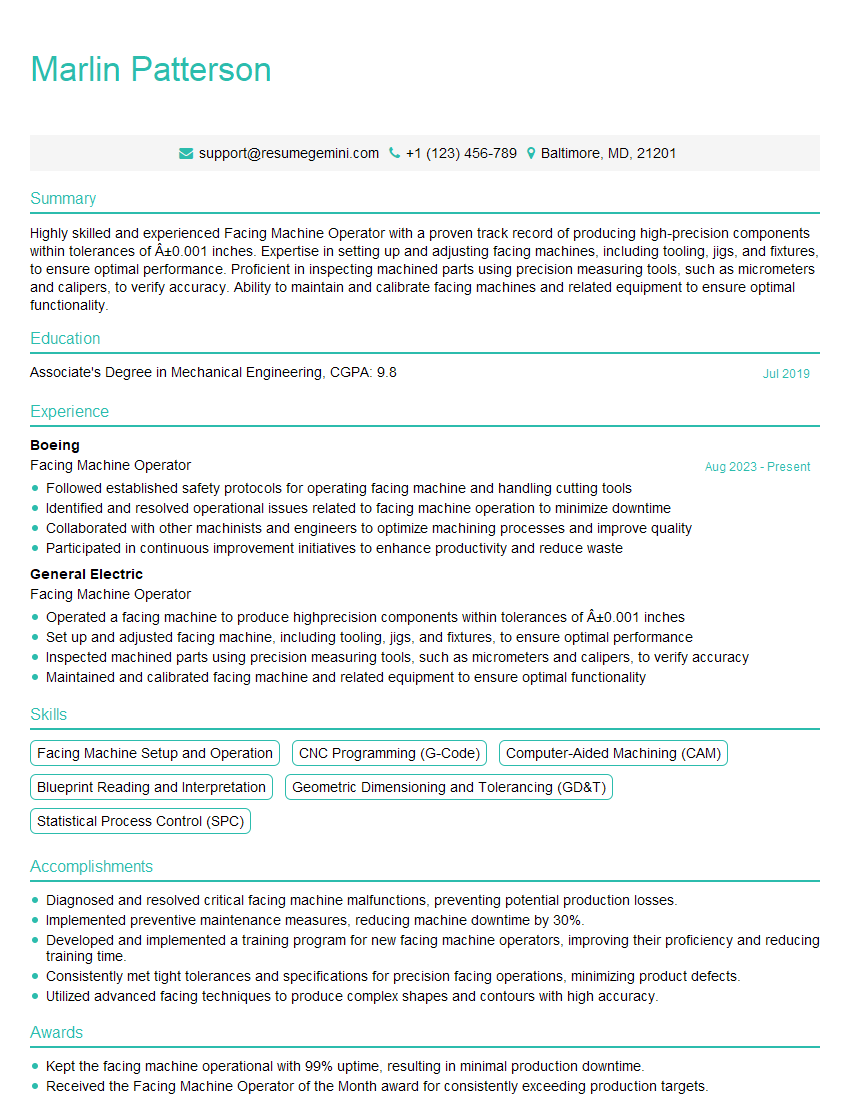
Are you gearing up for a career in Facing Machine Operator? Feeling nervous about the interview questions that might come your way? Don’t worry, you’re in the right place. In this blog post, we’ll dive deep into the most common interview questions for Facing Machine Operator and provide you with expert-backed answers. We’ll also explore the key responsibilities of this role so you can tailor your responses to showcase your perfect fit.
Acing the interview is crucial, but landing one requires a compelling resume that gets you noticed. Crafting a professional document that highlights your skills and experience is the first step toward interview success. ResumeGemini can help you build a standout resume that gets you called in for that dream job.






Essential Interview Questions For Facing Machine Operator
1. Explain the process of setting up a facing machine?
Setting up a facing machine involves the following steps:
- Mount the workpiece: Secure the workpiece to the machine table using a chuck, clamps, or other suitable fixturing.
- Select the appropriate cutter: Choose the correct cutter type and size based on the material and dimensions of the workpiece.
- Mount the cutter: Install the cutter into the machine’s spindle and tighten it securely.
- Set the cutting depth: Adjust the machine’s settings to determine the depth of the facing cut.
- Set the feed rate and spindle speed: Determine the appropriate feed rate and spindle speed for the material and desired finish.
- Check safety measures: Ensure that all safety guards are in place and that the machine is properly grounded.
2. Describe the different types of facing operations?
- Flat facing: Creating a flat surface on the end of a workpiece.
- Shoulder facing: Creating a flat surface on the shoulder of a workpiece.
- Angled facing: Creating a surface at an angle to the workpiece axis.
- Contour facing: Creating a surface with a specific contour.
3. What are the common materials faced on a facing machine?
Facing machines can handle a wide range of materials, including:
- Metals (steel, aluminum, brass, copper, etc.)
- Plastics
- Wood
- Composites
4. What factors affect the surface finish of a faced workpiece?
- Cutter type and sharpness: Using a sharp, appropriate cutter for the material and operation will result in a better finish.
- Cutting speed and feed rate: Higher cutting speeds and faster feed rates can lead to a rougher finish.
- Workpiece material: Softer materials generally produce a better finish than harder materials.
- Machine condition: A well-maintained machine with minimal vibration will produce a better finish.
5. How do you ensure the accuracy of a facing operation?
- Use precision measuring tools: Calipers, micrometers, or dial indicators can be used to ensure accurate workpiece dimensions.
- Check the machine’s settings: Verify that the machine is set up with the correct cutting depth and feed rate.
- Perform test cuts: Make small test cuts to verify the accuracy of the setup before machining the actual workpiece.
6. What are the safety precautions to be taken when operating a facing machine?
- Wear appropriate safety gear: Eye protection, ear protection, gloves, and proper clothing.
- Keep the work area clean and organized: Remove chips and debris to prevent accidents.
- Follow the manufacturer’s operating instructions: Refer to the machine’s manual for proper setup and operation.
- Inspect the machine before each use: Check for any damage or loose components.
- Never operate the machine under the influence of alcohol or drugs.
7. What are the maintenance procedures for a facing machine?
- Regular cleaning: Remove chips, debris, and coolant from the machine’s surfaces and components.
- Lubrication: Lubricate moving parts according to the manufacturer’s recommendations.
- Cutter maintenance: Sharpen or replace cutters as needed to maintain optimal performance.
- Regular inspections: Inspect the machine for any damage or wear to ensure safe and efficient operation.
8. What types of cutting tools are used for facing operations?
Common cutting tools used for facing operations include:
- Face mills: Multi-tooth cutters designed for flat facing operations.
- End mills: Single-tooth cutters used for both flat and angled facing.
- Boring bars: Used for facing operations in conjunction with a boring head.
9. How do you troubleshoot a facing operation that is producing poor surface finish?
To troubleshoot poor surface finish, consider the following steps:
- Check the cutter: Ensure that the cutter is sharp and free of damage.
- Adjust cutting parameters: Slow down the feed rate or increase the cutting speed.
- Use a different cutting tool: A finer-grain or coated cutter may improve finish.
- Inspect the machine: Check for excessive vibration or misalignment.
10. Describe your experience with operating different types of facing machines.
In my previous role at [Company Name], I operated various facing machines, including:
- CNC Facing Machine: I programmed and operated a CNC facing machine for high-volume production of precision parts.
- Manual Facing Machine: I manually operated a facing machine for prototype development and small-batch production.
- Turret Facing Machine: I utilized a turret facing machine for facing operations on large-diameter workpieces.
Interviewers often ask about specific skills and experiences. With ResumeGemini‘s customizable templates, you can tailor your resume to showcase the skills most relevant to the position, making a powerful first impression. Also check out Resume Template specially tailored for Facing Machine Operator.
Career Expert Tips:
- Ace those interviews! Prepare effectively by reviewing the Top 50 Most Common Interview Questions on ResumeGemini.
- Navigate your job search with confidence! Explore a wide range of Career Tips on ResumeGemini. Learn about common challenges and recommendations to overcome them.
- Craft the perfect resume! Master the Art of Resume Writing with ResumeGemini’s guide. Showcase your unique qualifications and achievements effectively.
- Great Savings With New Year Deals and Discounts! In 2025, boost your job search and build your dream resume with ResumeGemini’s ATS optimized templates.
Researching the company and tailoring your answers is essential. Once you have a clear understanding of the Facing Machine Operator‘s requirements, you can use ResumeGemini to adjust your resume to perfectly match the job description.
Key Job Responsibilities
Facing Machine Operators play a crucial role in manufacturing by operating facing machines to precision-cut and finish metal workpieces.
1. Machine Operation
Their primary responsibility is to skillfully operate facing machines, ensuring precise cutting and finishing of metal surfaces. This involves setting up the machine with proper tooling, selecting appropriate cutting parameters, and monitoring the process to maintain quality standards.
- Set up and operate facing machines as per blueprints, specifications, and production schedules.
- Select and install appropriate cutting tools, including inserts, drills, and reamers, in the machine.
- Calculate and set cutting parameters, such as speed, feed, and depth of cut, to achieve desired machining results.
- Monitor and adjust the machining process to ensure accuracy and maintain tolerances within specified limits.
2. Workpiece Handling
Facing Machine Operators are responsible for handling workpieces throughout the process. This includes securely clamping them to the machine table, ensuring proper alignment, and inspecting the finished product for quality.
- Load and secure workpieces in the machine’s fixtures or chucks.
- Align workpieces accurately using precision measuring tools and instruments.
- Inspect finished workpieces for dimensional accuracy, surface finish, and adherence to specifications.
- Identify and correct any deviations or defects, ensuring that the final product meets quality standards.
3. Maintenance and Troubleshooting
To ensure optimal machine performance and safety, Facing Machine Operators are required to perform basic maintenance and troubleshooting tasks.
- Perform regular maintenance checks, including cleaning, lubrication, and inspection of the machine.
- Troubleshoot and resolve machine malfunctions, identifying potential issues and implementing corrective actions.
- Monitor machine performance and identify areas for improvement or optimization.
- Follow established safety protocols and ensure a safe work environment while operating the machine.
4. Process Improvement
Facing Machine Operators may also contribute to process improvement activities. This could involve participating in discussions with management and engineers to identify areas for efficiency enhancements or waste reduction.
- Participate in process improvement initiatives, such as Six Sigma or Lean Manufacturing, to optimize production efficiency.
- Share knowledge and expertise with colleagues to improve overall team performance.
- Stay updated on industry best practices and advancements in facing machine technology.
Interview Tips
Preparing thoroughly for a Facing Machine Operator interview is essential to increase your chances of success. Here are some valuable tips to help you ace the interview:
1. Research the Company and Position
Invest time in learning about the company, their values, and the specific requirements of the Facing Machine Operator position. This demonstrates your genuine interest and enthusiasm for the opportunity.
- Visit the company’s website and LinkedIn page to gather information about their business, products, and culture.
- Thoroughly review the job description, paying attention to the key responsibilities, skills, and experience required.
- Use online resources such as Glassdoor or Indeed to research the company’s interview process and expectations.
2. Highlight Relevant Skills and Experience
Emphasize your skills and experience that align directly with the job requirements. Quantifying your accomplishments with specific examples will make your application stand out.
- Showcase your proficiency in operating facing machines, including the types of machines you have experience with.
- Provide examples of your ability to set up and adjust facing machines independently, ensuring precision and accuracy.
- Highlight your experience in handling and inspecting workpieces, ensuring quality and adherence to specifications.
3. Demonstrate Knowledge of Maintenance and Troubleshooting
Facing Machine Operators are often required to perform basic maintenance and troubleshooting tasks. Demonstrating your knowledge of these areas will enhance your credibility.
- Explain your understanding of common facing machine maintenance procedures and troubleshooting techniques.
- Share examples of how you have successfully identified and resolved machine malfunctions in the past.
4. Prepare Industry-Specific Questions
Asking informed questions during the interview shows your interest and eagerness to learn more about the company and the position. Prepare industry-specific questions that demonstrate your knowledge and curiosity.
- Inquire about the company’s current production processes and any upcoming projects related to facing machine operation.
- Ask about the company’s commitment to safety and quality standards in manufacturing.
- Express interest in opportunities for professional development and advancement within the organization.
5. Practice Common Interview Questions
Anticipate common interview questions and prepare thoughtful responses. Practice answering them out loud to gain confidence and deliver clear and concise answers during the actual interview.
- Tell me about your experience as a Facing Machine Operator.
- How do you ensure the accuracy and precision of your work?
- Describe a time when you successfully resolved a machine malfunction.
- Why are you interested in this position with our company?
Next Step:
Now that you’re armed with the knowledge of Facing Machine Operator interview questions and responsibilities, it’s time to take the next step. Build or refine your resume to highlight your skills and experiences that align with this role. Don’t be afraid to tailor your resume to each specific job application. Finally, start applying for Facing Machine Operator positions with confidence. Remember, preparation is key, and with the right approach, you’ll be well on your way to landing your dream job. Build an amazing resume with ResumeGemini