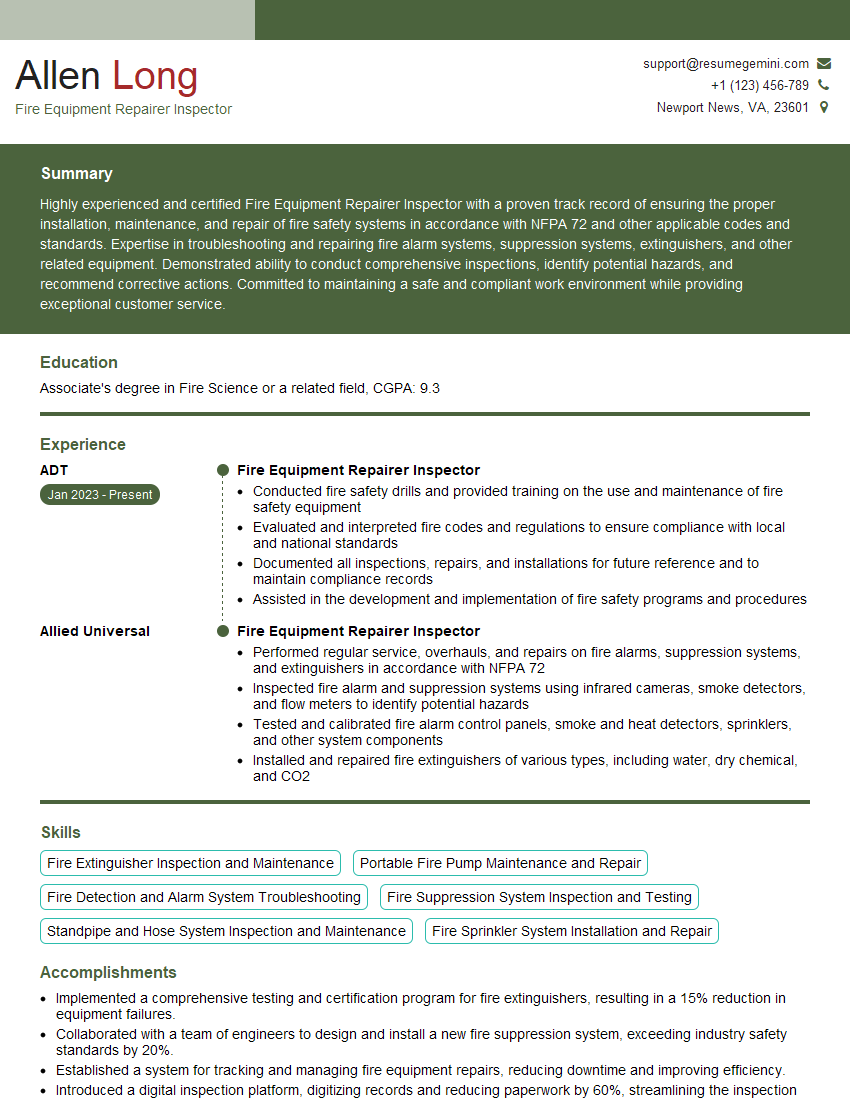
Ever felt underprepared for that crucial job interview? Or perhaps you’ve landed the interview but struggled to articulate your skills and experiences effectively? Fear not! We’ve got you covered. In this blog post, we’re diving deep into the Fire Equipment Repairer Inspector interview questions that you’re most likely to encounter. But that’s not all. We’ll also provide expert insights into the key responsibilities of a Fire Equipment Repairer Inspector so you can tailor your answers to impress potential employers.
Acing the interview is crucial, but landing one requires a compelling resume that gets you noticed. Crafting a professional document that highlights your skills and experience is the first step toward interview success. ResumeGemini can help you build a standout resume that gets you called in for that dream job.






Essential Interview Questions For Fire Equipment Repairer Inspector
1. Explain the process of inspecting a fire sprinkler system?
The process of inspecting a fire sprinkler system involves several key steps:
- Visual Inspection: Inspect the sprinkler heads, piping, valves, and other components for any signs of damage, corrosion, or leaks.
- Operational Testing: Test the sprinkler heads to ensure they are flowing properly and have adequate water pressure.
- Flow Testing: Measure the flow rate and pressure of the water flowing through the system to ensure it meets the design requirements.
- Hydrostatic Testing: Test the piping system by applying higher-than-normal water pressure to check for leaks or weaknesses.
- Documentation: Complete inspection reports and tag the inspected components with the date and any findings.
2. What are the common faults and troubleshooting steps for a fire alarm system?
Electrical Faults:
- Check for loose connections or damaged wires.
- Test batteries and replace if necessary.
- Verify the power supply and circuit breakers.
Sensor Faults:
- Clean or replace smoke detectors and heat detectors.
- Test sprinkler waterflow switches for proper operation.
- Verify the alignment and positioning of sensors.
Panel Faults:
- Reset the fire alarm panel and check for error codes.
- Inspect for damaged components or faulty displays.
- Update software and firmware if necessary.
3. How do you determine the appropriate size of a fire extinguisher for a particular hazard?
The appropriate size of a fire extinguisher is determined based on the following factors:
- Class of Fire: Identify the type of fire (A, B, C, D, or K) based on the materials involved.
- Occupancy Type: Consider the size and type of the building or area where the extinguisher will be used.
- Potential Fire Load: Estimate the amount of combustible materials present in the area.
- Fire Protection Codes: Refer to relevant codes and standards, such as NFPA 10, to determine the required extinguisher rating.
4. Describe the steps involved in recharging a dry chemical fire extinguisher?
Recharging a dry chemical fire extinguisher requires the following steps:
- Depressurize the Extinguisher: Use the discharge lever to release any remaining pressure.
- Remove the Valve Assembly: Unscrew the valve assembly at the top of the extinguisher.
- Empty the Extinguishing Agent: Pour out the remaining dry chemical powder.
- Refill with Dry Chemical: Use a specialized filling machine to refill the extinguisher with the appropriate type and amount of dry chemical powder.
- Reassemble the Extinguisher: Screw the valve assembly back onto the extinguisher and tighten it securely.
- Pressurize the Extinguisher: Use a nitrogen cylinder to pressurize the extinguisher according to the manufacturer’s instructions.
5. What are the key safety precautions to observe when working with fire extinguishing agents?
Key safety precautions include:
- Wear appropriate personal protective equipment (PPE), including gloves, safety glasses, and a respirator if necessary.
- Work in a well-ventilated area to avoid inhaling fumes.
- Handle and store extinguishing agents according to manufacturer’s instructions.
- Be aware of the potential for static electricity and follow proper grounding procedures.
- Avoid direct contact with extinguishing agents, as they can cause skin or eye irritation.
6. Explain the different types of fire detection systems and their applications.
Smoke Detection Systems:
- Ideal for detecting smoke particles, suitable for areas with potential smoldering fires.
Heat Detection Systems:
- Detect changes in temperature, ideal for areas where fast-burning fires are likely.
Flame Detection Systems:
- Sense light emitted by flames, suitable for areas where rapid detection is crucial.
Combination Detection Systems:
- Combine multiple detection technologies to provide comprehensive protection.
7. Describe the hazards associated with working with compressed gas fire extinguishers?
Hazards include:
- High Pressure: Compressed gas canisters are under high pressure, posing a risk of explosion if handled improperly.
- Asphyxiation: Inhaling compressed gases can displace oxygen, leading to asphyxiation.
- Frostbite: Rapid release of compressed gases can cause frostbite.
- Physical Injury: Incorrect handling can result in physical injuries, such as lacerations or punctures.
8. What are the preventive maintenance tasks for fire hydrants and standpipes?
Preventive maintenance includes:
- Visual Inspection: Check for damage, corrosion, or obstructions.
- Flow Testing: Conduct flow tests to ensure adequate water pressure and flow rate.
- Lubrication: Lubricate moving parts to prevent seizing.
- Valve Operation: Test and operate valves to ensure proper functioning.
- Cap and Chain Inspection: Check the condition of the caps and chains.
9. How do you evaluate the effectiveness of a fire alarm system?
Effectiveness evaluation includes:
- Inspection: Verify that all components are in good condition and meet code requirements.
- Testing: Conduct regular tests to simulate fire conditions and monitor system response.
- Documentation: Review inspection and test reports to identify any deficiencies or areas for improvement.
- Feedback: Gather feedback from users and stakeholders to assess system performance and identify potential enhancements.
10. Describe the role of fire safety regulations in ensuring fire equipment compliance?
Fire safety regulations play a crucial role in ensuring compliance by:
- Establishing Standards: Regulations set minimum standards for fire equipment design, installation, and maintenance.
- Enforcement: Authorities enforce regulations through inspections and penalties for non-compliance.
- Safety Assurance: Compliance with regulations ensures that fire equipment is reliable and meets safety requirements.
- Insurance Compliance: Insurance companies require compliance with fire safety regulations to provide coverage.
Interviewers often ask about specific skills and experiences. With ResumeGemini‘s customizable templates, you can tailor your resume to showcase the skills most relevant to the position, making a powerful first impression. Also check out Resume Template specially tailored for Fire Equipment Repairer Inspector.
Career Expert Tips:
- Ace those interviews! Prepare effectively by reviewing the Top 50 Most Common Interview Questions on ResumeGemini.
- Navigate your job search with confidence! Explore a wide range of Career Tips on ResumeGemini. Learn about common challenges and recommendations to overcome them.
- Craft the perfect resume! Master the Art of Resume Writing with ResumeGemini’s guide. Showcase your unique qualifications and achievements effectively.
- Great Savings With New Year Deals and Discounts! In 2025, boost your job search and build your dream resume with ResumeGemini’s ATS optimized templates.
Researching the company and tailoring your answers is essential. Once you have a clear understanding of the Fire Equipment Repairer Inspector‘s requirements, you can use ResumeGemini to adjust your resume to perfectly match the job description.
Key Job Responsibilities
Fire Equipment Repairer Inspectors play a crucial role in ensuring the safety of the community by maintaining and inspecting fire equipment.
1. Inspection and Maintenance
Inspect, test, and maintain a variety of fire equipment, including fire extinguishers, sprinkler systems, and alarms.
- Verify the functionality and accuracy of equipment.
- Identify potential hazards or non-compliance issues.
2. Repair and Calibration
Repair and calibrate defective or malfunctioning fire equipment.
- Troubleshoot and identify the root cause of equipment failures.
- Follow industry standards and manufacturer guidelines for repairs.
3. Record Keeping
Accurately document inspection, testing, and repair activities.
- Maintain detailed logs and reports for each piece of equipment.
- Report any non-compliant or potentially hazardous conditions.
4. Training and Education
Provide training and education to personnel responsible for operating and maintaining fire equipment.
- Conduct hands-on demonstrations and theoretical presentations.
- Instruct on proper use, storage, and maintenance of equipment.
Interview Tips
Preparing for an interview for a Fire Equipment Repairer Inspector position requires a combination of technical knowledge and interpersonal skills.
1. Research the Industry
Familiarize yourself with the latest industry standards, regulations, and best practices for fire equipment inspection and maintenance.
- Review industry publications and attend conferences.
- Stay informed about new technologies and advancements in the field.
2. Highlight Your Experience and Qualifications
Emphasize your hands-on experience in inspecting, repairing, and calibrating fire equipment.
- Quantify your accomplishments with specific examples.
- Describe how your skills and knowledge have contributed to ensuring safety in your previous roles.
3. Demonstrate Problem-Solving Abilities
Fire Equipment Repairer Inspectors often encounter challenging and critical situations. Highlight your ability to identify, analyze, and resolve problems effectively.
- Provide examples of how you have identified potential hazards and implemented corrective actions.
- Explain how you prioritize and manage multiple responsibilities under pressure.
4. Communication and Teamwork
Interact with a wide range of individuals, including fire personnel, building owners, and maintenance staff. Showcase your communication skills and ability to work effectively in a team environment.
- Describe experiences where you have successfully communicated technical information to non-technical audiences.
- Highlight your ability to build strong relationships and collaborate with others.
Next Step:
Now that you’re armed with interview-winning answers and a deeper understanding of the Fire Equipment Repairer Inspector role, it’s time to take action! Does your resume accurately reflect your skills and experience for this position? If not, head over to ResumeGemini. Here, you’ll find all the tools and tips to craft a resume that gets noticed. Don’t let a weak resume hold you back from landing your dream job. Polish your resume, hit the “Build Your Resume” button, and watch your career take off! Remember, preparation is key, and ResumeGemini is your partner in interview success.