Are you gearing up for an interview for a Funeral Director/Embalmer position? Whether you’re a seasoned professional or just stepping into the role, understanding what’s expected can make all the difference. In this blog, we dive deep into the essential interview questions for Funeral Director/Embalmer and break down the key responsibilities of the role. By exploring these insights, you’ll gain a clearer picture of what employers are looking for and how you can stand out. Read on to equip yourself with the knowledge and confidence needed to ace your next interview and land your dream job!
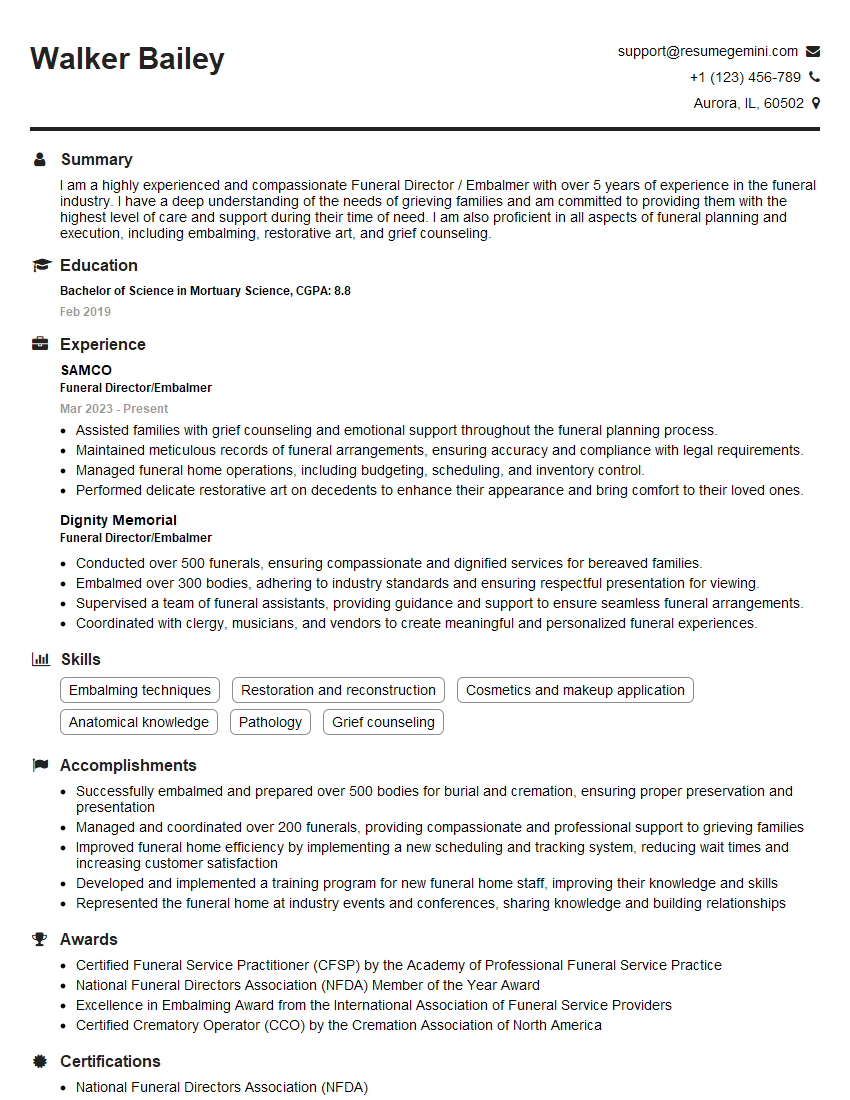
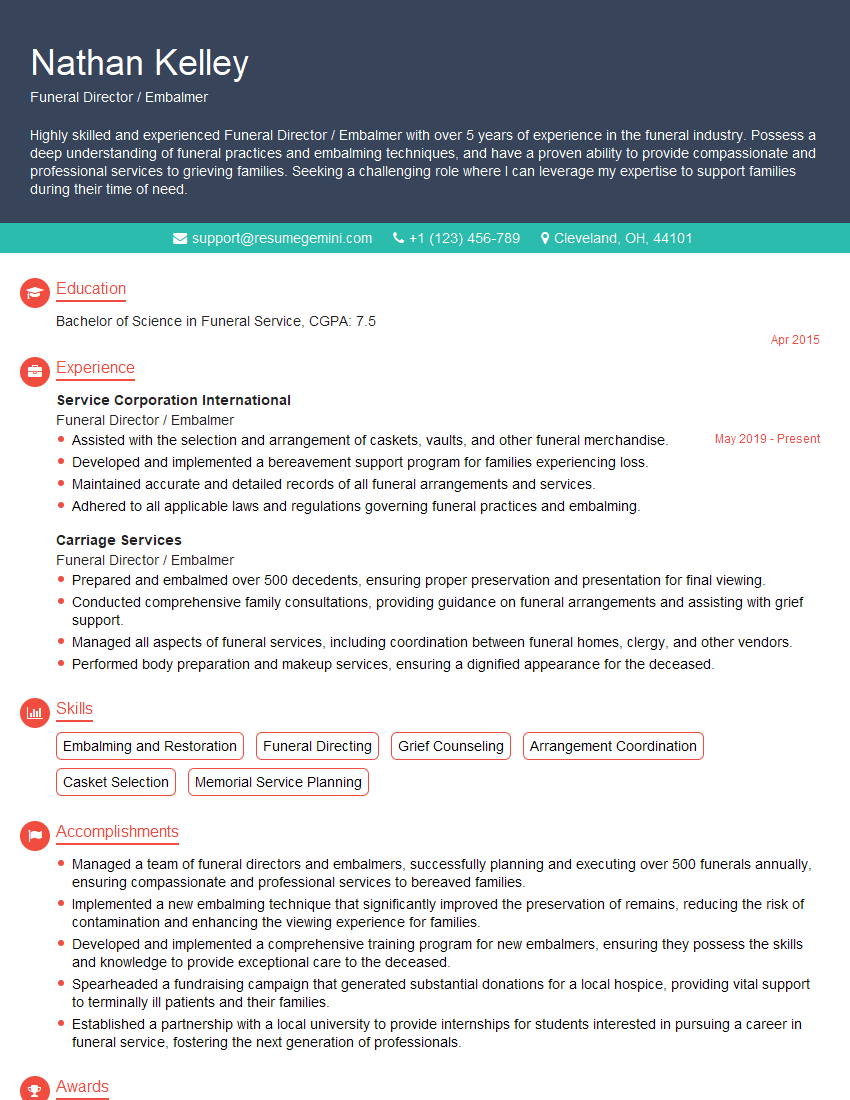
Acing the interview is crucial, but landing one requires a compelling resume that gets you noticed. Crafting a professional document that highlights your skills and experience is the first step toward interview success. ResumeGemini can help you build a standout resume that gets you called in for that dream job.






Essential Interview Questions For Funeral Director/Embalmer
1. Describe the key steps involved in the embalming process?
- Create an incision in the carotid artery and jugular vein.
- Drain blood and replace it with embalming fluid.
- Massage the body to distribute the fluid evenly.
- Inject embalming fluid into the cavities of the body.
- Close the incision and dress the body.
2. What are the different types of embalming fluids used? What are the advantages and disadvantages of each?
Chemical embalming fluids
- Advantages:
- Effective in preserving the body.
- Relatively inexpensive.
- Easy to use.
- Disadvantages:
- Can be harsh on the skin and tissues.
- Can cause discoloration of the skin.
- Can be harmful to the environment.
Natural embalming fluids
- Advantages:
- Gentler on the skin and tissues.
- Less likely to cause discoloration of the skin.
- More environmentally friendly.
- Disadvantages:
- Not as effective in preserving the body as chemical embalming fluids.
- More expensive than chemical embalming fluids.
- More difficult to use.
3. What are the ethical considerations that funeral directors and embalmers must be aware of?
- Respect for the deceased and their family.
- Confidentiality of information.
- Proper handling of human remains.
- Compliance with all applicable laws and regulations.
4. What are the challenges of working as a funeral director or embalmer?
- Emotional toll of dealing with death and grief.
- Physical demands of the job.
- Working irregular hours.
- Dealing with difficult family members.
5. What are the rewards of working as a funeral director or embalmer?
- Helping families through a difficult time.
- Making a difference in the lives of others.
- Learning about different cultures and religions.
- Being part of a close-knit community.
6. What are the different types of funeral services that you offer?
- Traditional funeral services
- Memorial services
- Cremation services
- Graveside services
- Direct cremation
7. What is the importance of pre-planning a funeral?
- Relieves the burden on family members.
- Ensures that your wishes are followed.
- Can save money.
- Provides peace of mind.
8. What are the different types of funeral merchandise that you sell?
- Caskets
- Urns
- Vaults
- Headstones
- Burial clothing
9. What are the different payment options that you offer?
- Cash
- Check
- Credit card
- Debit card
- Financing
10. What is your favorite part of working as a funeral director or embalmer?
- Helping families through a difficult time.
- Making a difference in the lives of others.
- Learning about different cultures and religions.
- Being part of a close-knit community.
Interviewers often ask about specific skills and experiences. With ResumeGemini‘s customizable templates, you can tailor your resume to showcase the skills most relevant to the position, making a powerful first impression. Also check out Resume Template specially tailored for Funeral Director/Embalmer.
Career Expert Tips:
- Ace those interviews! Prepare effectively by reviewing the Top 50 Most Common Interview Questions on ResumeGemini.
- Navigate your job search with confidence! Explore a wide range of Career Tips on ResumeGemini. Learn about common challenges and recommendations to overcome them.
- Craft the perfect resume! Master the Art of Resume Writing with ResumeGemini’s guide. Showcase your unique qualifications and achievements effectively.
- Great Savings With New Year Deals and Discounts! In 2025, boost your job search and build your dream resume with ResumeGemini’s ATS optimized templates.
Researching the company and tailoring your answers is essential. Once you have a clear understanding of the Funeral Director/Embalmer‘s requirements, you can use ResumeGemini to adjust your resume to perfectly match the job description.
Key Job Responsibilities
Funeral Directors/Embalmers are responsible for various tasks involving the preparation and burial or cremation of deceased individuals. Key job responsibilities include:1. Funeral Planning
Meet with family members and discuss funeral arrangements, including type of service, music, and burial site.
- Plan and coordinate funeral services and ceremonies.
- Obtain necessary permits and documents.
2. Embalming and Body Preparation
Prepare deceased individuals for viewing by embalming and applying cosmetics.
- Embalm bodies to prevent decomposition.
- Restore the deceased’s appearance through restorative art.
3. Funeral Management
Oversee all aspects of the funeral service, including logistics and coordination with third-party vendors.
- Coordinate with clergy, funeral home staff, and other professionals.
- Manage funeral services and visitation hours.
4. Grief Counseling and Support
Provide emotional support and guidance to grieving families.
- Counsel families and assist them in coping with their loss.
- Offer resources and support services to bereaved individuals.
Interview Tips
To ace the Funeral Director/Embalmer interview, consider the following tips:1. Research the Funeral Home
Familiarize yourself with the funeral home’s history, services, and clientele.
- Review their website and social media pages.
- Read online reviews from families who have used their services.
2. Practice Your Communication Skills
Grieving families often need emotional support and guidance. Demonstrate your ability to communicate effectively.
- Emphasize your active listening skills and empathy.
- Prepare examples of how you have supported families in difficult times.
3. Highlight Your Technical Skills
Showcase your knowledge and experience in embalming and funeral planning procedures.
- Discuss your training and experience in mortuary science.
- Describe your proficiency in embalming techniques and restorative art.
4. Be Professional and Respectful
Funerals are solemn occasions, so dress appropriately and maintain a professional demeanor.
- Wear suitable attire such as a black suit or dress.
- Maintain eye contact, be respectful, and avoid interrupting.
5. Prepare Sample Questions
Asking thoughtful questions shows your interest in the position.
- About the funeral home’s philosophy and approach to grief counseling.
- About opportunities for professional development and training.
Next Step:
Armed with this knowledge, you’re now well-equipped to tackle the Funeral Director/Embalmer interview with confidence. Remember, a well-crafted resume is your first impression. Take the time to tailor your resume to highlight your relevant skills and experiences. And don’t forget to practice your answers to common interview questions. With a little preparation, you’ll be on your way to landing your dream job. So what are you waiting for? Start building your resume and start applying! Build an amazing resume with ResumeGemini.