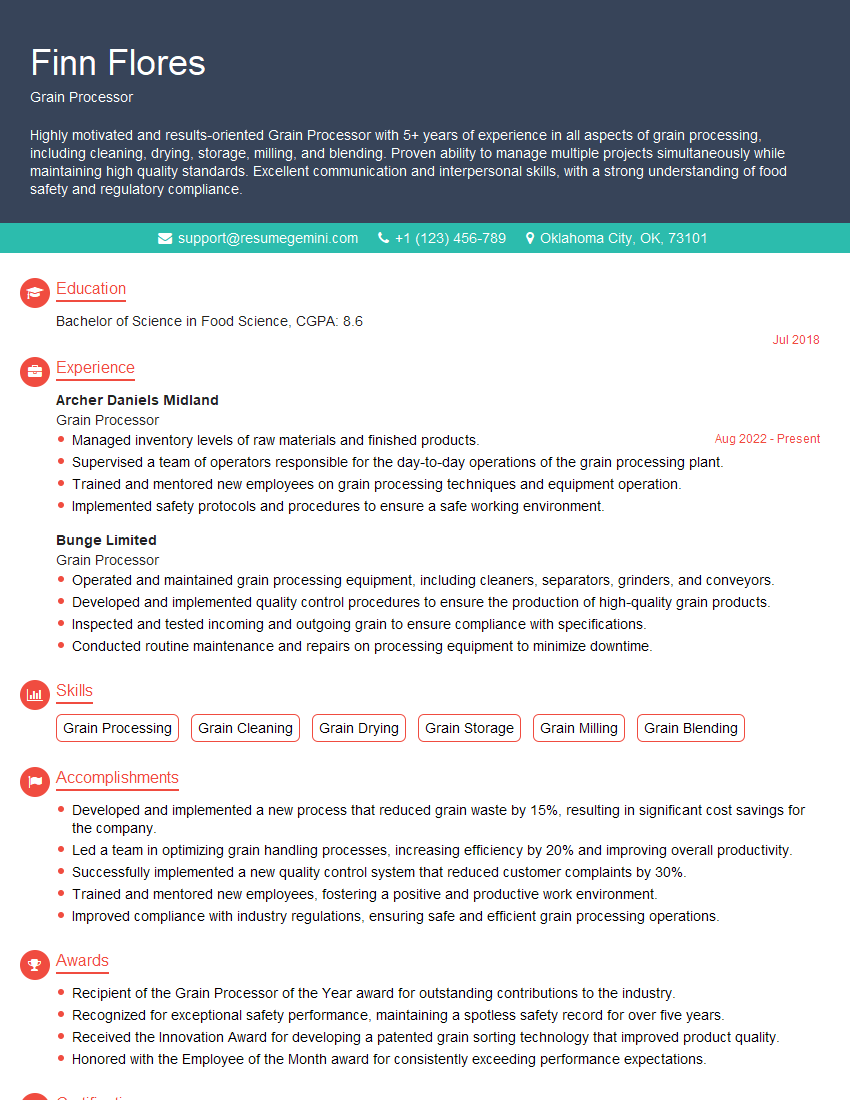
Ever felt underprepared for that crucial job interview? Or perhaps you’ve landed the interview but struggled to articulate your skills and experiences effectively? Fear not! We’ve got you covered. In this blog post, we’re diving deep into the Grain Processor interview questions that you’re most likely to encounter. But that’s not all. We’ll also provide expert insights into the key responsibilities of a Grain Processor so you can tailor your answers to impress potential employers.
Acing the interview is crucial, but landing one requires a compelling resume that gets you noticed. Crafting a professional document that highlights your skills and experience is the first step toward interview success. ResumeGemini can help you build a standout resume that gets you called in for that dream job.






Essential Interview Questions For Grain Processor
1. Describe the key steps involved in the grain processing operations?
The key steps involved in the grain processing operations include:
- Receiving and inspecting the grain
- Cleaning and sorting the grain
- Tempering the grain
- Milling the grain
- Packaging and storing the finished products
2. Explain the importance of grain cleaning and how different cleaning methods are used?
Cleaning process
- Removes impurities such as dirt, dust, stones, and other foreign materials
- Improves the quality and safety of the finished products
- Increases the efficiency of subsequent processing steps
Cleaning methods
- Screening: Uses screens to separate particles based on size
- Aspiration: Uses air to remove lighter impurities
- Magnetic separation: Removes ferrous metals
- Gravity separation: Uses gravity to separate particles based on density
3. What are the different types of grain milling processes and their applications?
The different types of grain milling processes include:
- Dry milling: Used to produce whole-wheat flour, bran, and germ
- Wet milling: Used to produce starch, gluten, and other products
- Roller milling: Used to produce white flour
- Stone milling: Used to produce stone-ground flour
4. Describe the factors that affect the quality of the finished grain products?
The factors that affect the quality of the finished grain products include:
- The quality of the raw grain
- The processing conditions
- The packaging and storage conditions
- The variety of grain
- The moisture content
- The level of impurities
5. How do you ensure the safety and quality of grain products throughout the processing operations?
- Implementing Good Manufacturing Practices (GMPs)
- Conducting regular inspections and audits
- Using Hazard Analysis and Critical Control Points (HACCP) plans
- Testing and monitoring products at various stages of processing
- Maintaining proper storage and handling conditions
6. What are the common challenges faced in grain processing operations and how do you overcome them?
- Contamination: Implement strict cleaning and sanitation procedures, use HACCP plans
- Pest infestation: Implement pest control measures, maintain proper storage conditions
- Equipment breakdowns: Regularly maintain and inspect equipment, have spare parts available
- Product quality variations: Monitor processing conditions, use quality control procedures
- Safety hazards: Implement safety protocols, provide training to employees
7. Explain the role of technology in modern grain processing operations?
- Automated machinery: Improves efficiency, reduces labor costs
- Sensors and monitoring systems: Real-time data collection, process control
- Computer software: Data analysis, process optimization
- Robotics: Handling and packaging tasks
- Artificial intelligence (AI): Predictive maintenance, quality control
8. Describe your experience in troubleshooting and resolving grain processing issues?
Provide specific examples of issues encountered and the steps taken to resolve them, highlighting technical skills and problem-solving abilities.
9. How do you stay updated with the latest advancements in grain processing technology?
- Attending industry conferences and workshops
- Reading trade publications and research papers
- Networking with other professionals
- Seeking training and certification opportunities
10. What are your goals for professional development in the grain processing industry?
- Acquire specialized knowledge in a particular area of grain processing
- Advance to a managerial role with increased responsibilities
- Contribute to the industry through research and development
Interviewers often ask about specific skills and experiences. With ResumeGemini‘s customizable templates, you can tailor your resume to showcase the skills most relevant to the position, making a powerful first impression. Also check out Resume Template specially tailored for Grain Processor.
Career Expert Tips:
- Ace those interviews! Prepare effectively by reviewing the Top 50 Most Common Interview Questions on ResumeGemini.
- Navigate your job search with confidence! Explore a wide range of Career Tips on ResumeGemini. Learn about common challenges and recommendations to overcome them.
- Craft the perfect resume! Master the Art of Resume Writing with ResumeGemini’s guide. Showcase your unique qualifications and achievements effectively.
- Great Savings With New Year Deals and Discounts! In 2025, boost your job search and build your dream resume with ResumeGemini’s ATS optimized templates.
Researching the company and tailoring your answers is essential. Once you have a clear understanding of the Grain Processor‘s requirements, you can use ResumeGemini to adjust your resume to perfectly match the job description.
Key Job Responsibilities
Grain Processors are responsible for the processing of grains, including wheat, corn, soybeans, and rice. They operate and maintain grain processing equipment, monitor the processing operation, and ensure that the grain is processed to the desired specifications.
1. Operating and Maintaining Grain Processing Equipment
Grain Processors operate and maintain a variety of grain processing equipment, including grain cleaners, dryers, mills, and conveyors. They must be familiar with the operation of each piece of equipment and be able to troubleshoot and repair any problems that may occur.
- Operate grain cleaners to remove foreign material from the grain
- Operate grain dryers to remove moisture from the grain
- Operate grain mills to grind the grain into flour or meal
- Operate grain conveyors to move the grain from one location to another
- Maintain grain processing equipment to ensure that it is operating properly
2. Monitoring the Processing Operation
Grain Processors monitor the grain processing operation to ensure that the grain is being processed to the desired specifications. They check the moisture content, temperature, and other quality factors of the grain. They also monitor the operation of the equipment to ensure that it is operating properly.
- Check the moisture content of the grain
- Check the temperature of the grain
- Check the other quality factors of the grain
- Monitor the operation of the equipment
3. Ensuring that the Grain is Processed to the Desired Specifications
Grain Processors ensure that the grain is processed to the desired specifications. They adjust the settings of the equipment and make other changes as necessary to ensure that the grain meets the customer’s requirements.
- Adjust the settings of the equipment
- Make other changes as necessary
- Ensure that the grain meets the customer’s requirements
4. Other Responsibilities
Grain Processors may also be responsible for other tasks, such as:
- Loading and unloading grain
- Cleaning and maintaining the grain processing area
- Keeping records of the grain processing operation
Interview Tips
Here are some tips to help you ace your interview for a Grain Processor position:
1. Research the Company and the Position
Before your interview, take some time to research the company and the position you are applying for. This will help you understand the company’s culture and values, and it will also help you answer questions about the position and your qualifications.
- Visit the company’s website
- Read the job description
- Look for news articles and other information about the company
2. Practice Answering Common Interview Questions
There are a number of common interview questions that you can expect to be asked, such as “Tell me about yourself” and “Why are you interested in this position?” It is helpful to practice answering these questions in advance so that you can deliver your answers confidently and concisely.
- Use the STAR method to answer behavioral questions
- Be specific and provide examples
- Tailor your answers to the job description
3. Be Prepared to Talk About Your Experience
The interviewer will want to know about your experience in the grain processing industry. Be prepared to talk about your skills and knowledge, and be sure to highlight any experience that is relevant to the position you are applying for.
- Highlight your skills and knowledge
- Be specific and provide examples
- Tailor your answers to the job description
4. Be Enthusiastic and Professional
The interviewer will be looking for someone who is enthusiastic about the grain processing industry and who is a good fit for the company culture. Be yourself, but be sure to project a professional and positive image.
- Be yourself
- Be positive and enthusiastic
- Dress professionally
Next Step:
Armed with this knowledge, you’re now well-equipped to tackle the Grain Processor interview with confidence. Remember, preparation is key. So, start crafting your resume, highlighting your relevant skills and experiences. Don’t be afraid to tailor your application to each specific job posting. With the right approach and a bit of practice, you’ll be well on your way to landing your dream job. Build your resume now from scratch or optimize your existing resume with ResumeGemini. Wish you luck in your career journey!