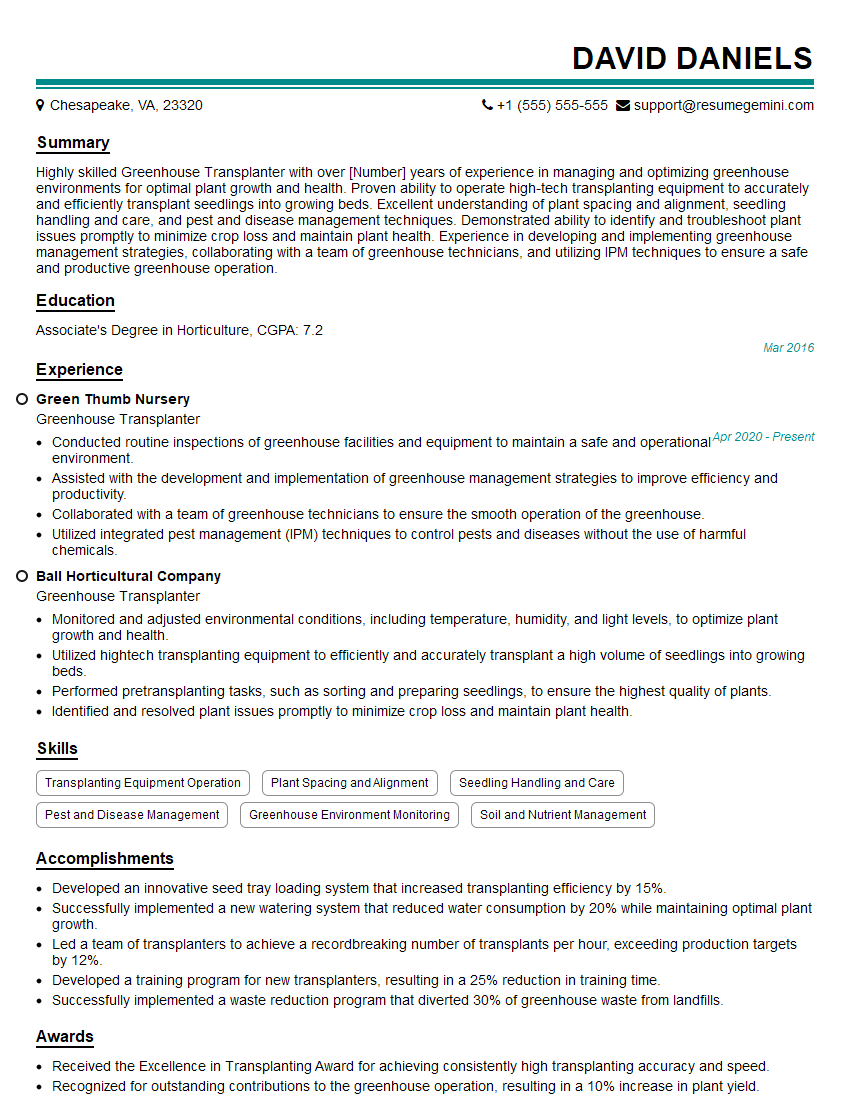
Are you gearing up for an interview for a Greenhouse Transplanter position? Whether you’re a seasoned professional or just stepping into the role, understanding what’s expected can make all the difference. In this blog, we dive deep into the essential interview questions for Greenhouse Transplanter and break down the key responsibilities of the role. By exploring these insights, you’ll gain a clearer picture of what employers are looking for and how you can stand out. Read on to equip yourself with the knowledge and confidence needed to ace your next interview and land your dream job!
Acing the interview is crucial, but landing one requires a compelling resume that gets you noticed. Crafting a professional document that highlights your skills and experience is the first step toward interview success. ResumeGemini can help you build a standout resume that gets you called in for that dream job.






Essential Interview Questions For Greenhouse Transplanter
1. Describe the process of transplanting seedlings into a greenhouse using a mechanical transplanter?
- Prepare the seedlings by ensuring they are healthy and have a well-developed root system.
- Set up the mechanical transplanter according to the manufacturer’s instructions, including adjusting the spacing and depth settings.
- Load the seedlings into the transplanter’s trays or belts.
- Operate the transplanter, guiding it along the desired rows and spacing.
- Monitor the transplanting process, ensuring the seedlings are placed at the correct depth and spacing, and that the soil is properly firmed around them.
- Water the transplanted seedlings as needed to help them establish and reduce transplant shock.
2. Explain the different types of greenhouse transplanters available?
Types of Greenhouse Transplanters
- Semi-Automatic Transplanters: Require a human operator to place seedlings into the machine, which then automatically transplants them into the soil.
- Fully-Automatic Transplanters: Use a robotic arm or other automated system to pick up and transplant seedlings without human intervention.
- Drum Transplanters: Utilize a rotating drum with cups that hold seedlings, which are then pressed into the soil at specific intervals.
- Belt Transplanters: Conveyor belts carry seedlings to the transplanting position, where they are often dropped or pressed into the soil.
3. How do you determine the optimal spacing and depth for transplanting seedlings in a greenhouse?
- Consider the specific crop and cultivar being transplanted, as they may have different spacing and depth requirements.
- Research recommended spacing and depth guidelines from reputable sources, such as seed catalogs, agricultural extension services, or greenhouse manuals.
- Conduct trials or observe experienced growers to determine the optimal spacing and depth for your specific greenhouse conditions and crop.
- Adjust spacing and depth based on factors such as plant size, ventilation, and light availability.
4. How do you troubleshoot common problems that occur during greenhouse transplanting?
- Seedling damage: Ensure the transplanter is properly adjusted and calibrated, and that it is not damaging seedlings during the transplanting process.
- Poor soil conditions: The soil should be well-prepared, loose, and free of large clumps or debris that can hinder transplanting.
- Insufficient watering: Water the seedlings both before and after transplanting to help them establish and reduce transplant shock.
- Transplanting at an incorrect time: Avoid transplanting seedlings during extreme temperatures or when the soil is too wet or too dry.
5. How do you maintain and calibrate a greenhouse transplanter?
- Regular cleaning: Remove soil and debris from the transplanter after each use to prevent clogging and ensure proper operation.
- Lubrication: Lubricate moving parts according to the manufacturer’s instructions to reduce wear and tear.
- Calibration: Calibrate the transplanter periodically to ensure it is accurately placing seedlings at the correct spacing and depth.
- Inspecting and replacing parts: Regularly inspect the transplanter for worn or damaged parts, and replace them as needed.
6. What are the safety precautions to follow when operating a greenhouse transplanter?
- Wear appropriate safety gear, such as gloves, safety glasses, and earplugs, when operating the transplanter.
- Inspect the transplanter thoroughly before each use to ensure it is in good working condition.
- Operate the transplanter on a stable and level surface.
- Keep hands and other body parts away from moving parts of the transplanter.
- Follow the manufacturer’s instructions and safety guidelines for operating the transplanter safely.
7. How do you ensure the accuracy and efficiency of a greenhouse transplanting operation?
- Properly calibrated transplanter: Ensure the transplanter is accurately placing seedlings at the correct spacing and depth.
- Experienced operator: Train operators on the correct operating procedures and techniques.
- Quality seedlings: Use healthy and well-developed seedlings to minimize transplanting failures.
- Optimal environmental conditions: Transplant seedlings during favorable weather conditions and maintain proper temperature and humidity in the greenhouse.
- Regular maintenance and inspection: Keep the transplanter in good working condition through regular maintenance and inspections.
8. Describe the importance of proper greenhouse transplanting techniques for crop production?
- Uniform plant spacing: Proper transplanting ensures uniform plant spacing, which promotes optimal growth, reduces competition, and improves yield.
- Correct depth: Transplanting seedlings at the correct depth allows for proper root development and nutrient uptake.
- Reduced transplant shock: Minimizing transplant shock by handling seedlings carefully and watering them adequately helps plants establish quickly and reduce losses.
- Increased productivity: Optimized transplanting techniques contribute to increased crop productivity and profitability.
9. How do you stay up-to-date on the latest greenhouse transplanting technologies and best practices?
- Attend industry conferences and workshops: Participate in events where experts and manufacturers showcase new technologies and discuss best practices.
- Read industry publications and journals: Stay informed about the latest research and innovations in greenhouse transplanting.
- Network with other professionals: Connect with greenhouse growers and professionals to exchange knowledge and learn about their experiences with different technologies.
- Online resources: Utilize reputable websites and online platforms to access information on greenhouse transplanting techniques and technologies.
10. How would you contribute to the efficiency and effectiveness of our greenhouse transplanting operations?
- My expertise in transplanting techniques: Utilize my knowledge of optimal spacing, depth, and handling practices to ensure accurate and efficient transplanting.
- Attention to detail: Perform transplanting operations with precision and care to minimize errors and seedling damage.
- Continuous improvement: Actively seek opportunities to improve transplanting processes, including researching new technologies and sharing knowledge with colleagues.
- Teamwork and collaboration: Work effectively as part of a team to ensure smooth and efficient greenhouse operations.
Interviewers often ask about specific skills and experiences. With ResumeGemini‘s customizable templates, you can tailor your resume to showcase the skills most relevant to the position, making a powerful first impression. Also check out Resume Template specially tailored for Greenhouse Transplanter.
Career Expert Tips:
- Ace those interviews! Prepare effectively by reviewing the Top 50 Most Common Interview Questions on ResumeGemini.
- Navigate your job search with confidence! Explore a wide range of Career Tips on ResumeGemini. Learn about common challenges and recommendations to overcome them.
- Craft the perfect resume! Master the Art of Resume Writing with ResumeGemini’s guide. Showcase your unique qualifications and achievements effectively.
- Great Savings With New Year Deals and Discounts! In 2025, boost your job search and build your dream resume with ResumeGemini’s ATS optimized templates.
Researching the company and tailoring your answers is essential. Once you have a clear understanding of the Greenhouse Transplanter‘s requirements, you can use ResumeGemini to adjust your resume to perfectly match the job description.
Key Job Responsibilities
A Greenhouse Transplanter plays a crucial role in the cultivation process of greenhouse plants by transplanting seedlings into their final growing containers. Their responsibilities encompass a wide range of tasks that ensure the proper growth and development of the plants.
1. Seedling Handling and Transplanting
The primary responsibility involves carefully handling and transplanting fragile seedlings. They gently remove seedlings from seed trays and skillfully transfer them into larger pots or containers, ensuring proper root placement and depth.
2. Plant Care and Monitoring
Greenhouse Transplanters are responsible for providing necessary care to the transplanted seedlings. They monitor plant growth, water them regularly, and maintain the appropriate temperature and humidity levels. They promptly identify any signs of disease or pests and take timely action to prevent the spread of problems.
3. Tray and Container Preparation
Prior to transplanting, they prepare the growing containers by filling them with the appropriate potting mix or substrate. They ensure that the trays are clean and sanitized to prevent contamination.
4. Greenhouse Maintenance
Greenhouse Transplanters contribute to maintaining a clean and organized greenhouse environment. They remove debris, clean work surfaces, and keep equipment in good working condition.
5. Data Recording and Reporting
They accurately record and maintain data related to transplanting activities, including the number of seedlings transplanted, plant spacing, and any observations or issues encountered. This information is used for quality control and tracking plant progress.
Interview Tips
Preparing thoroughly for a Greenhouse Transplanter interview can significantly increase your chances of success. Here are some essential tips and hacks to help you ace the interview.
1. Research the Company and Role
Familiarize yourself with the company’s background, mission, and values. Research the specific greenhouse operation and the role of a Greenhouse Transplanter within that context. This knowledge will enable you to demonstrate your understanding of the industry and the position.
2. Highlight Relevant Experience and Skills
Emphasize your prior experience in handling and transplanting plants. Showcase your knowledge of greenhouse practices, including plant care, disease prevention, and environmental control. Highlight any relevant certifications or training you have obtained.
3. Practice Common Interview Questions
Prepare for common interview questions by practicing your responses. Anticipate questions about your plant knowledge, experience, and problem-solving abilities. Consider using the STAR method (Situation, Task, Action, Result) to structure your answers, providing specific examples to demonstrate your skills.
4. Ask Thoughtful Questions
Asking insightful questions during the interview demonstrates your engagement and interest in the position. Prepare questions that delve deeper into the greenhouse operation, the company’s growth plans, and the opportunities for professional development.
5. Dress Professionally and Arrive Punctually
First impressions matter. Dress appropriately for the interview, ensuring your attire is clean and presentable. Punctuality reflects your respect for the interviewer’s time and professionalism.
Next Step:
Armed with this knowledge, you’re now well-equipped to tackle the Greenhouse Transplanter interview with confidence. Remember, preparation is key. So, start crafting your resume, highlighting your relevant skills and experiences. Don’t be afraid to tailor your application to each specific job posting. With the right approach and a bit of practice, you’ll be well on your way to landing your dream job. Build your resume now from scratch or optimize your existing resume with ResumeGemini. Wish you luck in your career journey!