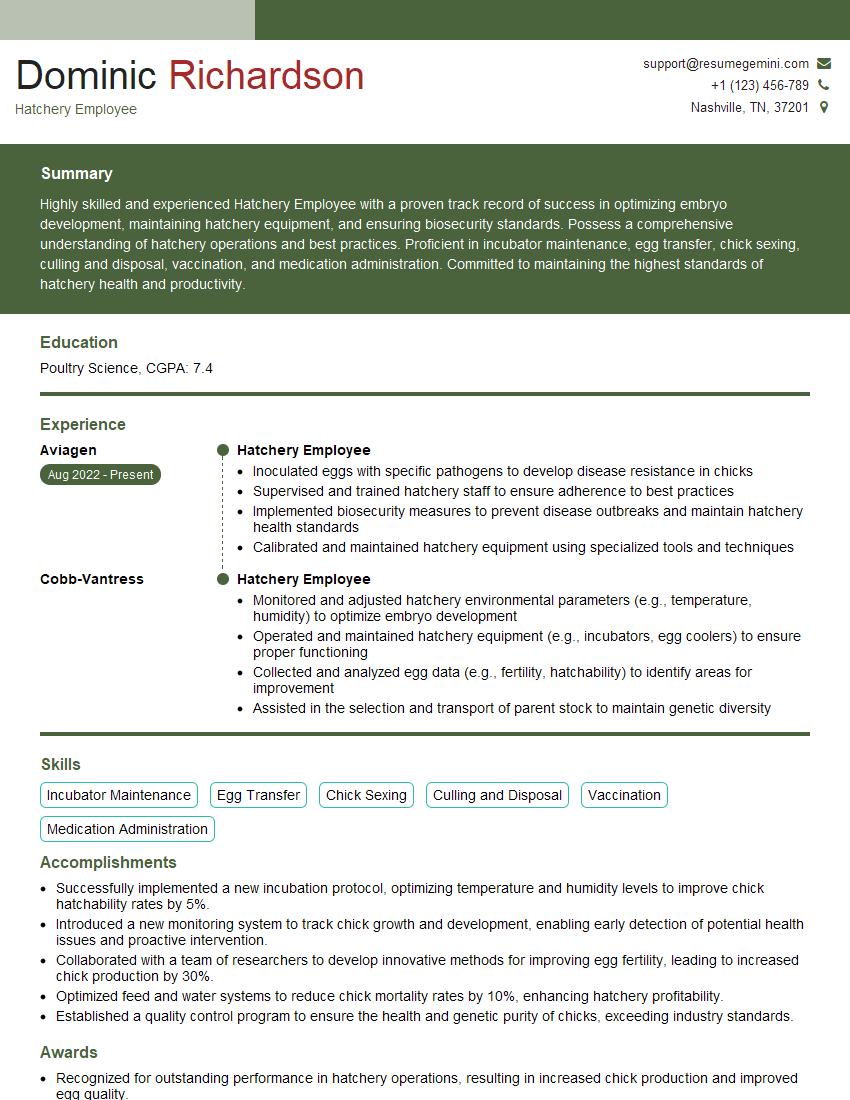
Are you gearing up for a career shift or aiming to ace your next interview? Look no further! We’ve curated a comprehensive guide to help you crack the interview for the coveted Hatchery Employee position. From understanding the key responsibilities to mastering the most commonly asked questions, this blog has you covered. So, buckle up and let’s embark on this journey together
Acing the interview is crucial, but landing one requires a compelling resume that gets you noticed. Crafting a professional document that highlights your skills and experience is the first step toward interview success. ResumeGemini can help you build a standout resume that gets you called in for that dream job.






Essential Interview Questions For Hatchery Employee
1. Describe the process of incubating eggs in a hatchery setting?
The process of incubating eggs in a hatchery involves several key steps:
- Egg collection: Eggs are collected from breeding flocks and carefully selected for incubation based on factors such as size, shape, and shell quality.
- Egg disinfection: Eggs are disinfected using various methods, such as spraying or dipping, to remove any surface contaminants that could harm the developing embryos.
- Egg storage: Eggs are stored in controlled conditions (temperature, humidity) prior to incubation to maintain their viability.
- Incubation: Eggs are placed in incubators, which are specialized machines that provide optimal temperature, humidity, and ventilation conditions for the developing embryos.
- Egg turning: Eggs are turned regularly to prevent the embryo from adhering to the shell membrane and to ensure even development.
- Monitoring: Eggs are monitored throughout the incubation period using techniques such as candling (illuminating the eggs to observe embryo development) and weighing to assess egg weight loss.
- Hatching: At the end of the incubation period, the chicks hatch from the eggs. They are removed from the incubator and placed in brooding facilities.
2. How do you maintain optimal temperature and humidity levels in an incubator?
Temperature control:
- Incubators are equipped with temperature sensors and controllers to maintain a consistent temperature within the required range.
- Temperature is adjusted manually or automatically using heating and cooling systems.
- Monitoring devices are used to ensure temperature accuracy and prevent deviations.
Humidity control:
- Incubators have built-in humidity systems that introduce moisture into the air.
- Humidity levels are controlled by adjusting water reservoirs or humidifiers.
- Hygrometers are used to measure and monitor humidity levels.
3. What are the common challenges faced during the incubation process and how do you address them?
- Embryo mortality: Can be caused by factors such as temperature fluctuations, humidity imbalances, or disease. Address by maintaining optimal conditions, monitoring egg development, and implementing biosecurity measures.
- Egg dehydration: Occurs when eggs lose too much moisture. Address by controlling humidity levels and preventing excessive egg weight loss.
- Bacterial contamination: Can lead to infection and embryo death. Address by implementing strict sanitation and disinfection protocols throughout the incubation process.
- Hatching issues: Chicks may struggle to hatch due to delayed development, incorrect positioning, or weak shells. Address by providing assistance during the hatching process and adjusting incubation parameters if necessary.
4. How do you monitor and evaluate the performance of an incubator?
- Temperature and humidity records: Track daily temperature and humidity readings to ensure consistency with optimal conditions.
- Hatching rates: Calculate the percentage of eggs that successfully hatch to assess incubator performance and identify areas for improvement.
- Chick quality: Observe the health and vigor of chicks after hatching to evaluate the effectiveness of incubation practices.
- Equipment maintenance: Conduct regular inspections and maintenance of incubators to ensure proper functioning and prevent malfunctions.
5. What are the key factors to consider when selecting eggs for incubation?
- Egg size: Larger eggs are more likely to contain viable embryos and produce larger chicks.
- Egg shape: Eggs with uniform shape and smooth shells are preferred.
- Shell quality: Strong, uncracked shells protect the embryo from damage.
- Egg age: Freshly laid eggs have a higher hatching rate compared to older eggs.
- Breed: Different breeds have specific incubation requirements, such as temperature and humidity levels.
6. Describe the role of sanitation and disease prevention in hatchery management?
- Disinfecting equipment: Thoroughly clean and disinfect all equipment, including incubators, trays, and tools, to prevent contamination.
- Egg sanitation: Disinfect eggs upon arrival at the hatchery to reduce the risk of introducing pathogens.
- Biosecurity measures: Implement procedures such as isolation, quarantine, and vaccination to prevent the spread of diseases.
- Waste management: Properly dispose of eggshells, dead embryos, and other waste materials to minimize disease transmission.
- Personnel hygiene: Train staff on proper hygiene practices, including wearing protective clothing and washing hands.
7. How do you ensure genetic diversity within a flock of breeding birds?
- Pedigree management: Maintain detailed records of breeding birds to track their lineage and prevent inbreeding.
- Introduction of new genetic lines: Acquire new birds from different genetic backgrounds to introduce genetic diversity.
- Selective breeding: Breed birds with desirable traits to improve the overall genetic quality of the flock.
- DNA testing: Utilize DNA-based technologies to assess genetic diversity and identify individuals with unique genetic profiles.
8. What is the importance of record-keeping in hatchery management?
- Hatching records: Track the number of eggs incubated, hatched, and discarded to monitor hatchery performance.
- Incubator logs: Maintain records of temperature, humidity, and other incubator parameters to ensure optimal conditions.
- Flock records: Keep records of breeding pairs, egg production, and chick health to assess flock performance and identify areas for improvement.
- Disease monitoring: Document any disease outbreaks, vaccinations, and treatments to track health trends and implement preventive measures.
- Financial records: Track expenses, sales, and profits to ensure financial viability.
9. Describe the different methods used for chick sexing and their advantages and disadvantages?
Venting:
- Advantages: Accurate, can be performed early.
- Disadvantages: Invasive, requires skilled personnel.
Feather sexing:
- Advantages: Non-invasive, can be performed later.
- Disadvantages: Requires experience and can be less accurate.
DNA sexing:
- Advantages: Highly accurate, can be performed even on day-old chicks.
- Disadvantages: More expensive than other methods.
10. How do you manage the waste generated by a hatchery operation?
- Composting: Composting organic waste, such as eggshells and dead embryos, to create a nutrient-rich soil amendment.
- Landfilling: Disposing of non-compostable waste in a sanitary landfill.
- Incineration: Burning waste to reduce its volume and remove pathogens.
- Recycling: Separating and recycling materials such as plastic trays and cardboard boxes.
- Waste minimization: Implementing measures to reduce waste production, such as using reusable materials and optimizing incubator operations.
Interviewers often ask about specific skills and experiences. With ResumeGemini‘s customizable templates, you can tailor your resume to showcase the skills most relevant to the position, making a powerful first impression. Also check out Resume Template specially tailored for Hatchery Employee.
Career Expert Tips:
- Ace those interviews! Prepare effectively by reviewing the Top 50 Most Common Interview Questions on ResumeGemini.
- Navigate your job search with confidence! Explore a wide range of Career Tips on ResumeGemini. Learn about common challenges and recommendations to overcome them.
- Craft the perfect resume! Master the Art of Resume Writing with ResumeGemini’s guide. Showcase your unique qualifications and achievements effectively.
- Great Savings With New Year Deals and Discounts! In 2025, boost your job search and build your dream resume with ResumeGemini’s ATS optimized templates.
Researching the company and tailoring your answers is essential. Once you have a clear understanding of the Hatchery Employee‘s requirements, you can use ResumeGemini to adjust your resume to perfectly match the job description.
Key Job Responsibilities
Hatchery Employees are primarily responsible for the maintenance and operation of hatchery facilities, including the care and management of poultry eggs and chicks.
1. Egg Handling and Incubation
Collect and process eggs from poultry breeders
- Monitor egg quality and determine hatchability
- Operate and maintain incubators to provide optimal conditions for egg development
2. Chick Care and Management
Care for newly hatched chicks, providing them with food, water, and shelter
- Monitor chick health and implement preventive measures
- Record chick growth, mortality, and performance data
3. Hatchery Maintenance and Sanitation
Maintain a clean and sanitary hatchery environment
- Inspect and clean equipment, including incubators, hatchers, and chick brooders
- Implement and follow biosecurity protocols to prevent disease outbreaks
4. Record Keeping and Data Analysis
Maintain accurate records of hatchery operations
- Record egg production, chick production, and mortality data
- Analyze data to identify trends and improve hatchery performance
Interview Tips
Preparing thoroughly for a hatchery employee interview is crucial. Here are some tips to help you ace the interview:
1. Research the Company and Industry
Familiarize yourself with the hatchery’s operations, products, and company culture. Research the poultry industry to understand market trends and industry best practices.
- Visit the hatchery’s website and social media pages
- Read industry publications and attend webinars
2. Highlight Relevant Experience and Skills
Emphasize your experience in handling poultry eggs, caring for chicks, and maintaining hatchery facilities. If you have experience in poultry breeding, incubation techniques, or biosecurity measures, highlight those as well.
- Quantify your accomplishments with specific numbers and metrics
- Use keywords from the job description to tailor your resume and answers
3. Prepare for Common Interview Questions
Practice answering common interview questions related to hatchery operations. Prepare examples that demonstrate your knowledge, skills, and commitment to poultry health and welfare.
- Tell me about your experience in handling and incubating poultry eggs
- How do you ensure the health and well-being of chicks in a hatchery setting?
4. Ask Informed Questions
Asking thoughtful questions at the end of the interview shows your interest in the role and the hatchery. Prepare questions about the company’s hatchery management practices, employee development opportunities, or future plans.
- What are the hatchery’s goals for improving egg production or chick survival rates?
- How does the hatchery implement biosecurity measures to prevent disease outbreaks?
Next Step:
Now that you’re armed with the knowledge of Hatchery Employee interview questions and responsibilities, it’s time to take the next step. Build or refine your resume to highlight your skills and experiences that align with this role. Don’t be afraid to tailor your resume to each specific job application. Finally, start applying for Hatchery Employee positions with confidence. Remember, preparation is key, and with the right approach, you’ll be well on your way to landing your dream job. Build an amazing resume with ResumeGemini