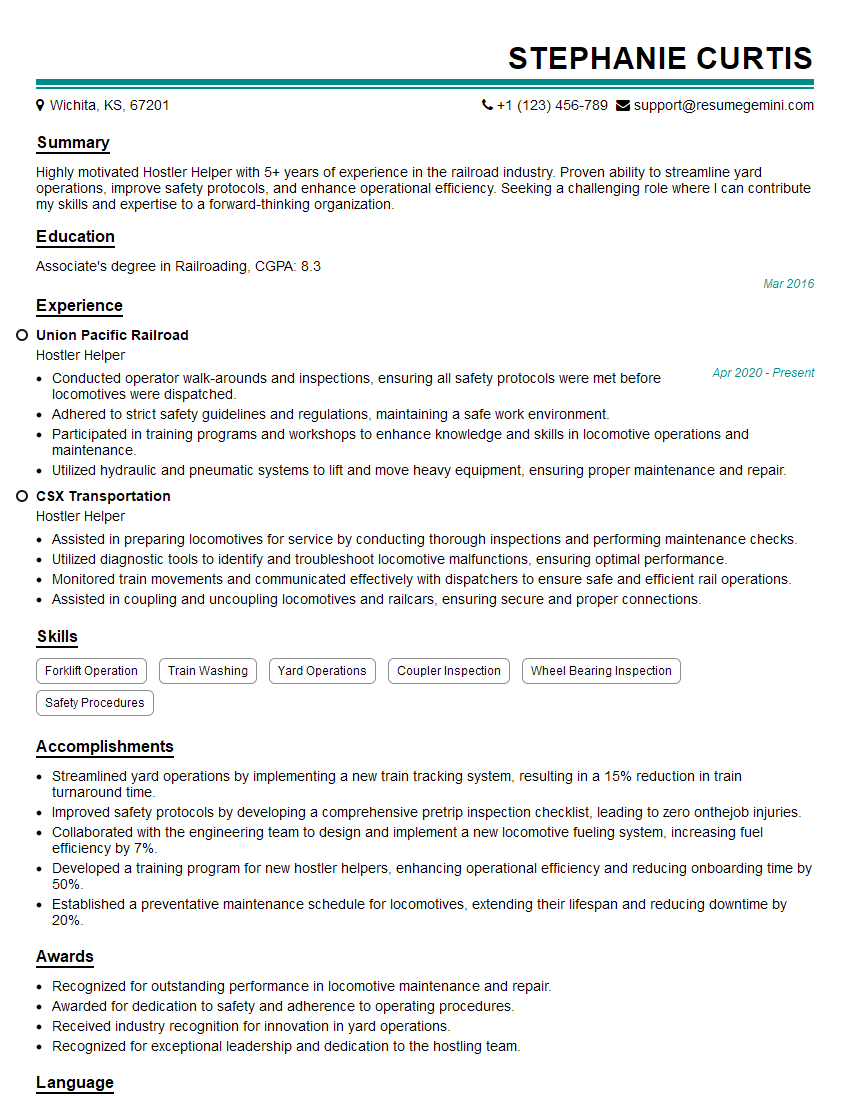
Are you gearing up for a career shift or aiming to ace your next interview? Look no further! We’ve curated a comprehensive guide to help you crack the interview for the coveted Hostler Helper position. From understanding the key responsibilities to mastering the most commonly asked questions, this blog has you covered. So, buckle up and let’s embark on this journey together
Acing the interview is crucial, but landing one requires a compelling resume that gets you noticed. Crafting a professional document that highlights your skills and experience is the first step toward interview success. ResumeGemini can help you build a standout resume that gets you called in for that dream job.






Essential Interview Questions For Hostler Helper
1. What do you know about hostler duties and responsibilities?
- Receiving, inspecting, and verifying incoming railcars
- Preparing and servicing railcars for loading and unloading
- Inspecting and coupling railcars
- Ensuring safe and efficient movement of railcars within the yard or facility
- Maintaining records of railcar movements and inspections
- Collaborating with train crews, shippers, and receivers to ensure smooth operations
2. Can you describe some common types of inspections performed by hostlers?
Types of Inspections
- Pre-departure inspections: Verifying the mechanical and safety features of railcars before they are coupled to a train
- In-transit inspections: Monitoring the condition of railcars while they are in transit
- Post-arrival inspections: Checking the condition of railcars after they have arrived at their destination
Inspection Procedures
- Inspecting air brakes, couplers, wheels, and bearings
- Checking for leaks, damage, and loose parts
- Verifying compliance with safety regulations and industry standards
3. What are the safety precautions to be taken when coupling and uncoupling railcars?
- Wearing appropriate personal protective equipment (PPE), including safety glasses, gloves, and a hard hat
- Inspecting the couplers and ensuring they are aligned properly
- Using a coupling pin or drawbar to connect the railcars
- Ensuring that the couplers are fully engaged and locked
- Checking for clearance before moving the railcars
- Being aware of other personnel and equipment in the area
4. What is the purpose of conducting air brake tests on railcars?
- To ensure that the air brake system on each railcar is functioning properly
- To identify any leaks or malfunctions in the system
- To verify that the brakes are applying evenly on all wheels
- To ensure that the brakes are releasing properly
- To comply with safety regulations and industry standards
5. Describe the steps involved in servicing a railcar for loading or unloading.
- Inspecting the railcar for any damage or defects
- Positioning the railcar at the appropriate loading or unloading dock
- Securing the railcar using wheel chocks or other devices
- Opening the doors or hatches of the railcar
- Ensuring that the loading or unloading equipment is properly positioned
6. What are some common challenges faced by hostlers and how do you handle them?
- Extreme weather conditions: Working in extreme heat, cold, or precipitation can be challenging. Hostlers must wear appropriate clothing and gear to protect themselves and adjust their work schedules as needed.
- Mechanical issues: Railcars can sometimes experience mechanical issues that require troubleshooting and repair. Hostlers must have a basic understanding of railcar mechanics and be able to work with maintenance personnel to resolve issues.
- Time constraints: Hostlers must often work under tight deadlines to ensure that railcars are moved and serviced efficiently. They must be able to prioritize tasks and work effectively under pressure.
- Communication breakdowns: Hostlers must communicate with train crews, shippers, and other personnel to ensure smooth operations. Misunderstandings or communication breakdowns can lead to delays and accidents. Hostlers must be able to communicate clearly and effectively.
7. What do you know about the different types of railcars and their uses?
- Boxcars: Enclosed railcars used for transporting packaged goods, such as food, clothing, and electronics
- Gondolas: Open-top railcars used for transporting bulk materials, such as coal, ore, and construction materials
- Hoppers: Railcars with funnel-shaped bottoms used for transporting loose materials, such as sand, gravel, and grain
- Tank cars: Railcars with cylindrical tanks used for transporting liquids and gases, such as oil, chemicals, and fertilizers
- Flatcars: Railcars with flatbeds used for transporting large or heavy items, such as vehicles, machinery, and bridge sections
8. What is the importance of following safety regulations and industry standards as a hostler?
- Ensuring the safety of oneself and others: Safety regulations and industry standards are in place to protect hostlers, train crews, and other personnel from accidents and injuries.
- Protecting equipment and property: Following safety protocols helps to prevent damage to railcars, locomotives, and other equipment.
- Maintaining efficient operations: Adhering to safety standards helps to avoid delays and accidents, ensuring that rail operations run smoothly and efficiently.
- Complying with legal requirements: Hostlers are legally required to follow safety regulations and industry standards.
9. How do you stay updated on the latest safety protocols and best practices in the rail industry?
- Attending industry conferences and workshops: These events provide opportunities to learn about new safety technologies and best practices, as well as network with other professionals in the field.
- Reading trade publications and online resources: Industry publications and websites often provide articles and updates on the latest safety regulations and advancements.
- Participating in company training and certification programs: Many companies offer training programs to keep their hostlers up to date on the latest safety protocols and best practices.
10. What are your career goals and how do you see this role as a hostler contributing to your professional development?
- Gaining practical experience in the rail industry: This role will provide me with hands-on experience in all aspects of hostler operations, which will be invaluable for my future career in the rail industry.
- Developing safety-conscious work habits: The emphasis on safety in this role will help me to develop strong safety habits that will benefit me throughout my career.
- Improving my communication and teamwork skills: Hostlers need to communicate effectively with train crews, shippers, and other personnel. This role will help me to develop my communication and teamwork skills, which are essential for success in any industry.
Interviewers often ask about specific skills and experiences. With ResumeGemini‘s customizable templates, you can tailor your resume to showcase the skills most relevant to the position, making a powerful first impression. Also check out Resume Template specially tailored for Hostler Helper.
Career Expert Tips:
- Ace those interviews! Prepare effectively by reviewing the Top 50 Most Common Interview Questions on ResumeGemini.
- Navigate your job search with confidence! Explore a wide range of Career Tips on ResumeGemini. Learn about common challenges and recommendations to overcome them.
- Craft the perfect resume! Master the Art of Resume Writing with ResumeGemini’s guide. Showcase your unique qualifications and achievements effectively.
- Great Savings With New Year Deals and Discounts! In 2025, boost your job search and build your dream resume with ResumeGemini’s ATS optimized templates.
Researching the company and tailoring your answers is essential. Once you have a clear understanding of the Hostler Helper‘s requirements, you can use ResumeGemini to adjust your resume to perfectly match the job description.
Key Job Responsibilities
Hostler Helpers play a crucial role in the smooth functioning of a stable or training facility. They perform various duties to support the care, maintenance, and well-being of horses and the facility itself.
1. Horse Care
Assist in the daily care of horses, including feeding, grooming, and exercise.
- Prepare and provide nutritious meals according to prescribed diets.
- Maintain clean stalls and ensure horses have access to fresh hay and water.
2. Facility Maintenance
Contribute to the upkeep and cleanliness of the stable or training facility.
- Clean stalls and paddocks, removing manure and bedding.
- Perform basic repairs and maintenance tasks on equipment and facilities.
3. Equipment Handling
Operate and maintain equipment used in horse care and handling.
- Drive tractors or other vehicles to transport horses or equipment.
- Properly use tack and equipment during horse handling and training.
4. General Assistance
Provide general assistance to other staff, visitors, or clients.
- Assist in guiding visitors and providing information about the facility.
- Help with administrative tasks, such as record-keeping or inventory management.
Interview Tips
To ace an interview for a Hostler Helper position, it is essential to prepare thoroughly and showcase your passion for horse care and facility management. Here are some tips:
1. Research the Facility and Industry
Familiarize yourself with the specific stable or training facility you are applying to. Learn about their history, services, and any unique aspects. Additionally, stay updated on trends and best practices in the horse care industry.
2. Highlight Your Experience and Skills
Emphasize your experience and skills related to horse care, facility maintenance, and equipment handling. Quantify your achievements whenever possible to demonstrate your impact.
3. Prepare for Common Interview Questions
Anticipate common interview questions and prepare thoughtful answers that align with the job responsibilities. For example, you may be asked about your experience with specific horse breeds or your approach to horse handling.
4. Ask Insightful Questions
Show your interest and engagement by asking thoughtful questions about the facility, the horses, and the team. This demonstrates your proactive nature and desire to learn more.
5. Dress Professionally and Arrive on Time
Make a good first impression by dressing appropriately and arriving for your interview punctually. This shows respect for the interviewer’s time and conveys your professionalism.
Next Step:
Armed with this knowledge, you’re now well-equipped to tackle the Hostler Helper interview with confidence. Remember, a well-crafted resume is your first impression. Take the time to tailor your resume to highlight your relevant skills and experiences. And don’t forget to practice your answers to common interview questions. With a little preparation, you’ll be on your way to landing your dream job. So what are you waiting for? Start building your resume and start applying! Build an amazing resume with ResumeGemini.