Are you gearing up for a career shift or aiming to ace your next interview? Look no further! We’ve curated a comprehensive guide to help you crack the interview for the coveted Internal Medicine Physician position. From understanding the key responsibilities to mastering the most commonly asked questions, this blog has you covered. So, buckle up and let’s embark on this journey together.
Acing the interview is crucial, but landing one requires a compelling resume that gets you noticed. Crafting a professional document that highlights your skills and experience is the first step toward interview success. ResumeGemini can help you build a standout resume that gets you called in for that dream job.






Essential Interview Questions For Internal Medicine Physician
1. What are the key differences in the management of heart failure with preserved ejection fraction (HFpEF) compared to heart failure with reduced ejection fraction (HFrEF)?
- Pathophysiology: HFpEF is characterized by impaired relaxation and increased stiffness of the left ventricle, while HFrEF is caused by systolic dysfunction with reduced ejection fraction.
- Clinical presentation: HFpEF patients typically present with symptoms of congestion, such as dyspnea and edema, while HFrEF patients have signs and symptoms of reduced cardiac output, including fatigue and exercise intolerance.
- Treatment: HFpEF management focuses on reducing symptoms and improving quality of life, with diuretics, ACE inhibitors, and beta-blockers being commonly used. HFrEF treatment aims to improve systolic function and reduce mortality, with ACE inhibitors, beta-blockers, and aldosterone antagonists being cornerstone therapies.
2. Describe your approach to a patient with a new diagnosis of atrial fibrillation (AF).
History and physical exam:
- Assess symptoms (e.g., palpitations, dyspnea)
- Identify risk factors (e.g., hypertension, CAD, obesity)
- Physical exam: Auscultation for murmurs, thyroid evaluation
Investigations:
- Electrocardiogram (ECG)
- Transthoracic echocardiogram (TTE)
- Holter monitor or event recorder (if paroxysmal AF)
Management:
- Address underlying conditions (e.g., hypertension, thyroid disease)
- Rhythm control versus rate control
- Anticoagulation (e.g., warfarin, DOACs)
- Lifestyle modifications (e.g., weight loss, exercise)
3. Discuss the evaluation and management of anemia in the elderly.
- Evaluation: Comprehensive history and physical exam, including medication review and nutritional assessment. Laboratory tests: complete blood count, iron studies, vitamin B12 and folate levels.
- Causes: Iron deficiency, vitamin B12 deficiency, anemia of chronic disease, aplastic anemia, myelodysplastic syndromes.
- Management: Treatment depends on the underlying cause. Iron replacement for iron deficiency anemia, vitamin B12 supplementation for vitamin B12 deficiency, erythropoietin for anemia of chronic disease, and appropriate referral for other causes.
4. How would you approach a patient with unexplained weight loss and fatigue?
- History and physical exam: Detailed history of weight loss, fatigue, diet, gastrointestinal symptoms, and constitutional symptoms. Physical exam: evaluation for signs of cachexia, lymphadenopathy, and organomegaly.
- Investigations: Complete blood count, comprehensive metabolic panel, thyroid function tests, chest X-ray, fecal occult blood test.
- Differential diagnosis: Cancer, gastrointestinal disorders (e.g., inflammatory bowel disease, celiac disease), endocrine disorders (e.g., hyperthyroidism), infectious diseases (e.g., tuberculosis), chronic kidney disease.
5. Describe the indications and contraindications for transesophageal echocardiography (TEE) in the evaluation of infective endocarditis (IE).
Indications:
- Confirming the diagnosis of IE
- Assessing the severity of valvular involvement
- Guiding therapeutic decisions (e.g., surgical intervention)
Contraindications:
- Recent esophageal surgery or trauma
- Severe esophageal varices
- Uncooperative or intubated patient
6. How would you manage a patient with a splenic abscess?
- Antibiotics: Broad-spectrum antibiotics covering aerobic and anaerobic organisms (e.g., piperacillin-tazobactam, clindamycin)
- Drainage: Percutaneous or surgical drainage may be necessary in some cases.
- Underlying cause: Identifying and treating the underlying cause (e.g., endocarditis, pancreatitis)
- Supportive care: Fluid resuscitation, pain management, nutritional support
7. Discuss the management of acute respiratory distress syndrome (ARDS) in the intensive care unit.
- Supportive care: Mechanical ventilation with low tidal volumes and positive end-expiratory pressure (PEEP), oxygen therapy
- Fluid management: Diuretics to reduce pulmonary edema
- Infection control: Antibiotics for suspected or confirmed infection
- Nutritional support: Enteral or parenteral nutrition
- Other: Prone positioning, neuromuscular blockade
8. Describe the differential diagnosis and management of a patient with acute pancreatitis.
Differential diagnosis:
- Cholelithiasis
- Alcohol abuse
- Trauma
- Hypertriglyceridemia
- Autoimmune disorders
Management:
- Supportive care: Fluid resuscitation, pain control, electrolyte management
- Antibiotics: If infected pancreatitis is suspected
- ERCP: For gallstone removal in severe cases
- Surgery: In severe cases with complications
9. How would you approach a patient with uncontrolled hypertension despite multiple antihypertensive medications?
- Assessment: Review medication adherence, lifestyle factors (e.g., diet, exercise), and underlying conditions that may contribute to hypertension.
- Medication adjustment: Optimize dosing and medication combinations, consider adding or switching to different classes of antihypertensives.
- Non-pharmacological interventions: Encourage lifestyle modifications (e.g., weight loss, exercise, dietary changes).
- Secondary causes: Investigate for underlying conditions such as renal artery stenosis, adrenal tumors, or sleep apnea.
- Resistant hypertension: Consider referral to a hypertension specialist.
10. Describe the management of a patient with acute renal failure.
- Identify and treat the underlying cause: Infection, hypotension, dehydration, obstruction
- Fluid resuscitation: Intravenous fluids to correct hypovolemia
- Electrolyte management: Monitor and correct electrolyte imbalances (e.g., hyperkalemia, hyponatremia)
- Dialysis: If conservative measures are insufficient, dialysis may be necessary.
- Supportive care: Blood pressure support, nutrition, and treatment of complications
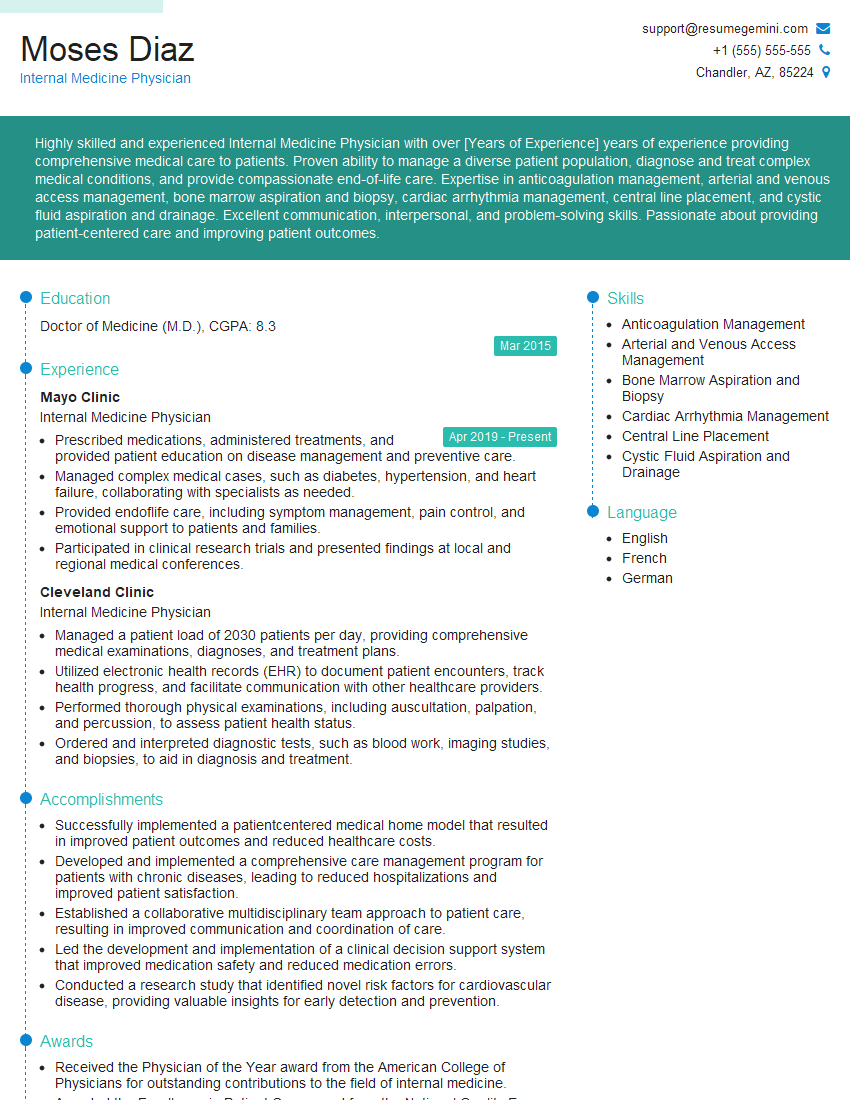
Interviewers often ask about specific skills and experiences. With ResumeGemini‘s customizable templates, you can tailor your resume to showcase the skills most relevant to the position, making a powerful first impression. Also check out Resume Template specially tailored for Internal Medicine Physician.
Career Expert Tips:
- Ace those interviews! Prepare effectively by reviewing the Top 50 Most Common Interview Questions on ResumeGemini.
- Navigate your job search with confidence! Explore a wide range of Career Tips on ResumeGemini. Learn about common challenges and recommendations to overcome them.
- Craft the perfect resume! Master the Art of Resume Writing with ResumeGemini’s guide. Showcase your unique qualifications and achievements effectively.
- Great Savings With New Year Deals and Discounts! In 2025, boost your job search and build your dream resume with ResumeGemini’s ATS optimized templates.
Researching the company and tailoring your answers is essential. Once you have a clear understanding of the Internal Medicine Physician‘s requirements, you can use ResumeGemini to adjust your resume to perfectly match the job description.
Key Job Responsibilities
Internal Medicine Physicians play a crucial role in providing comprehensive healthcare to adult patients. Their responsibilities encompass a wide range of clinical activities, including:
1. Patient Care Management
Provide personalized medical care and treatment plans for adult patients with complex and chronic conditions.
- Conduct thorough physical examinations, order and interpret diagnostic tests, and prescribe medications.
- Manage and monitor patients’ medical conditions, including diabetes, hypertension, heart disease, and respiratory illnesses.
2. Disease Diagnosis and Treatment
Evaluate patients’ symptoms, perform diagnostic procedures, and develop evidence-based treatment plans.
- Identify and treat common and complex medical conditions, such as infections, allergies, and cancers.
- Refer patients to specialists and other healthcare professionals as needed.
3. Preventive Care and Health Maintenance
Promote overall patient well-being through preventive healthcare measures.
- Provide routine checkups, immunizations, and lifestyle counseling.
- Educate patients on healthy habits, disease prevention, and management.
4. Collaboration and Communication
Effectively collaborate with other healthcare professionals, including nurses, pharmacists, and specialists.
- Consult with colleagues to optimize patient care and ensure continuity of treatment.
- Communicate effectively with patients and their families, providing clear and empathetic explanations.
Interview Preparation Tips
To ace your Internal Medicine Physician interview, consider the following preparation tips:
1. Research the Organization and Position
Thoroughly research the hospital, clinic, or organization you are applying to. Understand their mission, values, and service offerings.
- Review the specific job description and highlight your skills and experience that align with the requirements.
- Visit the organization’s website and social media pages to gain insights into their culture and reputation.
2. Practice Your Introduction and Key Points
Prepare a concise and engaging introduction that showcases your key qualifications and interest in the position.
- Use the STAR method (Situation, Task, Action, Result) to effectively describe your experiences and accomplishments.
- Be prepared to articulate your strengths, weaknesses, and areas for growth.
3. Anticipate Common Interview Questions
Familiarize yourself with common interview questions for Internal Medicine Physicians.
- Why did you choose internal medicine as your specialty?
- Describe your experience in managing complex medical conditions.
- How do you prioritize patient care and time management?
4. Prepare Questions for the Interviewer
Ask thoughtful questions during the interview to demonstrate your interest and engagement.
- Inquire about the patient population and the scope of practice at the organization.
- Ask about opportunities for professional development and mentorship.
- Request information about the organization’s commitment to patient satisfaction.
5. Practice Mock Interviews
Conduct mock interviews with a friend, family member, or career counselor to build confidence and identify areas for improvement.
- Ask them to provide feedback on your answers, body language, and overall presentation.
- Practice virtual interviews if the actual interview will be conducted remotely.
6. Dress Professionally and Arrive Prepared
Make a positive impression by dressing professionally and arriving on time for your interview.
- Wear appropriate attire, such as a suit or business casual clothing.
- Bring a portfolio or notebook with your resume, references, and any other relevant materials.
7. Follow Up After the Interview
Send a thank-you note to the interviewer(s) within 24 hours of the interview.
- Express your appreciation for the opportunity to interview and reiterate your interest in the position.
- Address any specific points from the interview that you would like to highlight.
Next Step:
Now that you’re armed with interview-winning answers and a deeper understanding of the Internal Medicine Physician role, it’s time to take action! Does your resume accurately reflect your skills and experience for this position? If not, head over to ResumeGemini. Here, you’ll find all the tools and tips to craft a resume that gets noticed. Don’t let a weak resume hold you back from landing your dream job. Polish your resume, hit the “Build Your Resume” button, and watch your career take off! Remember, preparation is key, and ResumeGemini is your partner in interview success.