Are you gearing up for a career shift or aiming to ace your next interview? Look no further! We’ve curated a comprehensive guide to help you crack the interview for the coveted Kiln Repairer position. From understanding the key responsibilities to mastering the most commonly asked questions, this blog has you covered. So, buckle up and let’s embark on this journey together
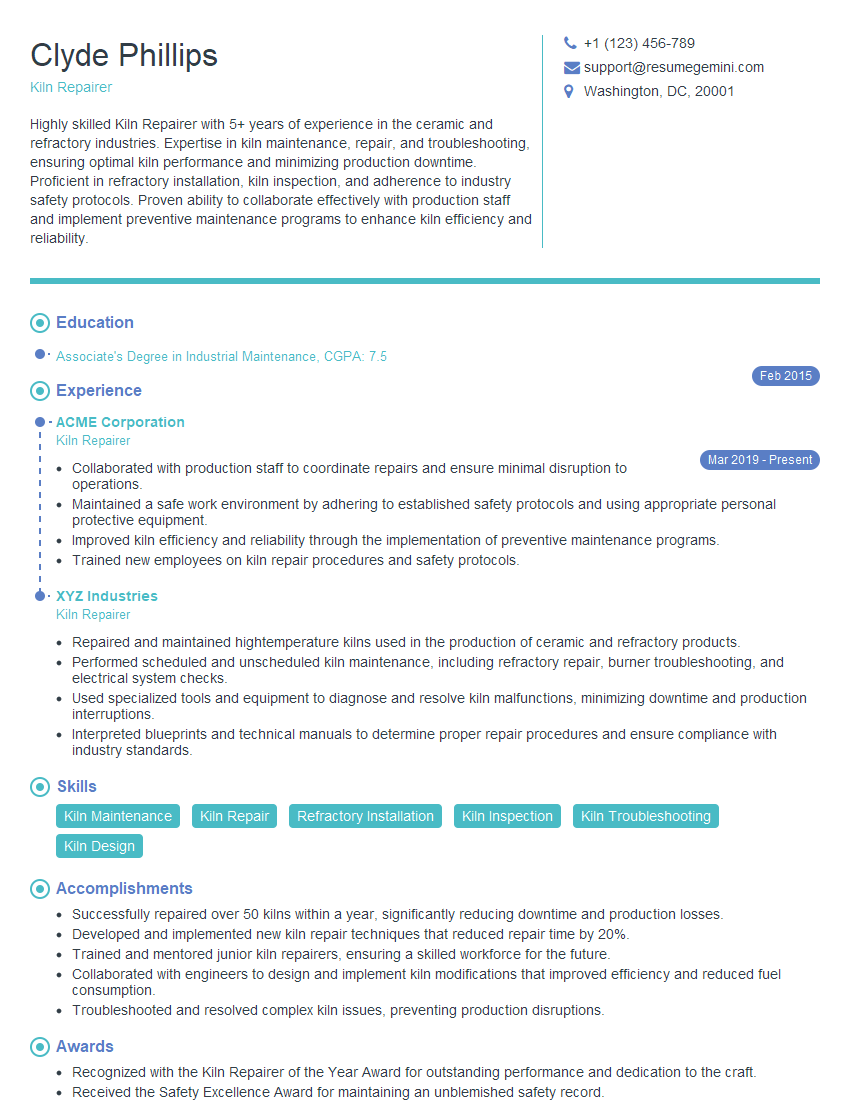
Acing the interview is crucial, but landing one requires a compelling resume that gets you noticed. Crafting a professional document that highlights your skills and experience is the first step toward interview success. ResumeGemini can help you build a standout resume that gets you called in for that dream job.






Essential Interview Questions For Kiln Repairer
1. What are the different types of kilns, and what are their applications?
There are several types of kilns used for various applications in the ceramic industry, each with unique characteristics:
- Shuttle Kilns: Continuous kilns used for firing large quantities of ceramics, where one end is loaded while the other end is unloaded.
- Tunnel Kilns: Long, continuous kilns that allow for high production volume and are typically used for firing tableware and sanitary ware.
- Periodic Kilns: Intermittent kilns that undergo a complete firing cycle, including loading, heating, holding, and cooling, before being unloaded.
- Top-Hat Kilns: Electrically heated kilns designed for high-temperature firing, typically used for firing technical ceramics.
- Raku Kilns: Small, portable kilns used for the traditional Japanese Raku firing technique, involving rapid heating and cooling.
2. Explain the process of kiln refractory repair and the different techniques used.
Refractory Brick Replacement
- Removing damaged refractory bricks.
- Cleaning the kiln walls and preparing them for new bricks.
- Selecting and installing new refractory bricks.
Mortar Application
- Preparing and applying refractory mortar to bond the bricks.
- Ensuring proper joint thickness and adhesion.
- Smoothing and finishing the mortar joints.
Gunned Refractory Application
- Using a refractory gun to spray a layer of wet refractory material onto the kiln walls.
- Compacting and smoothing the applied material.
- Allowing the refractory to dry and cure.
3. Describe the common causes of kiln failures and how to prevent them.
- Excessive Heat: Operating the kiln at temperatures beyond its specified range can damage the refractory lining.
- Thermal Shock: Rapid heating or cooling can cause cracks in the refractory.
- Chemical Attack: The kiln atmosphere or the materials being fired can release corrosive gases that attack the refractory.
- Mechanical Damage: Improper handling or accidental impact can damage the kiln lining.
- Poor Maintenance: Neglecting regular inspections and repairs can lead to premature kiln failure.
4. What safety precautions should be taken when working on kiln repairs?
- Protective Gear: Wear appropriate safety gear, including gloves, safety glasses, and a respirator.
- Kiln Cooling: Ensure the kiln is completely cooled before performing any repairs to avoid burns.
- Electrical Hazards: Disconnect the kiln from the power source before starting work.
- Proper Ventilation: Provide adequate ventilation to avoid exposure to fumes and dust.
- Emergency Procedures: Be aware of emergency procedures and have extinguishing equipment readily available.
5. What are the different types of refractory materials used in kiln construction and their properties?
- Fireclay: Common refractory material with moderate temperature resistance.
- High-Alumina Refractories: Offer higher temperature resistance than fireclay but have lower thermal shock resistance.
- Silica Refractories: Used in high-temperature kilns, but require special precautions to manage thermal expansion.
- Zirconia Refractories: Provide high temperature resistance and excellent thermal shock resistance.
- Carbonaceous Refractories: Used in reducing atmospheres, such as graphite or carbon-bonded refractories.
6. Explain the process of kiln insulation and its importance.
- Purpose: To minimize heat loss and improve kiln efficiency.
- Materials: Commonly used insulation materials include ceramic fiber, mineral wool, or insulating firebricks.
- Placement: Insulation is typically placed between the kiln shell and the refractory lining.
- Thickness: Insulation thickness depends on the kiln size, temperature, and desired efficiency gains.
7. Describe the role of thermocouples in kiln operation and how to calibrate them.
- Purpose: Thermocouples measure and monitor kiln temperature.
- Calibration: Periodically calibrate thermocouples using a known temperature source, such as a standard thermocouple or melting point indicators.
- Installation: Ensure proper placement of thermocouples to provide accurate temperature readings.
- Maintenance: Regularly check thermocouples for damage or deterioration and replace as needed.
8. What are the techniques for controlling kiln temperature and atmosphere?
- Temperature Control: Using temperature controllers, thermocouples, and heating elements to regulate the kiln temperature.
- Atmosphere Control: Adjusting the kiln atmosphere through the use of dampers, air pumps, and gas injectors.
- Oxygen Control: Monitoring and adjusting oxygen levels within the kiln using oxygen probes or a combustion analyzer.
9. How do you diagnose and troubleshoot common kiln problems, such as uneven firing or temperature fluctuations?
- Uneven Firing: Inspect kiln insulation, thermocouples, and heating elements for issues.
- Temperature Fluctuations: Check temperature controller settings, thermocouple integrity, and heating element operation.
- Damaged Refractory: Examine the kiln lining for cracks or damage and make necessary repairs.
- Atmosphere Issues: Adjust air flow and gas ratios to optimize the kiln atmosphere for even firing.
10. What are the latest trends and advancements in kiln repair and maintenance?
- Advanced Refractory Materials: New refractory materials with improved thermal shock resistance and durability.
- Computerized Kiln Control: Automated temperature and atmosphere control systems for increased precision.
- Remote Monitoring: Wireless sensors and internet-connected devices allow for remote kiln monitoring and troubleshooting.
- Sustainability Focus: Development of energy-efficient kilns and improved insulation techniques to reduce environmental impact.
Interviewers often ask about specific skills and experiences. With ResumeGemini‘s customizable templates, you can tailor your resume to showcase the skills most relevant to the position, making a powerful first impression. Also check out Resume Template specially tailored for Kiln Repairer.
Career Expert Tips:
- Ace those interviews! Prepare effectively by reviewing the Top 50 Most Common Interview Questions on ResumeGemini.
- Navigate your job search with confidence! Explore a wide range of Career Tips on ResumeGemini. Learn about common challenges and recommendations to overcome them.
- Craft the perfect resume! Master the Art of Resume Writing with ResumeGemini’s guide. Showcase your unique qualifications and achievements effectively.
- Great Savings With New Year Deals and Discounts! In 2025, boost your job search and build your dream resume with ResumeGemini’s ATS optimized templates.
Researching the company and tailoring your answers is essential. Once you have a clear understanding of the Kiln Repairer‘s requirements, you can use ResumeGemini to adjust your resume to perfectly match the job description.
Key Job Responsibilities
Kiln Repairers are responsible for the maintenance and repair of kilns, which are used in various industries to heat and cool materials. They work in a variety of settings, including manufacturing plants, research laboratories, and universities.
1. Inspect Kilns
Kiln Repairers must regularly inspect kilns to identify any potential problems. They look for cracks, leaks, and other damage that could affect the kiln’s performance or safety.
2. Repair Kilns
When a kiln is damaged, Kiln Repairers repair it using a variety of tools and techniques. They may weld cracks, replace damaged parts, or rebuild the kiln entirely.
3. Calibrate Kilns
Kilns must be calibrated regularly to ensure that they are operating at the correct temperature. Kiln Repairers perform this calibration using specialized equipment.
4. Maintain Kilns
In addition to repairing and calibrating kilns, Kiln Repairers also perform routine maintenance tasks. This includes cleaning the kiln, lubricating moving parts, and checking for any potential problems.
5. Safety
Kilns can be dangerous, so Kiln Repairers must always follow safety procedures. They must wear protective clothing and equipment, and they must be aware of the potential hazards of working with high temperatures.
Interview Tips
Interviewing for a Kiln Repairer position can be challenging, but by following these tips, you can increase your chances of success.
1. Research the company
Before your interview, take some time to learn about the company you’re applying to. This will help you understand their culture and what they’re looking for in a Kiln Repairer.
2. Practice your answers
Take some time to practice answering common interview questions. This will help you feel more confident and prepared during your interview.
3. Be prepared to talk about your experience
The interviewer will want to know about your experience as a Kiln Repairer. Be prepared to talk about your skills and knowledge, and how you’ve used them to solve problems.
4. Be enthusiastic
Kiln Repairers are passionate about their work. Show the interviewer that you’re excited about the opportunity to work as a Kiln Repairer.
5. Ask questions
Asking questions at the end of the interview shows that you’re interested in the position and that you’re taking the interview seriously.
Next Step:
Armed with this knowledge, you’re now well-equipped to tackle the Kiln Repairer interview with confidence. Remember, preparation is key. So, start crafting your resume, highlighting your relevant skills and experiences. Don’t be afraid to tailor your application to each specific job posting. With the right approach and a bit of practice, you’ll be well on your way to landing your dream job. Build your resume now from scratch or optimize your existing resume with ResumeGemini. Wish you luck in your career journey!