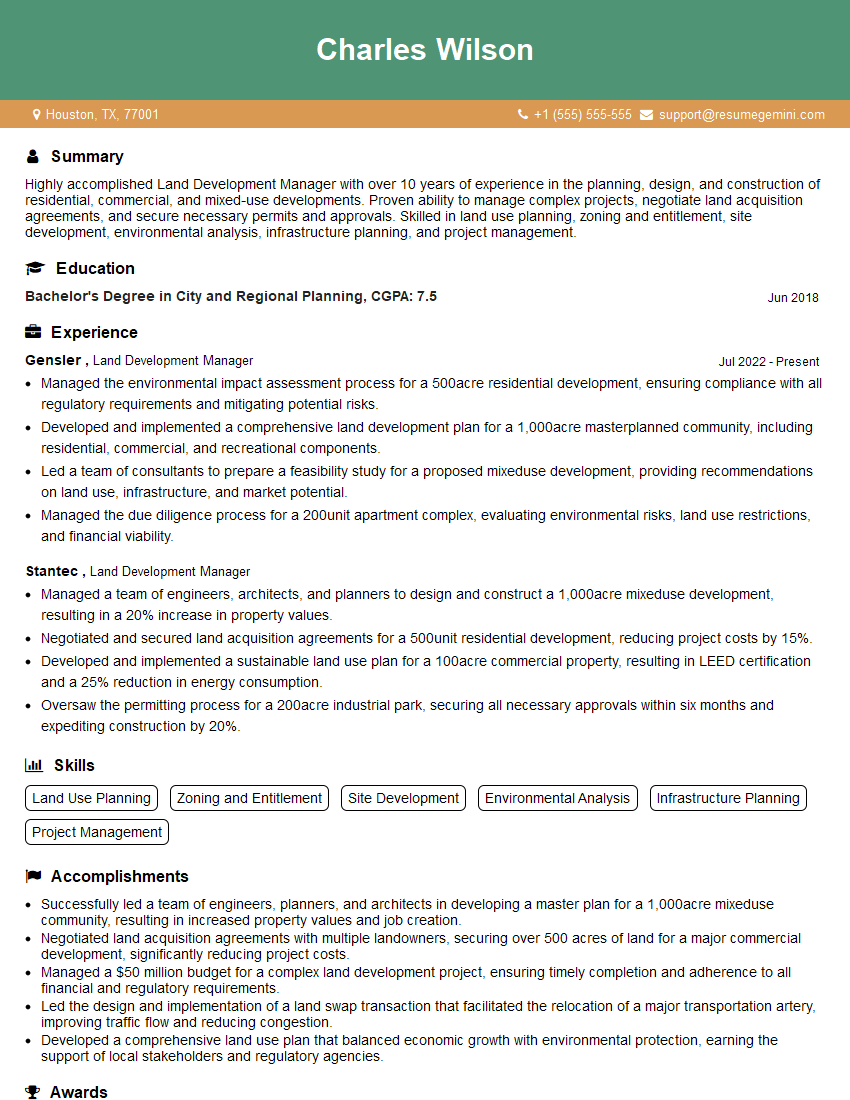
Feeling lost in a sea of interview questions? Landed that dream interview for Land Development Manager but worried you might not have the answers? You’re not alone! This blog is your guide for interview success. We’ll break down the most common Land Development Manager interview questions, providing insightful answers and tips to leave a lasting impression. Plus, we’ll delve into the key responsibilities of this exciting role, so you can walk into your interview feeling confident and prepared.
Acing the interview is crucial, but landing one requires a compelling resume that gets you noticed. Crafting a professional document that highlights your skills and experience is the first step toward interview success. ResumeGemini can help you build a standout resume that gets you called in for that dream job.






Essential Interview Questions For Land Development Manager
1. Walk me through the process of land development, from initial site selection to project completion.
Sample Answer:
- Site Selection: Identify potential sites based on market analysis, zoning regulations, and environmental factors.
- Due Diligence: Conduct environmental assessments, title searches, and feasibility studies to evaluate site suitability and potential risks.
- Site Planning: Design the layout of the development, including buildings, infrastructure, and landscaping, adhering to zoning requirements and engineering specifications.
- Permitting: Obtain necessary permits and approvals from government agencies, including zoning approval, building permits, and environmental clearances.
- Construction: Manage the construction process, ensuring compliance with plans, specifications, and building codes.
- Project Completion: Conduct final inspections, obtain occupancy permits, and transition the project to property management or sales.
2. How do you assess the feasibility of a land development project?
Financial Analysis
- Estimate project costs, including land acquisition, construction, infrastructure, and marketing.
- Analyze potential revenue streams and project return on investment.
- Identify funding sources and secure financing if necessary.
Market Analysis
- Conduct market research to determine demand for the proposed development.
- Analyze competition and identify potential threats and opportunities.
- Develop marketing strategies to promote the development and attract buyers or tenants.
3. What are the key factors to consider when negotiating land acquisition and development agreements?
Sample Answer:
- Purchase Price and Terms: Negotiate a fair purchase price and payment terms that align with the project budget.
- Due Diligence Contingencies: Secure contingencies in the contract to allow for due diligence investigations and protect against unforeseen issues.
- Development Rights and Restrictions: Define the scope of development allowed on the property and any restrictions imposed by the seller or local authorities.
- Environmental and Zoning Compliance: Ensure that the development plans comply with environmental regulations and zoning requirements.
- Legal Counsel: Engage legal counsel to review and advise on the terms of the agreement to protect the interests of the developer.
4. How do you balance the need for environmental sustainability with the financial viability of land development projects?
Sample Answer:
- Site Selection and Planning: Choose sites that minimize environmental impact and incorporate sustainable design principles.
- Green Building Practices: Implement energy-efficient construction methods, use sustainable materials, and promote water conservation.
- Environmental Mitigation: Identify potential environmental risks and develop strategies to mitigate negative impacts, such as habitat restoration or pollution control.
- Collaboration with Stakeholders: Engage with environmental groups, local communities, and regulatory agencies to ensure project sustainability and reduce potential conflicts.
- Long-Term Planning: Consider the environmental impact of the development over its lifetime, including post-construction operations and maintenance.
5. Describe your experience in managing large-scale land development projects, including project planning, budgeting, and stakeholder management.
Sample Answer:
- Project Planning: Developed comprehensive project plans that outlined goals, objectives, timelines, and resource allocation.
- Budgeting: Created and managed project budgets, ensuring efficient use of funds and adherence to financial constraints.
- Stakeholder Management: Engaged with stakeholders, including investors, contractors, regulatory agencies, and local communities, to build relationships and address their concerns.
- Team Leadership: Led and motivated project teams, fostering collaboration and accountability.
- Risk Management: Identified and mitigated potential risks throughout the project lifecycle.
6. What are the key performance indicators (KPIs) you use to measure the success of land development projects?
Sample Answer:
- Project Completion Time: Track project progress against established timelines to ensure timely delivery.
- Project Budget: Monitor actual costs against the project budget to identify potential cost overruns and take corrective action.
- Occupancy Rates: Measure the percentage of units or spaces occupied to assess project viability and revenue generation.
- Client Satisfaction: Conduct surveys or collect feedback from buyers or tenants to gauge their satisfaction with the developed property.
- Environmental Impact: Track environmental indicators, such as energy consumption, water usage, and waste management, to measure project sustainability.
7. How do you stay up-to-date on the latest trends and technologies in land development?
Sample Answer:
- Industry Conferences and Webinars: Attend industry events to learn about new practices and connect with experts.
- Professional Development: Engage in ongoing education programs and certifications to expand knowledge and skills.
- Research and Publications: Read industry publications and research reports to stay informed about emerging trends and technological advancements.
- Networking: Collaborate with colleagues, industry professionals, and thought leaders to exchange ideas and share best practices.
- Innovation: Seek opportunities to implement new technologies and solutions to improve project efficiency and sustainability.
8. What are the ethical considerations that you keep in mind when developing land?
Sample Answer:
- Environmental Responsibility: Minimize environmental impact and promote sustainable practices.
- Community Engagement: Engage with local communities to address their concerns and incorporate their input into project design.
- Transparency: Be transparent about project details and potential impacts to stakeholders.
- Fair Compensation: Ensure fair compensation for land acquisition and displacement, if necessary.
- Long-Term Impact: Consider the long-term effects of development on the surrounding environment and community.
9. How do you manage environmental risks associated with land development?
Sample Answer:
- Environmental Impact Assessment: Conduct thorough environmental impact assessments to identify potential risks.
- Mitigation Plans: Develop and implement mitigation plans to minimize negative environmental impacts.
- Erosion and Sediment Control: Implement measures to prevent erosion and control sediment during construction.
- Stormwater Management: Design stormwater management systems to reduce runoff and improve water quality.
- Habitat Protection: Preserve and enhance natural habitats or wildlife corridors within the development area.
10. What are your strengths and weaknesses as a Land Development Manager?
Sample Answer:
Strengths
- Strong technical knowledge of land development processes and best practices.
- Proven ability to plan, manage, and execute large-scale projects within budget and timeline constraints.
- Excellent communication and negotiation skills with stakeholders, clients, and regulatory agencies.
- Commitment to sustainability and environmental responsibility.
- Ability to think strategically and adapt to changing market conditions.
Weaknesses
- Limited experience in working with certain types of land development projects, such as mixed-use developments.
- Need to improve time management skills to handle multiple projects simultaneously.
Interviewers often ask about specific skills and experiences. With ResumeGemini‘s customizable templates, you can tailor your resume to showcase the skills most relevant to the position, making a powerful first impression. Also check out Resume Template specially tailored for Land Development Manager.
Career Expert Tips:
- Ace those interviews! Prepare effectively by reviewing the Top 50 Most Common Interview Questions on ResumeGemini.
- Navigate your job search with confidence! Explore a wide range of Career Tips on ResumeGemini. Learn about common challenges and recommendations to overcome them.
- Craft the perfect resume! Master the Art of Resume Writing with ResumeGemini’s guide. Showcase your unique qualifications and achievements effectively.
- Great Savings With New Year Deals and Discounts! In 2025, boost your job search and build your dream resume with ResumeGemini’s ATS optimized templates.
Researching the company and tailoring your answers is essential. Once you have a clear understanding of the Land Development Manager‘s requirements, you can use ResumeGemini to adjust your resume to perfectly match the job description.
Key Job Responsibilities
The Land Development Manager plays a crucial role in the planning, execution, and management of land development projects. Key responsibilities include:
1. Land Acquisition and Due Diligence
Identifying, acquiring, and securing land parcels
- Conducting market research and feasibility studies
- Negotiating and finalizing land purchase agreements
2. Project Planning and Design
Developing and managing comprehensive land development plans
- Working with architects, engineers, and planners to design and engineer projects
- Obtaining necessary permits and approvals
3. Construction Management
Overseeing the construction and development of projects
- Managing contractors and subcontractors
- Ensuring compliance with building codes and safety regulations
- Coordinating infrastructure installation and maintenance
4. Financial Management
Managing project budgets and financial reporting
- Preparing and presenting financial plans and forecasts
- Monitoring project expenses and profitability
5. Stakeholder Relations
Building and maintaining relationships with stakeholders
- Working with government agencies, community groups, and residents
- Addressing concerns and resolving conflicts
6. Environmental Compliance
Ensuring compliance with environmental regulations and sustainability standards
- Conducting environmental impact assessments
- Implementing mitigation measures and environmental restoration
Interview Tips
To ace the interview for a Land Development Manager position, consider the following tips:
1. Research the Company and Industry
Demonstrate your knowledge of the company’s mission, values, and recent projects.
- Stay updated on industry trends and best practices.
2. Quantify Your Experience
Provide specific examples of your accomplishments using numbers and metrics.
- Highlight your contributions to successful land development projects.
3. Showcase Your Skills
Emphasize relevant skills such as project management, financial analysis, negotiation, and stakeholder engagement.
- Describe situations where you have successfully utilized these skills.
4. Prepare for Technical Questions
Be prepared to answer questions about land development processes, zoning regulations, and environmental compliance.
- Review relevant industry terminology and concepts.
5. Ask Thoughtful Questions
Show your interest and engagement by asking insightful questions about the company, project pipeline, and industry outlook.
- This demonstrates your curiosity and interest in the role.
6. Highlight Your Passion for Sustainability
Emphasize your commitment to environmental stewardship and sustainable development practices.
- Share examples of your involvement in green building initiatives or environmental advocacy.
7. Be Confident and Enthusiastic
Show your excitement for the opportunity and convey your confidence in your abilities.
- Be positive and enthusiastic throughout the interview.
Next Step:
Now that you’re armed with a solid understanding of what it takes to succeed as a Land Development Manager, it’s time to turn that knowledge into action. Take a moment to revisit your resume, ensuring it highlights your relevant skills and experiences. Tailor it to reflect the insights you’ve gained from this blog and make it shine with your unique qualifications. Don’t wait for opportunities to come to you—start applying for Land Development Manager positions today and take the first step towards your next career milestone. Your dream job is within reach, and with a polished resume and targeted applications, you’ll be well on your way to achieving your career goals! Build your resume now with ResumeGemini.