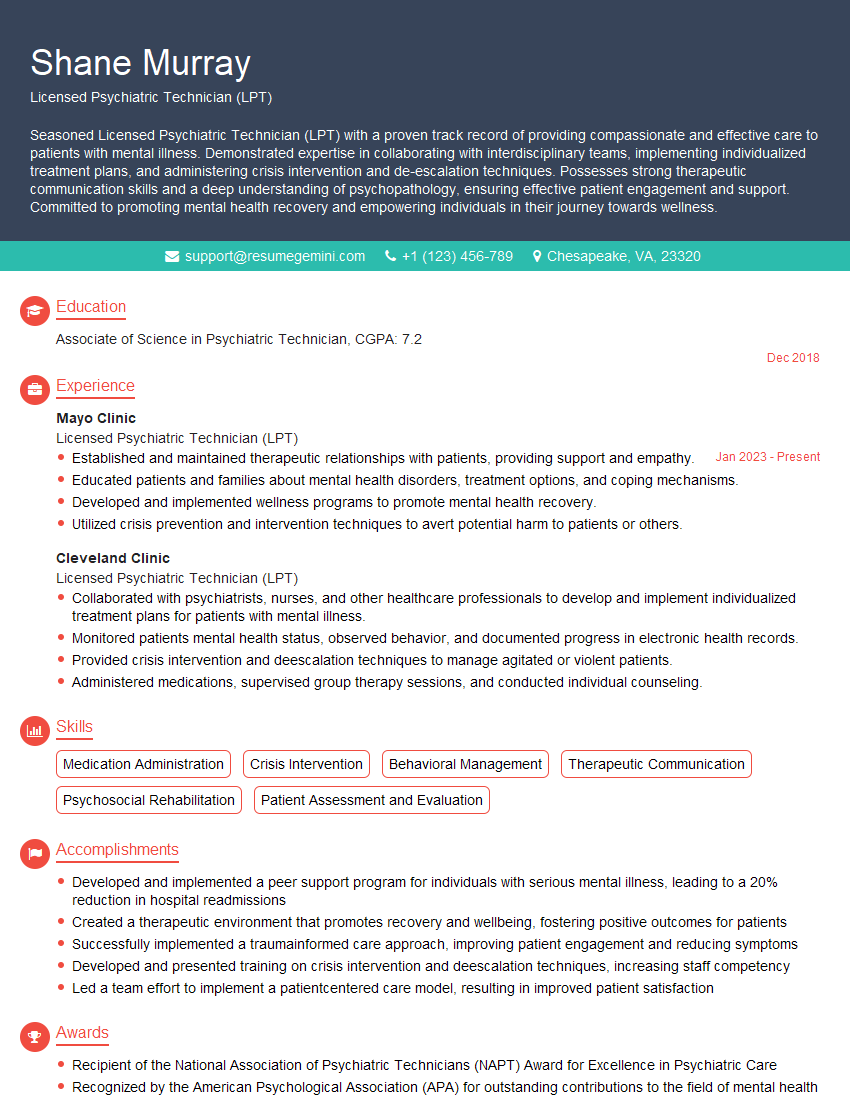
Are you gearing up for a career in Licensed Psychiatric Technician (LPT)? Feeling nervous about the interview questions that might come your way? Don’t worry, you’re in the right place. In this blog post, we’ll dive deep into the most common interview questions for Licensed Psychiatric Technician (LPT) and provide you with expert-backed answers. We’ll also explore the key responsibilities of this role so you can tailor your responses to showcase your perfect fit.
Acing the interview is crucial, but landing one requires a compelling resume that gets you noticed. Crafting a professional document that highlights your skills and experience is the first step toward interview success. ResumeGemini can help you build a standout resume that gets you called in for that dream job.






Essential Interview Questions For Licensed Psychiatric Technician (LPT)
1. How would you approach a patient who is experiencing a psychotic episode?
- Remain calm and approach the patient slowly and respectfully
- Identify yourself and explain your role
- Use clear and concise language
- Avoid making sudden movements or gestures
- Listen to the patient’s concerns and try to understand their perspective
- Provide reassurance and support
- Contact a psychiatrist or other mental health professional for further assistance if needed
2. What are the signs and symptoms of depression?
subheading of the answer
- Persistent feelings of sadness, emptiness, or hopelessness
- Loss of interest in activities that were once enjoyable
- Changes in appetite or sleep patterns
- Fatigue or loss of energy
- Feelings of worthlessness or guilt
- Difficulty concentrating or making decisions
- Thoughts of death or suicide
subheading of the answer
- It is important to note that not everyone who experiences these symptoms has depression. A diagnosis of depression should be made by a mental health professional.
3. How would you handle a patient who is exhibiting aggressive behavior?
- Remain calm and assess the situation
- Remove any potential hazards from the area
- Use verbal de-escalation techniques
- If necessary, use physical restraints to protect yourself and the patient
- Contact a psychiatrist or other mental health professional for further assistance
4. What are the ethical considerations when working with patients with mental illness?
- Maintain patient confidentiality
- Respect patient autonomy
- Avoid dual relationships
- Act in the best interests of the patient
- Be aware of your own limitations and seek supervision when needed
5. What are the different types of medications used to treat mental illness?
- Antidepressants
- Antipsychotics
- Mood stabilizers
- Anti-anxiety medications
- Stimulants
6. What are the side effects of psychotropic medications?
- Drowsiness
- Nausea
- Weight gain
- Sexual dysfunction
- Movement disorders
7. What are the different types of psychotherapy used to treat mental illness?
- Cognitive-behavioral therapy (CBT)
- Dialectical behavior therapy (DBT)
- Psychodynamic therapy
- Humanistic therapy
- Family therapy
8. What are the goals of psychotherapy?
- To help patients understand their mental illness and how it affects their lives
- To teach patients coping mechanisms for managing their symptoms
- To help patients improve their relationships and social functioning
- To help patients achieve their personal goals
9. What are the challenges of working with patients with mental illness?
- Patients may be resistant to treatment
- Patients may experience side effects from medications
- Patients may have difficulty managing their symptoms
- Patients may be at risk for self-harm or harm to others
10. What are the rewards of working with patients with mental illness?
- Making a difference in the lives of patients
- Helping patients to recover and achieve their goals
- Learning about mental illness and how to treat it
- Working with a team of dedicated professionals
Interviewers often ask about specific skills and experiences. With ResumeGemini‘s customizable templates, you can tailor your resume to showcase the skills most relevant to the position, making a powerful first impression. Also check out Resume Template specially tailored for Licensed Psychiatric Technician (LPT).
Career Expert Tips:
- Ace those interviews! Prepare effectively by reviewing the Top 50 Most Common Interview Questions on ResumeGemini.
- Navigate your job search with confidence! Explore a wide range of Career Tips on ResumeGemini. Learn about common challenges and recommendations to overcome them.
- Craft the perfect resume! Master the Art of Resume Writing with ResumeGemini’s guide. Showcase your unique qualifications and achievements effectively.
- Great Savings With New Year Deals and Discounts! In 2025, boost your job search and build your dream resume with ResumeGemini’s ATS optimized templates.
Researching the company and tailoring your answers is essential. Once you have a clear understanding of the Licensed Psychiatric Technician (LPT)‘s requirements, you can use ResumeGemini to adjust your resume to perfectly match the job description.
Key Job Responsibilities
Licensed Psychiatric Technicians (LPTs) are responsible for providing direct care and support to patients in psychiatric settings. Their key job responsibilities include:
1. Patient Care
LPTs provide a wide range of care services to patients, including assisting with daily activities, such as eating, bathing, and dressing, monitoring patients’ physical and mental health, and administering medications and treatments.
- Assisting patients with activities of daily living
- Monitoring patients’ physical and mental health
- Administering medications and treatments
- Observing and documenting patients’ behavior
- Providing emotional support and counseling
2. Treatment Planning
LPTs participate in treatment planning for patients, collaborating with psychiatrists and other members of the treatment team to develop and implement individualized care plans.
- Participating in treatment planning
- Developing and implementing individualized care plans
- Coordinating care with other members of the treatment team
3. Crisis Intervention
LPTs are trained to respond to psychiatric emergencies, providing crisis intervention and de-escalation techniques to help patients manage and cope with emotional distress.
- Responding to psychiatric emergencies
- Providing crisis intervention and de-escalation techniques
- Ensuring patient safety and well-being during crises
4. Communication and Documentation
LPTs maintain accurate and detailed patient records, documenting patient care and treatment plans, and communicating with other healthcare professionals and family members to ensure continuity of care.
- Maintaining accurate and detailed patient records
- Documenting patient care and treatment plans
- Communicating with other healthcare professionals and family members
Interview Tips
To ace the interview for an LPT position, candidates should prepare thoroughly and demonstrate their skills and experience in providing psychiatric care. Here are some interview preparation tips and hacks:
1. Research the Organization
Research the psychiatric facility or organization you are applying to, including its mission, values, and areas of expertise. This will help you understand the organization’s culture and tailor your answers to their specific needs.
- Visit the organization’s website
- Read news articles and reviews
- Talk to current or former employees
2. Practice Your Answers
Practice answering common interview questions, such as “Why are you interested in working as an LPT?” and “What are your strengths and weaknesses as an LPT?” Prepare concise and articulate answers that highlight your skills and experience.
- Use the STAR method to answer behavioral questions (Situation, Task, Action, Result)
- Provide specific examples of your work experience
- Quantify your accomplishments whenever possible
3. Be Prepared to Discuss Your Experience
Be ready to discuss your experience in providing psychiatric care, including your skills in patient care, treatment planning, crisis intervention, and communication. Highlight your ability to work effectively with patients and other healthcare professionals.
- Discuss your experience in a variety of psychiatric settings
- Describe your experience in providing specific types of care, such as medication management or crisis intervention
- Share examples of your success in working with patients
4. Demonstrate Your Commitment to Patient Care
Emphasize your commitment to providing compassionate and high-quality care to patients. Explain your understanding of the importance of patient confidentiality and your ability to maintain a professional and ethical demeanor.
- Share your experiences in providing care to patients from diverse backgrounds
- Discuss your understanding of ethical principles in psychiatric care
- Explain how you stay up-to-date on best practices in psychiatric care
Next Step:
Now that you’re armed with a solid understanding of what it takes to succeed as a Licensed Psychiatric Technician (LPT), it’s time to turn that knowledge into action. Take a moment to revisit your resume, ensuring it highlights your relevant skills and experiences. Tailor it to reflect the insights you’ve gained from this blog and make it shine with your unique qualifications. Don’t wait for opportunities to come to you—start applying for Licensed Psychiatric Technician (LPT) positions today and take the first step towards your next career milestone. Your dream job is within reach, and with a polished resume and targeted applications, you’ll be well on your way to achieving your career goals! Build your resume now with ResumeGemini.