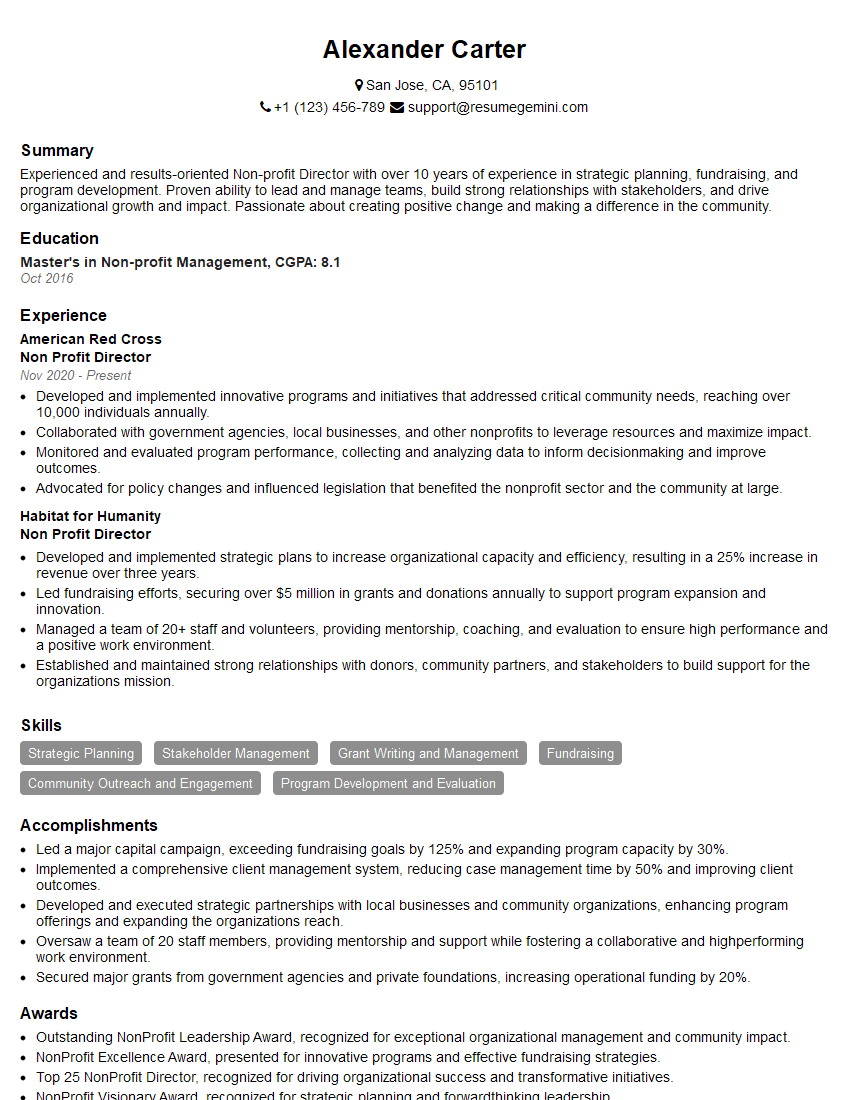
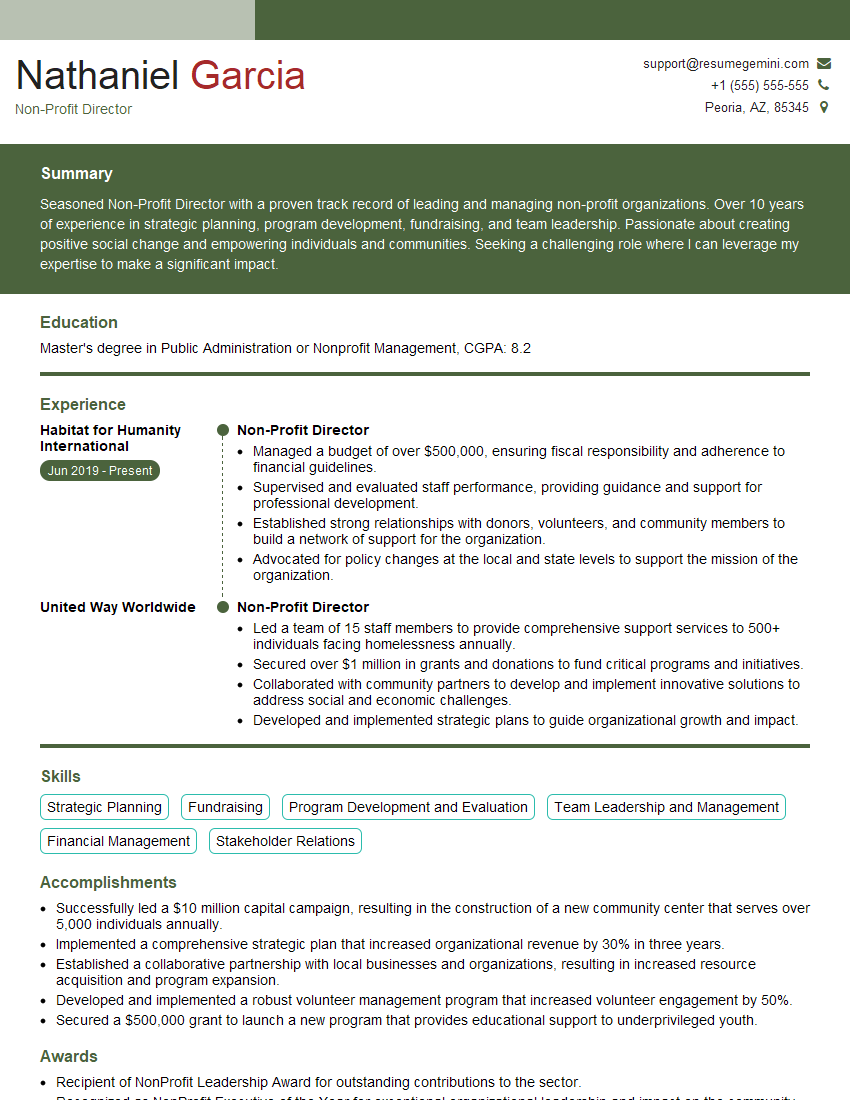
Are you gearing up for a career shift or aiming to ace your next interview? Look no further! We’ve curated a comprehensive guide to help you crack the interview for the coveted Non Profit Director position. From understanding the key responsibilities to mastering the most commonly asked questions, this blog has you covered. So, buckle up and let’s embark on this journey together.
Acing the interview is crucial, but landing one requires a compelling resume that gets you noticed. Crafting a professional document that highlights your skills and experience is the first step toward interview success. ResumeGemini can help you build a standout resume that gets you called in for that dream job.






Essential Interview Questions For Non Profit Director
1. How would you evaluate the effectiveness of a fundraising campaign?
- Analyze key performance indicators (KPIs) such as funds raised, donor acquisition, and conversion rates.
- Collect feedback from donors and stakeholders to identify areas for improvement.
- Compare results to industry benchmarks and previous campaigns.
- Track post-campaign metrics to measure long-term impact.
2. What strategies would you implement to increase stakeholder engagement?
Communication:
- Establish regular communication channels to provide updates and share progress.
- Use a variety of communication methods (e.g., email, social media, events) to reach different stakeholders.
Engagement:
- Create opportunities for stakeholders to provide input and participate in decision-making.
- Recognize and appreciate stakeholder contributions to foster a sense of value and ownership.
3. How do you prioritize and manage multiple projects with competing deadlines?
- Use project management tools to track progress and identify potential bottlenecks.
- Develop clear communication channels to update stakeholders on project status and request assistance when needed.
- Delegate tasks and responsibilities to distribute workload effectively.
- Prioritize projects based on impact, urgency, and resource availability.
4. What approaches would you take to build a strong and diverse team?
- Establish a clear diversity and inclusion policy to foster a welcoming environment.
- Actively recruit from underrepresented groups and create mentoring and development programs.
- Provide ongoing training and resources to promote cultural competence and unconscious bias awareness.
- Encourage open communication and feedback to create a sense of belonging and respect.
5. How do you stay up-to-date on the latest trends and best practices in the nonprofit sector?
- Attend industry conferences and workshops.
- Subscribe to nonprofit publications and newsletters.
- Network with other professionals in the field.
- Conduct research and follow thought leaders on social media.
6. How do you measure and evaluate the social impact of your programs?
- Develop clear and measurable program outcomes that align with the organization’s mission.
- Collect quantitative and qualitative data to track participant progress and impact.
- Use standardized evaluation methods to ensure consistency and validity.
- Analyze data and identify areas for improvement.
7. How do you foster a culture of innovation within your organization?
- Create an environment that encourages experimentation and risk-taking.
- Provide resources for staff to explore new ideas and attend professional development opportunities.
- Recognize and reward creativity and innovation.
- Establish a cross-functional team to generate and evaluate innovative solutions.
8. How do you ensure financial sustainability for the organization?
- Develop a diversified revenue plan that includes multiple income streams.
- Implement sound financial management practices, including budgeting, forecasting, and risk management.
- Cultivate strong relationships with donors and grantors.
- Explore partnerships and collaborations to share resources and reduce costs.
9. How do you handle conflict and difficult conversations?
- Approach conflicts with empathy and respect.
- Actively listen to all perspectives and seek to understand the underlying concerns.
- Identify areas of agreement and focus on finding mutually acceptable solutions.
- Maintain a professional and respectful tone, even in difficult situations.
10. What are your strengths and weaknesses as a Non Profit Director?
- Exceptional leadership and management skills.
- Proven track record of fundraising and stakeholder engagement.
- Expertise in strategic planning and program development.
- Deep understanding of the nonprofit sector and its challenges.
- Passion for social impact and a commitment to making a difference.
- Limited experience in financial forecasting and investment management.
- Can sometimes be overly ambitious and take on too many projects simultaneously.
- Recognizes the need for continuous improvement and seeks opportunities for professional development.
Strengths:
Weaknesses:
Interviewers often ask about specific skills and experiences. With ResumeGemini‘s customizable templates, you can tailor your resume to showcase the skills most relevant to the position, making a powerful first impression. Also check out Resume Template specially tailored for Non Profit Director.
Career Expert Tips:
- Ace those interviews! Prepare effectively by reviewing the Top 50 Most Common Interview Questions on ResumeGemini.
- Navigate your job search with confidence! Explore a wide range of Career Tips on ResumeGemini. Learn about common challenges and recommendations to overcome them.
- Craft the perfect resume! Master the Art of Resume Writing with ResumeGemini’s guide. Showcase your unique qualifications and achievements effectively.
- Great Savings With New Year Deals and Discounts! In 2025, boost your job search and build your dream resume with ResumeGemini’s ATS optimized templates.
Researching the company and tailoring your answers is essential. Once you have a clear understanding of the Non Profit Director‘s requirements, you can use ResumeGemini to adjust your resume to perfectly match the job description.
Key Job Responsibilities
A Non-Profit Director holds a significant leadership role within a non-profit organization, responsible for overseeing its operations and guiding it toward achieving its mission. Their key job responsibilities include:
1. Strategic Planning and Vision
Developing and implementing strategic plans that align with the organization’s mission, vision, and values.
- Conducting environmental scans and stakeholder consultations to identify opportunities and challenges.
- Setting performance targets, monitoring progress, and making adjustments as needed.
2. Program Management
Overseeing the development, implementation, and evaluation of programs that deliver on the organization’s mission.
- Directing program staff, ensuring adherence to policies and standards.
- Evaluating program effectiveness and making necessary modifications to enhance impact.
3. Fundraising and Development
Leading fundraising efforts to secure financial resources for the organization.
- Developing and maintaining relationships with donors, grantors, and prospective partners.
- Identifying and pursuing funding opportunities that align with the organization’s goals.
4. Board and Stakeholder Relations
Representing the organization to its Board of Directors and other external stakeholders.
- Providing regular updates on the organization’s progress and financial health.
- Engaging with stakeholders to build support and advocate for the organization’s mission.
5. Team Leadership and Management
Leading and managing a team of employees and volunteers, providing guidance and support.
- Setting clear expectations, providing feedback, and recognizing achievements.
- Creating a positive and empowering work environment that fosters collaboration and innovation.
Interview Tips
Preparing for an interview for a Non-Profit Director position requires thorough research, understanding of the organization’s mission, and a clear articulation of your skills and experience:
1. Research the Organization
Visit the organization’s website, read their annual reports, and familiarize yourself with their mission, programs, and impact.
- Example: “I was particularly impressed with your organization’s work in providing educational opportunities for underprivileged children.”
2. Highlight Your Leadership Skills
Showcase your ability to lead and inspire teams, manage resources, and navigate complex challenges.
- Example: “In my previous role, I successfully led a team of 20 staff members and volunteers, resulting in a 20% increase in program participation.”
3. Demonstrate Your Fundraising Expertise
Emphasize your experience in developing and executing fundraising strategies, building relationships with donors, and securing grants.
- Example: “I have consistently exceeded fundraising targets by 15% in my previous roles, leveraging my strong network of donors and grant-making organizations.”
4. Articulate Your Passion
Convey your passion for the organization’s mission and your commitment to making a positive impact.
- Example: “I am deeply drawn to your organization’s mission of empowering women and girls. I believe my skills and experience can contribute to your continued success in this important work.”
5. Prepare Thoughtful Questions
Asking thoughtful questions at the end of the interview demonstrates your engagement and interest in the role.
- Example: “I am curious to learn more about the organization’s plans for expanding its services to underserved communities.”
Next Step:
Now that you’re armed with interview-winning answers and a deeper understanding of the Non Profit Director role, it’s time to take action! Does your resume accurately reflect your skills and experience for this position? If not, head over to ResumeGemini. Here, you’ll find all the tools and tips to craft a resume that gets noticed. Don’t let a weak resume hold you back from landing your dream job. Polish your resume, hit the “Build Your Resume” button, and watch your career take off! Remember, preparation is key, and ResumeGemini is your partner in interview success.