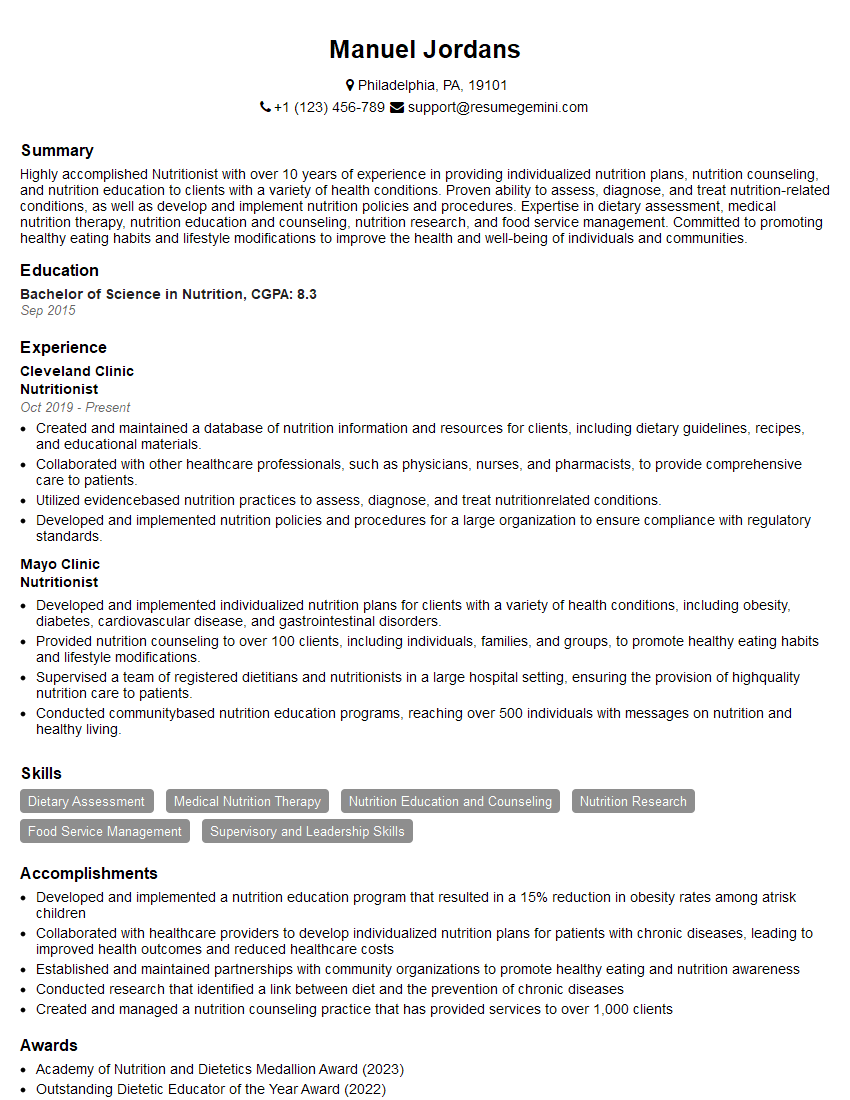
Are you gearing up for a career in Nutritionist? Feeling nervous about the interview questions that might come your way? Don’t worry, you’re in the right place. In this blog post, we’ll dive deep into the most common interview questions for Nutritionist and provide you with expert-backed answers. We’ll also explore the key responsibilities of this role so you can tailor your responses to showcase your perfect fit.
Acing the interview is crucial, but landing one requires a compelling resume that gets you noticed. Crafting a professional document that highlights your skills and experience is the first step toward interview success. ResumeGemini can help you build a standout resume that gets you called in for that dream job.






Essential Interview Questions For Nutritionist
1. What is the process of calculating an individual’s nutritional needs?
- Collect relevant information: Age, gender, height, weight, activity level, medical history, and dietary habits.
- Assess energy needs: Calculate basal metabolic rate (BMR) using formulas like Harris-Benedict equation and adjust for activity level.
- Determine macronutrient distribution: Set percentage targets for carbohydrates, protein, and fat based on individual needs and guidelines.
- Identify micronutrient requirements: Determine daily recommended intakes for vitamins, minerals, and other essential nutrients.
- Consider individual variations: Adjust calculations based on specific health conditions, dietary preferences, and cultural factors.
2. How do you evaluate the nutritional status of a patient?
Anthropometric measurements
- Height, weight, and body mass index (BMI)
- Body fat percentage and waist circumference
- Skinfold thickness measurements
Biochemical tests
- Blood tests: Hematocrit, hemoglobin, glucose, cholesterol
- Urine analysis: Protein, ketones
- Hair analysis: Trace elements
Dietary assessment
- Food frequency questionnaires
- 24-hour dietary recalls
- Food diaries
3. What are the key principles of medical nutrition therapy (MNT)?
- Individualized care: Tailored nutrition plans based on patient’s specific needs and medical conditions.
- Evidence-based approach: Recommendations supported by scientific research and clinical guidelines.
- Collaboration with healthcare team: Registered dietitians (RDs) collaborate with physicians, nurses, and other healthcare professionals.
- Patient education: Empowering patients with nutrition knowledge and self-management skills.
- Goal-oriented approach: Establishing specific and measurable nutrition goals with the patient.
4. How do you counsel patients on healthy dietary changes?
- Motivational interviewing techniques: Explore patient’s readiness to change, elicit their own goals, and support their decision-making.
- Educational materials: Provide handouts, websites, and other resources on healthy eating.
- Goal setting: Develop realistic and achievable nutrition goals with the patient.
- Skill development: Empower patients with cooking skills, meal planning strategies, and healthy food choices.
- Follow-up and support: Regular check-ins to monitor progress, provide encouragement, and adjust the plan as needed.
5. What is your experience in using nutrition software and databases?
Highlight proficiency in using nutrition analysis software, such as Nutrition Data System for Research (NDSR), Diet and Health Knowledge Base (DHK), or Nutritionist Pro. Mention experience in accessing and interpreting nutrition databases, such as USDA National Nutrient Database or Conde Nast Nutrition Data Source.
6. How do you stay up-to-date with the latest nutrition research and guidelines?
- Attend conferences and webinars
- Read peer-reviewed journals and articles
- Review websites of reputable organizations (e.g., Academy of Nutrition and Dietetics, National Institutes of Health)
- Engage in continuing education programs
- Participate in professional development opportunities
7. What are the ethical considerations in nutrition counseling?
- Confidentiality: Maintaining the privacy of patient information.
- Cultural sensitivity: Respecting different dietary practices and beliefs.
- Evidence-based practice: Avoiding biased or unproven information in nutrition recommendations.
- Non-judgmental approach: Treating patients with respect and understanding, regardless of their weight or dietary habits.
8. How do you handle challenging patients or those who are resistant to dietary changes?
- Active listening: Engaging empathetically with patients to understand their concerns and motivations.
- Motivational interviewing techniques: Guiding patients towards self-discovery and behavior change.
- Collaboration with healthcare team: Seeking support from physicians, nurses, or other professionals to address underlying medical or psychological issues.
- Setting realistic goals: Starting with small, achievable changes that the patient is more likely to maintain.
9. What is the role of a nutritionist in public health?
- Developing and implementing nutrition education programs
- Promoting healthy eating policies and initiatives
- Conducting nutrition research and surveillance
- Advocating for nutrition and food security
- Collaborating with community organizations and healthcare providers
10. What are the key challenges facing the field of nutrition today?
- Rising rates of obesity and chronic diseases
- Disparities in nutrition access and outcomes
- Misinformation and fad diets
- Need for continued research and innovation
- Evolving ethical considerations in nutrition practice
Interviewers often ask about specific skills and experiences. With ResumeGemini‘s customizable templates, you can tailor your resume to showcase the skills most relevant to the position, making a powerful first impression. Also check out Resume Template specially tailored for Nutritionist.
Career Expert Tips:
- Ace those interviews! Prepare effectively by reviewing the Top 50 Most Common Interview Questions on ResumeGemini.
- Navigate your job search with confidence! Explore a wide range of Career Tips on ResumeGemini. Learn about common challenges and recommendations to overcome them.
- Craft the perfect resume! Master the Art of Resume Writing with ResumeGemini’s guide. Showcase your unique qualifications and achievements effectively.
- Great Savings With New Year Deals and Discounts! In 2025, boost your job search and build your dream resume with ResumeGemini’s ATS optimized templates.
Researching the company and tailoring your answers is essential. Once you have a clear understanding of the Nutritionist‘s requirements, you can use ResumeGemini to adjust your resume to perfectly match the job description.
Key Job Responsibilities
Nutritionists play a crucial role in promoting health and well-being through their expertise in nutrition science. Their key job responsibilities encompass a wide range of tasks that directly impact individuals’ health and dietary choices.
1. Dietary Assessment and Analysis
Nutritionists conduct thorough dietary assessments to evaluate individuals’ nutrition intake and identify potential deficiencies or excesses. They analyze dietary patterns, food choices, and meal habits to understand the nutritional strengths and weaknesses of their clients.
2. Nutrition Counseling and Education
Based on their dietary assessments, nutritionists provide personalized counseling and education to clients. They help individuals understand the importance of balanced nutrition, make healthy food choices, and develop sustainable dietary habits. They also educate clients on food preparation techniques, label reading, and other aspects of nutritional well-being.
3. Medical Nutrition Therapy
For individuals with specific medical conditions or dietary restrictions, nutritionists provide medical nutrition therapy. They collaborate with healthcare professionals to develop tailored nutrition plans that address the unique dietary needs of patients with diabetes, heart disease, kidney disease, and other conditions.
4. Community Nutrition
Nutritionists often work in community settings to improve the nutritional status of populations. They conduct nutrition education programs, develop community-based nutrition initiatives, and advocate for policies that promote healthy eating.
Interview Preparation Tips
To increase your chances of success in a nutritionist interview, it is essential to prepare thoroughly and present your qualifications effectively. Here are some key tips to help you ace the interview:
1. Research the Organization and Position
Before the interview, take the time to thoroughly research the organization you are applying to and the specific position you are interviewing for. This will help you understand the company’s values, goals, and culture, and tailor your responses accordingly.
2. Highlight Your Relevant Skills and Experience
In your resume and cover letter, be sure to highlight your relevant skills and experience that align with the job requirements. Emphasize your expertise in dietary assessment, nutrition counseling, and medical nutrition therapy. Provide specific examples of your work that demonstrate your abilities.
3. Practice Your Answers to Common Interview Questions
Take the time to practice answering common interview questions. This will help you feel more confident and prepared during the actual interview. Some common questions you may encounter include:
- Tell me about your experience in dietary assessment and analysis.
- How would you approach counseling a client with diabetes?
- What are your thoughts on the role of community nutrition in improving population health?
4. Be Prepared to Discuss Your Research and Published Work
If you have conducted research or published work in the field of nutrition, be prepared to discuss it during the interview. This is a great way to showcase your expertise and passion for the field. Bring copies of your research papers or publications to share with the interviewer if appropriate.
5. Ask Thoughtful Questions
At the end of the interview, be sure to ask thoughtful questions about the organization, the position, and the team you would be working with. This shows that you are engaged and interested in the opportunity.
Next Step:
Now that you’re armed with the knowledge of Nutritionist interview questions and responsibilities, it’s time to take the next step. Build or refine your resume to highlight your skills and experiences that align with this role. Don’t be afraid to tailor your resume to each specific job application. Finally, start applying for Nutritionist positions with confidence. Remember, preparation is key, and with the right approach, you’ll be well on your way to landing your dream job. Build an amazing resume with ResumeGemini