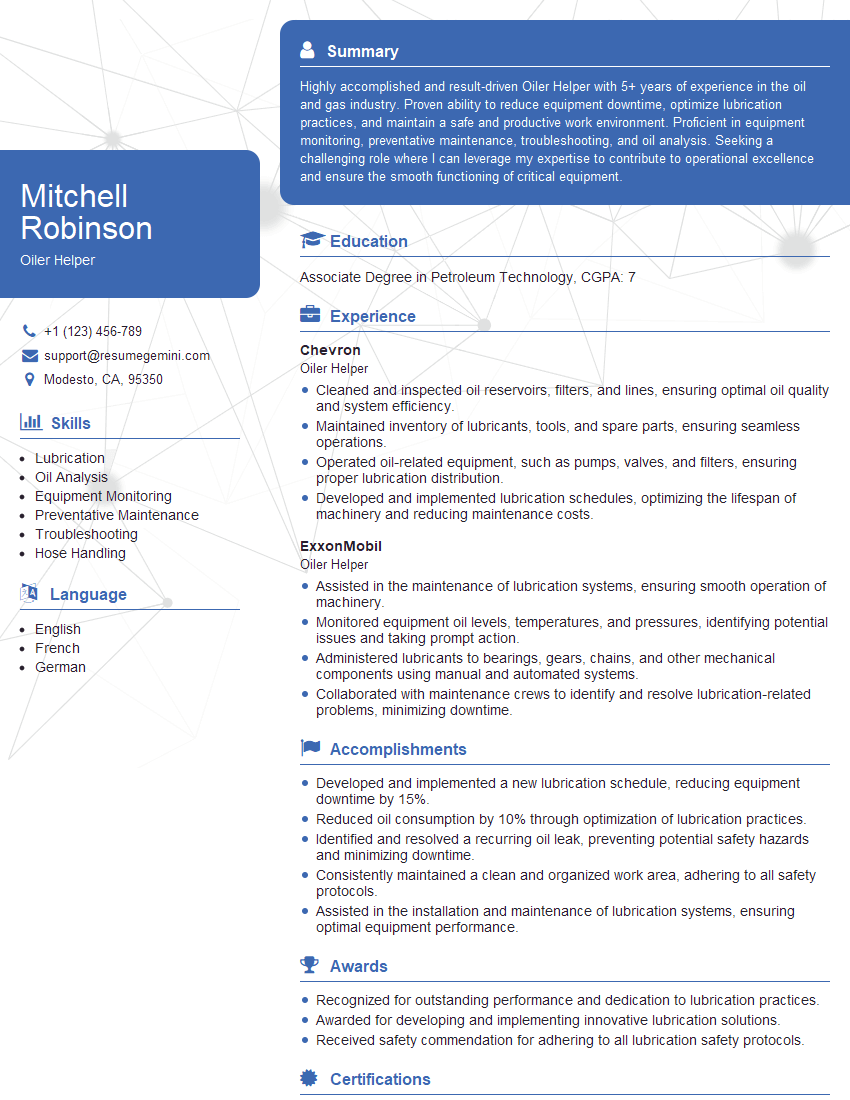
Ever felt underprepared for that crucial job interview? Or perhaps you’ve landed the interview but struggled to articulate your skills and experiences effectively? Fear not! We’ve got you covered. In this blog post, we’re diving deep into the Oiler Helper interview questions that you’re most likely to encounter. But that’s not all. We’ll also provide expert insights into the key responsibilities of a Oiler Helper so you can tailor your answers to impress potential employers.
Acing the interview is crucial, but landing one requires a compelling resume that gets you noticed. Crafting a professional document that highlights your skills and experience is the first step toward interview success. ResumeGemini can help you build a standout resume that gets you called in for that dream job.






Essential Interview Questions For Oiler Helper
1. What are the primary responsibilities of an Oiler Helper?
As an Oiler Helper, I would be responsible for assisting in the lubrication and maintenance of machinery and equipment, ensuring smooth operation and minimizing downtime.
- Performing routine oiling and greasing tasks.
- Monitoring equipment for leaks and other potential issues.
2. What types of lubricants are commonly used in industrial settings?
Petroleum-based oils:
- Mineral oils
- Synthetic oils
Non-petroleum-based lubricants
- Vegetable oils
- Synthetic greases
3. Explain the importance of proper lubrication for machinery and equipment.
Proper lubrication reduces friction, wear, and heat, which helps to extend the life of machinery and equipment.
- Minimizes friction and wear on moving parts.
- Removes heat and contaminants.
- Protects against corrosion and rust.
4. Describe the safety precautions to be observed when working with lubricants.
- Wear appropriate personal protective equipment (PPE), such as gloves and safety glasses.
- Handle lubricants with care, as they can be flammable or toxic.
- Dispose of used lubricants properly to minimize environmental impact.
5. What are the different types of lubrication systems used in industrial settings?
Manual lubrication:
- Hand-held oil cans
- Grease guns
Automatic lubrication:
- Centralized lubrication systems
- Automated oilers
6. How do you determine the appropriate lubrication interval for a specific machine?
The appropriate lubrication interval depends on several factors:
- Type of equipment
- Operating conditions
- Manufacturer’s recommendations
7. Explain the difference between oil and grease and their respective applications.
- Oil is a thin, liquid lubricant suitable for high-speed applications with low loads.
- Grease is a semi-solid lubricant used for low-speed applications with high loads.
8. What are the key performance indicators (KPIs) for an Oiler Helper?
- Equipment uptime
- Lubrication costs
- Environmental compliance
9. How would you handle a situation where you notice a potential problem with a piece of equipment?
If I noticed a potential problem with a piece of equipment, I would:
- Report it to my supervisor immediately.
- If possible, isolate the problem to prevent further damage.
- Assist in troubleshooting the issue.
10. Describe a time when you demonstrated initiative and went above and beyond your job responsibilities.
In my previous role, I noticed that the lubrication system on a critical piece of equipment was not functioning properly. I took the initiative to troubleshoot the problem and found that a sensor had failed.
- I replaced the sensor and recalibrated the system.
- This proactive action prevented a potential equipment failure and saved the company thousands of dollars in downtime.
Interviewers often ask about specific skills and experiences. With ResumeGemini‘s customizable templates, you can tailor your resume to showcase the skills most relevant to the position, making a powerful first impression. Also check out Resume Template specially tailored for Oiler Helper.
Career Expert Tips:
- Ace those interviews! Prepare effectively by reviewing the Top 50 Most Common Interview Questions on ResumeGemini.
- Navigate your job search with confidence! Explore a wide range of Career Tips on ResumeGemini. Learn about common challenges and recommendations to overcome them.
- Craft the perfect resume! Master the Art of Resume Writing with ResumeGemini’s guide. Showcase your unique qualifications and achievements effectively.
- Great Savings With New Year Deals and Discounts! In 2025, boost your job search and build your dream resume with ResumeGemini’s ATS optimized templates.
Researching the company and tailoring your answers is essential. Once you have a clear understanding of the Oiler Helper‘s requirements, you can use ResumeGemini to adjust your resume to perfectly match the job description.
Key Job Responsibilities
Oiler Helpers support the efficient operation of industrial machinery by performing routine maintenance and lubrication tasks, ensuring the smooth and safe running of equipment. Their key responsibilities include:
1. Lubrication Maintenance
Regularly inspecting and greasing bearings, gears, chains, and other moving parts to prevent friction and wear.
2. Asset Monitoring
Observing and monitoring machinery for any unusual sounds, vibrations, or leaks, and reporting any potential issues to supervisors promptly.
3. Equipment Cleaning
Cleaning and maintaining machinery, including removing grease, dirt, and debris to prevent contamination and improve performance.
4. Material Management
Managing and replenishing lubrication supplies, ensuring that there is sufficient stock for daily operations.
Interview Tips
Preparing for an Oiler Helper interview requires understanding the role’s requirements and demonstrating your skills and experience. Here are some tips to help you ace the interview:
1. Research the Company and Position
Familiarize yourself with the company’s industry, products, and culture. Study the job description thoroughly to understand the specific responsibilities and qualifications.
2. Highlight Relevant Skills and Experience
Emphasize your technical skills in lubrication, mechanical maintenance, and equipment monitoring. Provide concrete examples of your experience in performing these tasks.
3. Demonstrate Safety Awareness
Stress your understanding of safety protocols and your commitment to maintaining a safe work environment. Share examples of your experience in adhering to safety regulations and identifying potential hazards.
4. Show Willingness to Learn and Grow
Indicate your eagerness to expand your knowledge and develop new skills. Mention any training programs or certifications you have completed or are interested in pursuing.
Next Step:
Armed with this knowledge, you’re now well-equipped to tackle the Oiler Helper interview with confidence. Remember, preparation is key. So, start crafting your resume, highlighting your relevant skills and experiences. Don’t be afraid to tailor your application to each specific job posting. With the right approach and a bit of practice, you’ll be well on your way to landing your dream job. Build your resume now from scratch or optimize your existing resume with ResumeGemini. Wish you luck in your career journey!