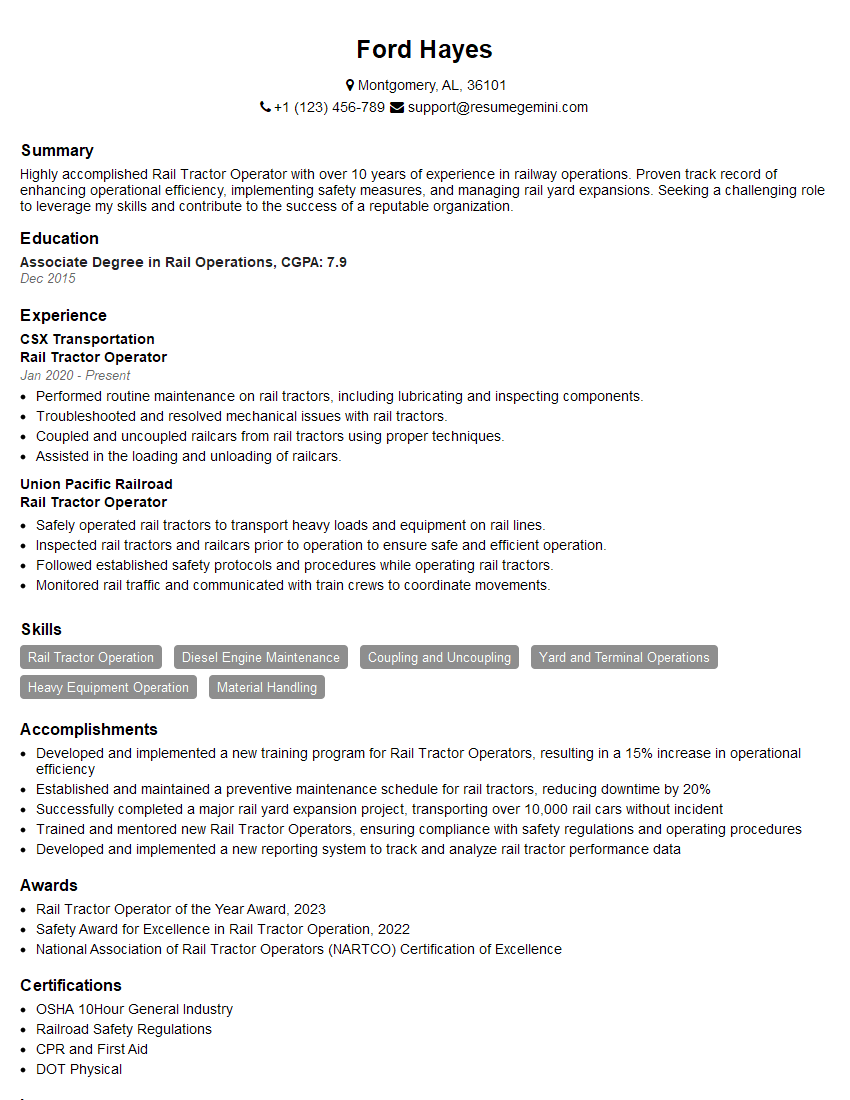
Ever felt underprepared for that crucial job interview? Or perhaps you’ve landed the interview but struggled to articulate your skills and experiences effectively? Fear not! We’ve got you covered. In this blog post, we’re diving deep into the Rail Tractor Operator interview questions that you’re most likely to encounter. But that’s not all. We’ll also provide expert insights into the key responsibilities of a Rail Tractor Operator so you can tailor your answers to impress potential employers.
Acing the interview is crucial, but landing one requires a compelling resume that gets you noticed. Crafting a professional document that highlights your skills and experience is the first step toward interview success. ResumeGemini can help you build a standout resume that gets you called in for that dream job.






Essential Interview Questions For Rail Tractor Operator
1. Describe the key responsibilities of a Rail Tractor Operator.
- Operating rail tractors to move rail cars and other equipment within rail yards and industrial facilities.
- Inspecting rail tractors and ensuring they are in good working order before operating them.
- Following established safety procedures and regulations while operating rail tractors.
- Communicating with other railroad personnel to coordinate movements and ensure safe operations.
- Troubleshooting and resolving minor mechanical issues with rail tractors.
2. What are the different types of rail tractors and their specific uses?
- Industrial Rail Tractors: Used for moving heavy loads within industrial facilities, such as factories and warehouses.
- Yard Tractors: Used for switching and moving rail cars within rail yards.
- Road-Rail Tractors: Can operate on both rails and roads, used for transporting rail cars between rail yards and industrial facilities.
- Terminal Tractors: Used for moving rail cars within intermodal terminals.
- Short-Line Rail Tractors: Used by short-line railroads for moving rail cars over short distances.
3. Explain the safety precautions you take when operating a rail tractor.
- Wearing appropriate safety gear, including high-visibility clothing, gloves, and safety glasses.
- Inspecting the rail tractor thoroughly before operating it, including checking fluid levels, brakes, and lights.
- Following established safety protocols, such as maintaining a safe distance from other equipment and personnel.
- Being aware of surroundings and potential hazards, such as overhead wires and grade crossings.
- Communicating effectively with other railroad personnel to ensure safe operations.
4. How do you troubleshoot and resolve common mechanical issues with rail tractors?
- Identifying the problem and its potential causes.
- Consulting technical manuals or seeking guidance from experienced mechanics.
- Using appropriate tools and equipment to diagnose and repair the issue.
- Testing the repair to ensure the rail tractor is operating properly.
- Documenting the issue and repair for future reference.
5. Describe your experience in operating rail tractors in different weather conditions.
- Extreme Heat: Ensuring proper hydration, monitoring engine temperature, and taking breaks as needed.
- Extreme Cold: Wearing appropriate clothing, warming up the engine before operating, and checking for ice and snow on the tracks.
- Rain: Reducing speed, increasing following distance, and using windshield wipers to maintain visibility.
- Snow: Using snow removal equipment, installing tire chains when necessary, and being extra cautious on slippery tracks.
- Fog: Using headlights and fog lights, reducing speed, and being aware of reduced visibility.
6. How do you maintain a clean and organized work environment on the rail tractor?
- Regularly cleaning the interior and exterior of the rail tractor.
- Inspecting and maintaining tools and equipment, ensuring they are in good working order.
- Storing materials and supplies in designated areas to prevent clutter.
- Reporting any spills or leaks promptly and taking appropriate cleanup measures.
- Following established housekeeping procedures to maintain a safe and efficient work environment.
7. Explain the importance of communication and teamwork in the role of a Rail Tractor Operator.
- Communicating effectively with other railroad personnel, such as conductors, engineers, and yardmasters.
- Following instructions and procedures clearly and accurately.
- Providing feedback and reporting any issues or concerns.
- Working collaboratively to ensure safe and efficient operations.
- Maintaining a positive and cooperative work environment.
8. Describe your experience in handling and transporting hazardous materials on rail tractors.
- Understanding the different types of hazardous materials and their potential risks.
- Following established procedures for handling and transporting hazardous materials safely.
- Wearing appropriate personal protective equipment (PPE) and using proper equipment for handling hazardous materials.
- Responding appropriately to spills or leaks of hazardous materials.
- Documenting and reporting any incidents involving hazardous materials.
9. Explain the role of technology in the operation of rail tractors.
- Using onboard computers and GPS systems for navigation and tracking.
- Utilizing remote monitoring systems to monitor engine performance and identify potential issues.
- Communicating with other railroad personnel using radios and mobile devices.
- Staying up-to-date on new technologies and advancements in the rail industry.
- Embracing technology to improve safety and efficiency in rail operations.
10. Describe your approach to continuous learning and professional development as a Rail Tractor Operator.
- Attending training sessions and workshops to enhance skills and knowledge.
- Reading industry publications and staying informed about new technologies and best practices.
- Seeking feedback from experienced operators and mentors.
- Participating in professional organizations and industry events.
- Demonstrating a commitment to ongoing learning and improvement.
Interviewers often ask about specific skills and experiences. With ResumeGemini‘s customizable templates, you can tailor your resume to showcase the skills most relevant to the position, making a powerful first impression. Also check out Resume Template specially tailored for Rail Tractor Operator.
Career Expert Tips:
- Ace those interviews! Prepare effectively by reviewing the Top 50 Most Common Interview Questions on ResumeGemini.
- Navigate your job search with confidence! Explore a wide range of Career Tips on ResumeGemini. Learn about common challenges and recommendations to overcome them.
- Craft the perfect resume! Master the Art of Resume Writing with ResumeGemini’s guide. Showcase your unique qualifications and achievements effectively.
- Great Savings With New Year Deals and Discounts! In 2025, boost your job search and build your dream resume with ResumeGemini’s ATS optimized templates.
Researching the company and tailoring your answers is essential. Once you have a clear understanding of the Rail Tractor Operator‘s requirements, you can use ResumeGemini to adjust your resume to perfectly match the job description.
Key Job Responsibilities
Rail Tractor Operators play a vital role in the transportation of goods by rail. They are responsible for the safe and efficient operation of rail tractors, which are used to move railcars within rail yards and industrial facilities. Key job responsibilities include:
1. Operating Rail Tractors
Rail Tractor Operators must be able to safely and efficiently operate rail tractors in a variety of conditions. This includes starting, stopping, and maneuvering the tractor, as well as coupling and uncoupling railcars.
- Starting, stopping, and maneuvering rail tractors
- Coupling and uncoupling railcars
- Inspecting rail tractors and railcars
2. Maintaining Rail Tractors
Rail Tractor Operators are also responsible for maintaining rail tractors in good working condition. This includes performing daily inspections, making minor repairs, and reporting any major problems to supervisors.
- Performing daily inspections of rail tractors
- Making minor repairs to rail tractors
- Reporting any major problems to supervisors
3. Following Safety Procedures
Rail Tractor Operators must always follow all safety procedures when working with rail tractors and railcars. This includes wearing proper safety gear, following all traffic signals, and being aware of potential hazards.
- Wearing proper safety gear
- Following all traffic signals
- Being aware of potential hazards
4. Communicating with Others
Rail Tractor Operators must be able to communicate effectively with others, including supervisors, co-workers, and customers. This includes giving and receiving instructions, reporting problems, and answering questions.
- Giving and receiving instructions
- Reporting problems
- Answering questions
Interview Tips
In order to ace your interview for a Rail Tractor Operator position, it is important to be prepared to answer questions about your experience, skills, and qualifications. Here are a few tips to help you prepare
1. Research the Company
Before your interview, take some time to research the company you are applying to. This will help you understand their business, their culture, and their specific needs. You can find information about the company on their website, in industry publications, and on social media.
- Visit the company website
- Read industry publications
- Check the company’s social media pages
2. Practice Answering Common Interview Questions
There are a number of common interview questions that you are likely to be asked, such as: “Tell me about yourself.” “Why are you interested in this position?” and “What are your strengths and weaknesses?” Take some time to practice answering these questions in a clear and concise manner.
- “Tell me about yourself.”
- “Why are you interested in this position?”
- “What are your strengths and weaknesses?”
3. Be Prepared to Talk About Your Experience
In your interview, you will be asked about your experience operating rail tractors and maintaining rail equipment. Be prepared to give specific examples of your work experience, and highlight your skills and qualifications.
- Give specific examples of your work experience
- Highlight your skills and qualifications
4. Dress Professionally
First impressions matter, so it is important to dress professionally for your interview. This means wearing a suit or business casual attire. You should also make sure that your clothes are clean and pressed.
- Wear a suit or business casual attire
- Make sure your clothes are clean and pressed
Next Step:
Now that you’re armed with the knowledge of Rail Tractor Operator interview questions and responsibilities, it’s time to take the next step. Build or refine your resume to highlight your skills and experiences that align with this role. Don’t be afraid to tailor your resume to each specific job application. Finally, start applying for Rail Tractor Operator positions with confidence. Remember, preparation is key, and with the right approach, you’ll be well on your way to landing your dream job. Build an amazing resume with ResumeGemini