Are you gearing up for a career shift or aiming to ace your next interview? Look no further! We’ve curated a comprehensive guide to help you crack the interview for the coveted Railcar Brake Operator position. From understanding the key responsibilities to mastering the most commonly asked questions, this blog has you covered. So, buckle up and let’s embark on this journey together
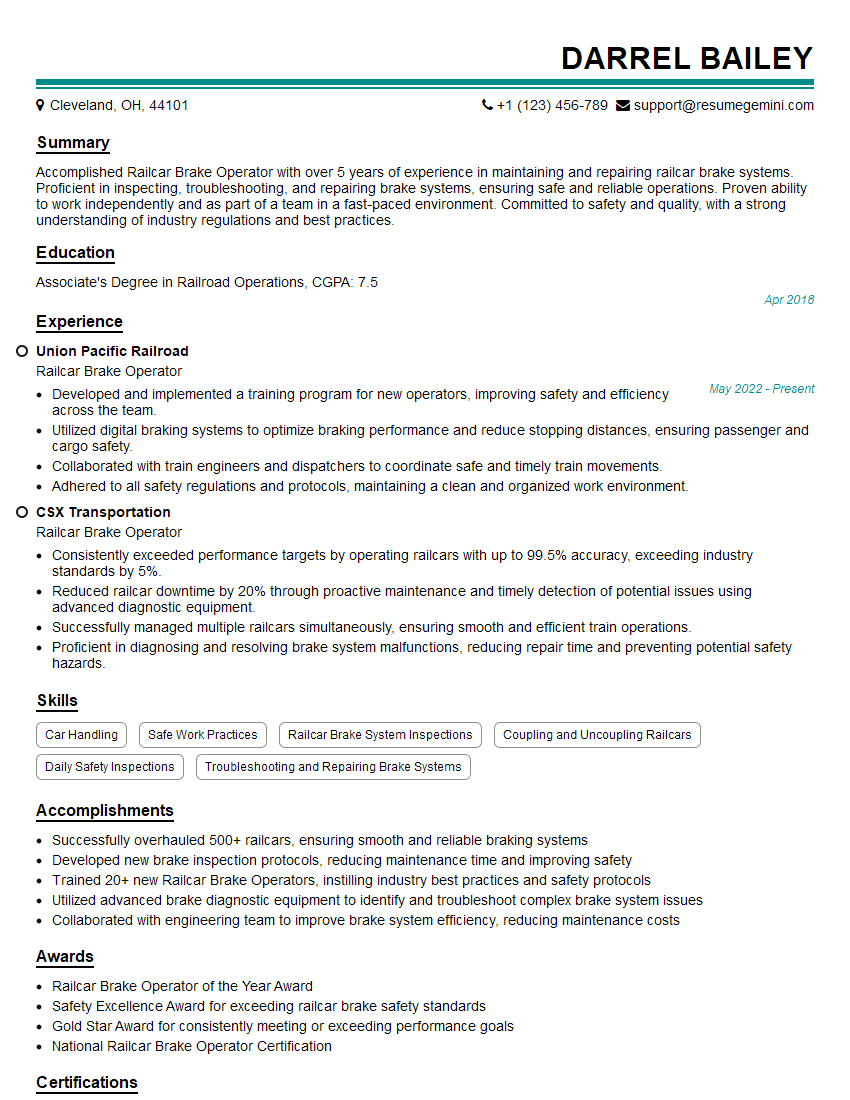
Acing the interview is crucial, but landing one requires a compelling resume that gets you noticed. Crafting a professional document that highlights your skills and experience is the first step toward interview success. ResumeGemini can help you build a standout resume that gets you called in for that dream job.






Essential Interview Questions For Railcar Brake Operator
1. What are the different types of railcar brake systems?
There are two main types of railcar brake systems: air brakes and dynamic brakes.
- Air brakes use compressed air to apply force to the brake shoes, which then press against the wheels to slow down the train.
- Dynamic brakes use the electric motors that power the train to slow it down by generating resistance.
2. How do you perform a brake test on a railcar?
Visual inspection
- Inspect the brake shoes, brake pads, and brake discs for wear and damage.
- Check the brake lines and hoses for leaks or damage.
Operational test
- Apply the brakes at low speed and listen for any unusual noises or vibrations.
- Gradually increase the speed and apply the brakes to test their effectiveness.
- Check the brake pressure gauge to ensure that the brakes are operating within the specified range.
3. What are the common causes of brake failure on railcars?
Some of the common causes of brake failure on railcars include:
- Worn or damaged brake shoes or pads
- Leaks in the brake lines or hoses
- Malfunctioning brake valves or actuators
- Electrical problems with the brake system
- Human error
4. What are the safety precautions that you must follow when working on railcar brakes?
When working on railcar brakes, it is important to follow all safety precautions to prevent injury or damage to the equipment.
- Wear appropriate safety gear, including gloves, safety glasses, and a hard hat.
- Ensure that the railcar is properly chocked and blocked before working on the brakes.
- Use caution when handling compressed air or other hazardous materials.
- Follow all manufacturer’s instructions and procedures for working on railcar brakes.
- Never work on the brakes while the train is in motion.
5. What is the role of the brake controller in a railcar brake system?
The brake controller is a device used by the train operator to control the application and release of the brakes.
- The brake controller typically has a handle or lever that the operator moves to apply or release the brakes.
- The brake controller also has a pressure gauge that indicates the air pressure in the brake system.
- The operator uses the brake controller to maintain the desired braking force and to modulate the brakes to prevent wheel slip.
6. How do you troubleshoot a railcar brake system that is not working properly?
If a railcar brake system is not working properly, the first step is to identify the source of the problem.
- Start by visually inspecting the brake components for any obvious damage or leaks.
- If there is no visible damage, use a pressure gauge to check the air pressure in the brake system.
- If the air pressure is low, check for leaks in the brake lines or hoses.
- If the air pressure is within the specified range, the problem may be with the brake valves or actuators.
- Use a multimeter to check the electrical connections to the brake components.
7. What is the importance of maintaining a proper brake system on a railcar?
A properly maintained brake system is essential for the safe operation of a railcar.
- The brake system helps to slow down and stop the train in a controlled manner.
- A well-maintained brake system can help to prevent accidents, such as derailments and collisions.
- Regular maintenance can also help to extend the life of the brake components and reduce the overall cost of operating the railcar.
8. What are the different types of brake shoes used on railcars?
There are several different types of brake shoes used on railcars, including:
- Composition brake shoes are made of a mixture of metal and non-metallic materials, such as graphite and asbestos.
- Metallic brake shoes are made of a metal alloy, such as cast iron or steel.
- Ceramic brake shoes are made of a ceramic material, such as silicon carbide or aluminum oxide.
- Polymer brake shoes are made of a polymer material, such as polyurethane or rubber.
9. What is the difference between a brake shoe and a brake pad?
Brake shoes and brake pads are both used to apply friction to the wheels to slow down or stop a train.
- Brake shoes are typically used on freight cars and other heavy-duty railcars.
- Brake pads are typically used on passenger cars and other lighter-weight railcars.
- Brake shoes are typically made of a metal alloy, while brake pads are typically made of a composite material.
- Brake shoes are typically replaced when they are worn down to a certain thickness, while brake pads are typically replaced when they are worn down to a certain level of friction material.
10. What is the role of the brake cylinder in a railcar brake system?
The brake cylinder is a device that converts compressed air into mechanical force to apply the brakes.
- The brake cylinder is typically located near the brake shoes or brake pads.
- When compressed air is applied to the brake cylinder, it pushes a piston that is connected to the brake shoes or brake pads.
- The piston applies force to the brake shoes or brake pads, which then press against the wheels to slow down or stop the train.
Interviewers often ask about specific skills and experiences. With ResumeGemini‘s customizable templates, you can tailor your resume to showcase the skills most relevant to the position, making a powerful first impression. Also check out Resume Template specially tailored for Railcar Brake Operator.
Career Expert Tips:
- Ace those interviews! Prepare effectively by reviewing the Top 50 Most Common Interview Questions on ResumeGemini.
- Navigate your job search with confidence! Explore a wide range of Career Tips on ResumeGemini. Learn about common challenges and recommendations to overcome them.
- Craft the perfect resume! Master the Art of Resume Writing with ResumeGemini’s guide. Showcase your unique qualifications and achievements effectively.
- Great Savings With New Year Deals and Discounts! In 2025, boost your job search and build your dream resume with ResumeGemini’s ATS optimized templates.
Researching the company and tailoring your answers is essential. Once you have a clear understanding of the Railcar Brake Operator‘s requirements, you can use ResumeGemini to adjust your resume to perfectly match the job description.
Key Job Responsibilities
Railcar Brake Operators play a crucial role in the safe and efficient operation of railway systems. Their primary responsibilities include:
1. Operating Railcar Brakes
Operate railcar brakes to control the movement and stopping of railcars.
- Apply and release brakes as directed by train engineers.
- Monitor brake performance and make necessary adjustments.
2. Inspecting Railcars and Brakes
Conduct regular inspections of railcars and brake systems to ensure they are in good working condition.
- Check brake pads, shoes, and other components for wear and damage.
- Identify and report any defects or malfunctions.
3. Maintaining Railcar Brakes
Perform routine maintenance and repairs on railcar brakes to ensure optimal performance.
- Replace brake pads and shoes when necessary.
- Lubricate and adjust brake components.
4. Communicating with Train Engineers
Maintain clear and effective communication with train engineers to coordinate brake operations.
- Relay brake status and any issues to train engineers.
- Follow instructions from train engineers regarding brake application and release.
Interview Tips
Preparing thoroughly for a Railcar Brake Operator interview can significantly increase your chances of success. Here are some tips and hacks to help you ace the interview:
1. Research the Company and Position
Familiarize yourself with the railway company, its operations, and the specific responsibilities of the Railcar Brake Operator role.
- Visit the company’s website and social media pages.
- Read industry articles and publications.
2. Highlight Your Relevant Experience and Skills
Emphasize your experience in operating and maintaining railcar brakes, as well as your knowledge of railway safety regulations.
- Use specific examples to demonstrate your technical abilities.
- Quantify your accomplishments whenever possible.
3. Demonstrate Your Communication and Teamwork Skills
Railcar Brake Operators need to be able to communicate effectively and work well as part of a team.
- Provide examples of how you have successfully communicated with train engineers and other railway personnel.
- Describe your experience working in a team environment and contributing to its success.
4. Be Prepared for Technical Questions
Interviewers may ask questions about your understanding of railcar brake systems, maintenance procedures, and safety regulations.
- Review technical manuals and study industry best practices.
- Be prepared to answer questions about your knowledge of different types of brake systems.
Next Step:
Now that you’re armed with the knowledge of Railcar Brake Operator interview questions and responsibilities, it’s time to take the next step. Build or refine your resume to highlight your skills and experiences that align with this role. Don’t be afraid to tailor your resume to each specific job application. Finally, start applying for Railcar Brake Operator positions with confidence. Remember, preparation is key, and with the right approach, you’ll be well on your way to landing your dream job. Build an amazing resume with ResumeGemini