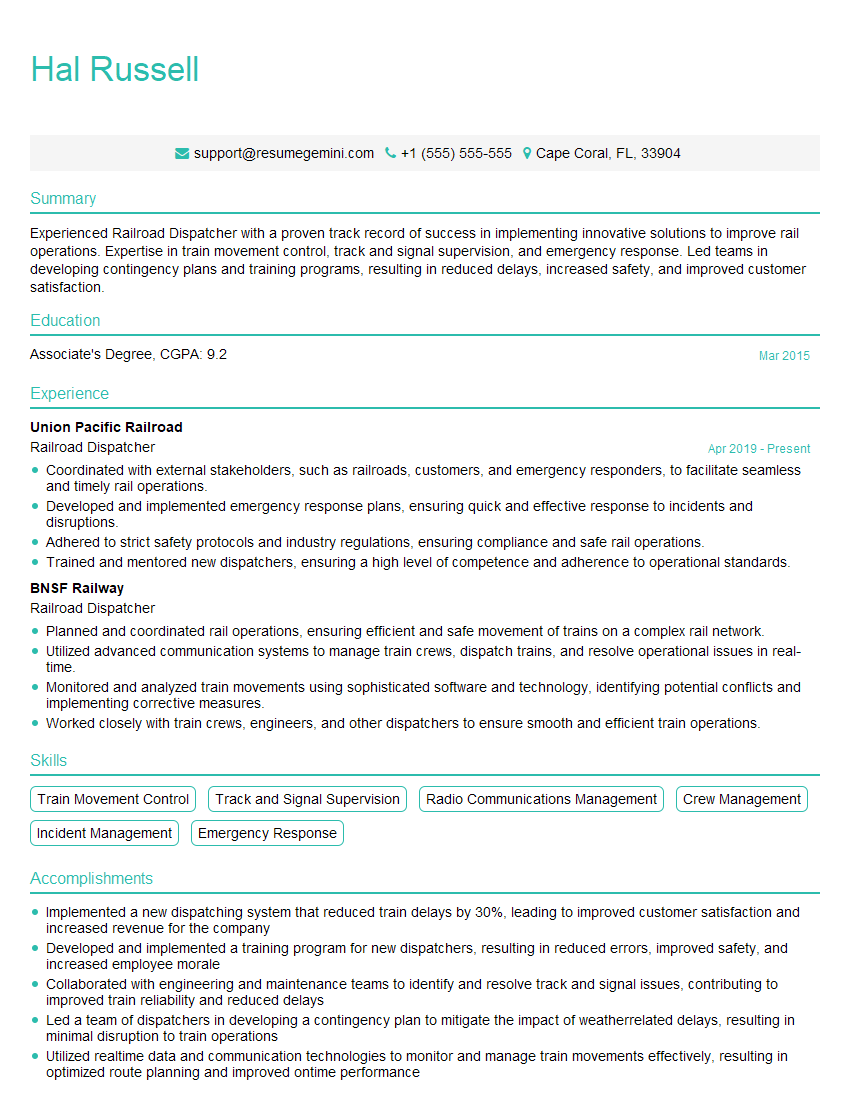
Are you gearing up for an interview for a Railroad Dispatcher position? Whether you’re a seasoned professional or just stepping into the role, understanding what’s expected can make all the difference. In this blog, we dive deep into the essential interview questions for Railroad Dispatcher and break down the key responsibilities of the role. By exploring these insights, you’ll gain a clearer picture of what employers are looking for and how you can stand out. Read on to equip yourself with the knowledge and confidence needed to ace your next interview and land your dream job!
Acing the interview is crucial, but landing one requires a compelling resume that gets you noticed. Crafting a professional document that highlights your skills and experience is the first step toward interview success. ResumeGemini can help you build a standout resume that gets you called in for that dream job.






Essential Interview Questions For Railroad Dispatcher
1. Explain the role and responsibilities of a Railroad Dispatcher?
- Execute train movements by issuing movement authorities to train crews.
- Monitor train movements and ensure safe and efficient operation.
- Communicate with train crews, trackside personnel, and other dispatchers to coordinate train movements.
- Manage train schedules and ensure on-time performance.
- Respond to emergencies and incidents, and implement contingency plans.
2. Describe the key skills and qualifications required for a Railroad Dispatcher?
- A deep understanding of railroad operations and safety standards.
- Excellent communication and interpersonal skills.
- The ability to work under pressure and make quick decisions.
- Strong problem-solving and critical thinking skills.
- Experience with railroad dispatching software and technologies.
3. How do you prioritize train movements during periods of congestion or delays?
- Consider the train’s type, length, and destination.
- Align with railroad priorities and customer schedules.
- Balance operational efficiency with safety and crew availability.
- Communicate with train crews and other dispatchers to coordinate schedules.
4. How do you handle incidents or emergencies involving trains?
- Implement emergency response plans and procedures.
- Communicate with relevant parties, including train crews, trackside personnel, and emergency responders.
- Coordinate resources and provide support to ensure passenger and crew safety.
- Investigate the incident and take appropriate corrective actions to prevent future occurrences.
5. Explain how you use technology and software in your role as a Railroad Dispatcher?
- Utilize railroad dispatching software to manage train movements and track progress.
- Use communication systems and radio to communicate with train crews and other personnel.
- Monitor train position and conditions using tracking systems.
- Implement safety and efficiency enhancements through the adoption of new technologies.
6. How do you ensure the safety of train operations and minimize risks?
- Follow established safety regulations and procedures.
- Monitor train movements and track conditions to identify potential hazards.
- Communicate with train crews and other dispatchers to coordinate safety measures.
- Investigate incidents and implement corrective actions to enhance safety protocols.
7. How do you manage conflicts and resolve disputes with train crews or other dispatchers?
- Maintain open communication and foster a collaborative work environment.
- Understand the perspectives of all parties involved.
- Seek compromise and resolution that prioritize safety and operational efficiency.
- Involve management or relevant stakeholders as necessary to facilitate conflict resolution.
8. How do you stay up-to-date with changes in railroad regulations and operating procedures?
- Attend training sessions and workshops.
- Review industry publications and bulletins.
- Stay informed about technological advancements and best practices.
- Engage with professional organizations and forums.
9. How do you manage workload and prioritize tasks during a busy shift?
- Prioritize tasks based on safety and operational impact.
- Delegate responsibilities and collaborate with other dispatchers when necessary.
- Use technology and automation to streamline tasks.
- Maintain a calm and organized work environment.
10. How do you contribute to the overall success and efficiency of the railroad?
- Ensure safe and efficient train operations.
- Collaborate with other departments to improve processes and service delivery.
- Identify and implement cost-saving measures.
- Support the training and development of new dispatchers.
Interviewers often ask about specific skills and experiences. With ResumeGemini‘s customizable templates, you can tailor your resume to showcase the skills most relevant to the position, making a powerful first impression. Also check out Resume Template specially tailored for Railroad Dispatcher.
Career Expert Tips:
- Ace those interviews! Prepare effectively by reviewing the Top 50 Most Common Interview Questions on ResumeGemini.
- Navigate your job search with confidence! Explore a wide range of Career Tips on ResumeGemini. Learn about common challenges and recommendations to overcome them.
- Craft the perfect resume! Master the Art of Resume Writing with ResumeGemini’s guide. Showcase your unique qualifications and achievements effectively.
- Great Savings With New Year Deals and Discounts! In 2025, boost your job search and build your dream resume with ResumeGemini’s ATS optimized templates.
Researching the company and tailoring your answers is essential. Once you have a clear understanding of the Railroad Dispatcher‘s requirements, you can use ResumeGemini to adjust your resume to perfectly match the job description.
Key Job Responsibilities
A railroad dispatcher is responsible for the safe and efficient movement of trains within a specified territory. They work closely with train crews, track maintenance personnel, and other railroad employees to ensure that trains operate on schedule and without incident.
1. Maintain Track Conditions
Dispatchers monitor track conditions and issue instructions to train crews to avoid potential hazards. They may also request that track maintenance crews make repairs or adjustments if necessary.
- Monitor track conditions using sensors and reports from train crews.
- Issue instructions to train crews to avoid hazards, such as slow orders or track closures.
- Request track maintenance crews to make repairs or adjustments as needed.
2. Manage Train Movement
Dispatchers control the movement of trains within their territory by issuing orders to train crews. They must consider factors such as track conditions, train schedules, and the location of other trains.
- Issue orders to train crews, such as speed limits, route changes, and stops.
- Monitor train progress and make adjustments to orders as needed.
- Coordinate with train crews and other dispatchers to avoid conflicts and delays.
3. Handle Emergencies
Dispatchers are responsible for responding to emergencies, such as derailments, accidents, and natural disasters. They must quickly assess the situation and take action to protect life and property.
- Respond to emergencies promptly and effectively.
- Coordinate with emergency responders and other railroad personnel.
- Provide information to the public and media.
4. Maintain Communication
Dispatchers must maintain constant communication with train crews, track maintenance personnel, and other railroad employees. They use a variety of methods, including radio, telephone, and email.
- Communicate effectively with train crews and other railroad personnel.
- Use radio, telephone, and email to transmit information.
- Maintain records of all communications.
Interview Tips
Preparing for an interview for a railroad dispatcher position can be daunting, but by following these tips, you can increase your chances of success.
1. Research the Company and Position
Before you go to an interview, it’s important to research the company and the specific position you’re applying for. This will help you understand the company’s culture and values, as well as the specific requirements of the job.
- Visit the company’s website and read about their mission, values, and products or services.
- Read the job description carefully and identify the key skills and qualifications required.
- Talk to people who work at the company or in a similar position to learn more about the company culture and what it’s like to work there.
2. Practice Your Answers
Once you’ve done your research, it’s time to practice your answers to common interview questions. This will help you feel more confident and prepared during the interview.
- Use the STAR method to structure your answers. This means stating the situation, task, action, and result of your experience.
- Be specific and provide examples to support your answers.
- Practice your answers out loud with a friend or family member to get feedback.
3. Dress Professionally
First impressions matter, so it’s important to dress professionally for your interview. This means wearing a suit or business casual attire.
- Choose clothing that is clean, pressed, and fits you well.
- Avoid wearing clothing that is too revealing or too casual.
- Make sure your shoes are clean and polished.
4. Be Prepared to Ask Questions
At the end of the interview, the interviewer will likely ask you if you have any questions. This is your chance to learn more about the company and the position, and to show that you’re interested in the job.
- Prepare a few questions to ask the interviewer, such as “What are the biggest challenges facing the company right now?” or “What are the opportunities for advancement within the company?”
- Don’t ask questions that are too personal or that have already been answered during the interview.
Next Step:
Armed with this knowledge, you’re now well-equipped to tackle the Railroad Dispatcher interview with confidence. Remember, preparation is key. So, start crafting your resume, highlighting your relevant skills and experiences. Don’t be afraid to tailor your application to each specific job posting. With the right approach and a bit of practice, you’ll be well on your way to landing your dream job. Build your resume now from scratch or optimize your existing resume with ResumeGemini. Wish you luck in your career journey!