Are you gearing up for a career in Rigging Worker? Feeling nervous about the interview questions that might come your way? Don’t worry, you’re in the right place. In this blog post, we’ll dive deep into the most common interview questions for Rigging Worker and provide you with expert-backed answers. We’ll also explore the key responsibilities of this role so you can tailor your responses to showcase your perfect fit.
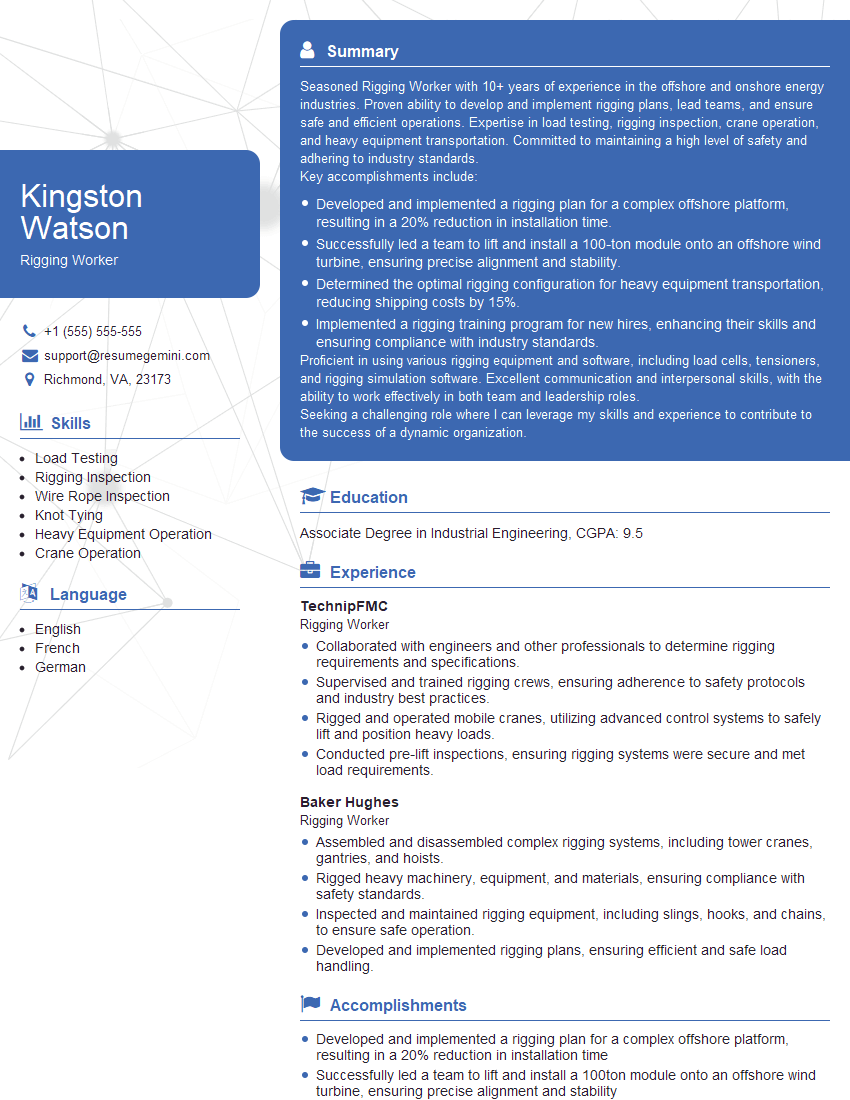
Acing the interview is crucial, but landing one requires a compelling resume that gets you noticed. Crafting a professional document that highlights your skills and experience is the first step toward interview success. ResumeGemini can help you build a standout resume that gets you called in for that dream job.






Essential Interview Questions For Rigging Worker
1. Describe the steps involved in rigging a load for lifting?
The steps involved in rigging a load for lifting are:
- Inspect the load and determine its weight and dimensions.
- Select the appropriate rigging equipment for the load.
- Attach the rigging equipment to the load.
- Test the rigging equipment to ensure it is secure.
- Lift the load.
2. What are the different types of rigging equipment?
Slings
- Wire rope slings
- Chain slings
- Nylon slings
Hoists
- Manual hoists
- Electric hoists
- Hydraulic hoists
Cranes
- Overhead cranes
- Gantry cranes
- Mobile cranes
3. What are the safety precautions that must be taken when rigging a load?
- Inspect the load and rigging equipment before use.
- Do not overload the rigging equipment.
- Use the proper hitches and knots.
- Do not stand under the load.
- Wear appropriate safety gear.
4. What are the different types of hitches and knots used in rigging?
- Basket hitch
- Choker hitch
- Clove hitch
- Bowline knot
- Square knot
5. What are the different types of slings used in rigging?
Wire rope slings
- Single leg slings
- Double leg slings
- Multi-leg slings
Chain slings
- Single leg slings
- Double leg slings
- Multi-leg slings
Nylon slings
- Single leg slings
- Double leg slings
- Multi-leg slings
6. What are the different types of hoists used in rigging?
Manual hoists
- Chain hoists
- Lever hoists
- Ratchet hoists
Electric hoists
- Wire rope hoists
- Chain hoists
- Air hoists
Hydraulic hoists
- Single acting hoists
- Double acting hoists
7. What are the different types of cranes used in rigging?
Overhead cranes
- Top running cranes
- Under running cranes
- Bridge cranes
Gantry cranes
- Single girder gantry cranes
- Double girder gantry cranes
- Semi-gantry cranes
Mobile cranes
- Crawler cranes
- Truck cranes
- All-terrain cranes
8. What are the different types of rigging inspections that are performed?
Pre-use inspections
- Visual inspections
- Functional inspections
In-service inspections
- Periodic inspections
- Special inspections
Post-use inspections
- Visual inspections
- Functional inspections
9. What are the different types of rigging records that are kept?
Rigging inspection records
- Pre-use inspection records
- In-service inspection records
- Post-use inspection records
Rigging maintenance records
- Repair records
- Replacement records
- Modification records
Rigging training records
- Rigging operator training records
- Rigging inspector training records
- Rigging maintenance training records
10. What are the different types of rigging accidents that can occur?
Load related accidents
- Overloading
- Improper load securement
- Load instability
Equipment related accidents
- Equipment failure
- Improper equipment use
- Lack of equipment maintenance
Human related accidents
- Human error
- Lack of training
- Fatigue
Interviewers often ask about specific skills and experiences. With ResumeGemini‘s customizable templates, you can tailor your resume to showcase the skills most relevant to the position, making a powerful first impression. Also check out Resume Template specially tailored for Rigging Worker.
Career Expert Tips:
- Ace those interviews! Prepare effectively by reviewing the Top 50 Most Common Interview Questions on ResumeGemini.
- Navigate your job search with confidence! Explore a wide range of Career Tips on ResumeGemini. Learn about common challenges and recommendations to overcome them.
- Craft the perfect resume! Master the Art of Resume Writing with ResumeGemini’s guide. Showcase your unique qualifications and achievements effectively.
- Great Savings With New Year Deals and Discounts! In 2025, boost your job search and build your dream resume with ResumeGemini’s ATS optimized templates.
Researching the company and tailoring your answers is essential. Once you have a clear understanding of the Rigging Worker‘s requirements, you can use ResumeGemini to adjust your resume to perfectly match the job description.
Key Job Responsibilities
Rigging Workers are responsible for the safe and efficient rigging and movement of heavy equipment and materials at construction sites and other industrial settings. Their primary duties include:
1. Equipment Handling and Rigging
Operate and maintain rigging equipment, such as cranes, hoists, and winches, to lift, move, and position heavy objects.
- Inspect and test rigging equipment to ensure its functionality and safety.
- Plan and execute rigging operations, considering factors such as load weight, equipment capabilities, and safety regulations.
2. Inspection and Maintenance
Inspect and maintain rigging equipment and accessories to ensure their proper functioning and adherence to safety standards.
- Conduct regular inspections of slings, chains, hooks, and other rigging components.
- Identify and repair or replace damaged or worn rigging equipment.
3. Load Handling and Securement
Safely handle and secure loads during rigging operations to prevent damage or injury.
- Use appropriate slings, straps, and other equipment to secure loads for lifting and movement.
- Monitor load stability and make adjustments as needed to ensure safe operation.
4. Safety and Regulations
Adhere to safety regulations and best practices to minimize risks and ensure a safe work environment.
- Follow established safety protocols for rigging and load handling operations.
- Wear appropriate personal protective equipment (PPE) and ensure the safety of others in the work area.
Interview Tips
Preparing for a Rigging Worker interview requires thorough research and practice. Here are some effective tips to help candidates ace the interview:
1. Research the Company and Position
Research the specific company and the Rigging Worker position to gain insights into their values, operations, and requirements.
- Visit the company’s website to learn about their business, culture, and career opportunities.
- Review the job description thoroughly to understand the key responsibilities and qualifications for the role.
2. Practice Answering Common Interview Questions
Prepare responses to common interview questions that are relevant to the Rigging Worker role.
- “Tell us about your experience in rigging and handling heavy equipment.”
- Provide specific examples of projects where you demonstrated your rigging skills.
- Highlight your ability to plan, execute, and complete rigging operations safely and efficiently.
- “How do you ensure safety when working with heavy loads and equipment?”
- Emphasize your adherence to safety regulations and best practices.
- Describe the safety protocols you follow during rigging operations, including equipment inspection, load handling, and PPE usage.
3. Demonstrate Your Technical Knowledge
Showcase your technical knowledge and expertise in rigging and load handling.
- Discuss your understanding of different types of rigging equipment, their capabilities, and their applications.
- Explain the principles of load balance, stability, and safe lifting techniques.
4. Highlight Your Physical Fitness and Endurance
Rigging work requires physical fitness and endurance. Demonstrate your ability to perform the strenuous tasks associated with the role.
- Mention your previous experience in physically demanding jobs or activities.
- Explain how you maintain your physical fitness to meet the demands of the job.
5. Prepare Questions for the Interviewer
Preparing questions to ask the interviewer demonstrates your interest and engagement in the role.
- Ask about the specific projects or tasks you would be responsible for in this position.
- Inquire about the company’s safety policies and training programs.
Next Step:
Armed with this knowledge, you’re now well-equipped to tackle the Rigging Worker interview with confidence. Remember, a well-crafted resume is your first impression. Take the time to tailor your resume to highlight your relevant skills and experiences. And don’t forget to practice your answers to common interview questions. With a little preparation, you’ll be on your way to landing your dream job. So what are you waiting for? Start building your resume and start applying! Build an amazing resume with ResumeGemini.