Are you gearing up for an interview for a Sand Conditioner position? Whether you’re a seasoned professional or just stepping into the role, understanding what’s expected can make all the difference. In this blog, we dive deep into the essential interview questions for Sand Conditioner and break down the key responsibilities of the role. By exploring these insights, you’ll gain a clearer picture of what employers are looking for and how you can stand out. Read on to equip yourself with the knowledge and confidence needed to ace your next interview and land your dream job!
Acing the interview is crucial, but landing one requires a compelling resume that gets you noticed. Crafting a professional document that highlights your skills and experience is the first step toward interview success. ResumeGemini can help you build a standout resume that gets you called in for that dream job.






Essential Interview Questions For Sand Conditioner
1. What are the key factors to consider when selecting a sand conditioner for a foundry?
- Type of casting process being used (green sand, lost foam, etc.)
- Size and capacity of the foundry
- Required sand properties (moisture content, clay content, etc.)
- Environmental regulations and emissions standards
- Budget and cost constraints
2. Describe the different types of sand conditioners available and their specific applications.
Organic conditioners
- Pitch-based conditioners: Improve moldability and reduce sand expansion
- Starch-based conditioners: Increase green strength and reduce casting defects
Inorganic conditioners
- Water-based conditioners: Control moisture content and prevent sand from sticking
- Oil-based conditioners: Reduce dust and improve flowability
Synthetic conditioners
- Acrylic-based conditioners: Reinforce sand and improve dimensional accuracy
- Silicone-based conditioners: Enhance release properties and reduce sticking
3. How do you determine the optimal dosage of sand conditioner for a given application?
- Start with the manufacturer’s recommended dosage
- Conduct small-scale tests to evaluate the effects of different dosages on sand properties
- Monitor the performance of the sand in the production process and adjust the dosage accordingly
- Use a sand analyzer to ensure that the sand meets the required specifications
4. What are the key equipment components of a sand conditioning system?
- Sand mixer
- Sand conditioner dispenser
- Moisture controller
- Dust collection system
5. How do you maintain and troubleshoot a sand conditioning system?
Maintenance
- Regularly clean and inspect the equipment
- Lubricate moving parts
- Check and calibrate measuring instruments
Troubleshooting
- Identify the problem (e.g., poor sand quality, excessive dust)
- Check the equipment for any faults or malfunctions
- Adjust the settings or replace worn parts if necessary
6. What are the safety precautions that need to be taken when working with sand conditioners?
- Wear appropriate personal protective equipment (PPE), including gloves and a mask
- Ensure adequate ventilation in the workspace
- Avoid contact with skin and eyes
- Dispose of used sand conditioners and packaging materials properly
7. How do you stay up-to-date on the latest advancements in sand conditioning technology?
- Attend industry conferences and exhibitions
- Read technical journals and articles
- Consult with experts in the field
- Participate in research and development projects
8. What are some sustainable practices that can be implemented in sand conditioning?
- Use recycled sand materials to reduce waste
- Adopt water-based conditioners to minimize environmental impact
- Invest in energy-efficient equipment
- Implement dust collection systems to improve air quality
9. How do you ensure the quality of conditioned sand and meet the specifications of the casting process?
- Establish clear sand quality specifications
- Use standardized testing methods to evaluate sand properties
- Implement a quality control system to monitor and adjust the conditioning process
- Provide training to operators on the importance of sand quality
10. Describe a challenging sand conditioning project you worked on and how you overcame the obstacles.
This open-ended question allows you to showcase your problem-solving skills and provide a narrative that highlights your experience and capabilities. Tailor your answer to the specific requirements of the role and the company you’re interviewing with.
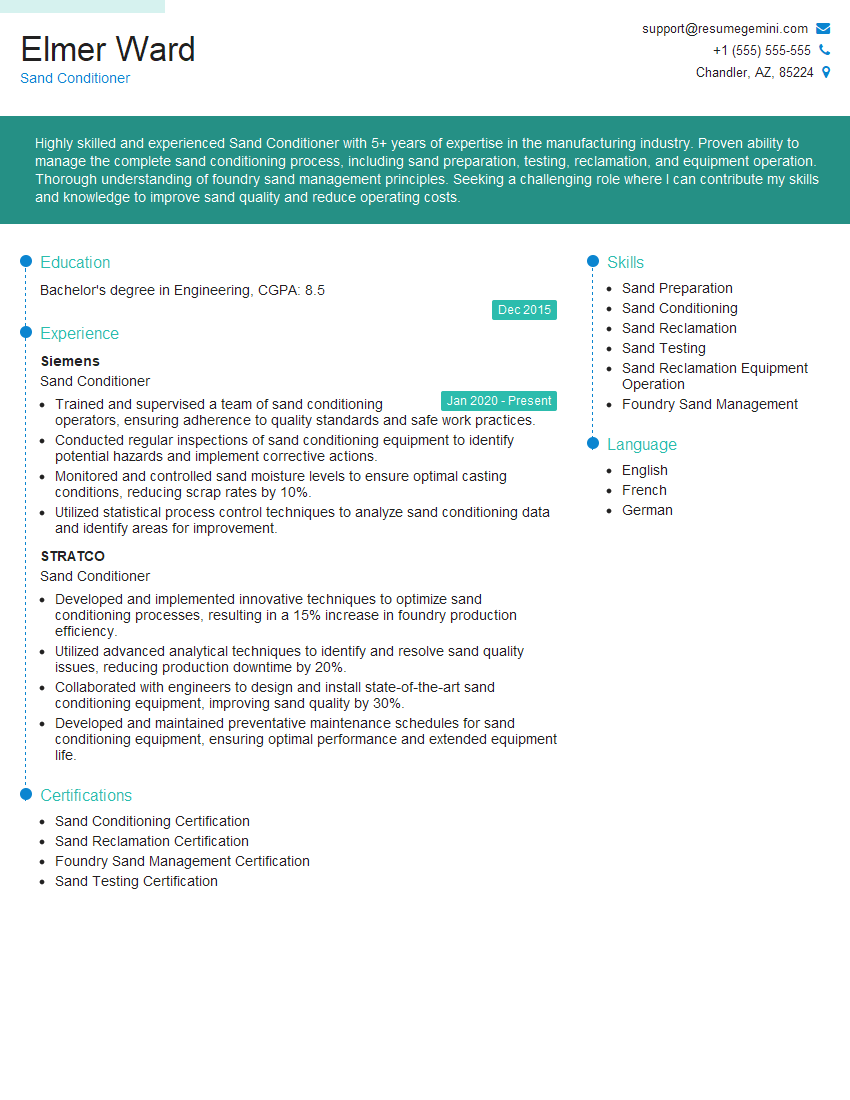
Interviewers often ask about specific skills and experiences. With ResumeGemini‘s customizable templates, you can tailor your resume to showcase the skills most relevant to the position, making a powerful first impression. Also check out Resume Template specially tailored for Sand Conditioner.
Career Expert Tips:
- Ace those interviews! Prepare effectively by reviewing the Top 50 Most Common Interview Questions on ResumeGemini.
- Navigate your job search with confidence! Explore a wide range of Career Tips on ResumeGemini. Learn about common challenges and recommendations to overcome them.
- Craft the perfect resume! Master the Art of Resume Writing with ResumeGemini’s guide. Showcase your unique qualifications and achievements effectively.
- Great Savings With New Year Deals and Discounts! In 2025, boost your job search and build your dream resume with ResumeGemini’s ATS optimized templates.
Researching the company and tailoring your answers is essential. Once you have a clear understanding of the Sand Conditioner‘s requirements, you can use ResumeGemini to adjust your resume to perfectly match the job description.
Key Job Responsibilities
Sand Conditioners are central to the efficient functioning of foundries and sand recycling plants. They perform the crucial task of conditioning and recycling used sand, making it suitable for reuse in the molding and casting processes.
1. Sand Conditioning and Preparation
The primary responsibility of a Sand Conditioner is to condition and prepare sand for use in molding and casting processes. Key aspects of this include:
- Removing impurities, such as dust, dirt, and metal particles, from the used sand.
- Adjusting the moisture content of the sand to ensure optimal cohesiveness and workability.
- Adding binders and additives to enhance the sand’s properties and meet specific casting requirements.
- Mixing and blending different sand types to achieve the desired composition and performance characteristics.
2. Equipment Operation and Maintenance
Sand Conditioners operate and maintain a variety of equipment used in the sand conditioning process, including:
- Sand mixers and blenders
- Moisture controllers
- Dust collectors
- Conveyors
They ensure that the equipment is functioning properly and efficiently to produce high-quality conditioned sand.
3. Quality Control
Sand Conditioners play a vital role in maintaining the quality of the conditioned sand. They perform regular tests and inspections to ensure that the sand meets the specified standards and requirements.
- Conducting sieve analysis to determine the particle size distribution and fineness of the sand.
- Measuring moisture content to ensure it is within the optimal range.
- Assessing the sand’s strength and workability through various tests.
- Making adjustments to the conditioning process based on the test results to achieve the desired sand properties.
4. Safety and Environmental Compliance
Sand Conditioners prioritize safety and environmental compliance in their work practices:
- Adhering to safety regulations and guidelines while operating equipment and handling materials.
- Wearing appropriate personal protective equipment (PPE) to prevent exposure to hazardous substances.
- Following environmental regulations by minimizing dust emissions and properly disposing of waste materials.
- Participating in safety training programs to stay updated on best practices and emergency procedures.
Interview Tips
Preparing for a Sand Conditioner interview requires a combination of technical knowledge and a strong understanding of the industry.
1. Research the Company and Position
Take the time to research the foundry or sand recycling plant you’re applying to. Familiarize yourself with their operations, products, and industry reputation. Understanding the specific requirements of the position will help you tailor your answers and demonstrate your suitability.
2. Highlight Relevant Skills and Experience
Emphasize your skills in sand conditioning, equipment operation, and quality control. Quantify your accomplishments and provide specific examples of how you have contributed to improving sand quality and foundry efficiency. If you have experience in a similar role, highlight the transferable skills and knowledge you possess.
3. Demonstrate Problem-Solving Abilities
Sand Conditioners often encounter issues with sand quality or equipment functionality. In the interview, be prepared to discuss how you approach problem-solving and provide examples of successful troubleshooting experiences. Explain your analytical approach and the steps you take to identify and resolve issues efficiently.
4. Show Enthusiasm and Willingness to Learn
Foundries and sand recycling plants are dynamic environments where new technologies and techniques are constantly emerging. Show the interviewer your enthusiasm for the industry and your willingness to embrace new learning opportunities. Express your eagerness to contribute to the team’s success and stay abreast of advancements in sand conditioning practices.
5. Prepare Questions for the Interviewer
Asking thoughtful questions at the end of the interview demonstrates your interest and engagement. Prepare questions about the company’s goals, sustainability initiatives, or the specific challenges faced by the sand conditioning department. This shows that you’re not just looking for a job but are genuinely interested in the role and the organization.
Next Step:
Now that you’re armed with interview-winning answers and a deeper understanding of the Sand Conditioner role, it’s time to take action! Does your resume accurately reflect your skills and experience for this position? If not, head over to ResumeGemini. Here, you’ll find all the tools and tips to craft a resume that gets noticed. Don’t let a weak resume hold you back from landing your dream job. Polish your resume, hit the “Build Your Resume” button, and watch your career take off! Remember, preparation is key, and ResumeGemini is your partner in interview success.