Ever felt underprepared for that crucial job interview? Or perhaps you’ve landed the interview but struggled to articulate your skills and experiences effectively? Fear not! We’ve got you covered. In this blog post, we’re diving deep into the Seed Analyst interview questions that you’re most likely to encounter. But that’s not all. We’ll also provide expert insights into the key responsibilities of a Seed Analyst so you can tailor your answers to impress potential employers.
Acing the interview is crucial, but landing one requires a compelling resume that gets you noticed. Crafting a professional document that highlights your skills and experience is the first step toward interview success. ResumeGemini can help you build a standout resume that gets you called in for that dream job.






Essential Interview Questions For Seed Analyst
1. What is the difference between seed germination and seed viability?
- Seed germination refers to the process of a seed breaking its dormancy and starting to grow, while seed viability refers to the potential of a seed to germinate and produce a healthy seedling.
- Seed viability is determined by factors such as the seed’s age, storage conditions, and genetic makeup, while seed germination is influenced by factors such as moisture, temperature, and light.
2. What are the different types of seed dormancy, and how can they be broken?
Mechanical Dormancy
- Caused by a hard seed coat that prevents water absorption and imbibition.
- Can be broken by scarification (scratching or chipping the seed coat), nicking, or soaking in hot water.
Physiological Dormancy
- Caused by the presence of growth inhibitors in the seed.
- Can be broken by stratification (alternating periods of cold and warm temperatures), gibberellic acid (GA3) treatment, or removal of the seed coat.
Morphological Dormancy
- Caused by the absence of a fully developed embryo.
- Can be broken by stratification or GA3 treatment.
Combined Dormancy
- A combination of two or more types of dormancy.
- Requires multiple treatments to break.
3. What are the quality standards for seeds used in agriculture?
- Purity: Refers to the percentage of pure seed in a sample, free from other crop seeds, weed seeds, and inert matter.
- Germination: Refers to the percentage of seeds that germinate and produce normal seedlings under controlled conditions.
- Moisture content: Refers to the amount of water present in the seeds, which should be low enough to prevent spoilage.
- Physical appearance: Refers to the size, shape, and color of the seeds, which should be consistent with the variety.
- Freedom from pests and diseases: Refers to the absence of seed-borne pathogens that could affect crop growth and yield.
4. What is the importance of seed health testing, and what are the different methods used?
- Seed health testing is important to ensure that seeds are free from pathogens that could cause diseases in crops.
- Methods used include:
- Seed inspection: Visual examination of seeds to identify any physical symptoms of disease or damage.
- Seed plating: Germinating seeds on a growth medium to observe for disease symptoms.
- Serological tests: Using antibodies to detect specific pathogens in seed extracts.
- Molecular methods: Using PCR or DNA sequencing to identify specific pathogens.
5. What is the role of a seed analyst in maintaining seed quality?
- Conducting seed testing to determine purity, germination, moisture content, and other quality parameters.
- Interpreting test results and providing recommendations on seed storage and use.
- Developing and implementing seed quality control programs.
- Participating in seed certification programs to ensure that certified seeds meet quality standards.
- Providing technical assistance to farmers and seed companies on seed quality management.
6. What are the different methods used for seed sampling?
- Bulk sampling: Sampling from a large seed lot using a probe or other device to obtain a representative sample.
- Bag sampling: Sampling from individual bags or containers of seed.
- Composite sampling: Combining multiple samples from different locations or bags to obtain a representative sample.
- Grab sampling: Taking a sample from the top or surface of a seed lot.
7. What are the key factors to consider when designing a seed testing protocol?
- Purpose of the test (e.g., quality control, certification, research).
- Type of seed being tested (e.g., cereal, vegetable, forage).
- Required accuracy and precision of the results.
- Available resources (e.g., equipment, personnel).
- Relevant industry standards and regulations.
8. How do you ensure the reliability and accuracy of seed testing results?
- Using standardized testing methods and equipment.
- Calibrating equipment regularly.
- Participating in proficiency testing programs.
- Following good laboratory practices.
- Maintaining a quality assurance system.
9. What are the ethical responsibilities of a seed analyst?
- Maintaining confidentiality of test results.
- Reporting results accurately and impartially.
- Avoiding conflicts of interest.
- Complying with relevant laws and regulations.
- Promoting the ethical use of seeds.
10. How do you stay up-to-date on the latest seed testing techniques and advancements?
- Attending industry conferences and workshops.
- Reading scientific journals and industry publications.
- Participating in online forums and discussion groups.
- Seeking training from equipment manufacturers and experts.
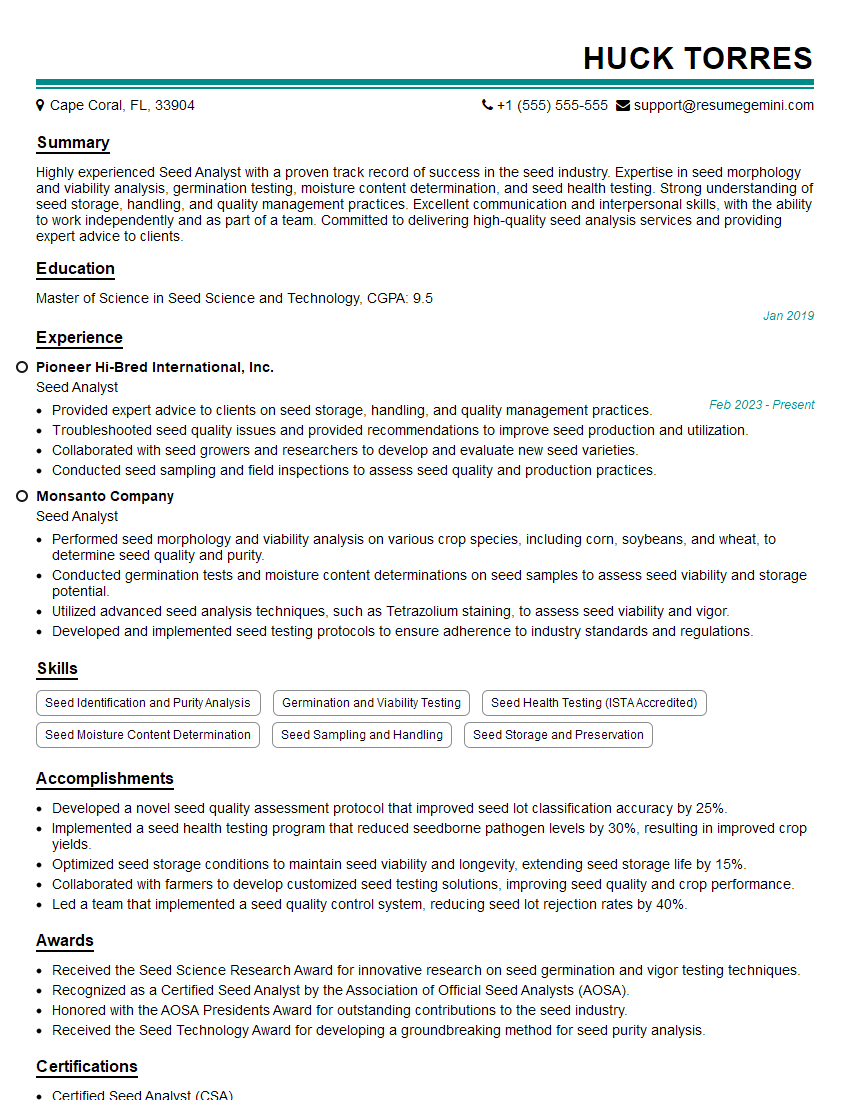
Interviewers often ask about specific skills and experiences. With ResumeGemini‘s customizable templates, you can tailor your resume to showcase the skills most relevant to the position, making a powerful first impression. Also check out Resume Template specially tailored for Seed Analyst.
Career Expert Tips:
- Ace those interviews! Prepare effectively by reviewing the Top 50 Most Common Interview Questions on ResumeGemini.
- Navigate your job search with confidence! Explore a wide range of Career Tips on ResumeGemini. Learn about common challenges and recommendations to overcome them.
- Craft the perfect resume! Master the Art of Resume Writing with ResumeGemini’s guide. Showcase your unique qualifications and achievements effectively.
- Great Savings With New Year Deals and Discounts! In 2025, boost your job search and build your dream resume with ResumeGemini’s ATS optimized templates.
Researching the company and tailoring your answers is essential. Once you have a clear understanding of the Seed Analyst‘s requirements, you can use ResumeGemini to adjust your resume to perfectly match the job description.
Key Job Responsibilities
Seed Analysts play a crucial role in ensuring the quality and viability of seeds used in agriculture. Their primary responsibilities involve:
1. Seed Testing and Evaluation
Conducting laboratory tests to determine seed purity, germination, and other quality parameters.
- Following established protocols and standards for seed analysis.
- Using specialized equipment and techniques to evaluate seed characteristics.
2. Seed Certification
Inspecting and certifying seed crops to ensure they meet established standards for purity, variety, and disease resistance.
- Visiting seed production fields to assess crop quality.
- Collecting seed samples for laboratory testing.
3. Research and Development
Conducting research to improve seed testing methods and develop new technologies.
- Collaborating with scientists and researchers in related fields.
- Staying abreast of advancements in seed analysis techniques.
4. Technical Support and Consulting
Providing technical guidance to seed producers, distributors, and farmers on seed quality management.
- Advising on seed selection, storage, and handling practices.
- Responding to inquiries and resolving seed-related issues.
Interview Tips
Preparing effectively for a Seed Analyst interview can increase your chances of success. Here are some tips to help you ace it:
1. Research the Company and Position
Familiarize yourself with the company’s mission, values, and seed-related activities. Understand the specific role you are applying for and its key responsibilities.
- Visit the company’s website and LinkedIn page.
- Read industry publications and articles to stay informed about current trends.
2. Highlight Your Technical Skills and Experience
Emphasize your expertise in seed testing techniques, such as purity analysis, germination testing, and seed certification. Quantify your experience and accomplishments using specific examples.
- Describe your proficiency in using seed analysis equipment and software.
- Showcase your ability to interpret and analyze seed test results.
3. Demonstrate Problem-Solving Abilities
Seed Analysts often encounter challenges and need to find practical solutions. Highlight your analytical thinking skills and ability to troubleshoot problems.
- Describe situations where you identified and resolved seed quality issues.
- Explain how you approached complex seed analysis problems.
4. Emphasize Your Attention to Detail
Seed analysis requires meticulous attention to detail. Demonstrate your ability to accurately follow protocols and procedures. Highlight your commitment to quality and accuracy.
- Provide examples of your ability to carefully inspect and evaluate seed samples.
- Explain how you maintain meticulous records and documentation of seed test results.
5. Prepare for Common Interview Questions
Familiarize yourself with common Seed Analyst interview questions. Practice your answers and tailor them to the specific role you are applying for.
- Describe your understanding of seed quality control and assurance.
- How do you stay updated with advancements in seed analysis techniques?
Next Step:
Now that you’re armed with the knowledge of Seed Analyst interview questions and responsibilities, it’s time to take the next step. Build or refine your resume to highlight your skills and experiences that align with this role. Don’t be afraid to tailor your resume to each specific job application. Finally, start applying for Seed Analyst positions with confidence. Remember, preparation is key, and with the right approach, you’ll be well on your way to landing your dream job. Build an amazing resume with ResumeGemini