Are you gearing up for an interview for a Shell Assembler position? Whether you’re a seasoned professional or just stepping into the role, understanding what’s expected can make all the difference. In this blog, we dive deep into the essential interview questions for Shell Assembler and break down the key responsibilities of the role. By exploring these insights, you’ll gain a clearer picture of what employers are looking for and how you can stand out. Read on to equip yourself with the knowledge and confidence needed to ace your next interview and land your dream job!
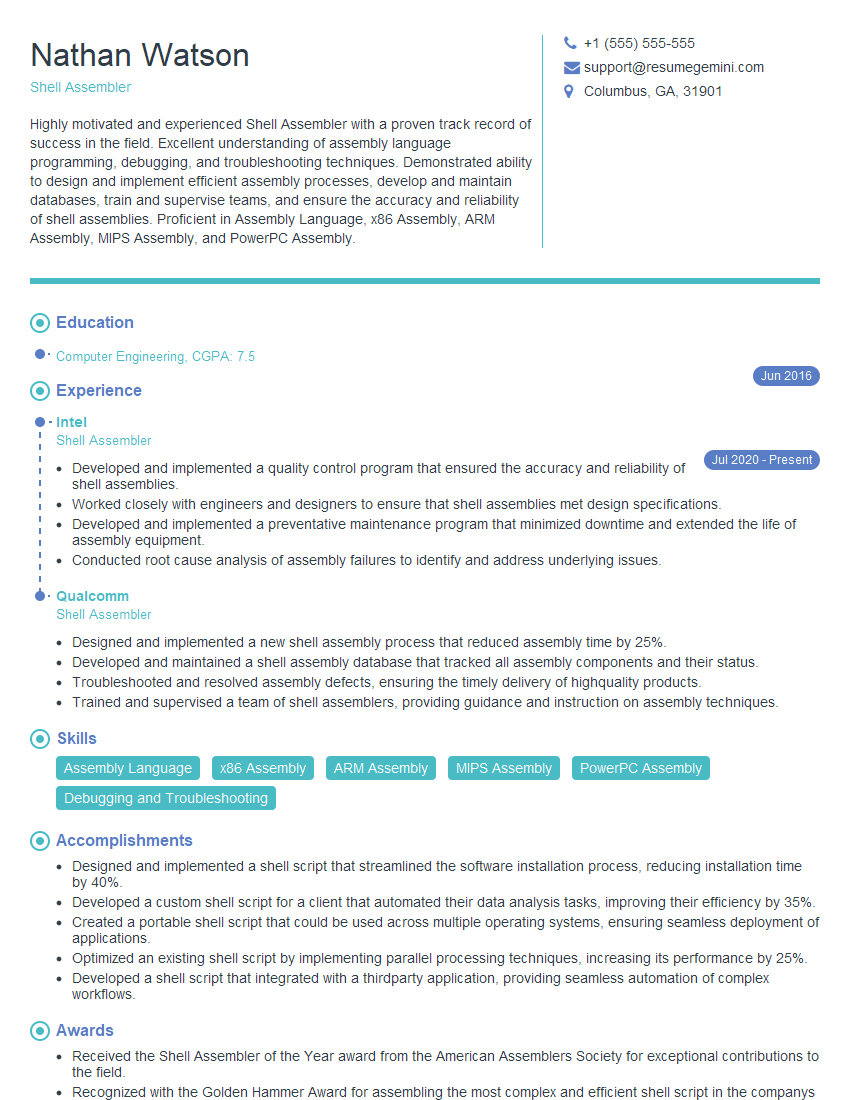
Acing the interview is crucial, but landing one requires a compelling resume that gets you noticed. Crafting a professional document that highlights your skills and experience is the first step toward interview success. ResumeGemini can help you build a standout resume that gets you called in for that dream job.






Essential Interview Questions For Shell Assembler
1. What is your understanding of the role of a Shell Assembler?
A Shell Assembler is responsible for translating assembly language instructions into machine code. They are also responsible for optimizing the code for speed and efficiency.
- Translates assembly language instructions into machine code
- Optimizes the code for speed and efficiency
2. What are the different types of Shell Assemblers?
One Pass Assemblers
- Scan the source code only once
- Generate the machine code in one pass
Two Pass Assemblers
- Scan the source code twice
- In the first pass, it creates a symbol table
- In the second pass, it generates the machine code
3. What are the advantages and disadvantages of using a Shell Assembler?
- Advantages:
- Can produce very efficient code
- Gives the programmer more control over the code
- Disadvantages:
- Can be difficult to learn
- Can be difficult to debug
4. What are some of the most common Shell Assembler directives?
- .equ
- .org
- .dc
- .ds
5. What are some of the most common Shell Assembler instructions?
- mov
- add
- sub
- jmp
6. How do you debug a Shell Assembler program?
- Use a debugger
- Use error messages
- Use print statements
7. What are some of the best practices for writing Shell Assembler code?
- Use meaningful variable names
- Use comments to explain your code
- Use a consistent coding style
8. What are some of the most common mistakes that Shell Assembler programmers make?
- Using incorrect syntax
- Not using comments
- Not using a consistent coding style
9. What are some of the resources that you use to learn about Shell Assembler?
- The Shell Assembler manual
- Online tutorials
- Books
10. What are some of the projects that you have worked on that have used Shell Assembler?
I have worked on a number of projects that have used Shell Assembler, including:
- A simple operating system
- A game engine
- A compiler
Interviewers often ask about specific skills and experiences. With ResumeGemini‘s customizable templates, you can tailor your resume to showcase the skills most relevant to the position, making a powerful first impression. Also check out Resume Template specially tailored for Shell Assembler.
Career Expert Tips:
- Ace those interviews! Prepare effectively by reviewing the Top 50 Most Common Interview Questions on ResumeGemini.
- Navigate your job search with confidence! Explore a wide range of Career Tips on ResumeGemini. Learn about common challenges and recommendations to overcome them.
- Craft the perfect resume! Master the Art of Resume Writing with ResumeGemini’s guide. Showcase your unique qualifications and achievements effectively.
- Great Savings With New Year Deals and Discounts! In 2025, boost your job search and build your dream resume with ResumeGemini’s ATS optimized templates.
Researching the company and tailoring your answers is essential. Once you have a clear understanding of the Shell Assembler‘s requirements, you can use ResumeGemini to adjust your resume to perfectly match the job description.
Key Job Responsibilities
Shell assemblers play a pivotal role in the development and maintenance of computer systems and applications. Their key responsibilities include:
1. Assembly and Debugging
Assembling source code written in assembly language into machine code that can be executed by computer processors.
- Analyzing and interpreting assembly language instructions
- Identifying and resolving errors and bugs in assembly code
- Optimizing assembly code for performance
2. Systems Integration
Collaborating with software developers and hardware engineers to integrate assembly code into larger software and hardware systems.
- Understanding the functional requirements of the system
- Designing and implementing interfaces between assembly code and other system components
- Testing and verifying the overall system functionality
3. Code Maintenance and Documentation
Maintaining and updating assembly code to address bug fixes, performance improvements, and new requirements.
- Reviewing and modifying existing assembly code
- Creating and maintaining documentation for assembly code
- Updating assembly code to comply with changes in hardware or software platforms
4. Performance Analysis and Optimization
Analyzing the performance of assembly code and identifying areas for improvement.
- Using profiling tools to identify bottlenecks in assembly code
- Applying optimization techniques to enhance code performance
- Balancing performance against factors like code size and maintainability
Interview Tips
To prepare for a Shell Assembler interview, candidates should consider the following tips:
1. Technical Proficiency
Demonstrate a strong understanding of assembly language, including its syntax, semantics, and conventions.
- Study assembly language tutorials and reference materials
- Practice writing and debugging assembly code in a development environment
- Review common assembly language instructions and addressing modes
2. Systems Knowledge
Have a solid understanding of computer systems architecture, including processors, memory management, and input/output devices.
- Read technical books and online resources on computer architecture
- Explore the internals of operating systems and embedded systems
- Attend seminars or workshops on computer systems design
3. Problem-Solving Aptitude
Showcase your ability to analyze problems, design solutions, and implement them in assembly language.
- Practice solving assembly language coding challenges
- Participate in coding competitions or hackathons
- Develop personal projects that involve assembly language
4. Communication Skills
Be able to clearly articulate technical concepts and explain your assembly code solutions to both technical and non-technical audiences.
- Practice presenting your work to others
- Prepare clear and concise documentation for your assembly code
- Engage in online forums or communities to discuss assembly language topics
Next Step:
Now that you’re armed with a solid understanding of what it takes to succeed as a Shell Assembler, it’s time to turn that knowledge into action. Take a moment to revisit your resume, ensuring it highlights your relevant skills and experiences. Tailor it to reflect the insights you’ve gained from this blog and make it shine with your unique qualifications. Don’t wait for opportunities to come to you—start applying for Shell Assembler positions today and take the first step towards your next career milestone. Your dream job is within reach, and with a polished resume and targeted applications, you’ll be well on your way to achieving your career goals! Build your resume now with ResumeGemini.