Feeling lost in a sea of interview questions? Landed that dream interview for Signal Person but worried you might not have the answers? You’re not alone! This blog is your guide for interview success. We’ll break down the most common Signal Person interview questions, providing insightful answers and tips to leave a lasting impression. Plus, we’ll delve into the key responsibilities of this exciting role, so you can walk into your interview feeling confident and prepared.
Acing the interview is crucial, but landing one requires a compelling resume that gets you noticed. Crafting a professional document that highlights your skills and experience is the first step toward interview success. ResumeGemini can help you build a standout resume that gets you called in for that dream job.






Essential Interview Questions For Signal Person
1. What are the primary responsibilities of a Signal Person?
The primary responsibilities of a Signal Person include:
- Communicating between train crews and dispatchers.
- Monitoring train movements and ensuring the safe operation of signals.
- Maintaining and inspecting signal systems and equipment.
- Responding to emergencies and assisting with train operations.
- Providing information to passengers and train crews.
2. What are the different types of signals used in train operations?
Fixed Signals
- Positioned at specific locations along the track.
- Provide information about train movements, such as speed, direction, and track occupancy.
Cab Signals
- Located in the locomotive cab.
- Receive information from trackside signals and display it to the train crew.
Wayside Signals
- Installed along the track.
- Provide information about train movements to train crews.
3. How do you ensure the safe operation of signals?
To ensure the safe operation of signals, I would:
- Regularly inspect and maintain all signal systems and equipment.
- Test signals regularly to ensure they are functioning properly.
- Monitor train movements and respond to any irregularities.
- Communicate with dispatchers and train crews to ensure clear communication and coordination.
- Follow all established safety procedures and protocols.
4. How do you handle emergency situations?
In case of an emergency:
- I would remain calm and assess the situation.
- Contact the dispatcher immediately and provide all relevant information.
- Follow established emergency procedures and protocols.
- Assist with evacuation and passenger safety as needed.
- Document the incident and provide a report to the appropriate authorities.
5. What are the most important qualities of a successful Signal Person?
- Excellent communication skills
- Strong attention to detail
- Ability to work independently and as part of a team
- Problem-solving skills
- Ability to work under pressure
6. How do you stay up-to-date on the latest signal technology and regulations?
To stay up-to-date on the latest signal technology and regulations:
- I regularly attend industry conferences and workshops.
- Read industry publications and technical manuals.
- Participate in online forums and discussion groups.
- Network with other Signal Persons and industry experts.
7. What is the most challenging aspect of being a Signal Person?
The most challenging aspect of being a Signal Person is:
- Ensuring the safety of train operations in all situations.
- Responding quickly and effectively to emergencies.
- Maintaining a thorough understanding of complex signal systems and regulations.
- Working long and irregular hours, including nights, weekends, and holidays.
8. What is the most rewarding aspect of being a Signal Person?
The most rewarding aspect of being a Signal Person is:
- Knowing that I am playing a vital role in ensuring the safety of train passengers and crew.
- Learning about and working with cutting-edge signal technology.
- Being part of a team of dedicated professionals who are committed to providing safe and efficient rail transportation.
- Having the opportunity to work independently and take ownership of my responsibilities.
9. Why are you interested in working as a Signal Person for our company?
I am interested in working as a Signal Person for your company because:
- Your company has a strong reputation for safety and innovation in the rail industry.
- I am impressed by your company’s commitment to employee training and development.
- I believe that my skills and experience would be a valuable asset to your team.
- I am eager to learn more about your company and contribute to its success.
10. What are your career goals?
My career goals are to:
- Become a highly skilled and experienced Signal Person.
- Contribute to the safety and efficiency of rail transportation.
- Advance my knowledge and skills through ongoing training and development.
- Assume a leadership role in the future.
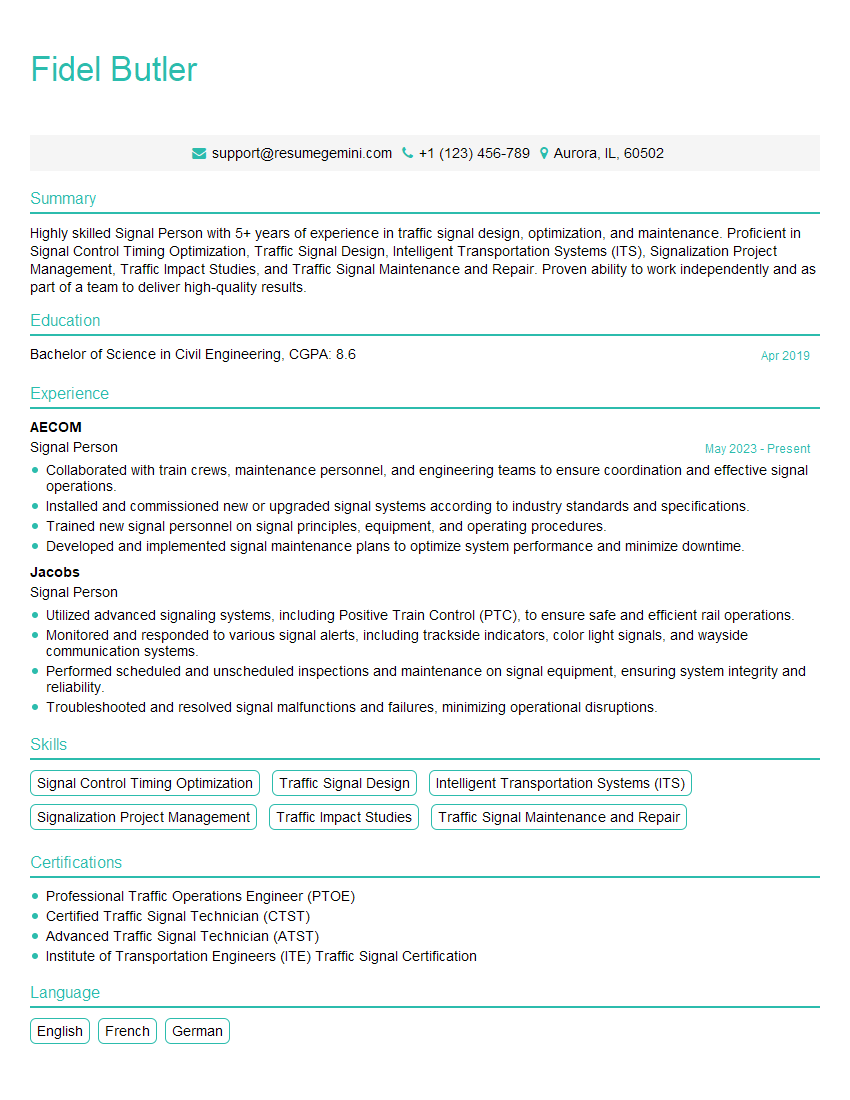
Interviewers often ask about specific skills and experiences. With ResumeGemini‘s customizable templates, you can tailor your resume to showcase the skills most relevant to the position, making a powerful first impression. Also check out Resume Template specially tailored for Signal Person.
Career Expert Tips:
- Ace those interviews! Prepare effectively by reviewing the Top 50 Most Common Interview Questions on ResumeGemini.
- Navigate your job search with confidence! Explore a wide range of Career Tips on ResumeGemini. Learn about common challenges and recommendations to overcome them.
- Craft the perfect resume! Master the Art of Resume Writing with ResumeGemini’s guide. Showcase your unique qualifications and achievements effectively.
- Great Savings With New Year Deals and Discounts! In 2025, boost your job search and build your dream resume with ResumeGemini’s ATS optimized templates.
Researching the company and tailoring your answers is essential. Once you have a clear understanding of the Signal Person‘s requirements, you can use ResumeGemini to adjust your resume to perfectly match the job description.
Key Job Responsibilities
Signal Persons play a crucial role in maintaining safe and efficient operations within the transportation industry. Their primary responsibilities involve:
1. Signaling Trains
Signal Persons are responsible for transmitting signals to train engineers using various devices such as hand signals, flags, or electronic equipment. They ensure that trains operate safely and adhere to established schedules.
2. Monitoring Track Conditions
Signal Persons must constantly monitor track conditions and identify any potential hazards or obstructions. They report any issues promptly to ensure prompt repairs and prevent accidents.
3. Controlling Train Movements
Based on received signals and track conditions, Signal Persons control the movement of trains by adjusting switches and signals. They ensure that trains are routed correctly and avoid collisions.
4. Maintaining Equipment
Signal Persons are responsible for maintaining and inspecting signaling equipment to ensure its proper functioning. They conduct regular tests and troubleshoot any issues to prevent breakdowns.
Interview Tips
To ace the interview for a Signal Person position, candidates should follow these tips:
1. Research the Company and Role
Familiarize yourself with the company’s history, values, and current projects. Research the specific role to understand its requirements and responsibilities thoroughly.
2. Highlight Relevant Experience
Emphasize your previous experience in signaling or related fields. Describe specific examples where you demonstrated your ability to interpret signals, monitor track conditions, and control train movements.
3. Showcase Safety Awareness
Signal Persons play a critical role in ensuring safety. Highlight your understanding of safety protocols and your commitment to adhering to them at all times.
4. Technical Skills
Brush up on your knowledge of signaling equipment, train operations, and industry regulations. Be prepared to discuss your technical skills and how they align with the position’s requirements.
Next Step:
Armed with this knowledge, you’re now well-equipped to tackle the Signal Person interview with confidence. Remember, preparation is key. So, start crafting your resume, highlighting your relevant skills and experiences. Don’t be afraid to tailor your application to each specific job posting. With the right approach and a bit of practice, you’ll be well on your way to landing your dream job. Build your resume now from scratch or optimize your existing resume with ResumeGemini. Wish you luck in your career journey!