Are you gearing up for an interview for a Spiral Spring Winder position? Whether you’re a seasoned professional or just stepping into the role, understanding what’s expected can make all the difference. In this blog, we dive deep into the essential interview questions for Spiral Spring Winder and break down the key responsibilities of the role. By exploring these insights, you’ll gain a clearer picture of what employers are looking for and how you can stand out. Read on to equip yourself with the knowledge and confidence needed to ace your next interview and land your dream job!
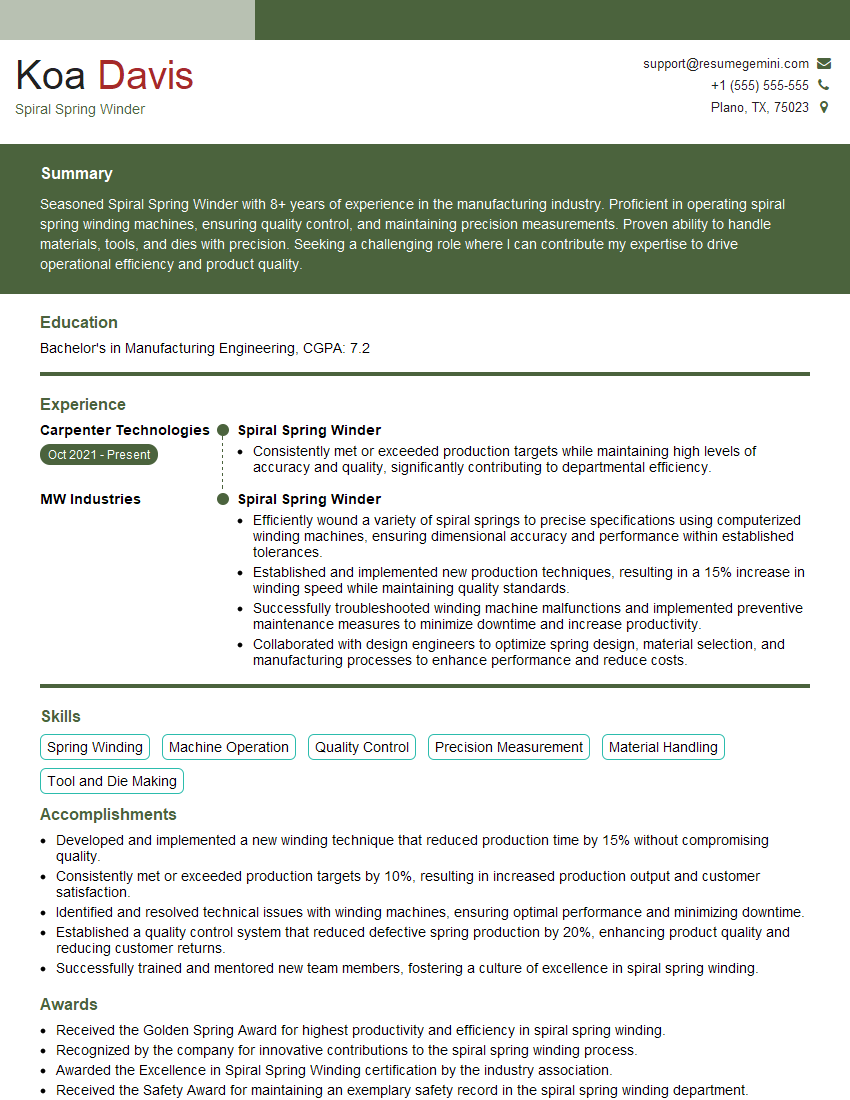
Acing the interview is crucial, but landing one requires a compelling resume that gets you noticed. Crafting a professional document that highlights your skills and experience is the first step toward interview success. ResumeGemini can help you build a standout resume that gets you called in for that dream job.






Essential Interview Questions For Spiral Spring Winder
1. How do you ensure the production of high-quality spiral springs that meet the specified dimensions and tolerances?
To ensure the production of high-quality spiral springs, I strictly adhere to the following steps:
- Meticulous Material Selection: I carefully select high-quality spring steel that meets the specific requirements for strength, durability, and corrosion resistance.
- Precise Machine Calibration: I calibrate the winding machines regularly to ensure accurate production according to the desired dimensions and tolerances.
- In-Process Quality Checks: I conduct regular in-process inspections to monitor spring diameter, length, pitch, and other critical parameters, making necessary adjustments as needed.
- Rigorous Final Inspection: Before packaging, I perform a thorough final inspection of each spring using precision measuring tools to verify compliance with the specified specifications.
2. What techniques do you employ to minimize scrap and optimize material utilization?
Waste Reduction Strategies
- Optimized Coil Design: I carefully calculate coil dimensions to minimize material waste and maximize spring efficiency.
- Material Yield Analysis: I perform material yield analysis to determine the optimal wire length for each spring, reducing scrap.
- Rework and Repurposing: I rework or repurpose springs that do not meet specifications, minimizing scrap and maximizing resource utilization.
Material Optimization Techniques
- Batch Production: I run production batches of similar springs to minimize machine setup changes and optimize material usage.
- Inventory Management: I maintain a lean inventory system to reduce material waste due to obsolescence.
3. How do you troubleshoot and resolve common issues that arise during spiral spring winding?
To troubleshoot and resolve common issues in spiral spring winding, I follow a systematic approach:
- Identify the Problem: I carefully observe the spring and identify any deviations from specifications or performance issues.
- Analyze Potential Causes: I analyze the winding process, materials, and machine settings to determine potential causes of the problem.
- Implement Solutions: I implement targeted solutions based on my analysis, such as adjusting machine parameters, recalibrating sensors, or optimizing wire tension.
- Verify Resolution: I conduct subsequent tests to verify that the issue has been resolved and the spring meets the desired specifications.
4. Describe the different types of winding machines you have experience with and their specific applications.
I have experience with a wide range of spiral spring winding machines, including:
- CNC Spring Winders: These versatile machines enable precise and efficient winding of complex spring designs, including tapered and variable-pitch springs.
- Computer-Controlled Spring Winders: These machines offer advanced control over winding parameters, allowing for high-speed production of springs with consistent quality.
- Semi-Automatic Spring Winders: These machines are ideal for small-batch production and prototyping, providing flexibility and cost-effectiveness.
5. How do you ensure the safety of yourself and others while operating spiral spring winding machines?
I prioritize safety in the workplace through the following measures:
- Regular Machine Maintenance: I conduct regular maintenance and inspections to ensure the machines are in optimal working condition.
- Proper Machine Setup: I carefully set up the machines before operation, ensuring proper wire tension and alignment to prevent accidents.
- Protective Gear: I wear appropriate protective gear, including safety glasses, gloves, and hearing protection, as required.
- Workplace Organization: I maintain a clean and organized work area to minimize potential hazards.
- Safety Training: I regularly attend safety training sessions to stay updated on best practices and emergency procedures.
6. How do you stay up-to-date on the latest advancements in spiral spring winding technology?
To stay abreast of the latest advancements in spiral spring winding technology, I:
- Attend Industry Conferences and Exhibitions: I participate in industry events to learn about new technologies, products, and best practices.
- Read Technical Publications: I regularly read trade journals, research papers, and online resources to stay informed about technological developments.
- Collaborate with Industry Experts: I connect with engineers, researchers, and suppliers to exchange knowledge and gain insights into the latest innovations.
7. How do you handle multiple projects with tight deadlines and ensure timely delivery?
To effectively manage multiple projects with tight deadlines, I employ the following strategies:
- Prioritization and Planning: I prioritize projects based on their urgency and allocate resources accordingly.
- Task Delegation: I delegate tasks to team members based on their skills and availability, maximizing productivity.
- Communication and Coordination: I maintain open communication with clients and team members to ensure everyone is informed and aligned.
- Time Management Techniques: I use time management tools and techniques, such as the Pomodoro Technique, to optimize my workflow.
- Contingency Planning: I develop contingency plans to mitigate potential delays or challenges that may arise.
8. How do you work effectively in a team environment and contribute to the overall success of the organization?
- Collaboration and Communication: I actively participate in team meetings, share knowledge, and collaborate with colleagues to achieve common goals.
- Problem Solving: I contribute to problem-solving efforts by sharing my expertise and working together with the team to find innovative solutions.
- Support and Assistance: I provide support and assistance to team members when needed, fostering a positive and supportive work environment.
- Continuous Improvement: I actively participate in continuous improvement initiatives, sharing ideas and suggestions to enhance team performance.
- Alignment with Organizational Goals: I understand and align my work with the overall goals and objectives of the organization, contributing to its success.
9. How do you ensure the confidentiality of sensitive information related to clients and projects?
- Adherence to Confidentiality Policies: I strictly adhere to the established confidentiality policies of the organization.
- Secure Data Handling: I handle sensitive information with care, using secure storage and access protocols.
- Limited Access: I limit access to sensitive information to authorized individuals only.
- Encryption and Password Protection: I use encryption and strong passwords to protect sensitive data in electronic formats.
- Ethical Conduct: I maintain a high level of ethical conduct and integrity, understanding the importance of confidentiality.
10. How do you stay motivated and maintain a positive attitude in a fast-paced and demanding work environment?
- Purpose and Values: I remind myself of my purpose and the value of my contribution to the team and organization.
- Goal Setting: I set achievable goals to stay motivated and track my progress towards success.
- Positive Mindset: I cultivate a positive mindset, focusing on solutions and opportunities rather than challenges.
- Support System: I surround myself with supportive colleagues and mentors who encourage and motivate me.
- Continuous Learning: I engage in continuous learning to expand my knowledge and skills, which keeps me engaged and motivated.
Interviewers often ask about specific skills and experiences. With ResumeGemini‘s customizable templates, you can tailor your resume to showcase the skills most relevant to the position, making a powerful first impression. Also check out Resume Template specially tailored for Spiral Spring Winder.
Career Expert Tips:
- Ace those interviews! Prepare effectively by reviewing the Top 50 Most Common Interview Questions on ResumeGemini.
- Navigate your job search with confidence! Explore a wide range of Career Tips on ResumeGemini. Learn about common challenges and recommendations to overcome them.
- Craft the perfect resume! Master the Art of Resume Writing with ResumeGemini’s guide. Showcase your unique qualifications and achievements effectively.
- Great Savings With New Year Deals and Discounts! In 2025, boost your job search and build your dream resume with ResumeGemini’s ATS optimized templates.
Researching the company and tailoring your answers is essential. Once you have a clear understanding of the Spiral Spring Winder‘s requirements, you can use ResumeGemini to adjust your resume to perfectly match the job description.
Key Job Responsibilities
Spiral Spring Winders are responsible for setting up, operating, and maintaining machinery that winds metal wire to create spiral springs.
1. Operation and Maintenance of Machinery
Operate and monitor machinery that winds metal wire to create spiral springs.
- Adjust and calibrate machinery to meet production requirements.
- Inspect and maintain machinery to ensure proper functioning.
2. Production Management
Set up and prepare machinery for production.
- Load wire into the machine.
- Monitor production to ensure quality and quantity meet specifications.
3. Quality Control
Inspect and test finished springs to ensure they meet specifications.
- Measure spring dimensions and forces.
- Identify and correct any defects.
4. Troubleshooting and Problem-Solving
Identify and resolve any issues that arise during production.
- Troubleshoot machine malfunctions.
- Resolve production problems and implement corrective actions.
Interview Tips
A well-prepared candidate is more likely to ace the interview. Here are some tips to help you prepare for your interview as a Spiral Spring Winder.
1. Research the Company
Take the time to research the company and learn about their products, services, and values. Knowledge of their size, industry standing, and recent news, will demonstrate your enthusiasm for the position.
- Visit the company’s website.
- Look for press releases and articles about the company.
2. Practice Your Answers
Prepare for common interview questions by practicing your answers. This helps you become more comfortable and confident during the interview.
- Organize your thoughts and articulate your responses clearly.
- Use STAR (Situation, Task, Action, Result) method to answer behavioral questions.
3. Know Your Skills and Experience
Be prepared to discuss your skills and experience as they relate to the job requirements. Highlight your technical abilities, relevant knowledge, and industry experience.
- Review the job description and identify the key responsibilities.
- Provide specific examples of how your skills and experience match those requirements.
4. Be Enthusiastic and Professional
Show your enthusiasm for the position and the company throughout the interview. Maintain a professional demeanor, dress appropriately, and be polite and respectful to everyone you interact with.
- Greet the interviewer with a firm handshake and make eye contact.
- Be positive and engaged throughout the interview.
5. Ask Questions
At the end of the interview, take the opportunity to ask questions. This shows that you are interested in the position and the company.
- Ask about the company’s culture, growth opportunities, and training programs.
- Inquire about the specific responsibilities of the role and the performance expectations.
Next Step:
Armed with this knowledge, you’re now well-equipped to tackle the Spiral Spring Winder interview with confidence. Remember, a well-crafted resume is your first impression. Take the time to tailor your resume to highlight your relevant skills and experiences. And don’t forget to practice your answers to common interview questions. With a little preparation, you’ll be on your way to landing your dream job. So what are you waiting for? Start building your resume and start applying! Build an amazing resume with ResumeGemini.