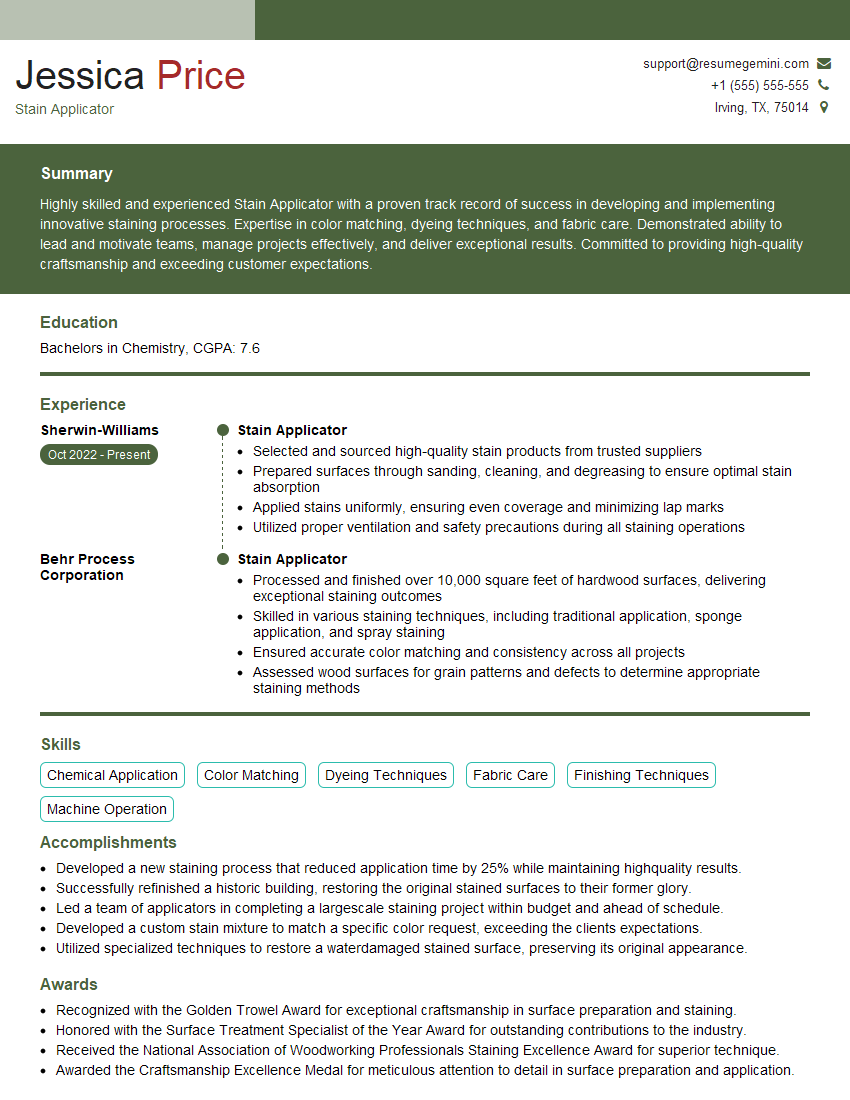
Are you gearing up for a career in Stain Applicator? Feeling nervous about the interview questions that might come your way? Don’t worry, you’re in the right place. In this blog post, we’ll dive deep into the most common interview questions for Stain Applicator and provide you with expert-backed answers. We’ll also explore the key responsibilities of this role so you can tailor your responses to showcase your perfect fit.
Acing the interview is crucial, but landing one requires a compelling resume that gets you noticed. Crafting a professional document that highlights your skills and experience is the first step toward interview success. ResumeGemini can help you build a standout resume that gets you called in for that dream job.






Essential Interview Questions For Stain Applicator
1. What is the correct process to prepare wood for stain application?
- Clean the wood surface with a damp cloth to remove dust and debris.
- Sand the wood in the direction of the grain using a fine-grit sandpaper.
- Wipe the wood surface clean with a tack cloth to remove any sanding dust.
2. Describe the different types of stains and how to choose the right stain for a specific project?
Pigmented Stain
- Creates a solid color on the wood.
- Available in a wide range of colors.
Penetrating Oil Stain
- Soaks into the wood and enhances the wood’s natural grain.
- Available in a limited range of colors.
3. What are the common mistakes to avoid when applying stain?
- Applying the stain too thickly.
- Not applying the stain evenly.
- Not allowing the stain to dry properly before applying a finish.
4. How to achieve an even stain finish on large surfaces?
- Divide the surface into smaller sections.
- Apply the stain in thin, even coats.
- Use a brush or roller specifically designed for stain application.
5. What is the purpose of a grain filler?
- Fills the pores of the wood.
- Creates a smoother surface for staining.
- Helps to prevent the stain from absorbing unevenly.
6. How to repair or touch up damaged stain?
- Sand the damaged area lightly.
- Apply a thin coat of stain to the damaged area.
- Allow the stain to dry completely.
7. Describe the different methods of applying stain?
Brush Application
- Provides precise control over the application.
- Can be time-consuming for large surfaces.
Roller Application
- Faster than brush application.
- May not provide as even a finish as brush application.
8. What are some tips for staining intricate or detailed surfaces?
- Use a small brush or sponge to apply the stain.
- Work in small sections at a time.
- Allow the stain to dry completely before applying a finish.
9. How to prevent lap marks when applying stain?
- Apply the stain in the direction of the wood grain.
- Overlap each stroke by about 50%.
- Work quickly and smoothly.
10. What are the safety precautions to follow when working with stains?
- Wear gloves and a dust mask.
- Ventilate the work area properly.
- Dispose of rags and brushes properly.
Interviewers often ask about specific skills and experiences. With ResumeGemini‘s customizable templates, you can tailor your resume to showcase the skills most relevant to the position, making a powerful first impression. Also check out Resume Template specially tailored for Stain Applicator.
Career Expert Tips:
- Ace those interviews! Prepare effectively by reviewing the Top 50 Most Common Interview Questions on ResumeGemini.
- Navigate your job search with confidence! Explore a wide range of Career Tips on ResumeGemini. Learn about common challenges and recommendations to overcome them.
- Craft the perfect resume! Master the Art of Resume Writing with ResumeGemini’s guide. Showcase your unique qualifications and achievements effectively.
- Great Savings With New Year Deals and Discounts! In 2025, boost your job search and build your dream resume with ResumeGemini’s ATS optimized templates.
Researching the company and tailoring your answers is essential. Once you have a clear understanding of the Stain Applicator‘s requirements, you can use ResumeGemini to adjust your resume to perfectly match the job description.
Key Job Responsibilities
Under the guidance of a supervisor, the Stain Applicator is responsible for applying stains to various surfaces in a timely and efficient manner. They need to ensure that the stains are applied evenly, consistently, and according to the manufacturer’s specifications.
1. Prepare Surfaces
The Stain Applicator should prepare surfaces by cleaning, sanding, and masking, to ensure that they are ready for staining.
- Clean surfaces to remove dust, dirt, and debris.
- Sand surfaces to smooth them and create a uniform surface.
- Mask off areas that should not be stained, such as hardware and trim.
2. Apply Stain
The Stain Applicator needs to apply stain using a brush, sprayer, or roller. They must ensure that the stain is applied evenly, consistently, and according to the manufacturer’s specifications.
- Apply stain evenly using a brush, sprayer, or roller.
- Wipe off excess stain to prevent runs and drips.
- Allow stain to dry completely before applying a second coat.
3. Protect Stained Surfaces
The Stain Applicator must protect stained surfaces by applying a sealer or finish. This will help to protect the stain from fading, moisture, and wear.
- Apply a sealer or finish to protect the stained surface.
- Allow the sealer or finish to dry completely before using the stained surface.
4. Clean Up
The Stain Applicator is responsible for cleaning up their work area and ensuring that all tools and equipment are stored properly.
- Clean up work area and dispose of waste properly.
- Store tools and equipment properly.
Interview Tips
To ace the interview for the position of Stain Applicator, it is important to prepare yourself by gathering all the necessary information about the job, the company, and the industry.
1. Research the job description
Make sure you understand the key responsibilities of the Stain Applicator and how they align with your skills and experience. Research the company’s website, social media pages, and industry news to learn more about their culture and values.
- Highlight your experience and skills that are most relevant to the job requirements.
- Be prepared to discuss your understanding of the staining process, including surface preparation, stain application, and finish protection.
2. Practice answering common interview questions
Some common interview questions for Stain Applicators include:
- Tell me about your experience with staining different types of surfaces.
- What are the most important factors to consider when choosing a stain?
- How do you ensure that you apply stain evenly and consistently?
- What are your tips for protecting stained surfaces from fading and wear?
3. Be prepared to share your knowledge of the industry
Show the interviewer that you are knowledgeable about the staining industry and the latest trends. This will demonstrate your enthusiasm for the field and your commitment to staying up-to-date with best practices.
- Discuss your knowledge of different types of stains, their properties, and their applications.
- Share your insights on the latest trends in staining techniques and equipment.
4. Be professional and enthusiastic
First impressions matter, so dress professionally and arrive on time for your interview. Be polite and respectful to everyone you meet, including the receptionist and other employees. Show the interviewer that you are enthusiastic about the job and the opportunity to work for their company.
- Be confident and articulate when answering questions.
- Ask thoughtful questions about the job and the company.
Next Step:
Now that you’re armed with a solid understanding of what it takes to succeed as a Stain Applicator, it’s time to turn that knowledge into action. Take a moment to revisit your resume, ensuring it highlights your relevant skills and experiences. Tailor it to reflect the insights you’ve gained from this blog and make it shine with your unique qualifications. Don’t wait for opportunities to come to you—start applying for Stain Applicator positions today and take the first step towards your next career milestone. Your dream job is within reach, and with a polished resume and targeted applications, you’ll be well on your way to achieving your career goals! Build your resume now with ResumeGemini.