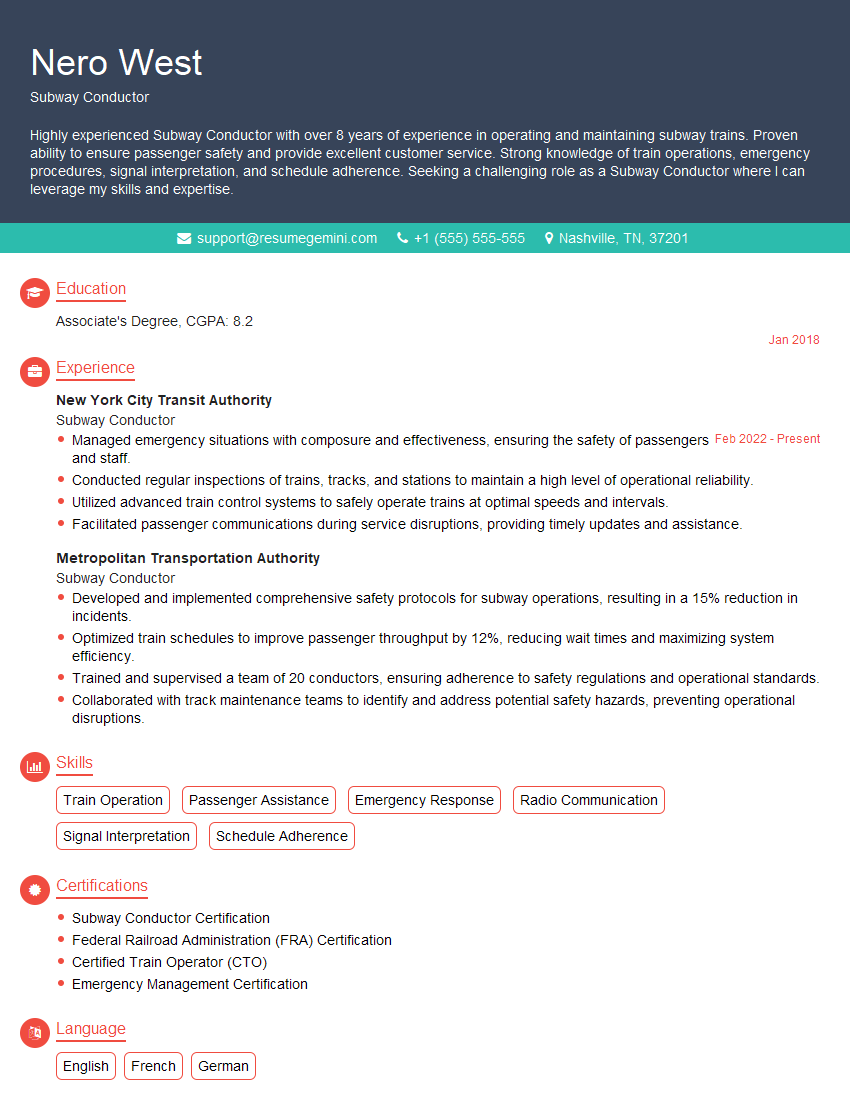
Feeling lost in a sea of interview questions? Landed that dream interview for Subway Conductor but worried you might not have the answers? You’re not alone! This blog is your guide for interview success. We’ll break down the most common Subway Conductor interview questions, providing insightful answers and tips to leave a lasting impression. Plus, we’ll delve into the key responsibilities of this exciting role, so you can walk into your interview feeling confident and prepared.
Acing the interview is crucial, but landing one requires a compelling resume that gets you noticed. Crafting a professional document that highlights your skills and experience is the first step toward interview success. ResumeGemini can help you build a standout resume that gets you called in for that dream job.






Essential Interview Questions For Subway Conductor
1. What is the role of a Subway Conductor, and what are the essential responsibilities in this role?
As a Subway Conductor, my primary responsibility is to ensure the safe and efficient operation of subway trains. My key duties include:
- Operating and controlling the subway train, adhering to established schedules and speed limits.
- Monitoring the train’s equipment and systems, reporting any irregularities or malfunctions.
- Communicating with passengers, providing announcements about upcoming stations, delays, and safety guidelines.
- Enforcing safety regulations, ensuring passengers comply with rules and maintaining order on the train.
- Responding to emergencies, such as medical emergencies, evacuations, or accidents, and following established protocols.
2. What are the essential technical skills required to operate a subway train effectively?
Technical Skills
- Thorough understanding of train operations, including braking systems, signaling systems, and track layouts.
- Proficient in utilizing train control systems, managing speed, and maintaining safe train handling.
- Knowledge of subway route maps, schedules, and emergency procedures.
- Excellent communication skills, both verbal and nonverbal, for effective passenger interaction and maintaining situational awareness.
- Strong observational abilities and attention to detail for monitoring train systems and ensuring passenger safety.
Non-Technical Skills
- Calm and composed demeanor under pressure, especially during emergency situations.
- Excellent interpersonal skills and the ability to interact effectively with passengers and colleagues.
- Strong decision-making abilities and the ability to think clearly and respond quickly in unexpected circumstances.
3. How do you prioritize safety measures when operating a subway train, and what actions do you take to maintain passenger safety?
Passenger safety is my top priority, and I take several measures to maintain it:
- Adhering to established safety protocols and regulations at all times.
- Conducting thorough pre-trip inspections of the train, ensuring all systems are operational and safe.
- Maintaining a heightened awareness of the surroundings, monitoring the platform and tracks for any potential hazards.
- Providing clear and concise safety instructions to passengers, emphasizing the importance of holding handrails and remaining within designated areas.
- Enforcing safety regulations, preventing passengers from engaging in risky behaviors such as running or leaning out of the train.
4. How do you handle emergency situations, such as medical emergencies, evacuations, or accidents?
In the event of an emergency, I remain calm and follow established protocols:
- Immediately contacting the control center to report the emergency and request assistance.
- Taking appropriate actions based on the nature of the emergency, such as initiating an evacuation or providing medical aid.
- Communicating clearly and effectively with passengers, providing instructions and updates on the situation.
- Working closely with emergency responders to ensure the safety of passengers and staff.
5. How do you manage passenger interactions, especially when dealing with difficult or disruptive individuals?
Managing passenger interactions is an important part of my role:
- Approaching passengers with a polite and professional demeanor, fostering a positive and respectful environment.
- Actively listening to passenger concerns and providing helpful information or assistance whenever possible.
- Enforcing safety regulations and addressing disruptive behavior firmly but respectfully, prioritizing passenger safety.
- Maintaining composure and de-escalating tense situations, preventing conflicts from escalating.
6. What are the challenges you have faced as a Subway Conductor, and how did you overcome them?
One of the challenges I faced was dealing with a sudden medical emergency on board the train.
- I remained calm and immediately contacted the control center to request medical assistance.
- I provided first aid to the passenger while waiting for help to arrive.
- I communicated with passengers, providing updates on the situation and ensuring their safety.
- Once medical professionals arrived, I assisted them in transporting the passenger off the train.
7. How do you stay updated with advancements in subway operations and safety protocols?
To stay updated, I:
- Attend regular training sessions and workshops organized by the transit authority.
- Review industry publications and online resources to learn about best practices and new technologies.
- Engage in discussions with colleagues and participate in professional organizations to exchange knowledge and insights.
8. What motivated you to pursue a career as a Subway Conductor, and what do you find most rewarding about the role?
My passion for public transportation and my desire to contribute to the community motivated me to become a Subway Conductor:
- I find it incredibly rewarding to play a vital role in moving people safely and efficiently throughout the city.
- I appreciate the opportunity to interact with diverse passengers from all walks of life and make a positive impact on their daily commutes.
9. How do you manage fatigue and maintain alertness during extended shifts?
Managing fatigue is crucial for safety:
- I prioritize getting adequate sleep and maintain a healthy lifestyle to ensure I am well-rested before each shift.
- During extended shifts, I take short breaks to move around, stretch, and rehydrate.
- I communicate with my colleagues to monitor my alertness levels and request assistance if needed.
10. Why do you believe you are the best candidate for this Subway Conductor position?
- My extensive experience in operating subway trains, combined with my unwavering commitment to safety and passenger well-being.
- My strong technical skills and in-depth knowledge of subway systems, ensuring efficient and reliable train operations.
- My exceptional communication and interpersonal abilities, enabling me to effectively interact with passengers and colleagues.
- My proven ability to remain calm and make sound decisions in emergency situations.
- My dedication to continuous learning and staying abreast of industry advancements.
Interviewers often ask about specific skills and experiences. With ResumeGemini‘s customizable templates, you can tailor your resume to showcase the skills most relevant to the position, making a powerful first impression. Also check out Resume Template specially tailored for Subway Conductor.
Career Expert Tips:
- Ace those interviews! Prepare effectively by reviewing the Top 50 Most Common Interview Questions on ResumeGemini.
- Navigate your job search with confidence! Explore a wide range of Career Tips on ResumeGemini. Learn about common challenges and recommendations to overcome them.
- Craft the perfect resume! Master the Art of Resume Writing with ResumeGemini’s guide. Showcase your unique qualifications and achievements effectively.
- Great Savings With New Year Deals and Discounts! In 2025, boost your job search and build your dream resume with ResumeGemini’s ATS optimized templates.
Researching the company and tailoring your answers is essential. Once you have a clear understanding of the Subway Conductor‘s requirements, you can use ResumeGemini to adjust your resume to perfectly match the job description.
Key Job Responsibilities
Subway Conductors play a critical role in the safe and efficient operation of subway systems. Their key responsibilities include:
1. Operating Subway Trains
Conduct subway trains according to established procedures, ensuring the safety of passengers and adherence to schedules.
- Control train speed and braking systems
- Monitor train systems and respond to any malfunctions
2. Managing Passenger Safety and Comfort
Ensure the well-being of passengers by maintaining a safe and comfortable environment.
- Assist passengers with boarding and exiting trains
- Enforce safety regulations and respond to emergencies
3. Communication and Reporting
Effectively communicate with passengers, диспетчерские, and other staff to ensure smooth operations.
- Announce station stops and provide information to passengers
- Report any incidents or delays to the control center
4. Compliance and Regulations
Adhere to all applicable regulations and procedures governing subway operations.
- Follow safety protocols and maintain regulatory compliance
- Participate in training and development programs
Interview Tips
To ace the interview for a Subway Conductor position, it’s essential to prepare thoroughly. Here are some tips:
1. Research the Company and Industry
Gather information about the subway system you’re applying to, its operations, and the specific role you’re seeking.
- Visit the company website and social media pages
- Read industry news and articles
2. Practice Common Interview Questions
Prepare for potential interview questions by researching common inquiries and formulating thoughtful answers.
- Explain your motivation for becoming a Subway Conductor
- Describe your experience in operating transportation vehicles
3. Highlight Relevant Skills and Experience
Emphasize your skills and experience that are directly relevant to the Subway Conductor role, such as:
- Customer service and communication abilities
- Knowledge of train operations and safety procedures
4. Prepare for Technical Questions
Be prepared to answer technical questions about subway operations, such as:
- How would you respond to a passenger emergency?
- Explain the procedures for dealing with train delays
5. Convey Passion and Enthusiasm
During the interview, express your passion for the transportation industry and your enthusiasm for the Subway Conductor role.
- Share your interest in ensuring passenger safety and providing excellent customer service
- Explain how your skills and experience align with the company’s needs
Next Step:
Armed with this knowledge, you’re now well-equipped to tackle the Subway Conductor interview with confidence. Remember, preparation is key. So, start crafting your resume, highlighting your relevant skills and experiences. Don’t be afraid to tailor your application to each specific job posting. With the right approach and a bit of practice, you’ll be well on your way to landing your dream job. Build your resume now from scratch or optimize your existing resume with ResumeGemini. Wish you luck in your career journey!