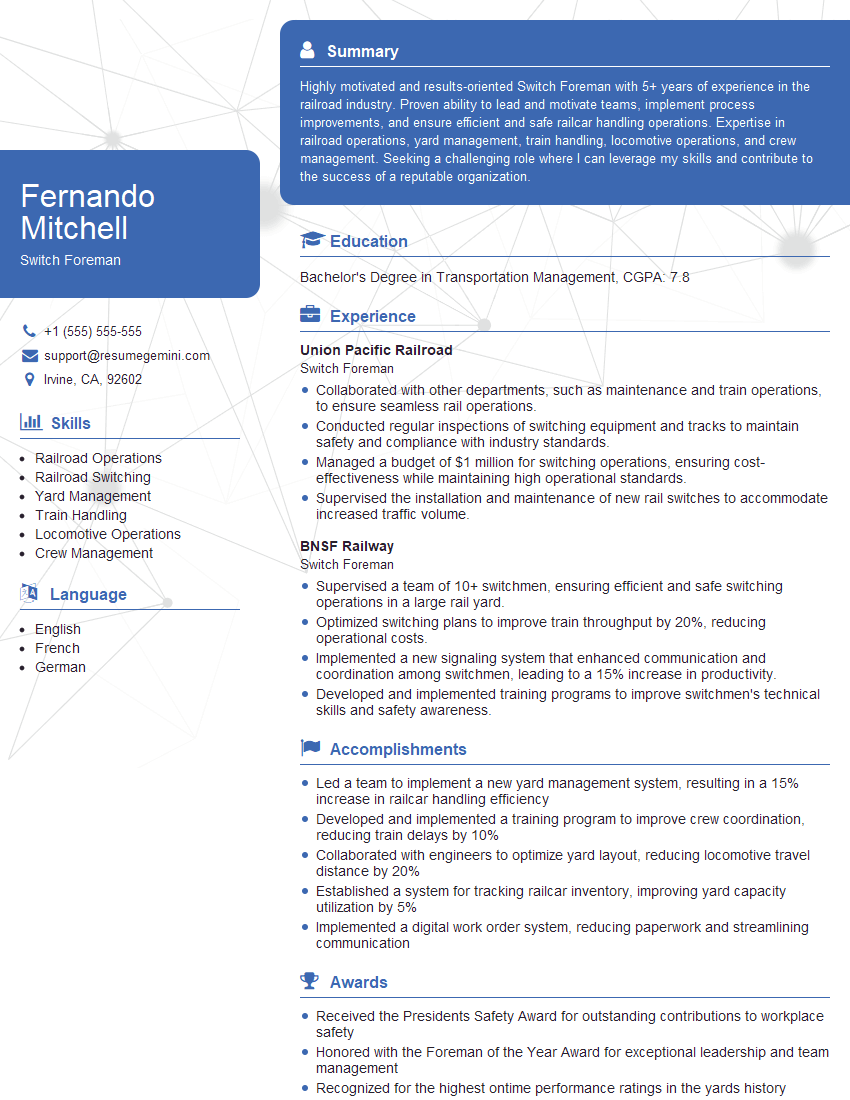
Are you gearing up for a career shift or aiming to ace your next interview? Look no further! We’ve curated a comprehensive guide to help you crack the interview for the coveted Switch Foreman position. From understanding the key responsibilities to mastering the most commonly asked questions, this blog has you covered. So, buckle up and let’s embark on this journey together.
Acing the interview is crucial, but landing one requires a compelling resume that gets you noticed. Crafting a professional document that highlights your skills and experience is the first step toward interview success. ResumeGemini can help you build a standout resume that gets you called in for that dream job.






Essential Interview Questions For Switch Foreman
1. What are the core responsibilities of a Switch Foreman?
As a Switch Foreman, my key responsibilities involve:
- Supervising and directing a team of switch operators
- Ensuring efficient and safe operation of railway switching operations
2. Describe the procedures you follow when operating a railway switch.
When operating a railway switch, I adhere to the following procedures:
- Visual inspection: I inspect the switch components for any damage or defects.
- Switch alignment verification: I verify that the switch is properly aligned to direct trains to the desired track.
- Switch operation: Using the appropriate control mechanism, I operate the switch to change the track alignment.
- Safety measures: I ensure that all safety precautions are followed, including locking the switch in place and displaying appropriate signals.
3. How do you handle train movement within your assigned yard or territory?
Managing train movement involves the following steps:
- Communication: I coordinate with train crews, dispatchers, and other personnel to determine train movements.
- Route planning: I plan the optimal routes for trains, considering factors such as track availability, train length, and scheduled arrivals/departures.
- Switch operation: I operate switches to direct trains onto the appropriate tracks.
- Monitoring: I monitor train progress and ensure that they are moving according to schedule.
4. How do you ensure the safety of your team and equipment during switching operations?
Safety is paramount:
- Safety briefings: I conduct regular safety briefings with my team to emphasize safe work practices.
- Hazard identification: I identify potential hazards in the work area and take necessary precautions to mitigate risks.
- Proper use of safety equipment: I ensure that my team wears appropriate personal protective equipment (PPE) and uses equipment correctly.
- Emergency preparedness: I establish clear emergency procedures and conduct drills to ensure my team’s readiness.
5. How do you maintain and inspect railway switches and track components?
Regular maintenance is essential:
- Daily inspections: I perform daily inspections of switches, tracks, and other components to identify any wear, damage, or defects.
- Scheduled maintenance: I follow established maintenance schedules to lubricate, adjust, and repair switches and tracks.
- Documentation: I maintain detailed records of all inspections and maintenance activities.
6. What are the common troubleshooting techniques you use for switch and track issues?
Troubleshooting is crucial:
- Symptom identification: I identify the symptoms of the issue, such as switch failure or track damage.
- Cause analysis: I analyze potential causes by examining the affected components and reviewing maintenance records.
- Repair or replacement: Depending on the issue, I either repair the component or replace it with a new one.
- Testing: After repairs or replacements, I conduct thorough testing to ensure proper functionality.
7. How do you handle emergency situations related to train movements or track conditions?
Emergencies require prompt action:
- Quick assessment: I quickly assess the situation to determine the nature and severity of the emergency.
- Immediate action: I take immediate action to protect personnel and equipment, such as stopping trains or diverting them to alternate routes.
- Communication: I communicate with relevant personnel, including train crews, dispatchers, and emergency services.
- Follow-up: After the emergency, I investigate the root cause and implement measures to prevent similar incidents in the future.
8. How do you stay updated with advancements in railway switching technology and best practices?
Continuous learning is important:
- Industry publications: I subscribe to industry publications and attend conferences to stay informed about new technologies and best practices.
- Training programs: I participate in training programs offered by railway companies and equipment manufacturers.
- Networking: I connect with other professionals in the field to share knowledge and learn from their experiences.
9. How do you prioritize tasks and allocate resources efficiently?
Efficient resource management:
- Task prioritization: I evaluate tasks based on their urgency, importance, and impact on operations.
- Resource allocation: I allocate resources, such as personnel and equipment, to ensure that tasks are completed effectively and efficiently.
- Monitoring and adjustment: I monitor progress and make adjustments as needed to optimize resource utilization.
10. How do you lead and motivate your team to achieve optimal performance?
Effective leadership and motivation:
- Communication: I communicate clearly and regularly with my team to set expectations, provide feedback, and motivate them.
- Recognition and appreciation: I recognize and appreciate my team’s contributions and efforts.
- Training and development: I provide training and development opportunities to enhance my team’s skills and knowledge.
Interviewers often ask about specific skills and experiences. With ResumeGemini‘s customizable templates, you can tailor your resume to showcase the skills most relevant to the position, making a powerful first impression. Also check out Resume Template specially tailored for Switch Foreman.
Career Expert Tips:
- Ace those interviews! Prepare effectively by reviewing the Top 50 Most Common Interview Questions on ResumeGemini.
- Navigate your job search with confidence! Explore a wide range of Career Tips on ResumeGemini. Learn about common challenges and recommendations to overcome them.
- Craft the perfect resume! Master the Art of Resume Writing with ResumeGemini’s guide. Showcase your unique qualifications and achievements effectively.
- Great Savings With New Year Deals and Discounts! In 2025, boost your job search and build your dream resume with ResumeGemini’s ATS optimized templates.
Researching the company and tailoring your answers is essential. Once you have a clear understanding of the Switch Foreman‘s requirements, you can use ResumeGemini to adjust your resume to perfectly match the job description.
Key Job Responsibilities
The Switch Foreman is a critical role within a railway system, responsible for the safe and efficient operation of railway switches. They oversee a team of switchmen and ensure that all switches are properly maintained and operated.
1. Supervision and Coordination
Supervises and coordinates a team of switchmen, assigning tasks and ensuring that they are carried out efficiently and safely.
- Provides training and guidance to switchmen on proper switching procedures and safety regulations.
- Monitors the performance of switchmen and provides feedback and support to improve their skills.
2. Switch Maintenance and Inspection
Inspects and maintains railway switches, ensuring that they are in good working condition and meet safety standards.
- Conducts regular inspections of switches, tracks, and other railway infrastructure to identify any potential hazards or malfunctions.
- Performs necessary repairs and maintenance on switches, including replacing worn parts, lubricating moving components, and adjusting switch settings.
3. Train Control and Communication
Communicates with train crews and dispatchers to ensure the safe and orderly movement of trains.
- Receives and interprets train orders, and communicates them to switchmen to ensure proper switch alignment and track routing.
- Monitors train movements and maintains communication with train crews to facilitate smooth and efficient train operations.
4. Safety and Emergency Management
Ensures the safety of railway operations and responds to emergencies promptly and effectively.
- Enforces safety regulations and ensures that all employees adhere to established safety protocols.
- Responds to emergencies such as train derailments, track obstructions, or signal malfunctions, and coordinates with other departments to resolve the situation.
Interview Tips
Preparing for a Switch Foreman interview requires a thorough understanding of the job responsibilities and the railway industry. Here are some tips to help you ace the interview:
1. Research and Preparation
Research the railway industry, the specific company you are applying to, and the role of a Switch Foreman. Familiarize yourself with the key responsibilities and the industry-specific terminology.
- Review railway safety regulations and standards, such as those set by the Federal Railroad Administration (FRA).
- Practice answering common interview questions related to railway operations, safety, and communication.
2. Highlight Relevant Experience
Emphasize your experience in railway operations, switch maintenance, or a related field. Quantify your accomplishments and provide specific examples that demonstrate your skills.
- Discuss your experience in supervising and motivating teams, and provide examples of how you have successfully achieved goals through effective leadership.
- Highlight your technical skills in switch maintenance and inspection, and explain how you have applied these skills to ensure the safe operation of railway switches.
3. Showcase Safety Commitment
Emphasize your commitment to safety and your understanding of railway safety regulations. Provide examples of how you have implemented safety measures and responded to emergencies in previous roles.
- Explain your knowledge of FRA safety regulations and your experience in enforcing these regulations on the job.
- Describe your experience in conducting safety inspections, identifying hazards, and implementing corrective actions to mitigate risks.
4. Communication and Interpersonal Skills
Highlight your communication and interpersonal skills, as they are crucial for effective coordination with train crews, dispatchers, and other employees. Provide examples of how you have communicated complex information clearly and effectively.
- Discuss your experience in working with diverse teams and your ability to build strong relationships with colleagues.
- Explain how you have used your communication skills to resolve conflicts, coordinate operations, and ensure the smooth flow of train traffic.
Next Step:
Armed with this knowledge, you’re now well-equipped to tackle the Switch Foreman interview with confidence. Remember, a well-crafted resume is your first impression. Take the time to tailor your resume to highlight your relevant skills and experiences. And don’t forget to practice your answers to common interview questions. With a little preparation, you’ll be on your way to landing your dream job. So what are you waiting for? Start building your resume and start applying! Build an amazing resume with ResumeGemini.