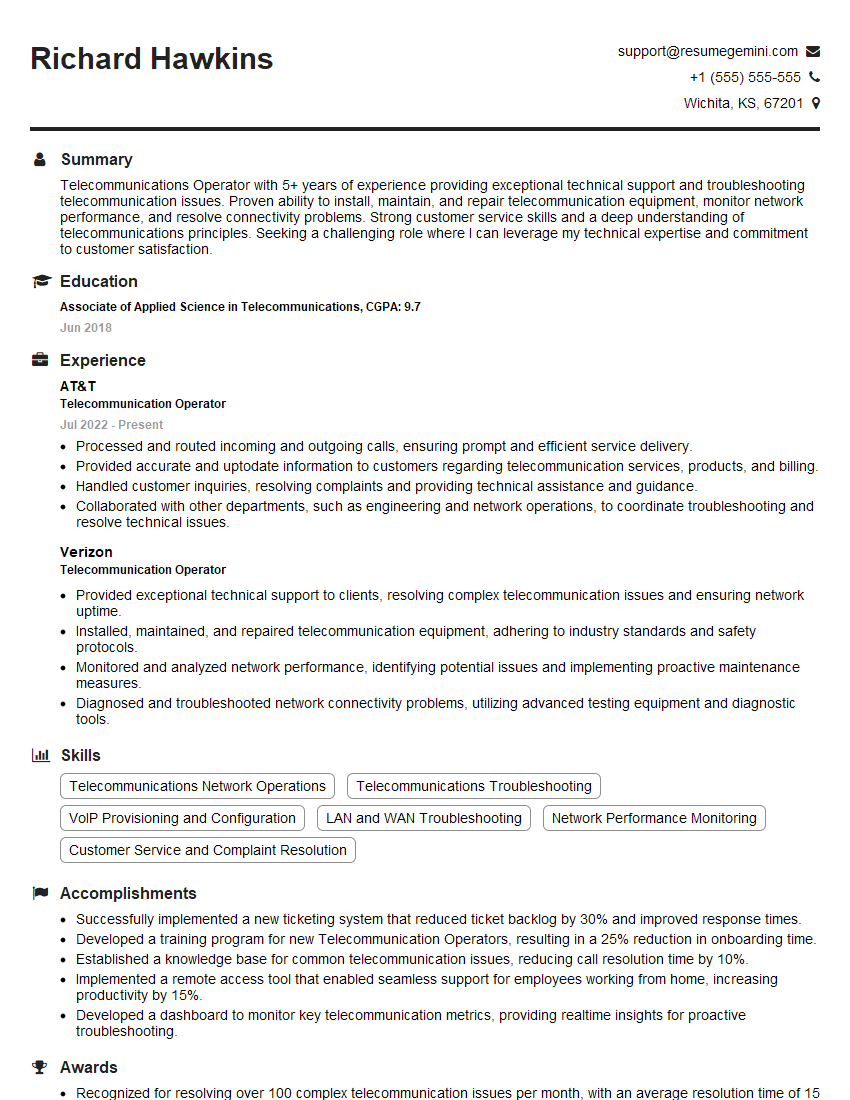
Are you gearing up for a career shift or aiming to ace your next interview? Look no further! We’ve curated a comprehensive guide to help you crack the interview for the coveted Telecommunication Operator position. From understanding the key responsibilities to mastering the most commonly asked questions, this blog has you covered. So, buckle up and let’s embark on this journey together
Acing the interview is crucial, but landing one requires a compelling resume that gets you noticed. Crafting a professional document that highlights your skills and experience is the first step toward interview success. ResumeGemini can help you build a standout resume that gets you called in for that dream job.






Essential Interview Questions For Telecommunication Operator
1. Explain the responsibilities of a Telecommunication Operator?
As a Telecommunication Operator, I would be responsible for:
- Operating and maintaining telecommunications equipment, such as telephone switches, routers, and fiber optic cables.
- Providing customer service and technical support to customers.
- Monitoring and troubleshooting network issues.
- Installing and repairing telecommunications equipment.
- Working with other technicians and engineers to resolve complex problems.
2. What are the key technical skills required for a Telecommunication Operator?
- Strong understanding of telecommunications principles and protocols.
- Ability to troubleshoot and resolve network issues.
- Experience with telecommunications equipment and software.
- Excellent customer service and communication skills.
- Ability to work independently and as part of a team.
3. What are the different types of telecommunications networks?
- Wired networks: These networks use physical cables to connect devices.
- Wireless networks: These networks use radio waves to connect devices.
- Cellular networks: These networks use radio towers to connect devices.
- Satellite networks: These networks use satellites to connect devices.
4. What are the different types of telecommunications services?
- Voice services: These services allow users to make and receive phone calls.
- Data services: These services allow users to access the internet and send and receive data files.
- Video services: These services allow users to watch TV and movies over the internet.
5. What are the challenges facing the telecommunications industry?
- The increasing demand for bandwidth.
- The need to improve network security.
- The convergence of telecommunications and information technology.
- The globalization of the telecommunications industry.
6. What are the trends in the telecommunications industry?
- The growth of mobile broadband.
- The development of new telecommunications technologies, such as 5G.
- The increasing use of cloud computing.
- The convergence of telecommunications and media.
7. What are the career opportunities for Telecommunication Operators?
- Network technician
- Customer service representative
- Field engineer
- Network engineer
- Telecommunications manager
8. What are your strengths as a Telecommunication Operator?
- Strong understanding of telecommunications principles and protocols.
- Ability to troubleshoot and resolve network issues.
- Experience with telecommunications equipment and software.
- Excellent customer service and communication skills.
- Ability to work independently and as part of a team.
9. What are your weaknesses as a Telecommunication Operator?
I am always willing to learn new things and I am confident that I can overcome any weaknesses that I have.
10. Why are you interested in working as a Telecommunication Operator?
I am passionate about telecommunications and I believe that I have the skills and experience necessary to be successful in this role.
Interviewers often ask about specific skills and experiences. With ResumeGemini‘s customizable templates, you can tailor your resume to showcase the skills most relevant to the position, making a powerful first impression. Also check out Resume Template specially tailored for Telecommunication Operator.
Career Expert Tips:
- Ace those interviews! Prepare effectively by reviewing the Top 50 Most Common Interview Questions on ResumeGemini.
- Navigate your job search with confidence! Explore a wide range of Career Tips on ResumeGemini. Learn about common challenges and recommendations to overcome them.
- Craft the perfect resume! Master the Art of Resume Writing with ResumeGemini’s guide. Showcase your unique qualifications and achievements effectively.
- Great Savings With New Year Deals and Discounts! In 2025, boost your job search and build your dream resume with ResumeGemini’s ATS optimized templates.
Researching the company and tailoring your answers is essential. Once you have a clear understanding of the Telecommunication Operator‘s requirements, you can use ResumeGemini to adjust your resume to perfectly match the job description.
Key Job Responsibilities
1. Handling Customer Inquiries and Orders
Operators are responsible for addressing customer queries regarding services, billing, and technical issues. They also take orders for new services and upgrades.
- Answering phone calls, emails, and online inquiries.
- Providing information on plans, promotions, and service availability.
- Processing service orders and subscriptions for new and existing customers.
2. Troubleshooting and Resolving Technical Issues
Operators are often the first line of support for customers experiencing technical problems. They diagnose issues and provide solutions, or escalate complex issues to technical teams.
- Performing basic troubleshooting steps over the phone.
- Remotely configuring and resetting devices.
- Providing instructions for customers to resolve simple issues.
3. Maintaining Customer Accounts and Records
Operators are responsible for updating customer account information and managing billing. They also ensure compliance with regulatory requirements.
- Processing payments and handling billing discrepancies.
- Maintaining customer records and tracking account status.
- Ensuring compliance with data privacy and security regulations.
4. Providing Excellent Customer Service
Telecommunication operators play a key role in shaping the customer experience. They are expected to provide courteous, efficient, and professional service.
- Meeting customer expectations and resolving issues promptly.
- Building rapport with customers and providing personalized assistance.
- Providing constructive feedback to improve customer service.
Interview Tips
To ace an interview for a telecommunication operator position, candidates should focus on these key tips:
1. Research the Company and Role
Familiarize yourself with the company’s services, values, and industry standing. Understand the specific responsibilities of the telecommunication operator role and how it aligns with your skills.
2. Practice Customer Service Skills
Interviewers will assess your ability to communicate effectively and handle customer inquiries. Practice answering common customer service questions and demonstrating empathy and patience.
3. Highlight Technical Knowledge
Telecommunication operators often need basic technical knowledge. Highlight any experience you have with troubleshooting, remote configuration, or customer support for telecommunication services.
4. Prepare for Common Interview Questions
Review typical interview questions for telecommunication operators, such as:
- Why are you interested in this role?
- Describe your experience in handling customer inquiries.
- How do you handle challenging customer situations?
- What is your understanding of telecommunication services?
- How do you stay updated on the latest industry trends?
5. Dress Professionally and Arrive Punctually
First impressions matter. Dress in business attire and arrive at the interview on time. Maintain a professional demeanor throughout the interview.
Next Step:
Armed with this knowledge, you’re now well-equipped to tackle the Telecommunication Operator interview with confidence. Remember, preparation is key. So, start crafting your resume, highlighting your relevant skills and experiences. Don’t be afraid to tailor your application to each specific job posting. With the right approach and a bit of practice, you’ll be well on your way to landing your dream job. Build your resume now from scratch or optimize your existing resume with ResumeGemini. Wish you luck in your career journey!