Are you gearing up for a career in Textile Conservator? Feeling nervous about the interview questions that might come your way? Don’t worry, you’re in the right place. In this blog post, we’ll dive deep into the most common interview questions for Textile Conservator and provide you with expert-backed answers. We’ll also explore the key responsibilities of this role so you can tailor your responses to showcase your perfect fit.
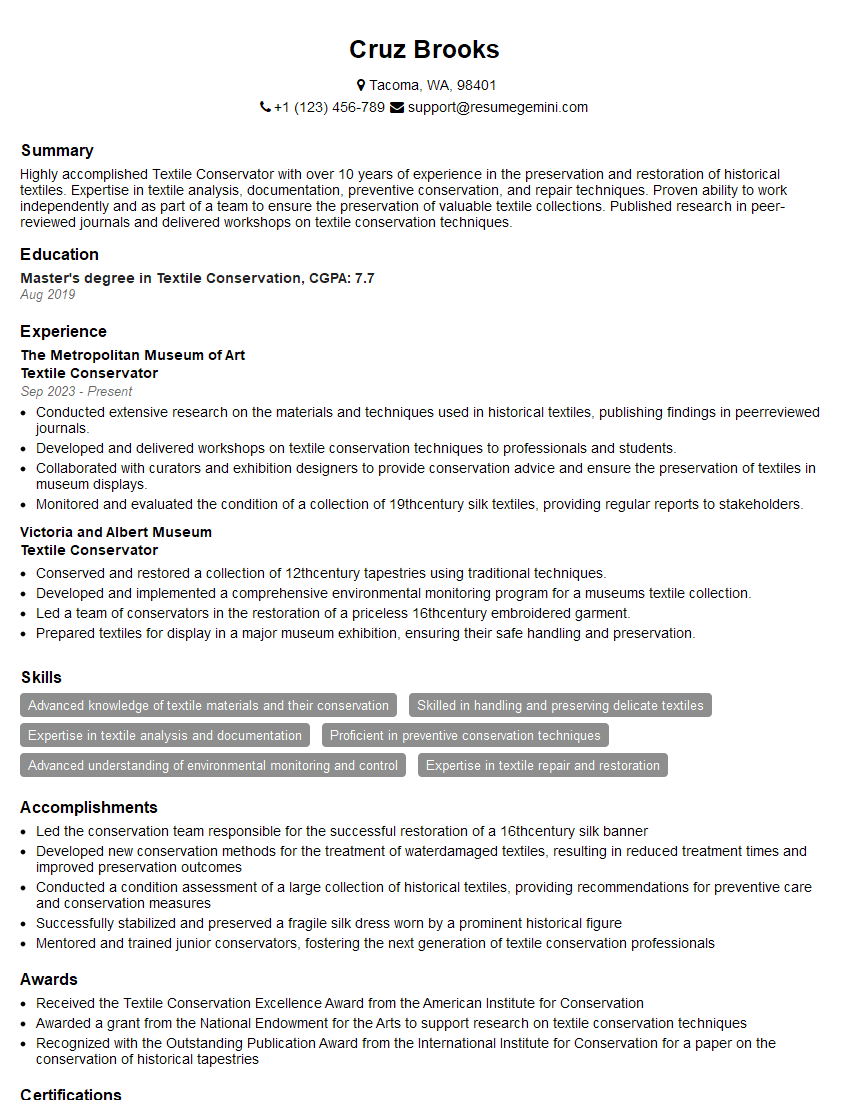
Acing the interview is crucial, but landing one requires a compelling resume that gets you noticed. Crafting a professional document that highlights your skills and experience is the first step toward interview success. ResumeGemini can help you build a standout resume that gets you called in for that dream job.






Essential Interview Questions For Textile Conservator
1. What methods would you use to assess the condition of a historic textile?
The condition of a historic textile can be assessed using various techniques. These include:
- Visual examination: A thorough examination of the textile, including its overall condition, any stains, tears, or other damage.
- Microscopic analysis: Using a microscope to examine the fibers of the textile and identify any damage or deterioration.
- Chemical analysis: To determine the composition of the fibers and identify any dyes or other treatments that have been used.
- Mechanical testing: To assess the strength and durability of the textile.
2. How would you create a conservation plan for a damaged textile?
Planning
- Document the textile’s condition and history.
- Identify the causes of damage and determine the best course of action.
- Establish treatment priorities and develop a timeline for completion.
Intervention
- Clean the textile using appropriate methods.
- Repair any tears or holes using techniques such as mending or patching.
- Stabilize the textile using supports or backing materials.
Monitoring and Evaluation
- Monitor the textile’s condition over time.
- Make adjustments to the conservation plan as needed.
- Document the conservation process and results.
3. What are the different types of solvents used in textile conservation and when would you use each type?
Solvents are used in textile conservation to remove dirt, stains, and other unwanted materials from textiles. Different types of solvents have different properties and are used for specific purposes. Some of the most common types of solvents used in textile conservation include:
- Water: Water is the most common solvent used in textile conservation. It is safe for use on most textiles and is effective at removing dirt and water-soluble stains.
- Alcohol: Alcohol is a good solvent for removing oil-based stains and dirt. It is also effective at removing dyes and other colorants from textiles.
- Mineral spirits: Mineral spirits are a good solvent for removing grease and oil from textiles. They are also effective at removing wax and other non-polar substances.
- Acids: Acids are used to remove rust and other metal stains from textiles. They can also be used to brighten colors and remove yellowing.
- Alkalis: Alkalis are used to remove acid stains from textiles. They can also be used to soften fibers and make them more pliable.
4. How would you remove a stain from a delicate textile?
Removing a stain from a delicate textile requires a gentle approach to avoid damaging the fabric. The steps involved may vary depending on the type of stain and the fabric, but generally include:
- Identify the type of stain and choose an appropriate solvent.
- Test the solvent on an inconspicuous area of the textile to ensure it does not cause damage.
- Apply the solvent to the stain using a cotton swab or soft cloth.
- Gently blot the stain to remove the solvent and the stain.
- Rinse the area with water to remove any remaining solvent.
- Allow the textile to air dry completely.
5. What are the different methods used to repair tears in textiles?
The method used to repair a tear in a textile will depend on the size, location, and type of tear, as well as the fabric itself. Some of the most common methods include:
- Invisible mending: This technique is used to repair small tears or holes in delicate fabrics. It involves using a fine needle and thread to stitch the tear together in a way that is almost invisible.
- Patching: This technique is used to repair larger tears or holes. A piece of fabric is sewn over the tear to reinforce it and prevent it from spreading.
- Darning: This technique is used to repair tears in knitted fabrics. It involves using a needle and thread to stitch across the tear, creating a new loop of yarn that replaces the damaged one.
- Weaving: This technique is used to repair tears in woven fabrics. It involves using a needle and thread to weave new threads into the fabric, replacing the damaged ones.
6. How would you stabilize a fragile textile?
Stabilizing a fragile textile involves taking steps to prevent it from further deterioration. This may involve:
- Supporting the textile with a backing material, such as a stretcher or frame.
- Encapsulating the textile in a protective enclosure, such as a box or case.
- Controlling the environment in which the textile is stored, such as by regulating temperature and humidity.
- Handling the textile carefully to avoid causing further damage.
7. What are the ethical considerations involved in textile conservation?
Textile conservation involves making decisions about how to preserve and care for cultural heritage. These decisions must be made in a way that respects the original intent of the textile and its cultural significance. Some of the ethical considerations involved in textile conservation include:
- Preservation vs. restoration: Should the textile be preserved in its current state or restored to its original appearance?
- Repairs vs. replacements: Should damaged parts of the textile be repaired or replaced?
- Use of materials: Should original materials be used for repairs or can modern materials be used?
- Documentation: How should the conservation process be documented to ensure transparency and accountability?
8. What are the challenges of working with contemporary textiles?
Contemporary textiles often present unique challenges for conservators due to their use of non-traditional materials and techniques. Some of these challenges include:
- Unfamiliarity with materials: Conservators may not be familiar with the properties and behavior of new materials used in contemporary textiles.
- Lack of documentation: Information about the materials and techniques used in contemporary textiles is often not well-documented, making it difficult to develop appropriate conservation strategies.
- Rapid deterioration: Some contemporary textiles are made from materials that are prone to rapid deterioration, making it difficult to preserve them over the long term.
9. How do you stay up-to-date on the latest developments in textile conservation?
To stay up-to-date on the latest developments in textile conservation, I:
- Attend conferences and workshops on textile conservation.
- Read journals and articles on textile conservation.
- Subscribe to email lists and online forums for textile conservators.
- Network with other textile conservators.
10. What are your career goals as a textile conservator?
My career goals as a textile conservator are to:
- Contribute to the preservation and care of cultural heritage textiles.
- Develop new and innovative conservation techniques.
- Educate the public about the importance of textile conservation.
- Mentor and train future textile conservators.
Interviewers often ask about specific skills and experiences. With ResumeGemini‘s customizable templates, you can tailor your resume to showcase the skills most relevant to the position, making a powerful first impression. Also check out Resume Template specially tailored for Textile Conservator.
Career Expert Tips:
- Ace those interviews! Prepare effectively by reviewing the Top 50 Most Common Interview Questions on ResumeGemini.
- Navigate your job search with confidence! Explore a wide range of Career Tips on ResumeGemini. Learn about common challenges and recommendations to overcome them.
- Craft the perfect resume! Master the Art of Resume Writing with ResumeGemini’s guide. Showcase your unique qualifications and achievements effectively.
- Great Savings With New Year Deals and Discounts! In 2025, boost your job search and build your dream resume with ResumeGemini’s ATS optimized templates.
Researching the company and tailoring your answers is essential. Once you have a clear understanding of the Textile Conservator‘s requirements, you can use ResumeGemini to adjust your resume to perfectly match the job description.
Key Job Responsibilities
To preserve and maintain textile collections, a Textile Conservator is needed. They must have deep knowledge and understanding of textile materials, deterioration mechanisms, and conservation techniques. These qualified professionals are responsible for assessing, stabilizing, and restoring different types of textiles.
1. Condition Assessment and Documentation
Textile conservators begin by thoroughly assessing the condition of textiles, noting any damage or deterioration. They document their findings using detailed reports and images, creating a baseline for future reference.
2. Treatment and Stabilization
Based on their assessment, conservators develop and implement tailored treatment plans to stabilize and preserve textiles. They use specialized techniques like cleaning, mending, and reweaving, ensuring the long-term preservation of these valuable items.
3. Storage and Handling
Conservators play a crucial role in ensuring the proper storage and handling of textiles to prevent further damage. They establish guidelines for handling, packing, and storage, ensuring textiles are kept in optimal conditions.
4. Research and Development
Textile conservators stay updated on the latest conservation techniques and research, contributing to the field’s advancement. They may conduct research on new materials and methods, benefiting the preservation of textiles worldwide.
Interview Tips
Preparing for a Textile Conservator interview requires a thorough understanding of the role and highlighting your relevant skills and experience. Here are some tips to help you ace the interview:
1. Research the Organization and Position
Familiarize yourself with the organization’s mission, values, and the specific requirements of the Textile Conservator role. This demonstrates your interest and enthusiasm for the position.
2. Highlight Your Technical Skills
Emphasize your technical skills in textile conservation, including assessment, treatment, stabilization, and storage practices. Provide specific examples of your work, showcasing your expertise and hands-on experience.
3. Communicate Your Understanding of Textiles
Demonstrate your comprehensive understanding of textiles, including different fibers, fabrics, and their properties. Explain how this knowledge informs your conservation approach and decision-making.
4. Showcase Your Research and Publications
If you have conducted research or published articles related to textile conservation, highlight these accomplishments. They indicate your commitment to the field’s advancement and your dedication to staying current with best practices.
5. Prepare for Common Interview Questions
Practice answering common interview questions that explore your motivation for pursuing textile conservation, your understanding of ethical considerations, and your experience working with diverse stakeholders.
Next Step:
Armed with this knowledge, you’re now well-equipped to tackle the Textile Conservator interview with confidence. Remember, preparation is key. So, start crafting your resume, highlighting your relevant skills and experiences. Don’t be afraid to tailor your application to each specific job posting. With the right approach and a bit of practice, you’ll be well on your way to landing your dream job. Build your resume now from scratch or optimize your existing resume with ResumeGemini. Wish you luck in your career journey!