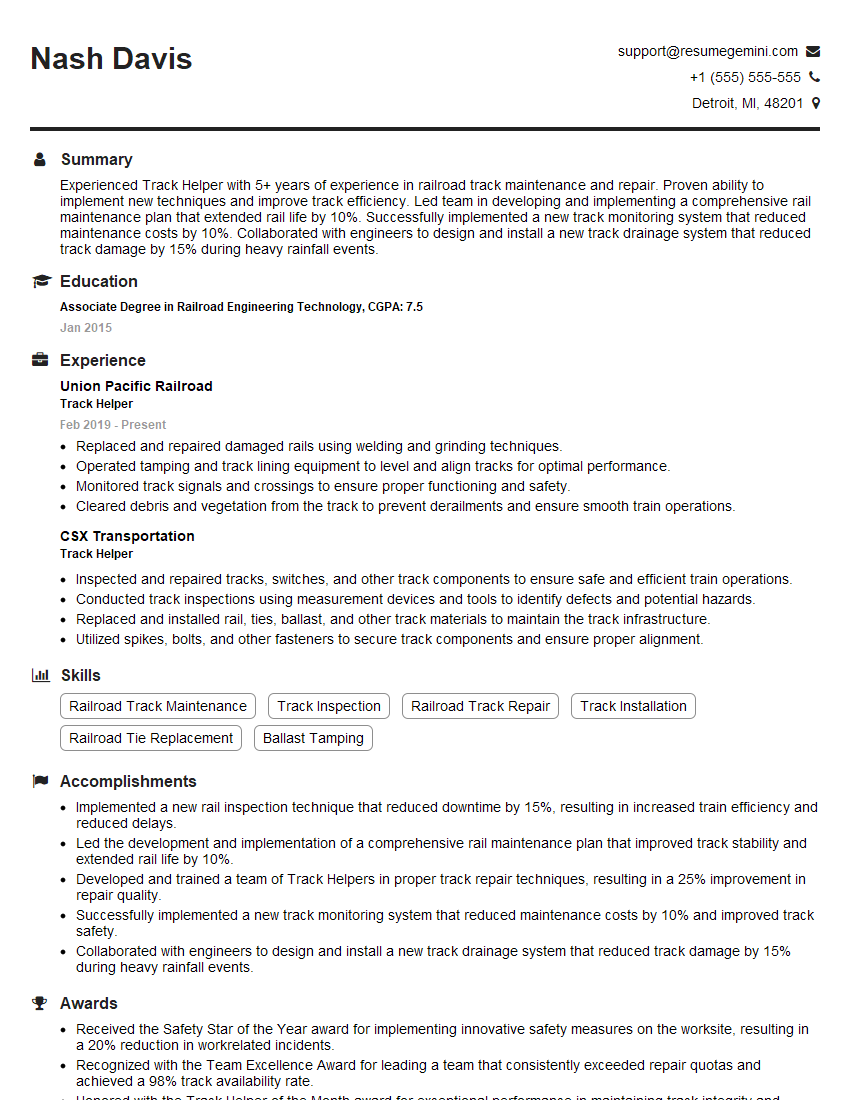
Are you gearing up for a career in Track Helper? Feeling nervous about the interview questions that might come your way? Don’t worry, you’re in the right place. In this blog post, we’ll dive deep into the most common interview questions for Track Helper and provide you with expert-backed answers. We’ll also explore the key responsibilities of this role so you can tailor your responses to showcase your perfect fit.
Acing the interview is crucial, but landing one requires a compelling resume that gets you noticed. Crafting a professional document that highlights your skills and experience is the first step toward interview success. ResumeGemini can help you build a standout resume that gets you called in for that dream job.






Essential Interview Questions For Track Helper
1. Explain the primary responsibilities of a Track Helper?
- Assist in the construction, maintenance, and repair of railway tracks.
- Operate and maintain track equipment, such as ballast regulators, tampers, and tie inserters.
- Inspect tracks for defects and perform necessary repairs.
- Clear obstructions from tracks, such as fallen trees or debris.
- Report track conditions and any potential hazards to supervisors.
2. Describe the different types of railway track construction?
Concrete Tie Construction:
- Involves laying pre-stressed concrete ties onto a prepared ballast bed.
- Concrete ties are durable and require less maintenance compared to wooden ties.
Wood Tie Construction:
- Utilizes wooden ties spaced evenly along the track.
- Wooden ties are treated with preservatives to increase their lifespan.
Direct Fixation Track:
- Eliminates the use of ties and directly attaches rails to concrete slabs or steel beams.
- Provides a more stable and durable track structure.
3. What are the key safety regulations that Track Helpers must adhere to?
- Wear appropriate safety gear, including hard hats, safety glasses, and reflective vests.
- Follow proper procedures when working near live electrical wires.
- Maintain a safe distance from moving trains and equipment.
- Be aware of potential hazards, such as slippery surfaces or uneven terrain.
- Report any unsafe conditions or incidents to supervisors immediately.
4. Describe the use of ballast in railway track construction?
- Ballast is a layer of crushed rock or gravel placed beneath the tracks.
- It provides support and drainage for the track structure.
- Ballast helps distribute the weight of trains evenly and prevents track deformation.
- Regular maintenance is required to ensure proper ballast conditions.
5. What are the common tools and equipment used by Track Helpers?
- Sledgehammers, wrenches, and crowbars for track repairs.
- Track gauges and levels for ensuring track alignment.
- Tie tampers for compacting ballast around ties.
- Ballast regulators for distributing and leveling ballast.
- Hand-held radios for communication with supervisors and other team members.
6. Explain the process of replacing a broken rail?
- Secure the affected track section and obtain clearance from train dispatchers.
- Unbolt the rail joints and remove the damaged rail.
- Insert the new rail into place and bolt the joints.
- Tamp the ballast around the new rail to provide support.
- Inspect and test the repaired section before reopening the track.
7. What are the potential hazards associated with working as a Track Helper?
- Exposure to heavy machinery and moving trains.
- Working in inclement weather conditions.
- Lifting heavy objects and performing physically demanding tasks.
- Potential for injuries from falls, cuts, and abrasions.
- Exposure to noise and vibrations.
8. Describe your experience in operating track maintenance equipment?
- Experience in operating ballast regulators, tampers, and tie inserters.
- Knowledge of proper equipment maintenance and troubleshooting.
- Ability to follow operating instructions and safety procedures.
- Experience in working as part of a team to maintain track infrastructure.
9. Explain the importance of track inspection and maintenance?
- Regular inspection identifies potential defects and prevents major track failures.
- Maintenance ensures the safe and efficient operation of trains.
- Proper track conditions reduce derailment risks and improve train performance.
- Maintenance activities extend the lifespan of track infrastructure.
10. What are the qualities of a successful Track Helper?
- Strong work ethic and attention to detail.
- Physical strength and endurance.
- Knowledge of railway track construction and maintenance.
- Ability to work independently and as part of a team.
- Commitment to safety and adherence to regulations.
Interviewers often ask about specific skills and experiences. With ResumeGemini‘s customizable templates, you can tailor your resume to showcase the skills most relevant to the position, making a powerful first impression. Also check out Resume Template specially tailored for Track Helper.
Career Expert Tips:
- Ace those interviews! Prepare effectively by reviewing the Top 50 Most Common Interview Questions on ResumeGemini.
- Navigate your job search with confidence! Explore a wide range of Career Tips on ResumeGemini. Learn about common challenges and recommendations to overcome them.
- Craft the perfect resume! Master the Art of Resume Writing with ResumeGemini’s guide. Showcase your unique qualifications and achievements effectively.
- Great Savings With New Year Deals and Discounts! In 2025, boost your job search and build your dream resume with ResumeGemini’s ATS optimized templates.
Researching the company and tailoring your answers is essential. Once you have a clear understanding of the Track Helper‘s requirements, you can use ResumeGemini to adjust your resume to perfectly match the job description.
Key Job Responsibilities
Track Helpers are responsible for maintaining and repairing railroad tracks, ensuring the safe and efficient movement of trains.
1. Track Maintenance
Regularly inspect tracks for defects, wear and tear, and potential hazards.
- Identify and report any abnormalities or damage to supervisors.
- Carry out routine maintenance tasks such as tightening bolts, cleaning ballast, and removing debris.
2. Track Repair
Repair or replace damaged or defective track components.
- Lay new rails and sleepers.
- Tamp ballast to provide support for the tracks.
3. Emergency Response
Respond to track-related emergencies, such as derailments or broken rails.
- Clear debris and repair tracks to restore train traffic.
- Assist in the evacuation of passengers and crew in case of accidents.
4. Equipment Operation
Operate and maintain track maintenance equipment, such as tampers, ballast regulators, and track liners.
- Follow safety protocols and proper operating procedures.
- Report any equipment malfunctions or maintenance issues.
Interview Tips
Preparing thoroughly for a Track Helper interview can significantly increase your chances of success. Here are some valuable tips to help you ace the interview:
1. Research the Company and Role
Familiarize yourself with the company’s history, values, and operations. This will demonstrate your interest and enthusiasm for the position.
- Read the job description carefully to understand the specific responsibilities and qualifications.
- Prepare questions to ask the interviewer about the company, the team, and the role.
2. Highlight Relevant Experience
Emphasize your past experiences that are relevant to the job requirements. Quantify your accomplishments whenever possible.
- Share specific examples of track maintenance, repair, or emergency response tasks you have performed.
- Mention any equipment you have operated and highlight your proficiency in using it.
3. Emphasize Safety Consciousness
Safety is paramount in the rail industry. Demonstrate your strong commitment to safety practices.
- Discuss your adherence to safety regulations and operating procedures.
- Provide examples of how you have identified and mitigated safety hazards.
4. Showcase Physical Fitness and Endurance
Track Helper jobs require physical strength and endurance. Highlight your ability to perform physically demanding tasks.
- State your physical capabilities and experience in working outdoors in various weather conditions.
- Mention any physical training or certifications you have obtained.
Next Step:
Armed with this knowledge, you’re now well-equipped to tackle the Track Helper interview with confidence. Remember, preparation is key. So, start crafting your resume, highlighting your relevant skills and experiences. Don’t be afraid to tailor your application to each specific job posting. With the right approach and a bit of practice, you’ll be well on your way to landing your dream job. Build your resume now from scratch or optimize your existing resume with ResumeGemini. Wish you luck in your career journey!