Feeling lost in a sea of interview questions? Landed that dream interview for Urologist, Physician but worried you might not have the answers? You’re not alone! This blog is your guide for interview success. We’ll break down the most common Urologist, Physician interview questions, providing insightful answers and tips to leave a lasting impression. Plus, we’ll delve into the key responsibilities of this exciting role, so you can walk into your interview feeling confident and prepared.
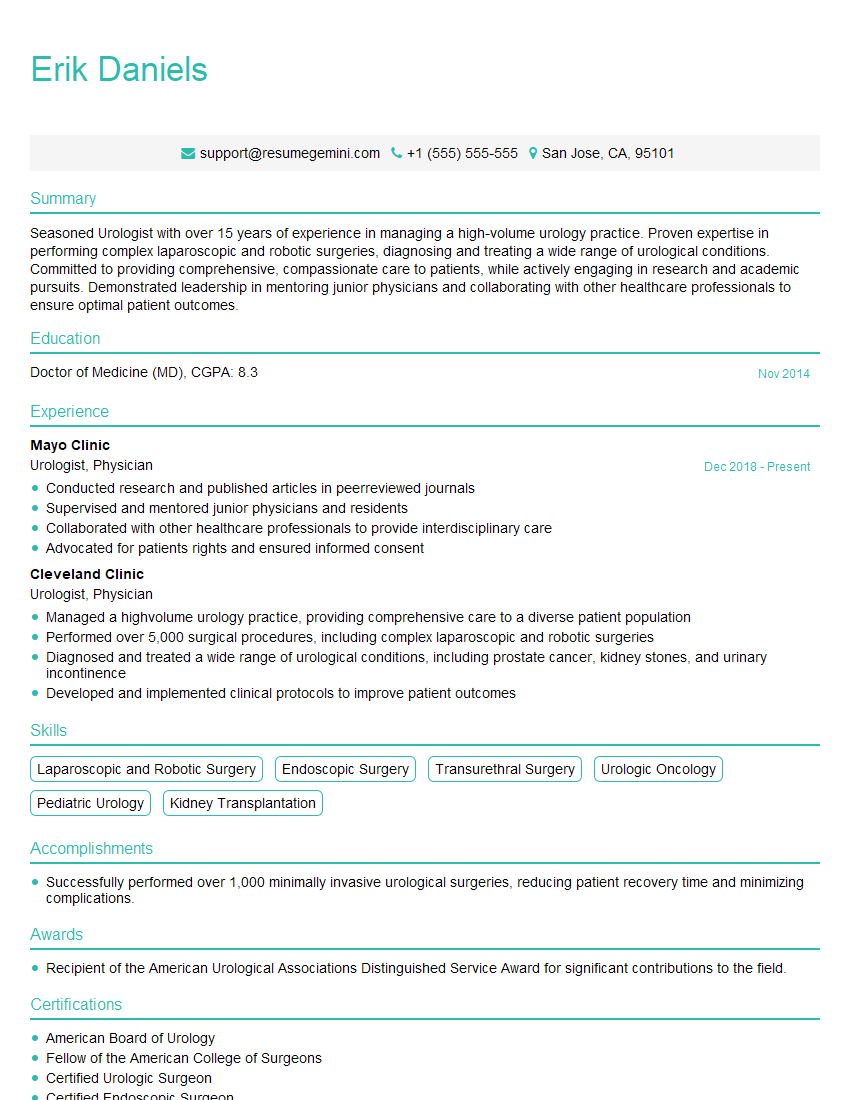
Acing the interview is crucial, but landing one requires a compelling resume that gets you noticed. Crafting a professional document that highlights your skills and experience is the first step toward interview success. ResumeGemini can help you build a standout resume that gets you called in for that dream job.






Essential Interview Questions For Urologist, Physician
1. What are the most common urological conditions that you encounter in your practice?
- Prostate enlargement
- Kidney stones
- Urinary tract infections
2. What are the latest advances in urological surgery that you are familiar with?
Laser surgery
- Minimally invasive
- Less pain and scarring
Robotic surgery
- Increased precision
- Shorter recovery time
3. What are the ethical considerations that you take into account when treating patients with urological conditions?
- Informed consent
- Confidentiality
- End-of-life care
4. How do you stay up-to-date on the latest developments in urology?
- Attending conferences
- Reading medical journals
- Taking continuing medical education courses
5. What are your strengths and weaknesses as a urologist?
- Strengths: Excellent surgical skills, strong communication and interpersonal skills, extensive knowledge of urology
- Weaknesses: Can be a bit too detail-oriented at times, may not always be the most patient communicator
6. What are your goals for the future?
- To continue to provide high-quality urological care to my patients
- To conduct research and publish my findings
- To mentor and train junior urologists
7. What are the biggest challenges facing urology today?
- Rising healthcare costs
- The increasing prevalence of chronic diseases
- The shortage of qualified urologists
8. What are the most rewarding aspects of being a urologist?
- Making a difference in the lives of my patients
- Applying my medical knowledge and skills to help others
- Being part of a team of dedicated healthcare professionals
9. What is your approach to patient care?
- I take a patient-centered approach to care, which means that I listen to my patients’ concerns and goals and work with them to develop a treatment plan that is tailored to their individual needs.
- I believe in providing my patients with as much information as possible about their condition and treatment options so that they can make informed decisions about their care.
- I am committed to providing my patients with the highest quality of care and I strive to build long-term relationships with my patients based on trust and respect.
10. What is your experience with managing complex urological conditions?
- I have extensive experience in managing complex urological conditions, including prostate cancer, kidney stones, and urinary incontinence.
- I have a strong understanding of the latest treatment options for these conditions and I am skilled in performing a variety of surgical and non-surgical procedures.
- I am also experienced in managing the complications that can arise from these conditions and I am committed to providing my patients with the best possible care.
Interviewers often ask about specific skills and experiences. With ResumeGemini‘s customizable templates, you can tailor your resume to showcase the skills most relevant to the position, making a powerful first impression. Also check out Resume Template specially tailored for Urologist, Physician.
Career Expert Tips:
- Ace those interviews! Prepare effectively by reviewing the Top 50 Most Common Interview Questions on ResumeGemini.
- Navigate your job search with confidence! Explore a wide range of Career Tips on ResumeGemini. Learn about common challenges and recommendations to overcome them.
- Craft the perfect resume! Master the Art of Resume Writing with ResumeGemini’s guide. Showcase your unique qualifications and achievements effectively.
- Great Savings With New Year Deals and Discounts! In 2025, boost your job search and build your dream resume with ResumeGemini’s ATS optimized templates.
Researching the company and tailoring your answers is essential. Once you have a clear understanding of the Urologist, Physician‘s requirements, you can use ResumeGemini to adjust your resume to perfectly match the job description.
Key Job Responsibilities
Urologists, physicians are highly trained medical professionals who diagnose and treat diseases of the urinary tract and male reproductive system. Their key job responsibilities include:
1. Diagnosis and Treatment of Urological Conditions
Urologists are responsible for diagnosing and treating a wide range of urological conditions, including urinary tract infections (UTIs), kidney stones, prostate cancer, and erectile dysfunction. They perform physical exams, order diagnostic tests, and interpret results to determine the best course of treatment.
- Conduct comprehensive physical exams to assess urological health
- Order and interpret diagnostic tests, such as urine analysis, blood tests, and imaging studies
- Develop individualized treatment plans based on diagnosis and patient preferences
2. Surgical Interventions
In addition to diagnosing and treating urological conditions, urologists also perform a variety of surgical procedures. These procedures may include removing tumors, repairing birth defects, and performing reconstructive surgery.
- Perform complex surgical procedures, including minimally invasive techniques
- Ensure patient safety and well-being during and after surgical interventions
- Monitor patient progress and provide post-operative care
3. Patient Education and Counseling
Urologists play a vital role in educating patients about urological conditions and treatments. They provide information on lifestyle modifications, medications, and surgery to help patients make informed decisions about their care.
- Provide clear and concise explanations of urological conditions and treatment options
- Address patient concerns and answer questions in a sensitive and compassionate manner
- Promote healthy lifestyle habits and preventive measures
4. Research and Development
Some urologists are involved in research to advance the field of urology. They may participate in clinical trials, develop new surgical techniques, or investigate the latest medical technologies.
- Engage in ongoing research and development activities to improve patient care
- Stay abreast of the latest advancements in urology and implement them in practice
- Contribute to the scientific knowledge base and share findings with colleagues
Interview Tips
Preparing thoroughly for a urologist interview is crucial. Here are some tips to help you ace the interview:
1. Research the Practice and the Position
Before the interview, research the urology practice and the specific position you’re applying for. This will give you a good understanding of the practice’s mission, values, and areas of specialization. It will also allow you to tailor your answers to the specific needs of the role.
- Visit the practice’s website to learn about its services, team, and mission
- Read articles and reviews about the urologists in the practice
- Identify any specific skills or experience that the position requires and highlight them in your resume and cover letter
2. Practice Your Answers to Common Interview Questions
There are several common interview questions that you can expect to be asked. It’s helpful to practice your answers to these questions in advance so that you can deliver them confidently and succinctly. Some common questions include:
- “Tell me about yourself and your experience in urology.”
- “Why are you interested in this position?”
- “What are your strengths and weaknesses as a urologist?”
- “How do you stay up-to-date with the latest advancements in urology?”
3. Dress Professionally and Arrive on Time
First impressions matter, so it’s important to dress professionally for your interview. You should also arrive on time to show that you respect the interviewer’s time. Punctuality and appropriate attire demonstrate your professionalism and attention to detail.
- Wear a suit or business casual attire
- Make sure your clothes are clean and pressed
- Arrive 10-15 minutes early for your interview
4. Be Enthusiastic and Positive
Urologists are typically passionate about their work and helping patients. Let your enthusiasm for urology shine through during your interview. Be positive and upbeat, and highlight your commitment to providing compassionate and high-quality care.
- Smile and make eye contact with the interviewer
- Speak clearly and confidently about your skills and experience
- Express your passion for urology and your desire to make a difference in patients’ lives
5. Ask Thoughtful Questions
At the end of the interview, you will likely have an opportunity to ask questions. This is your chance to learn more about the practice and the position. It also shows the interviewer that you’re engaged and interested in the opportunity.
- Prepare a few thoughtful questions about the practice, the patient population, and the role of the urologist in the team
- Avoid asking questions that are easily answered on the practice’s website or in the job description
Next Step:
Now that you’re armed with interview-winning answers and a deeper understanding of the Urologist, Physician role, it’s time to take action! Does your resume accurately reflect your skills and experience for this position? If not, head over to ResumeGemini. Here, you’ll find all the tools and tips to craft a resume that gets noticed. Don’t let a weak resume hold you back from landing your dream job. Polish your resume, hit the “Build Your Resume” button, and watch your career take off! Remember, preparation is key, and ResumeGemini is your partner in interview success.