Are you a seasoned Prevocational/Rehabilitation Counselor seeking a new career path? Discover our professionally built Prevocational/Rehabilitation Counselor Resume Template. This time-saving tool provides a solid foundation for your job search. Simply click “Edit Resume” to customize it with your unique experiences and achievements. Customize fonts and colors to match your personal style and increase your chances of landing your dream job. Explore more Resume Templates for additional options.






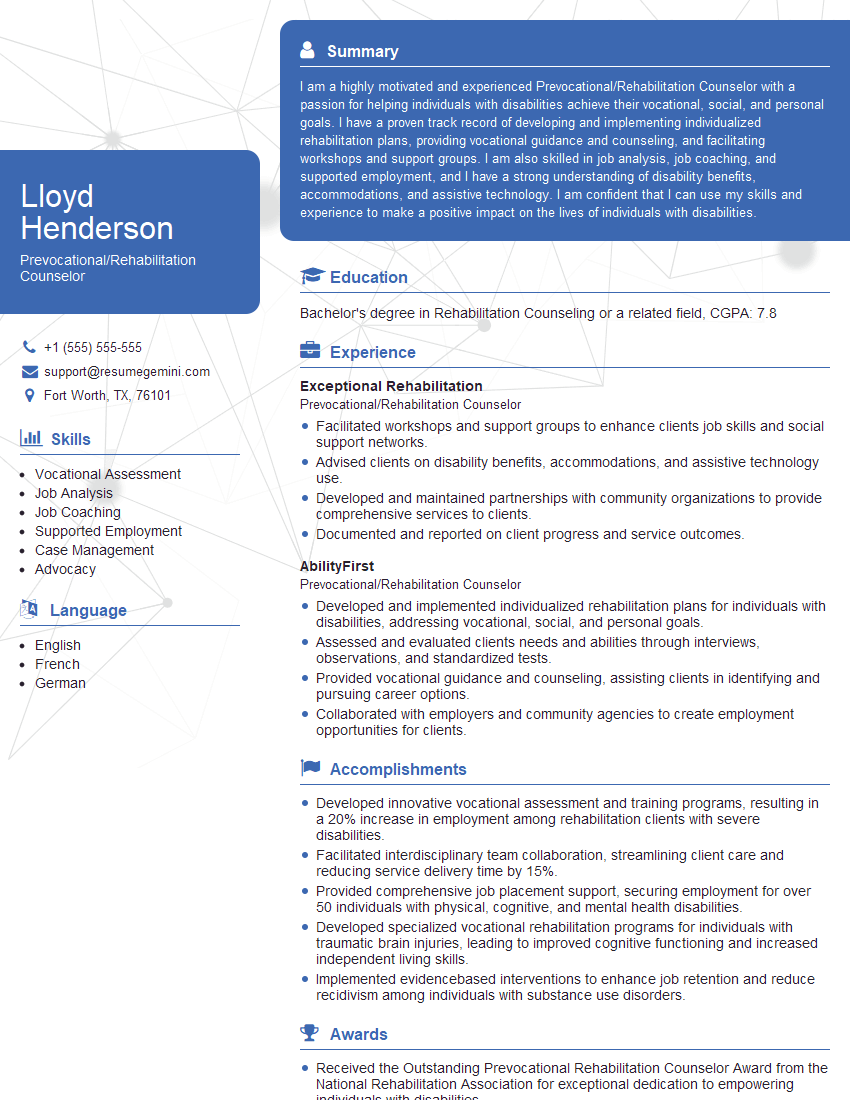
Lloyd Henderson
Prevocational/Rehabilitation Counselor
Summary
I am a highly motivated and experienced Prevocational/Rehabilitation Counselor with a passion for helping individuals with disabilities achieve their vocational, social, and personal goals. I have a proven track record of developing and implementing individualized rehabilitation plans, providing vocational guidance and counseling, and facilitating workshops and support groups. I am also skilled in job analysis, job coaching, and supported employment, and I have a strong understanding of disability benefits, accommodations, and assistive technology. I am confident that I can use my skills and experience to make a positive impact on the lives of individuals with disabilities.
Education
Bachelor’s degree in Rehabilitation Counseling or a related field
March 2015
Skills
- Vocational Assessment
- Job Analysis
- Job Coaching
- Supported Employment
- Case Management
- Advocacy
Work Experience
Prevocational/Rehabilitation Counselor
- Facilitated workshops and support groups to enhance clients job skills and social support networks.
- Advised clients on disability benefits, accommodations, and assistive technology use.
- Developed and maintained partnerships with community organizations to provide comprehensive services to clients.
- Documented and reported on client progress and service outcomes.
Prevocational/Rehabilitation Counselor
- Developed and implemented individualized rehabilitation plans for individuals with disabilities, addressing vocational, social, and personal goals.
- Assessed and evaluated clients needs and abilities through interviews, observations, and standardized tests.
- Provided vocational guidance and counseling, assisting clients in identifying and pursuing career options.
- Collaborated with employers and community agencies to create employment opportunities for clients.
Accomplishments
- Developed innovative vocational assessment and training programs, resulting in a 20% increase in employment among rehabilitation clients with severe disabilities.
- Facilitated interdisciplinary team collaboration, streamlining client care and reducing service delivery time by 15%.
- Provided comprehensive job placement support, securing employment for over 50 individuals with physical, cognitive, and mental health disabilities.
- Developed specialized vocational rehabilitation programs for individuals with traumatic brain injuries, leading to improved cognitive functioning and increased independent living skills.
- Implemented evidencebased interventions to enhance job retention and reduce recidivism among individuals with substance use disorders.
Awards
- Received the Outstanding Prevocational Rehabilitation Counselor Award from the National Rehabilitation Association for exceptional dedication to empowering individuals with disabilities.
- Honored with the Presidents Council on Disability Employment for outstanding contributions to workplace accessibility and inclusion.
- Recognized as a Certified Rehabilitation Counselor (CRC) by the Commission on Rehabilitation Counselor Certification (CRCC).
- Recipient of the Rehabilitation Professional of the Year Award from the states Rehabilitation Association.
Certificates
- Certified Rehabilitation Counselor (CRC)
- Board Certified Patient Advocate (BCPA)
- Certified Case Manager (CCM)
- Certified Job Coach (CJC)
Career Expert Tips:
- Select the ideal resume template to showcase your professional experience effectively.
- Master the art of resume writing to highlight your unique qualifications and achievements.
- Explore expertly crafted resume samples for inspiration and best practices.
- Build your best resume for free this new year with ResumeGemini. Enjoy exclusive discounts on ATS optimized resume templates.
How To Write Resume For Prevocational/Rehabilitation Counselor
- Highlight your skills and experience in working with individuals with disabilities
- Showcase your knowledge of vocational assessment, job analysis, and job coaching
- Emphasize your ability to develop and implement individualized rehabilitation plans
- Demonstrate your commitment to helping individuals with disabilities achieve their goals
- Proofread your resume carefully for any errors
Essential Experience Highlights for a Strong Prevocational/Rehabilitation Counselor Resume
- Develop and implement individualized rehabilitation plans for individuals with disabilities, addressing vocational, social, and personal goals
- Assess and evaluate clients’ needs and abilities through interviews, observations, and standardized tests
- Provide vocational guidance and counseling, assisting clients in identifying and pursuing career options
- Collaborate with employers and community agencies to create employment opportunities for clients
- Facilitate workshops and support groups to enhance clients’ job skills and social support networks
- Advise clients on disability benefits, accommodations, and assistive technology use
- Develop and maintain partnerships with community organizations to provide comprehensive services to clients
- Document and report on client progress and service outcomes
Frequently Asked Questions (FAQ’s) For Prevocational/Rehabilitation Counselor
What is the role of a Prevocational/Rehabilitation Counselor?
Prevocational/Rehabilitation Counselors help individuals with disabilities prepare for, obtain, and maintain employment. They work with clients to assess their needs, develop goals, and create a plan to achieve those goals. They may also provide job training, counseling, and support services.
What are the qualifications for becoming a Prevocational/Rehabilitation Counselor?
Most Prevocational/Rehabilitation Counselors have a bachelor’s degree in rehabilitation counseling, counseling psychology, or a related field. Some states require counselors to be licensed or certified.
What are the job prospects for Prevocational/Rehabilitation Counselors?
The job outlook for Prevocational/Rehabilitation Counselors is expected to be good in the coming years. The aging population and the increasing number of people with disabilities are expected to drive demand for these services.
What are the benefits of working as a Prevocational/Rehabilitation Counselor?
Working as a Prevocational/Rehabilitation Counselor can be a rewarding and fulfilling career. It offers the opportunity to make a positive impact on the lives of individuals with disabilities and help them achieve their goals.
What are the challenges of working as a Prevocational/Rehabilitation Counselor?
Working with individuals with disabilities can be challenging at times. Counselors may need to deal with difficult emotions, such as grief, anger, and frustration. They may also need to work with clients who have complex needs and require a lot of support.
What are some tips for writing a standout Prevocational/Rehabilitation Counselor resume?
Highlight your skills and experience in working with individuals with disabilities. Showcase your knowledge of vocational assessment, job analysis, and job coaching. Emphasize your ability to develop and implement individualized rehabilitation plans. Demonstrate your commitment to helping individuals with disabilities achieve their goals.
What are some interview questions that I may be asked as a Prevocational/Rehabilitation Counselor?
Tell me about your experience working with individuals with disabilities. What are your strengths as a Prevocational/Rehabilitation Counselor? What are your weaknesses? Why are you interested in working as a Prevocational/Rehabilitation Counselor?
What are some professional development opportunities for Prevocational/Rehabilitation Counselors?
Prevocational/Rehabilitation Counselors can pursue professional development opportunities by attending conferences, workshops, and webinars. They can also read books and articles on the latest research and best practices in the field.