Are you a seasoned Septic Cleaner seeking a new career path? Discover our professionally built Septic Cleaner Resume Template. This time-saving tool provides a solid foundation for your job search. Simply click “Edit Resume” to customize it with your unique experiences and achievements. Customize fonts and colors to match your personal style and increase your chances of landing your dream job. Explore more Resume Templates for additional options.






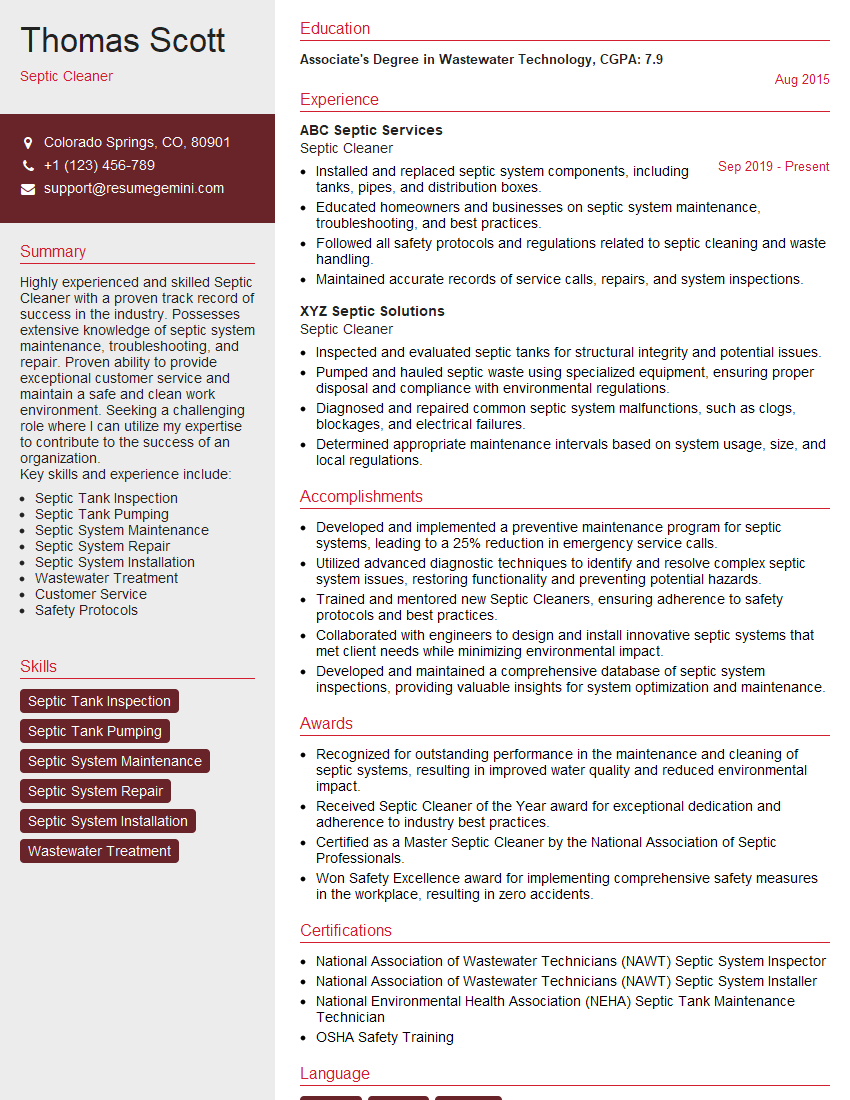
Thomas Scott
Septic Cleaner
Summary
Highly experienced and skilled Septic Cleaner with a proven track record of success in the industry. Possesses extensive knowledge of septic system maintenance, troubleshooting, and repair. Proven ability to provide exceptional customer service and maintain a safe and clean work environment. Seeking a challenging role where I can utilize my expertise to contribute to the success of an organization.
Key skills and experience include:
- Septic Tank Inspection
- Septic Tank Pumping
- Septic System Maintenance
- Septic System Repair
- Septic System Installation
- Wastewater Treatment
- Customer Service
- Safety Protocols
Education
Associate’s Degree in Wastewater Technology
August 2015
Skills
- Septic Tank Inspection
- Septic Tank Pumping
- Septic System Maintenance
- Septic System Repair
- Septic System Installation
- Wastewater Treatment
Work Experience
Septic Cleaner
- Installed and replaced septic system components, including tanks, pipes, and distribution boxes.
- Educated homeowners and businesses on septic system maintenance, troubleshooting, and best practices.
- Followed all safety protocols and regulations related to septic cleaning and waste handling.
- Maintained accurate records of service calls, repairs, and system inspections.
Septic Cleaner
- Inspected and evaluated septic tanks for structural integrity and potential issues.
- Pumped and hauled septic waste using specialized equipment, ensuring proper disposal and compliance with environmental regulations.
- Diagnosed and repaired common septic system malfunctions, such as clogs, blockages, and electrical failures.
- Determined appropriate maintenance intervals based on system usage, size, and local regulations.
Accomplishments
- Developed and implemented a preventive maintenance program for septic systems, leading to a 25% reduction in emergency service calls.
- Utilized advanced diagnostic techniques to identify and resolve complex septic system issues, restoring functionality and preventing potential hazards.
- Trained and mentored new Septic Cleaners, ensuring adherence to safety protocols and best practices.
- Collaborated with engineers to design and install innovative septic systems that met client needs while minimizing environmental impact.
- Developed and maintained a comprehensive database of septic system inspections, providing valuable insights for system optimization and maintenance.
Awards
- Recognized for outstanding performance in the maintenance and cleaning of septic systems, resulting in improved water quality and reduced environmental impact.
- Received Septic Cleaner of the Year award for exceptional dedication and adherence to industry best practices.
- Certified as a Master Septic Cleaner by the National Association of Septic Professionals.
- Won Safety Excellence award for implementing comprehensive safety measures in the workplace, resulting in zero accidents.
Certificates
- National Association of Wastewater Technicians (NAWT) Septic System Inspector
- National Association of Wastewater Technicians (NAWT) Septic System Installer
- National Environmental Health Association (NEHA) Septic Tank Maintenance Technician
- OSHA Safety Training
Career Expert Tips:
- Select the ideal resume template to showcase your professional experience effectively.
- Master the art of resume writing to highlight your unique qualifications and achievements.
- Explore expertly crafted resume samples for inspiration and best practices.
- Build your best resume for free this new year with ResumeGemini. Enjoy exclusive discounts on ATS optimized resume templates.
How To Write Resume For Septic Cleaner
- Highlight your experience and skills in septic tank inspection, pumping, and maintenance.
- Quantify your accomplishments and provide specific examples of your work.
- Demonstrate your knowledge of septic system regulations and best practices.
- Emphasize your customer service skills and ability to work independently.
Essential Experience Highlights for a Strong Septic Cleaner Resume
- Inspected and evaluated septic tanks for structural integrity and potential issues.
- Pumped and hauled septic waste using specialized equipment, ensuring proper disposal and compliance with environmental regulations.
- Diagnosed and repaired common septic system malfunctions, such as clogs, blockages, and electrical failures.
- Determined appropriate maintenance intervals based on system usage, size, and local regulations.
- Installed and replaced septic system components, including tanks, pipes, and distribution boxes.
- Educated homeowners and businesses on septic system maintenance, troubleshooting, and best practices.
- Followed all safety protocols and regulations related to septic cleaning and waste handling.
Frequently Asked Questions (FAQ’s) For Septic Cleaner
What are the key responsibilities of a Septic Cleaner?
Septic Cleaners are responsible for inspecting, pumping, and maintaining septic tanks and systems. They diagnose and repair malfunctions, install and replace components, and educate homeowners and businesses on septic system maintenance.
What qualifications are required to become a Septic Cleaner?
Most Septic Cleaners have a high school diploma or equivalent and receive on-the-job training. Some employers may prefer candidates with an Associate’s Degree in Wastewater Technology or a related field.
What are the career prospects for Septic Cleaners?
Septic Cleaners can advance to positions such as Septic System Inspector or Manager. With additional training and experience, they may also become licensed Septic Contractors.
What are the safety hazards associated with Septic Cleaning?
Septic Cleaners work with raw sewage and other hazardous materials. They must wear protective gear and follow safety protocols to avoid exposure to harmful bacteria and chemicals.
How can I find a job as a Septic Cleaner?
You can find job openings for Septic Cleaners through online job boards, company websites, and local employment agencies.
What is the average salary for a Septic Cleaner?
The average salary for a Septic Cleaner in the United States is around $50,000 per year.
What are the benefits of working as a Septic Cleaner?
Septic Cleaners enjoy job security, as their services are always in demand. They also have the opportunity to work outdoors and help protect the environment.