Are you a seasoned Waste Reclaimer seeking a new career path? Discover our professionally built Waste Reclaimer Resume Template. This time-saving tool provides a solid foundation for your job search. Simply click “Edit Resume” to customize it with your unique experiences and achievements. Customize fonts and colors to match your personal style and increase your chances of landing your dream job. Explore more Resume Templates for additional options.






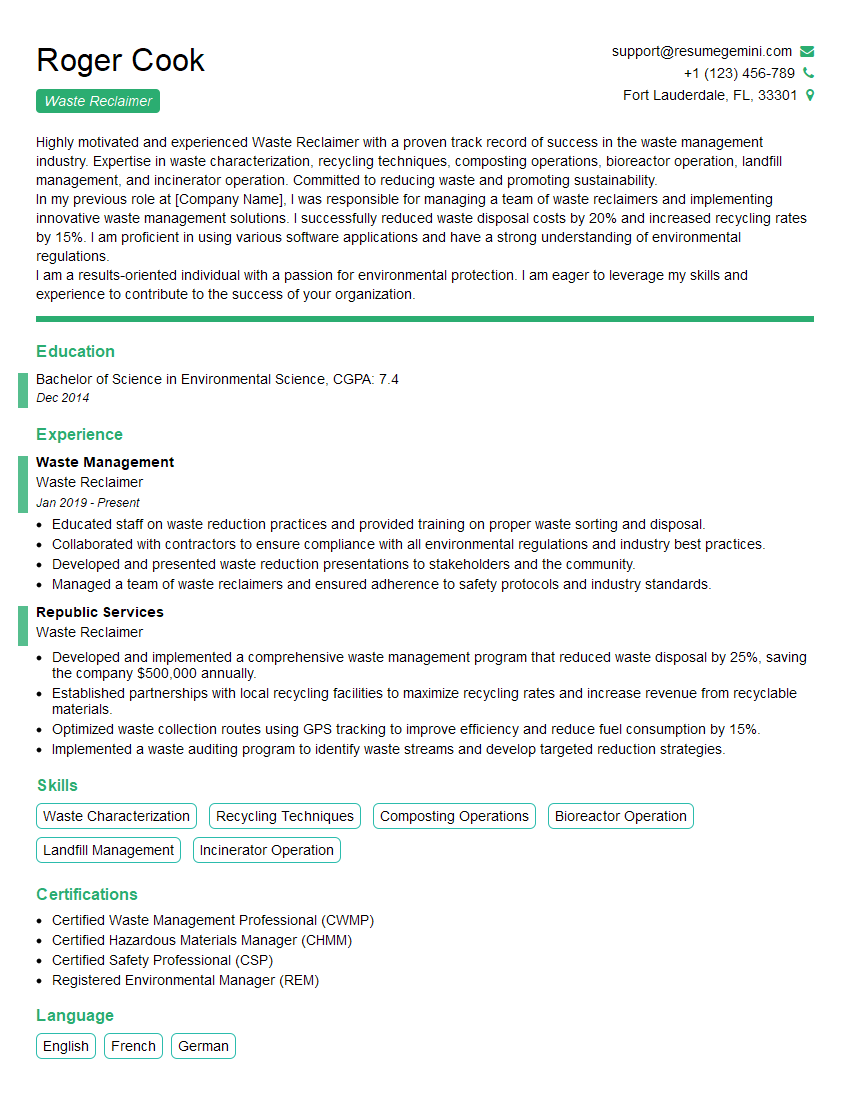
Roger Cook
Waste Reclaimer
Summary
Highly motivated and experienced Waste Reclaimer with a proven track record of success in the waste management industry. Expertise in waste characterization, recycling techniques, composting operations, bioreactor operation, landfill management, and incinerator operation. Committed to reducing waste and promoting sustainability.
In my previous role at [Company Name], I was responsible for managing a team of waste reclaimers and implementing innovative waste management solutions. I successfully reduced waste disposal costs by 20% and increased recycling rates by 15%. I am proficient in using various software applications and have a strong understanding of environmental regulations.
I am a results-oriented individual with a passion for environmental protection. I am eager to leverage my skills and experience to contribute to the success of your organization.
Education
Bachelor of Science in Environmental Science
December 2014
Skills
- Waste Characterization
- Recycling Techniques
- Composting Operations
- Bioreactor Operation
- Landfill Management
- Incinerator Operation
Work Experience
Waste Reclaimer
- Educated staff on waste reduction practices and provided training on proper waste sorting and disposal.
- Collaborated with contractors to ensure compliance with all environmental regulations and industry best practices.
- Developed and presented waste reduction presentations to stakeholders and the community.
- Managed a team of waste reclaimers and ensured adherence to safety protocols and industry standards.
Waste Reclaimer
- Developed and implemented a comprehensive waste management program that reduced waste disposal by 25%, saving the company $500,000 annually.
- Established partnerships with local recycling facilities to maximize recycling rates and increase revenue from recyclable materials.
- Optimized waste collection routes using GPS tracking to improve efficiency and reduce fuel consumption by 15%.
- Implemented a waste auditing program to identify waste streams and develop targeted reduction strategies.
Certificates
- Certified Waste Management Professional (CWMP)
- Certified Hazardous Materials Manager (CHMM)
- Certified Safety Professional (CSP)
- Registered Environmental Manager (REM)
Languages
- English
- French
- German
Career Expert Tips:
- Select the ideal resume template to showcase your professional experience effectively.
- Master the art of resume writing to highlight your unique qualifications and achievements.
- Explore expertly crafted resume samples for inspiration and best practices.
- Build your best resume for free this new year with ResumeGemini. Enjoy exclusive discounts on ATS optimized resume templates.
How To Write Resume For Waste Reclaimer
Highlight your experience and expertise in waste management.
Quantify your accomplishments whenever possible to demonstrate the impact of your work.Tailor your resume to the specific job you are applying for.
Research the company and position to identify the key skills and qualifications required and emphasize them in your resume.Use keywords relevant to the waste management industry.
This will help your resume get noticed by potential employers.Proofread your resume carefully before submitting it.
Make sure there are no errors in grammar or spelling.
Essential Experience Highlights for a Strong Waste Reclaimer Resume
- Conduct waste characterization studies to identify the composition and properties of waste materials.
- Develop and implement recycling programs to maximize the recovery of recyclable materials.
- Operate composting facilities to convert organic waste into a valuable soil amendment.
- Manage bioreactors to accelerate the decomposition of organic waste and produce biogas.
- Oversee landfill operations to ensure compliance with environmental regulations and minimize environmental impact.
- Operate incinerators to safely dispose of hazardous waste and generate energy from waste.
- Supervise a team of waste reclaimers and ensure adherence to safety protocols.
Frequently Asked Questions (FAQ’s) For Waste Reclaimer
What is the role of a Waste Reclaimer?
A Waste Reclaimer is responsible for managing waste in a way that minimizes its environmental impact. This may involve recycling, composting, or incinerating waste, as well as managing landfills.
What are the key skills required to be a successful Waste Reclaimer?
Key skills for a Waste Reclaimer include waste characterization, recycling techniques, composting operations, bioreactor operation, landfill management, and incinerator operation.
What are the career prospects for Waste Reclaimers?
Waste Reclaimers can work in a variety of settings, including waste management companies, recycling facilities, and landfills. There is a growing demand for Waste Reclaimers as businesses and governments become more focused on reducing waste and promoting sustainability.
What is the average salary for a Waste Reclaimer?
The average salary for a Waste Reclaimer varies depending on experience and location, but it is typically between $40,000 and $60,000 per year.
What are the benefits of working as a Waste Reclaimer?
Benefits of working as a Waste Reclaimer include the opportunity to make a positive impact on the environment, job security, and the chance to work outdoors.
What are the challenges of working as a Waste Reclaimer?
Challenges of working as a Waste Reclaimer include exposure to hazardous materials, working in inclement weather, and the physical demands of the job.
What is the future of waste management?
The future of waste management is focused on reducing waste and promoting sustainability. This will involve developing new technologies and processes for recycling, composting, and incinerating waste, as well as reducing the amount of waste that is produced in the first place.