Feeling lost in a sea of interview questions? Landed that dream interview for AC/DC Winder but worried you might not have the answers? You’re not alone! This blog is your guide for interview success. We’ll break down the most common AC/DC Winder interview questions, providing insightful answers and tips to leave a lasting impression. Plus, we’ll delve into the key responsibilities of this exciting role, so you can walk into your interview feeling confident and prepared.
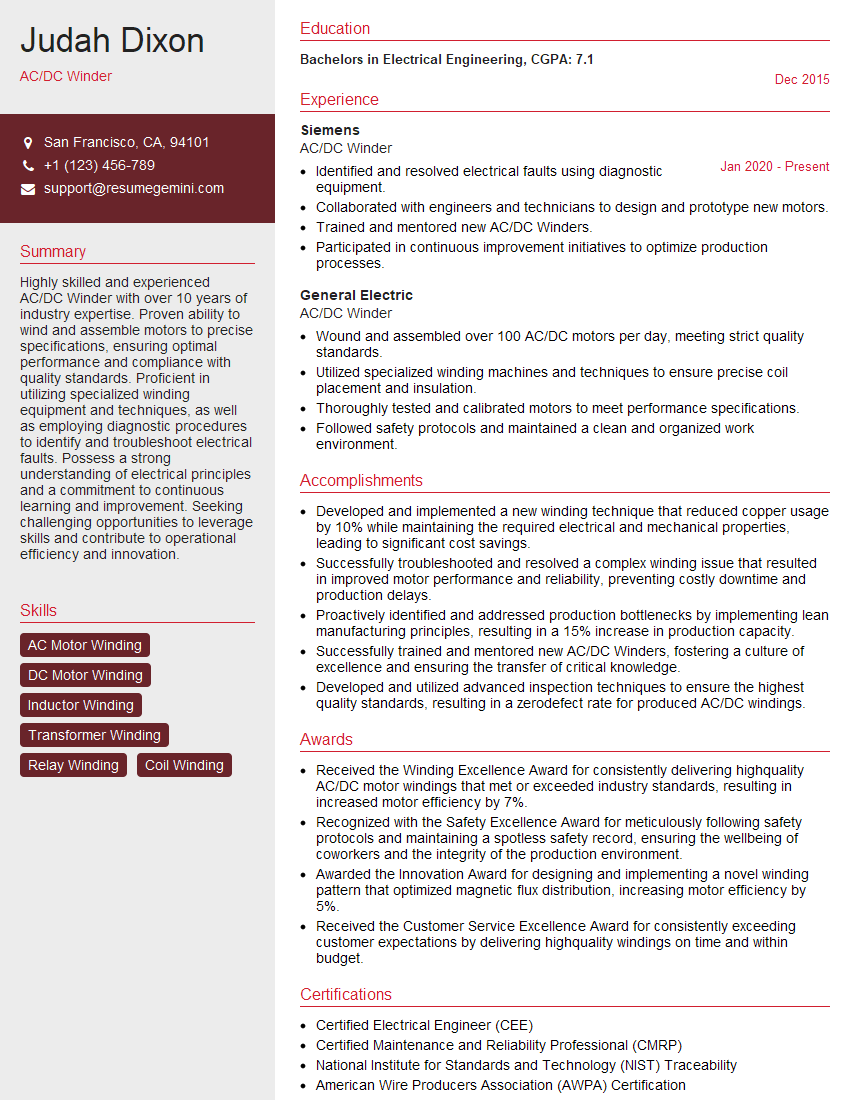
Acing the interview is crucial, but landing one requires a compelling resume that gets you noticed. Crafting a professional document that highlights your skills and experience is the first step toward interview success. ResumeGemini can help you build a standout resume that gets you called in for that dream job.






Essential Interview Questions For AC/DC Winder
1. What are the different types of AC/DC winders and their applications?
- Single-Phase AC Winders: Used in small motors, fans, and appliances. They produce a single-phase alternating current.
- Three-Phase AC Winders: Used in industrial motors, generators, and transformers. They produce a three-phase alternating current.
- DC Winders: Used in DC motors, generators, and batteries. They produce a direct current.
2. Describe the key components of an AC/DC winder.
Stator Core
- Laminated steel core that provides a magnetic path for the stator windings.
- Slots in the core accommodate the stator windings.
Stator Windings
- Copper or aluminum conductors arranged in coils that create the stator’s magnetic field.
- Connected in series or parallel to form the stator circuit.
Rotor
- Conductive material that rotates within the stator.
- Creates a magnetic field when current is applied.
- Types include squirrel-cage rotors and wound rotors.
Winding Machine
- Automated machine that inserts the stator windings into the core.
- Ensures proper alignment and spacing of the windings.
3. Explain the process of winding an AC/DC armature.
- Pre-Slot the Core: Create slots in the core to accommodate the armature windings.
- Insert the Coils: Manually or using a winding machine, insert pre-wound coils into the slots.
- Connect the Windings: Solder or weld the ends of the coils together to form the armature circuit.
- Skew the Slots: Rotate the armature slightly between coil insertions to reduce magnetic noise and vibration.
4. How do you test the quality of an AC/DC winding?
Resistance Test
- Measure the resistance of the windings to check for any shorts or open circuits.
- Compare the measured resistance to specifications.
Hi-Pot Test
- Apply a high voltage to the windings to check for insulation breakdown.
- Ensure the insulation can withstand the operating voltage.
Impedance Test
- Measure the impedance of the windings to determine their inductance and resistance.
- Verify that the impedance meets design specifications.
5. What are the common winding techniques used in AC/DC winders?
- Lap Winding: Windings are arranged in parallel paths, resulting in a lower voltage and higher current.
- Wave Winding: Windings are arranged in series paths, resulting in a higher voltage and lower current.
- Concentric Winding: Windings are arranged in concentric layers, reducing magnetic losses and increasing efficiency.
6. How do you ensure proper insulation of AC/DC windings?
- Slot Insulation: Use insulating materials to line the stator slots and protect the windings from the core.
- Coil Insulation: Cover the coils with insulating materials such as varnish or epoxy to protect them from electrical shorts.
- Phase Insulation: Separate the different phases of the windings using insulating barriers.
7. What are the factors that affect the efficiency of an AC/DC winder?
Design Factors
- Type of winding technique
- Number of turns
- Wire gauge
Material Factors
- Core material (laminated steel, ferrite)
- Conductor material (copper, aluminum)
- Insulation materials
Operational Factors
- Voltage and current rating
- Temperature
- Mechanical stresses
8. How do you troubleshoot common problems in AC/DC winders?
Overheating
- Check for winding shorts or insulation failures.
- Ensure proper ventilation and cooling.
- Reduce the load on the winder.
Arcing
- Inspect insulation for damage.
- Check for loose connections.
- Clean contacts and terminals.
Mechanical Noise
- Check for loose components or bearings.
- Ensure proper alignment of rotating parts.
- Lubricate moving parts as necessary.
9. What safety precautions should be taken when working with AC/DC winders?
- Wear appropriate PPE (gloves, safety glasses, earplugs).
- Lock out and tag out equipment before performing maintenance.
- Ground the winder properly to prevent electrical shocks.
- Follow manufacturer’s instructions and safety guidelines.
10. How can you improve the performance of an AC/DC winder?
Optimizing Winding Design
- Select the appropriate winding technique and wire gauge.
- Minimize copper losses by using thicker conductors.
- Reduce iron losses by using high-grade core materials.
Enhancing Insulation
- Use high-quality insulating materials with low dielectric losses.
- Ensure proper insulation thickness between windings and core.
- Apply insulating coatings or varnishes to protect the windings.
Improving Cooling
- Provide adequate ventilation channels or cooling fans.
- Use heat-resistant materials for insulation and windings.
- Monitor winding temperature and adjust cooling accordingly.
Interviewers often ask about specific skills and experiences. With ResumeGemini‘s customizable templates, you can tailor your resume to showcase the skills most relevant to the position, making a powerful first impression. Also check out Resume Template specially tailored for AC/DC Winder.
Career Expert Tips:
- Ace those interviews! Prepare effectively by reviewing the Top 50 Most Common Interview Questions on ResumeGemini.
- Navigate your job search with confidence! Explore a wide range of Career Tips on ResumeGemini. Learn about common challenges and recommendations to overcome them.
- Craft the perfect resume! Master the Art of Resume Writing with ResumeGemini’s guide. Showcase your unique qualifications and achievements effectively.
- Great Savings With New Year Deals and Discounts! In 2025, boost your job search and build your dream resume with ResumeGemini’s ATS optimized templates.
Researching the company and tailoring your answers is essential. Once you have a clear understanding of the AC/DC Winder‘s requirements, you can use ResumeGemini to adjust your resume to perfectly match the job description.
Key Job Responsibilities
AC/DC Winders are responsible for the maintenance and repair of electrical equipment, including transformers, motors, generators, and other electrical components. They are also responsible for the installation, testing, and commissioning of new electrical equipment.
1. Installation and Maintenance
Install, maintain, and repair electrical equipment, including transformers, motors, generators, and other electrical components.
- Inspect electrical equipment for signs of damage or wear and tear.
- Troubleshoot and repair electrical equipment using hand tools and power tools.
- Replace worn or damaged electrical components.
- Test and calibrate electrical equipment to ensure that it is operating properly.
2. Winding and Rewinding
Wind and rewind coils and windings on electrical equipment.
- Select the appropriate wire and insulation materials for the job.
- Wind coils and windings to the specified dimensions.
- Inspect coils and windings for defects.
- Repair or replace defective coils and windings.
3. Testing and Commissioning
Test and commission new electrical equipment.
- Perform electrical tests to ensure that the equipment is operating properly.
- Commission the equipment by connecting it to the electrical system.
- Monitor the equipment during operation to ensure that it is operating properly.
- Troubleshoot and repair any problems that arise during operation.
4. Safety and Compliance
Follow all safety regulations and procedures.
- Wear appropriate personal protective equipment (PPE).
- Follow lockout/tagout procedures.
- Comply with all applicable electrical codes and standards.
- Maintain a clean and organized work area.
Interview Tips
Interviewing for an AC/DC Winder position can be a daunting task, but by following a few simple tips, you can increase your chances of success.
1. Research the Company and the Position
Before you go to your interview, take some time to research the company and the position you are applying for. This will help you understand the company’s culture and the specific requirements of the job.
- Visit the company’s website to learn about their history, mission, and values.
- Read the job description carefully and identify the key skills and qualifications that the company is looking for.
- Search for news articles and other information about the company to get a better understanding of their industry and their recent projects.
2. Prepare Your Answers to Common Interview Questions
There are a few common interview questions that you are likely to be asked, such as “Tell me about yourself” and “Why are you interested in this position?” It is important to prepare your answers to these questions in advance so that you can deliver them confidently and concisely.
- When answering the question “Tell me about yourself,” focus on your most relevant skills and experience.
- For the question “Why are you interested in this position?” explain why you are interested in the company and the position, and how your skills and experience make you a good fit for the job.
- You can also prepare for other common interview questions by researching online or talking to a career counselor.
3. Practice Your Interview Skills
The best way to prepare for an interview is to practice. Ask a friend or family member to conduct a mock interview with you. This will help you get comfortable with the interview process and identify any areas where you need to improve.
- During your practice interview, focus on delivering your answers clearly and confidently.
- Make eye contact with the interviewer and use body language that is open and inviting.
- Be prepared to answer questions about your skills, experience, and qualifications.
4. Dress Professionally and Arrive on Time
First impressions matter, so it is important to dress professionally for your interview. Arrive on time and be prepared to answer questions about your punctuality.
- Choose clothing that is clean, pressed, and appropriate for a business setting.
- Arrive at the interview location a few minutes early so that you can take a moment to relax and gather your thoughts.
- Be polite and respectful to the receptionist and other employees that you encounter.
Next Step:
Now that you’re armed with a solid understanding of what it takes to succeed as a AC/DC Winder, it’s time to turn that knowledge into action. Take a moment to revisit your resume, ensuring it highlights your relevant skills and experiences. Tailor it to reflect the insights you’ve gained from this blog and make it shine with your unique qualifications. Don’t wait for opportunities to come to you—start applying for AC/DC Winder positions today and take the first step towards your next career milestone. Your dream job is within reach, and with a polished resume and targeted applications, you’ll be well on your way to achieving your career goals! Build your resume now with ResumeGemini.