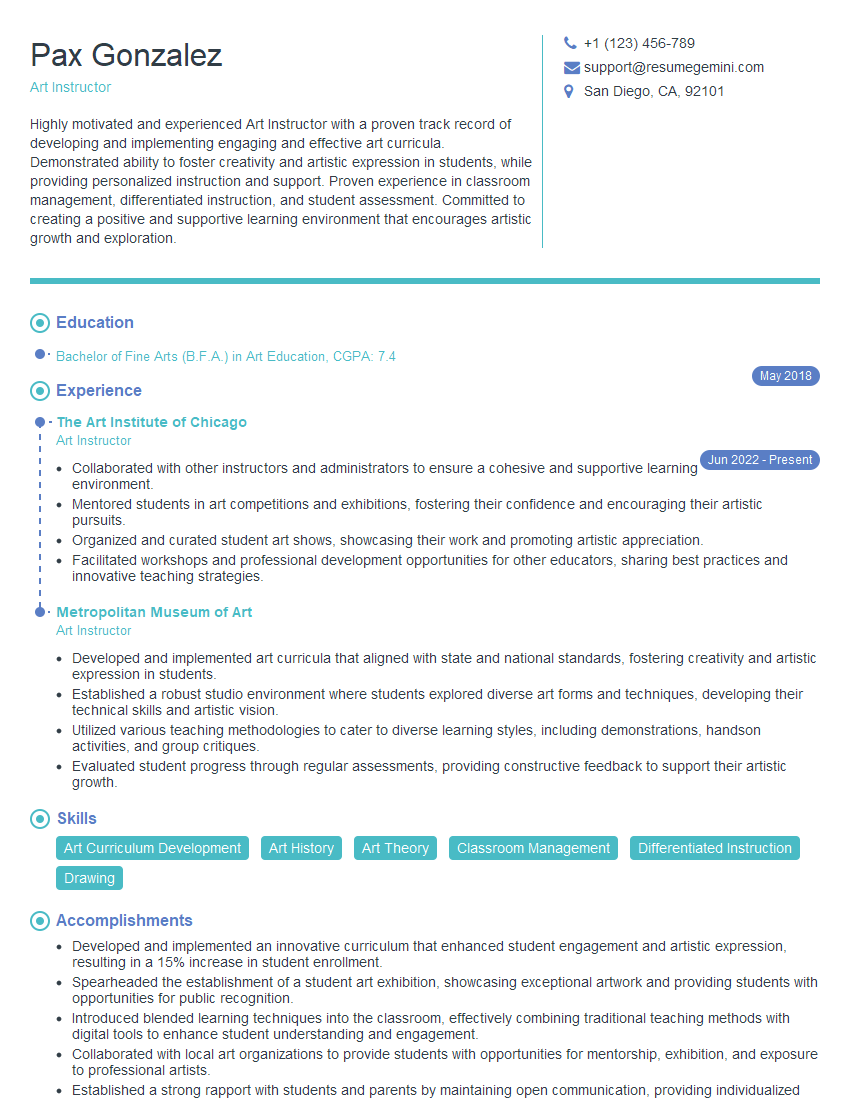
Are you gearing up for an interview for a Art Instructor position? Whether you’re a seasoned professional or just stepping into the role, understanding what’s expected can make all the difference. In this blog, we dive deep into the essential interview questions for Art Instructor and break down the key responsibilities of the role. By exploring these insights, you’ll gain a clearer picture of what employers are looking for and how you can stand out. Read on to equip yourself with the knowledge and confidence needed to ace your next interview and land your dream job!
Acing the interview is crucial, but landing one requires a compelling resume that gets you noticed. Crafting a professional document that highlights your skills and experience is the first step toward interview success. ResumeGemini can help you build a standout resume that gets you called in for that dream job.






Essential Interview Questions For Art Instructor
1. What are the key elements of visual arts that you would emphasize to your students?
- Line: the path created by a moving point
- Shape: a two-dimensional area defined by lines
- Form: a three-dimensional object defined by lines and shapes
- Color: the hue, saturation, and brightness of light
- Texture: the surface quality of an object
- Space: the area around, between, and within objects
- Value: the lightness or darkness of a color
2. How do you develop age-appropriate lesson plans that cater to the different abilities and interests of your students?
Understanding Student Abilities and Interests
- Conduct assessments and observations to identify strengths and weaknesses
- Collect information on students’ backgrounds, experiences, and motivations
Lesson Plan Development
- Align lessons with curriculum objectives and developmental milestones
- Differentiate instruction based on student needs, providing varying levels of challenge and support
- Incorporate a variety of activities, such as hands-on projects, discussions, and demonstrations
- Provide opportunities for students to explore their interests and express their creativity
3. Describe how you would teach the concept of perspective to a group of middle school students.
- Start with basic concepts such as horizon line and vanishing point
- Use hands-on activities, such as drawing objects from different angles
- Demonstrate how perspective creates an illusion of depth
- Introduce one-point, two-point, and three-point perspectives gradually
- Provide feedback and encouragement to help students understand the concepts
4. How do you handle students who struggle with artistic skills or have limited exposure to art?
- Identify the specific areas where students need support
- Provide individualized instruction and differentiated activities
- Create a positive and encouraging learning environment
- Offer extra help outside of class time
- Collaborate with parents or guardians to provide additional support
5. What techniques do you use to assess students’ progress and provide constructive feedback?
- Regular observations during class time
- Portfolio reviews to track student growth over time
- Written and verbal feedback on specific areas of improvement
- Self-assessments to encourage students to reflect on their progress
- Conferences with students and parents to discuss progress and areas for growth
6. What role does technology play in your art instruction?
- Using technology to enhance student learning
- Incorporating digital art tools into lessons
- Utilizing online resources and platforms
- Encouraging students to explore and experiment with technology
7. How do you collaborate with other educators and professionals to enhance your teaching practice?
- Attend workshops and professional development opportunities
- Exchange ideas with other art teachers
- Collaborate on projects with other subject areas
- Seek input from community artists and arts organizations
8. How do you stay up-to-date with current trends and best practices in art education?
- Attend conferences and workshops
- Read professional journals and articles
- Join professional organizations
- Network with other educators and artists
9. Describe a successful art project that you have implemented in your classroom.
- The project’s objectives and how they aligned with curriculum standards
- The materials and techniques used
- How the project was structured and implemented
- The student outcomes and how they demonstrated learning
- Any challenges encountered and how they were overcome
10. What are your thoughts on the importance of art education in the overall development of students?
- Art education fosters creativity, imagination, and problem-solving skills
- Art helps students express themselves and develop their emotional intelligence
- Art education enhances cognitive abilities, such as critical thinking and visual literacy
- Art promotes cultural understanding and appreciation
Interviewers often ask about specific skills and experiences. With ResumeGemini‘s customizable templates, you can tailor your resume to showcase the skills most relevant to the position, making a powerful first impression. Also check out Resume Template specially tailored for Art Instructor.
Career Expert Tips:
- Ace those interviews! Prepare effectively by reviewing the Top 50 Most Common Interview Questions on ResumeGemini.
- Navigate your job search with confidence! Explore a wide range of Career Tips on ResumeGemini. Learn about common challenges and recommendations to overcome them.
- Craft the perfect resume! Master the Art of Resume Writing with ResumeGemini’s guide. Showcase your unique qualifications and achievements effectively.
- Great Savings With New Year Deals and Discounts! In 2025, boost your job search and build your dream resume with ResumeGemini’s ATS optimized templates.
Researching the company and tailoring your answers is essential. Once you have a clear understanding of the Art Instructor‘s requirements, you can use ResumeGemini to adjust your resume to perfectly match the job description.
Key Job Responsibilities
As an Art Instructor, you will be responsible for providing instruction and guidance on a range of art forms. Your responsibilities will include:
1. Lesson Planning and Instruction
Develop and deliver age-appropriate lesson plans that meet curriculum standards and student needs.
- Introduce students to various art techniques and concepts.
- Provide hands-on instruction and guidance to students.
2. Student Assessment
Evaluate student work and provide feedback to improve their artistic abilities.
- Create and implement rubrics to assess student progress.
- Provide constructive criticism and support to students.
3. Classroom Management
Maintain a positive and safe learning environment for students.
- Establish clear rules and expectations.
- Manage classroom supplies and equipment.
4. Collaboration with Parents and Colleagues
Communicate with parents to provide updates on student progress.
- Collaborate with other teachers and staff to ensure a comprehensive education for students.
- Attend meetings and professional development opportunities.
Interview Tips
To ace your Art Instructor interview, consider the following tips:
1. Research the School and Position
Familiarize yourself with the school’s history, mission, and curriculum. Understand the specific requirements of the Art Instructor position.
- Visit the school’s website and social media pages.
- Contact the school to inquire about the position’s expectations.
2. Showcase Your Passion for Art
Demonstrate your enthusiasm for art and teaching. Share examples of your own artistic work and teaching experiences.
- Prepare a portfolio of your work to present during the interview.
- Discuss your teaching philosophy and how it aligns with the school’s mission.
3. Highlight Your Classroom Management Skills
Emphasize your ability to create and maintain a positive learning environment. Share strategies for managing behavior and fostering student engagement.
- Provide examples of how you have managed challenging student behaviors.
- Describe your techniques for building relationships with students.
4. Practice Your Interview Answers
Prepare specific responses to common interview questions. Consider the STAR method (Situation, Task, Action, Result) to structure your answers.
- Practice answering questions related to your teaching experience, classroom management, and assessment strategies.
- Seek feedback from a friend, family member, or career counselor on your answers.
5. Ask Thoughtful Questions
Prepare a list of questions to ask the interviewer. This demonstrates your interest in the position and the school.
- Inquire about the school’s approach to art education.
- Ask about the professional development opportunities available to instructors.
Next Step:
Armed with this knowledge, you’re now well-equipped to tackle the Art Instructor interview with confidence. Remember, preparation is key. So, start crafting your resume, highlighting your relevant skills and experiences. Don’t be afraid to tailor your application to each specific job posting. With the right approach and a bit of practice, you’ll be well on your way to landing your dream job. Build your resume now from scratch or optimize your existing resume with ResumeGemini. Wish you luck in your career journey!