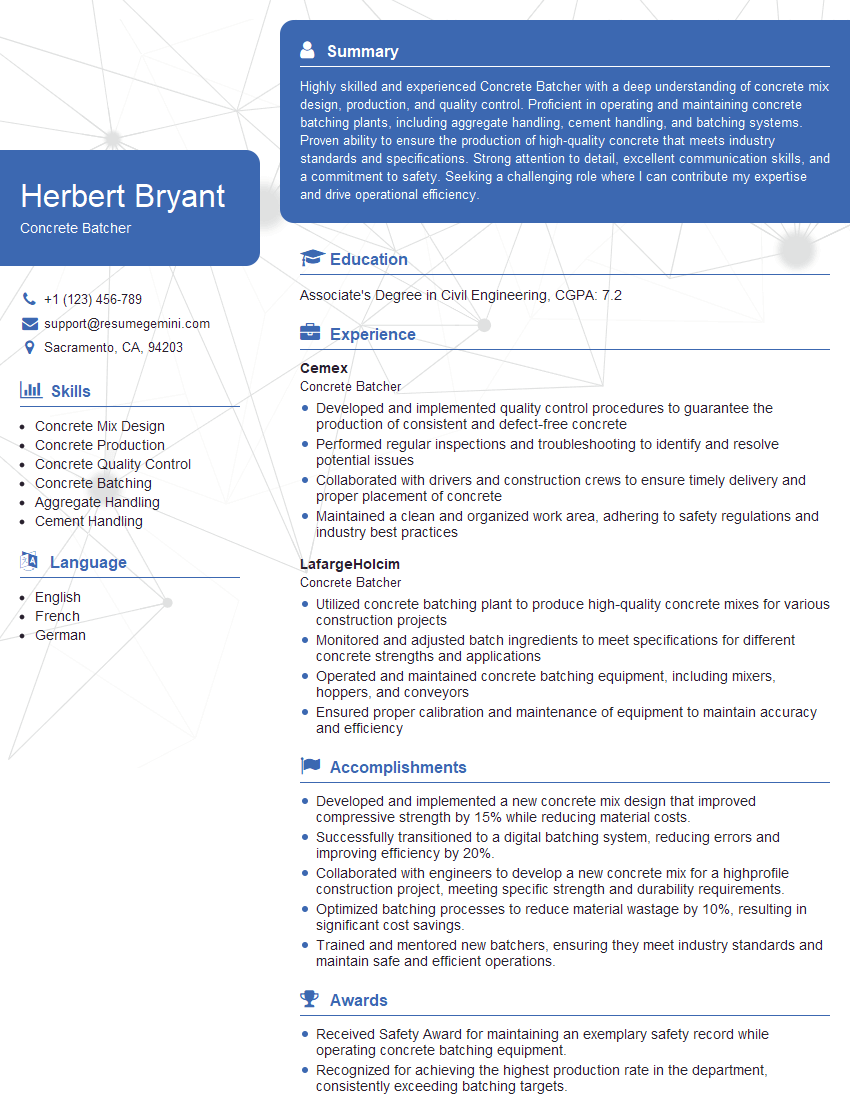
Ever felt underprepared for that crucial job interview? Or perhaps you’ve landed the interview but struggled to articulate your skills and experiences effectively? Fear not! We’ve got you covered. In this blog post, we’re diving deep into the Concrete Batcher interview questions that you’re most likely to encounter. But that’s not all. We’ll also provide expert insights into the key responsibilities of a Concrete Batcher so you can tailor your answers to impress potential employers.
Acing the interview is crucial, but landing one requires a compelling resume that gets you noticed. Crafting a professional document that highlights your skills and experience is the first step toward interview success. ResumeGemini can help you build a standout resume that gets you called in for that dream job.






Essential Interview Questions For Concrete Batcher
1. What are the different types of concrete batchers and how do they compare?
Types of Concrete Batchers:
- Central Mix Batcher: Mixes concrete at a central location and transports it to the site.
- Truck Mixer Batcher: Mixes concrete in a rotating drum mounted on a truck and delivers it to the site.
- Volumetric Batcher: Measures aggregates, cement, and water independently and proportions them into the mixer.
- Weigh Batcher: Weighs all materials individually and proportions them into the mixer.
Comparison:
- Central Mix: High production capacity, consistent quality, but limited mobility.
- Truck Mixer: Mobile and flexible, but lower production capacity and quality control.
- Volumetric: Consistent quality, easy to transport and operate, but limited aggregate sizes.
- Weigh Batcher: High accuracy and quality control, but more complex and expensive.
2. How do you calculate the correct proportions of concrete mix design?
Material Weights:
- Determine the desired water-cement ratio.
- Calculate the weight of cement required.
- Calculate the weight of aggregates (sand and gravel) based on the desired mix design.
Water Adjustment:
- Adjust the water content as needed based on the moisture content of aggregates and the desired slump.
- Use slump tests or other methods to determine the optimal water content.
Mix Adjustment:
- Adjust the proportions of aggregates and admixtures (if used) to achieve the specified concrete properties.
- Use trial batches or other methods to fine-tune the mix design.
3. How do you monitor and control the quality of concrete batches?
- Aggregate Testing: Test aggregates for gradation, moisture content, and durability.
- Cement Testing: Verify cement type, fineness, and strength.
- Mix Design Verification: Perform slump tests, air content tests, and other quality control checks.
- Concrete Sampling and Testing: Take samples of concrete from the batcher and perform strength tests, durability tests, and other evaluations.
- Calibration and Maintenance: Regularly calibrate equipment and maintain the batcher to ensure accuracy and reliability.
4. How do you troubleshoot common problems with concrete batchers?
- Improper Mix Proportions: Check the mix design and adjust material weights as needed.
- Inconsistent Water Content: Verify the moisture content of aggregates and adjust water content accordingly.
- Equipment Malfunctions: Perform diagnostics and repairs on sensors, valves, and other components.
- Aggregate Shortages: Contact suppliers and arrange for additional deliveries or adjust production schedule.
- Quality Control Issues: Perform testing and investigate potential causes, such as faulty materials or mixing errors.
5. What safety precautions do you follow when operating a concrete batcher?
- PPE: Wear appropriate personal protective equipment (PPE), including gloves, safety glasses, and respirators.
- Equipment Inspection: Inspect the batcher regularly for any hazards or malfunctions.
- Lockout/Tagout: Lockout and tagout equipment during maintenance or repairs.
- Hazardous Materials: Handle cement and other chemicals with care, following safety protocols.
- Training: Regularly receive training on safety procedures and best practices.
6. How do you optimize the efficiency of a concrete batching operation?
- Process Optimization: Streamline processes, including material handling and delivery.
- Equipment Maintenance: Maintain equipment regularly to prevent breakdowns and delays.
- Staff Training: Train staff on efficient operating techniques and quality control.
- Material Management: Ensure a consistent supply of materials and minimize waste.
- Technology Integration: Utilize automation and data collection to improve productivity.
7. How do you handle customer inquiries and complaints?
- Responsiveness: Respond to inquiries and complaints promptly and professionally.
- Communication: Clearly understand customer needs and provide detailed explanations.
- Problem Solving: Investigate issues thoroughly and work with customers to find solutions.
- Follow-Up: Follow up with customers to ensure satisfaction and address any lingering concerns.
- Documentation: Document all interactions and actions taken to maintain a record of customer service.
8. Describe your experience in using industry software for concrete batching.
- Software Knowledge: Proficiency in software for mix design, process control, and quality assurance.
- Data Analysis: Ability to analyze data from sensors and tests to identify trends and improve operations.
- Automation: Utilize software for automated operations, such as material ordering and equipment scheduling.
- Reporting: Generate reports on production, quality control, and customer interactions.
- Communication: Integrate software with other systems to share data and facilitate communication.
9. How do you stay up-to-date on industry best practices and technological advancements in concrete batching?
- Professional Development: Attend industry conferences, workshops, and training programs.
- Industry Publications: Read trade journals, magazines, and online resources.
- Networking: Connect with colleagues, suppliers, and other industry professionals.
- Research and Development: Follow research and advancements in concrete technology and equipment.
- Continuous Learning: Engage in self-directed learning to stay abreast of industry developments.
10. What are your career aspirations in the concrete industry?
- Growth Mindset: Desire to learn, develop, and take on more responsibilities.
- Management Aspirations: Express interest in advancing to leadership roles within the concrete batching operations.
- Industry Expertise: Pursue opportunities to deepen knowledge and become an expert in the field.
- Customer Focus: Emphasize the importance of providing exceptional customer service and building strong relationships.
- Contribution to the Industry: Share ideas and contribute to the advancement of concrete batching practices.
Interviewers often ask about specific skills and experiences. With ResumeGemini‘s customizable templates, you can tailor your resume to showcase the skills most relevant to the position, making a powerful first impression. Also check out Resume Template specially tailored for Concrete Batcher.
Career Expert Tips:
- Ace those interviews! Prepare effectively by reviewing the Top 50 Most Common Interview Questions on ResumeGemini.
- Navigate your job search with confidence! Explore a wide range of Career Tips on ResumeGemini. Learn about common challenges and recommendations to overcome them.
- Craft the perfect resume! Master the Art of Resume Writing with ResumeGemini’s guide. Showcase your unique qualifications and achievements effectively.
- Great Savings With New Year Deals and Discounts! In 2025, boost your job search and build your dream resume with ResumeGemini’s ATS optimized templates.
Researching the company and tailoring your answers is essential. Once you have a clear understanding of the Concrete Batcher‘s requirements, you can use ResumeGemini to adjust your resume to perfectly match the job description.
Key Job Responsibilities
Concrete Batchers are responsible for operating and maintaining concrete batching plants to produce concrete for construction projects. They ensure that the concrete meets the specified proportions and quality standards. Key job responsibilities include:
1. Operation of Equipment
Operating and maintaining concrete batching plants, including mixers, conveyor belts, and other equipment.
2. Material Handling
Handling and weighing aggregates, cement, water, and other materials used in concrete production.
3. Quality Control
Monitoring and testing concrete to ensure that it meets specifications for strength, durability, and other properties.
4. Maintenance
Performing routine maintenance and repairs on equipment to ensure optimal performance and safety.
5. Compliance
Adhering to all safety regulations and environmental standards related to concrete production and handling.
6. Communication
Coordinating with construction crews, engineers, and other stakeholders to ensure timely and efficient delivery of concrete.
Interview Tips
Preparing for an interview for a Concrete Batcher position can help you showcase your skills and qualifications and increase your chances of success:
1. Research the Industry
Familiarize yourself with the concrete industry, including production processes, materials, and quality standards.
2. Practice Your Skills
Demonstrate your ability to operate and maintain concrete batching equipment, handle materials, and monitor quality.
3. Highlight Your Experience
Emphasize your experience in concrete production, including any specific knowledge or expertise you have acquired.
4. Prepare for Technical Questions
Anticipate questions about concrete mix designs, material proportions, and quality testing methods.
5. Soft Skills
Highlight your communication, teamwork, and problem-solving skills, as these are essential for working effectively in a concrete production environment.
6. Dress Professionally
Make a good impression by dressing professionally and arriving on time for your interview.
Next Step:
Now that you’re armed with the knowledge of Concrete Batcher interview questions and responsibilities, it’s time to take the next step. Build or refine your resume to highlight your skills and experiences that align with this role. Don’t be afraid to tailor your resume to each specific job application. Finally, start applying for Concrete Batcher positions with confidence. Remember, preparation is key, and with the right approach, you’ll be well on your way to landing your dream job. Build an amazing resume with ResumeGemini