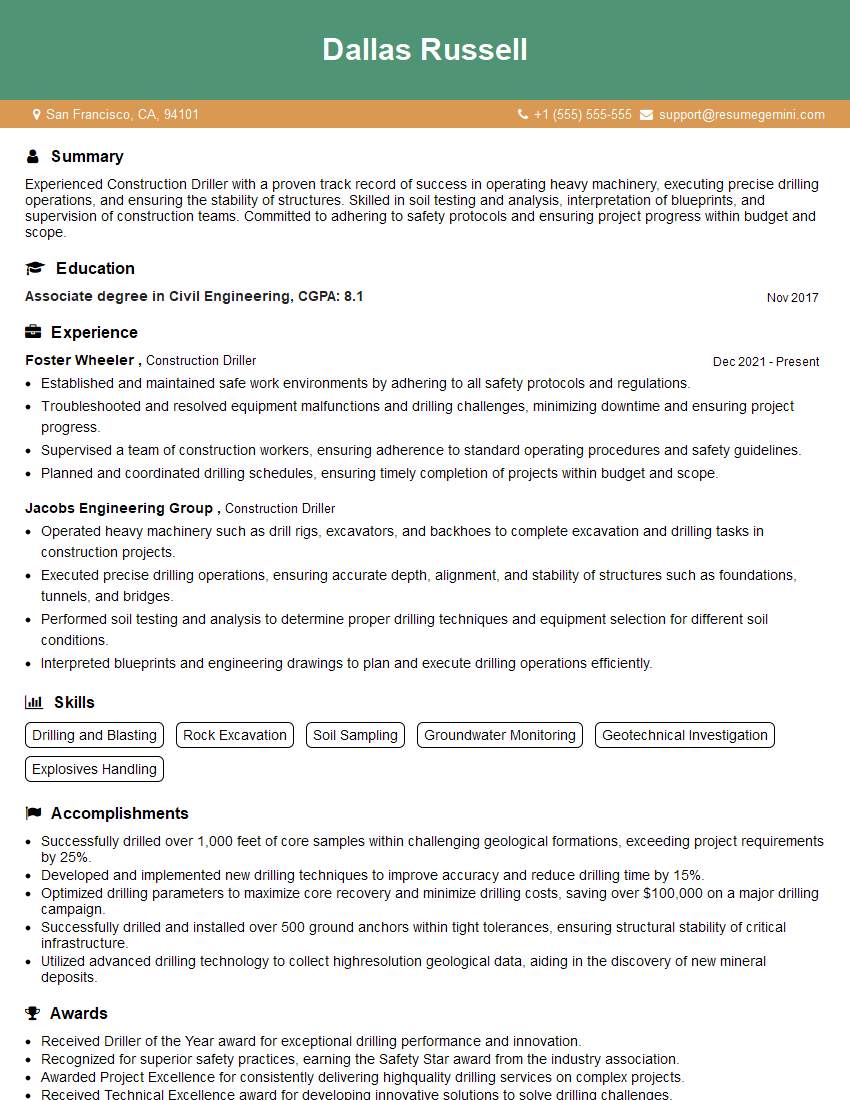
Are you gearing up for a career in Construction Driller? Feeling nervous about the interview questions that might come your way? Don’t worry, you’re in the right place. In this blog post, we’ll dive deep into the most common interview questions for Construction Driller and provide you with expert-backed answers. We’ll also explore the key responsibilities of this role so you can tailor your responses to showcase your perfect fit.
Acing the interview is crucial, but landing one requires a compelling resume that gets you noticed. Crafting a professional document that highlights your skills and experience is the first step toward interview success. ResumeGemini can help you build a standout resume that gets you called in for that dream job.






Essential Interview Questions For Construction Driller
1. What is the most important factor to consider when selecting a drill bit for a specific job?
The most important factor to consider when selecting a drill bit for a specific job is the material being drilled. This will determine the type of bit required, such as a masonry bit, metal bit, or wood bit. Other factors to consider include the size of the hole needed, the depth of the hole, and the speed of the drill.
2. What are the different types of drill bits and what are they used for?
Masonry drill bits
- Used to drill into masonry products such as concrete, brick, and stone.
- Made from carbide or tungsten for durability.
Metal drill bits
- Used to drill into metal materials such as steel, iron, and aluminum.
- Made from high-speed steel or cobalt for hardness.
Wood drill bits
- Used to drill into wood products such as softwoods, hardwoods, and plywood.
- Can be made from various materials such as carbon steel, high-speed steel, or cobalt.
3. What are the safety precautions that should be taken when operating a drill?
- Wear appropriate safety gear such as safety glasses, gloves, and earplugs.
- Inspect the drill and its components before each use.
- Secure the workpiece properly before drilling.
- Hold the drill firmly and maintain a stable grip.
- Be aware of the surroundings and keep others at a safe distance.
4. What are the different types of drilling machines and what are their applications?
Rotary hammers
- Used for heavy-duty drilling applications such as concrete or stone.
- Operates with a combination of rotary and hammer action.
Impact drivers
- Used for driving screws or bolts into metal or wood.
- Delivers high torque to tighten or loosen fasteners.
Cordless drills
- Used for portable drilling applications in various locations.
- Powered by a battery and offers convenience and flexibility.
5. Describe the process of drilling a hole in concrete.
- Mark the location of the hole and ensure it is free from obstacles.
- Select the appropriate drill bit and ensure it is securely fastened.
- Set the drill speed and impact force suitable for concrete.
- Start drilling perpendicular to the surface and apply steady pressure.
- Periodically remove debris from the hole to prevent binding.
6. What are the common problems encountered when drilling and how can they be resolved?
Problem: Drill bit overheating
- Reduce drilling speed.
- Use a lubricant or cutting fluid.
Problem: Hole not being straight
- Ensure the drill is held perpendicular to the surface.
- Use a drill guide or template.
Problem: Drill bit breaking
- Select the correct drill bit for the material and application.
- Apply the appropriate amount of pressure.
7. What are the maintenance procedures for a drill?
- Clean the drill regularly to remove dirt and debris.
- Lubricate moving parts as per the manufacturer’s instructions.
- Inspect the cord or battery for damage.
- Store the drill in a dry and secure location.
8. Describe the different types of anchors used in construction and how they are installed.
Expansion anchors
- Expand when a bolt or screw is tightened, creating a mechanical interlock with the surrounding material.
- Suitable for concrete, brick, and stone.
Sleeve anchors
- Consist of a sleeve and a bolt.
- Installed by inserting the sleeve into a pre-drilled hole and expanding it using a setting tool.
Chemical anchors
- Use a chemical adhesive to bond a threaded rod or bolt into a hole.
- Provide high holding strength and are ideal for overhead applications or poor-quality concrete.
9. What are the different types of construction documents and how are they used in the construction process?
Construction drawings
- Provide detailed plans and specifications for the construction project.
- Include architectural, structural, electrical, and mechanical drawings.
Specifications
- Describe the quality and performance requirements for materials, products, and workmanship.
- Provide specific instructions for construction activities.
Construction schedule
- Outlines the sequence and duration of construction activities.
- Used for planning, coordination, and monitoring the project.
10. Describe your experience in working with other trades on a construction site.
- Collaborated with electricians, plumbers, and carpenters to coordinate installations and ensure smooth progress.
- Communicated effectively and resolved any conflicts or challenges that arose.
- Adhered to safety protocols and maintained a cooperative and professional work environment.
Interviewers often ask about specific skills and experiences. With ResumeGemini‘s customizable templates, you can tailor your resume to showcase the skills most relevant to the position, making a powerful first impression. Also check out Resume Template specially tailored for Construction Driller.
Career Expert Tips:
- Ace those interviews! Prepare effectively by reviewing the Top 50 Most Common Interview Questions on ResumeGemini.
- Navigate your job search with confidence! Explore a wide range of Career Tips on ResumeGemini. Learn about common challenges and recommendations to overcome them.
- Craft the perfect resume! Master the Art of Resume Writing with ResumeGemini’s guide. Showcase your unique qualifications and achievements effectively.
- Great Savings With New Year Deals and Discounts! In 2025, boost your job search and build your dream resume with ResumeGemini’s ATS optimized templates.
Researching the company and tailoring your answers is essential. Once you have a clear understanding of the Construction Driller‘s requirements, you can use ResumeGemini to adjust your resume to perfectly match the job description.
Key Job Responsibilities
A Construction Driller is responsible for operating and maintaining drilling equipment used in the construction industry. They work in various settings, including residential, commercial, and infrastructure projects.
1. Drilling Operations
Drillers are responsible for operating drill rigs to create holes in the ground or other surfaces. They must be able to choose the correct drill bits and speeds for the specific type of material being drilled.
- Operate drilling equipment to create holes in the ground, concrete, asphalt, or other materials.
- Use a variety of drill bits and attachments to drill holes of various sizes and depths.
2. Equipment Maintenance
Drillers are responsible for maintaining their drilling equipment in good working order. They must be able to identify and troubleshoot problems, as well as perform basic repairs.
- Inspect and maintain drilling equipment, such as drill rigs, drill bits, and accessories.
- Troubleshoot and repair minor equipment problems.
3. Site Preparation
Drillers must often prepare the drilling site before they can begin drilling. This may involve clearing vegetation, leveling the ground, and setting up drilling equipment.
- Prepare drilling sites by clearing vegetation, leveling the ground, and setting up equipment.
- Establish and maintain drilling site boundaries.
4. Safety
Drillers must always adhere to safety regulations when operating drilling equipment. They must be able to identify and avoid hazards, and use personal protective equipment.
- Follow safety protocols and procedures.
- Wear appropriate personal protective equipment (PPE), such as safety glasses, gloves, and hard hats.
Interview Tips
Job interviews are your chance to make a great impression on potential employers. You should take the opportunity to showcase your skills and experience, and to explain why you would be a great fit for the position.
1. Research the Company
Before you go to an interview, it’s important to do your research on the company. This will help you understand the company’s culture and values, and it will show the interviewer that you are interested in the position.
- Visit the company’s website.
- Read articles about the company in the news.
- Talk to people who work at the company.
2. Practice Your Answers
Once you have done your research, it’s important to practice your answers to common interview questions. This will help you feel more confident and prepared during the interview.
- Think about your strengths and weaknesses.
- Prepare answers to questions about your experience and qualifications.
- Practice answering questions in front of a mirror or with a friend.
3. Dress Professionally
First impressions matter, so it’s important to dress professionally for your interview. This means wearing clean, pressed clothes that are appropriate for the company culture.
- Wear a suit or dress pants and a button-down shirt.
- Make sure your clothes are clean and pressed.
- Accessorize with a tie or scarf.
4. Be On Time
Punctuality is important, so be sure to arrive on time for your interview. If you are running late, call the interviewer to let them know.
- Plan your route to the interview location in advance.
- Give yourself extra time to get there in case of traffic or other delays.
- If you are running late, call the interviewer to let them know.
Next Step:
Armed with this knowledge, you’re now well-equipped to tackle the Construction Driller interview with confidence. Remember, preparation is key. So, start crafting your resume, highlighting your relevant skills and experiences. Don’t be afraid to tailor your application to each specific job posting. With the right approach and a bit of practice, you’ll be well on your way to landing your dream job. Build your resume now from scratch or optimize your existing resume with ResumeGemini. Wish you luck in your career journey!