Are you gearing up for a career shift or aiming to ace your next interview? Look no further! We’ve curated a comprehensive guide to help you crack the interview for the coveted Refrigeration Technician position. From understanding the key responsibilities to mastering the most commonly asked questions, this blog has you covered. So, buckle up and let’s embark on this journey together
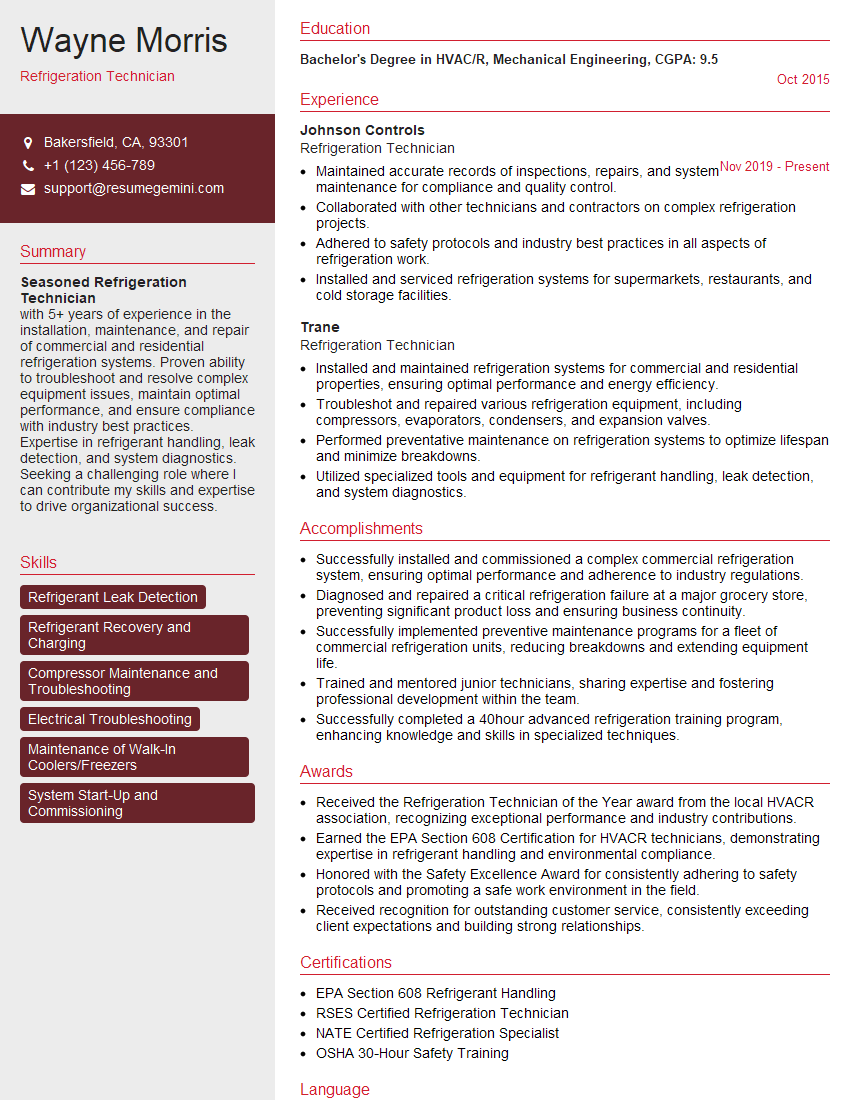
Acing the interview is crucial, but landing one requires a compelling resume that gets you noticed. Crafting a professional document that highlights your skills and experience is the first step toward interview success. ResumeGemini can help you build a standout resume that gets you called in for that dream job.






Essential Interview Questions For Refrigeration Technician
1. What are the common refrigeration system components and how do they work together?
- Compressor is which compresses the refrigerant gas and increases its pressure.
- Evaporator is the part of the system which absorbs heat from the surrounding air.
- Condenser, where the hot compressed gas is cooled and converted back into a liquid.
- Expansion device, which controls the flow of refrigerant into the evaporator.
2. Explain the refrigeration cycle?
Refrigeration Cycle Process
- The refrigerant enters the compressor as a low-pressure gas.
- The compressor compresses the gas, increasing its pressure and temperature.
- The hot, high-pressure gas flows into the condenser.
- In the condenser, the gas releases heat to the surrounding environment (usually via a heat exchanger), causing it to condense into a liquid.
- The high-pressure liquid refrigerant then flows through an expansion device, which reduces its pressure and temperature.
- The cold, low-pressure liquid refrigerant flows into the evaporator.
- In the evaporator, the refrigerant absorbs heat from the surrounding environment, causing it to evaporate into a gas.
- The low-pressure gas then flows back into the compressor, and the cycle repeats.
3. What are the different types of refrigerants and their properties?
- Chlorofluorocarbons (CFCs) – no longer used due to their high ozone depletion potential (ODP).
- Hydrochlorofluorocarbons (HCFCs) – in the process of being phased out due to their ODP.
- Hydrofluorocarbons (HFCs) – currently the most common type of refrigerant, but they have high global warming potential (GWP).
- Natural refrigerants – include hydrocarbons, ammonia, and carbon dioxide, which have low ODP and GWP.
4. How do you troubleshoot a refrigeration system?
- Check the power supply to the system.
- Check the refrigerant levels.
- Check the compressor for any unusual noises or vibrations.
- Check the condenser and evaporator coils for any dirt or debris.
- Check the expansion device for proper operation.
5. What are the safety precautions that must be taken when working on a refrigeration system?
- Wear appropriate personal protective equipment (PPE), including gloves, safety glasses, and a respirator.
- Be aware of the potential for electrical hazards.
- Be aware of the potential for refrigerant leaks.
- Do not attempt to repair a refrigeration system unless you are qualified to do so.
6. What are the different types of refrigeration systems?
- Vapor compression systems – the most common type of refrigeration system, which uses a compressor to compress the refrigerant gas.
- Absorption systems – which use a heat source to drive the refrigerant cycle.
- Thermoelectric systems – which use the Peltier effect to create a cooling or heating effect.
7. What are the different applications of refrigeration systems?
- Air conditioning
- Food preservation
- Industrial cooling
- Medical refrigeration
8. What are the latest trends in refrigeration technology?
- The use of natural refrigerants
- The development of more energy-efficient systems
- The use of advanced controls to optimize system performance
9. What are your long and short term career goals?
- In long term, I want to become a refrigeration engineer and design and develop new refrigeration systems.
- In short term, I want to get certified as a refrigeration technician and gain more experience in the field.
10. What questions do you have for me?
- What is the company’s culture like?
- What are the company’s goals for the future?
- What are the opportunities for professional development within the company?
Interviewers often ask about specific skills and experiences. With ResumeGemini‘s customizable templates, you can tailor your resume to showcase the skills most relevant to the position, making a powerful first impression. Also check out Resume Template specially tailored for Refrigeration Technician.
Career Expert Tips:
- Ace those interviews! Prepare effectively by reviewing the Top 50 Most Common Interview Questions on ResumeGemini.
- Navigate your job search with confidence! Explore a wide range of Career Tips on ResumeGemini. Learn about common challenges and recommendations to overcome them.
- Craft the perfect resume! Master the Art of Resume Writing with ResumeGemini’s guide. Showcase your unique qualifications and achievements effectively.
- Great Savings With New Year Deals and Discounts! In 2025, boost your job search and build your dream resume with ResumeGemini’s ATS optimized templates.
Researching the company and tailoring your answers is essential. Once you have a clear understanding of the Refrigeration Technician‘s requirements, you can use ResumeGemini to adjust your resume to perfectly match the job description.
Key Job Responsibilities
Refrigeration Technicians are responsible for the installation, maintenance, and repair of refrigeration systems, including:
1. Installation and Maintenance:
Installing new refrigeration systems and maintaining existing ones to ensure they function properly.
- Installing and configuring compressor racks and other refrigeration equipment.
- Maintaining and repairing evaporator coils, condenser coils, and other refrigeration components.
2. Troubleshooting and Repairs:
Troubleshooting and repairing refrigeration systems that are malfunctioning.
- Diagnosing problems causing the refrigeration system to malfunction.
- Replacing faulty components and repairing leaks in the refrigeration system.
3. Refrigerant Handling:
Handling refrigerants safely and in accordance with environmental regulations.
- Recovering refrigerant from refrigeration systems before repairs or servicing.
- Recharging refrigeration systems with the correct type and amount of refrigerant.
4. Safety and Compliance:
Ensuring that refrigeration systems comply with safety regulations and industry standards.
- Inspecting refrigeration systems to ensure they meet safety standards.
- Maintaining detailed records of all repairs and maintenance performed on refrigeration systems.
Interview Tips
Preparing for a Refrigeration Technician interview requires researching the role, practicing common interview questions, and understanding the industry:
1. Research the Role and Company:
Thoroughly research the specific Refrigeration Technician role and the company you are applying for.
- Review the job description to understand the key responsibilities and requirements of the position.
- Visit the company’s website and LinkedIn page to learn about their culture, values, and recent projects.
2. Practice Common Interview Questions:
Practice answering common interview questions related to your refrigeration technician skills and experience.
- Tell me about your experience in installing and maintaining refrigeration systems.
- Describe a time you successfully troubleshoot and repaired a refrigeration problem.
3. Showcase Your Technical Knowledge:
Highlight your technical knowledge and understanding of refrigeration systems.
- Explain the different types of refrigerants and their applications.
- Discuss the principles of refrigeration and how they apply to refrigeration systems.
4. Emphasize Safety and Compliance:
Emphasize your commitment to safety and compliance in the refrigeration industry.
- Describe your knowledge of refrigerant handling regulations.
- Explain how you ensure refrigeration systems meet safety standards.
Next Step:
Now that you’re armed with the knowledge of Refrigeration Technician interview questions and responsibilities, it’s time to take the next step. Build or refine your resume to highlight your skills and experiences that align with this role. Don’t be afraid to tailor your resume to each specific job application. Finally, start applying for Refrigeration Technician positions with confidence. Remember, preparation is key, and with the right approach, you’ll be well on your way to landing your dream job. Build an amazing resume with ResumeGemini