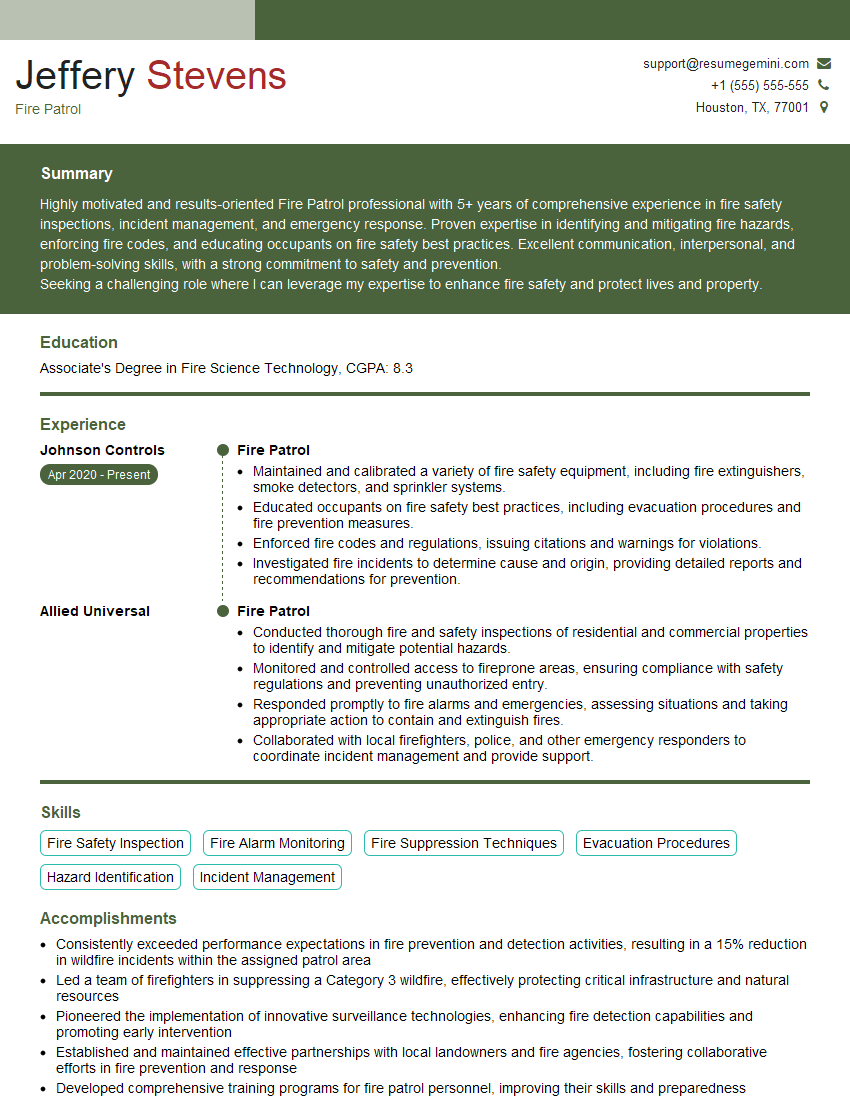
Are you gearing up for a career shift or aiming to ace your next interview? Look no further! We’ve curated a comprehensive guide to help you crack the interview for the coveted Fire Patrol position. From understanding the key responsibilities to mastering the most commonly asked questions, this blog has you covered. So, buckle up and let’s embark on this journey together
Acing the interview is crucial, but landing one requires a compelling resume that gets you noticed. Crafting a professional document that highlights your skills and experience is the first step toward interview success. ResumeGemini can help you build a standout resume that gets you called in for that dream job.






Essential Interview Questions For Fire Patrol
1. What are the various types of fire extinguishers and their uses?
- Water Extinguishers: Class A fires (ordinary combustibles such as wood, paper, and plastic).
- Foam Extinguishers: Class B fires (flammable liquids such as gasoline, oil, and grease).
- Dry Chemical Extinguishers: Class C fires (electrical fires), Class B fires, and Class A fires.
- CO2 Extinguishers: Class B fires, Class C fires, and small Class A fires.
- Wet Chemical Extinguishers: Class K fires (kitchen fires involving fats or oils).
2. Describe the proper steps to extinguish a fire using a fire extinguisher (PASS method).
Pull
- Pull the pin to unlock the extinguisher handle.
Aim
- Point the nozzle at the base of the fire.
Squeeze
- Squeeze the handle to discharge the extinguishing agent.
Sweep
- Sweep the nozzle back and forth at the base of the fire until extinguished.
3. Explain the different types of fire alarms and their detection mechanisms.
- Heat Detectors: Detect changes in temperature caused by fire.
- Smoke Detectors: Detect smoke particles in the air using ionization or photoelectric sensors.
- Carbon Monoxide Detectors: Detect the presence of toxic carbon monoxide gas.
- Sprinkler Systems: Automatically release water when activated by extreme heat.
- Pull Stations: Manually activated devices that trigger an alarm signal.
4. What are the key responsibilities of a Fire Patrol Officer?
- Patrol designated areas to detect and report potential fire hazards.
- Enforce fire safety regulations and codes.
- Provide fire prevention education to occupants.
- Respond to fire alarms and assist with evacuation procedures.
- Extinguish small fires using appropriate methods.
5. Describe your experience and training in fire prevention and suppression.
- Completed Fire Prevention Officer Level I certification.
- Attended regular training on fire safety regulations, firefighting techniques, and emergency response.
- Previous experience as a volunteer firefighter in a local fire department.
6. How do you assess fire hazards and determine the appropriate course of action?
- Inspect electrical systems, heating appliances, and other potential ignition sources.
- Check for flammable materials and storage practices.
- Identify exit paths and evacuation routes.
- Consult with fire prevention engineers or other experts as needed.
7. What are the steps involved in conducting a fire safety inspection?
- Prepare by reviewing building plans and previous inspection reports.
- Inspect the building for potential fire hazards, including electrical wiring, storage areas, and escape routes.
- Interview building occupants and staff about fire safety practices.
- Document findings and provide recommendations for improvements.
- Follow up to ensure recommendations are implemented.
8. How do you communicate effectively with building occupants and staff regarding fire safety?
- Conduct regular fire safety training sessions.
- Distribute educational materials and post fire safety signs.
- Respond to inquiries and provide guidance on fire safety practices.
- Use clear and concise language and avoid technical jargon.
9. Describe your experience in using fire suppression equipment, such as extinguishers and hoses.
- Trained in the use of various types of fire extinguishers.
- Participated in fire suppression drills and exercises.
- Assisted with firefighting operations in previous roles.
10. How do you stay updated on the latest fire safety codes and regulations?
- Attend industry conferences and seminars.
- Subscribe to fire safety publications and newsletters.
- Consult with experts in the field on a regular basis.
Interviewers often ask about specific skills and experiences. With ResumeGemini‘s customizable templates, you can tailor your resume to showcase the skills most relevant to the position, making a powerful first impression. Also check out Resume Template specially tailored for Fire Patrol.
Career Expert Tips:
- Ace those interviews! Prepare effectively by reviewing the Top 50 Most Common Interview Questions on ResumeGemini.
- Navigate your job search with confidence! Explore a wide range of Career Tips on ResumeGemini. Learn about common challenges and recommendations to overcome them.
- Craft the perfect resume! Master the Art of Resume Writing with ResumeGemini’s guide. Showcase your unique qualifications and achievements effectively.
- Great Savings With New Year Deals and Discounts! In 2025, boost your job search and build your dream resume with ResumeGemini’s ATS optimized templates.
Researching the company and tailoring your answers is essential. Once you have a clear understanding of the Fire Patrol‘s requirements, you can use ResumeGemini to adjust your resume to perfectly match the job description.
Key Job Responsibilities
Fire Patrol officers are responsible for protecting life and property from fire hazards. They perform a variety of tasks to prevent and suppress fires, including:
1. Monitoring Fire Hazards
Fire Patrol officers regularly inspect buildings and other structures to identify potential fire hazards. They look for things like blocked fire exits, improperly stored flammable materials, and electrical hazards.
- Conducting fire inspections
- Enforcing fire codes
2. Educating the Public
Fire Patrol officers also educate the public about fire safety. They give presentations to schools, businesses, and community groups. They also distribute fire safety materials.
- Teaching fire safety classes
- Distributing fire safety materials
3. Fighting Fires
Fire Patrol officers are trained to fight fires. They use a variety of equipment to extinguish fires, including fire extinguishers, hoses, and ladders.
- Extinguishing fires
- Rescuing people and animals from fires
4. Investigating Fires
Fire Patrol officers investigate fires to determine their cause. They collect evidence and interview witnesses. They also work with fire investigators to determine the origin and cause of fires.
- Collecting evidence
- Interviewing witnesses
Interview Tips
Preparing for an interview for a Fire Patrol position can be daunting. Here are a few tips to help you ace your interview:
1. Research the Fire Patrol
Before your interview, take some time to research the Fire Patrol. Learn about their history, mission, and values. This will show the interviewer that you are interested in the position and that you have taken the time to learn about the organization.
- Visit the Fire Patrol website
- Read articles about the Fire Patrol
2. Practice Your Answers to Common Interview Questions
There are a number of common interview questions that you are likely to be asked. It is a good idea to practice your answers to these questions ahead of time. This will help you feel more confident and prepared during your interview.
- Tell me about yourself.
- Why are you interested in this position?
- What are your strengths and weaknesses?
3. Dress Professionally
First impressions matter. When you go to your interview, dress professionally. This will show the interviewer that you are serious about the position and that you respect the Fire Patrol.
- Wear a suit or business casual attire
- Make sure your clothes are clean and pressed
4. Arrive on Time
Punctuality is important. Arrive for your interview on time. This will show the interviewer that you are respectful of their time and that you are organized.
- Give yourself plenty of time to get to the interview
- If you are running late, call the interviewer to let them know
5. Be Yourself
The most important thing is to be yourself. The interviewer wants to get to know the real you. So be yourself and let your personality shine through.
- Don’t try to be someone you’re not
- Answer the questions honestly and thoughtfully
Next Step:
Now that you’re armed with a solid understanding of what it takes to succeed as a Fire Patrol, it’s time to turn that knowledge into action. Take a moment to revisit your resume, ensuring it highlights your relevant skills and experiences. Tailor it to reflect the insights you’ve gained from this blog and make it shine with your unique qualifications. Don’t wait for opportunities to come to you—start applying for Fire Patrol positions today and take the first step towards your next career milestone. Your dream job is within reach, and with a polished resume and targeted applications, you’ll be well on your way to achieving your career goals! Build your resume now with ResumeGemini.