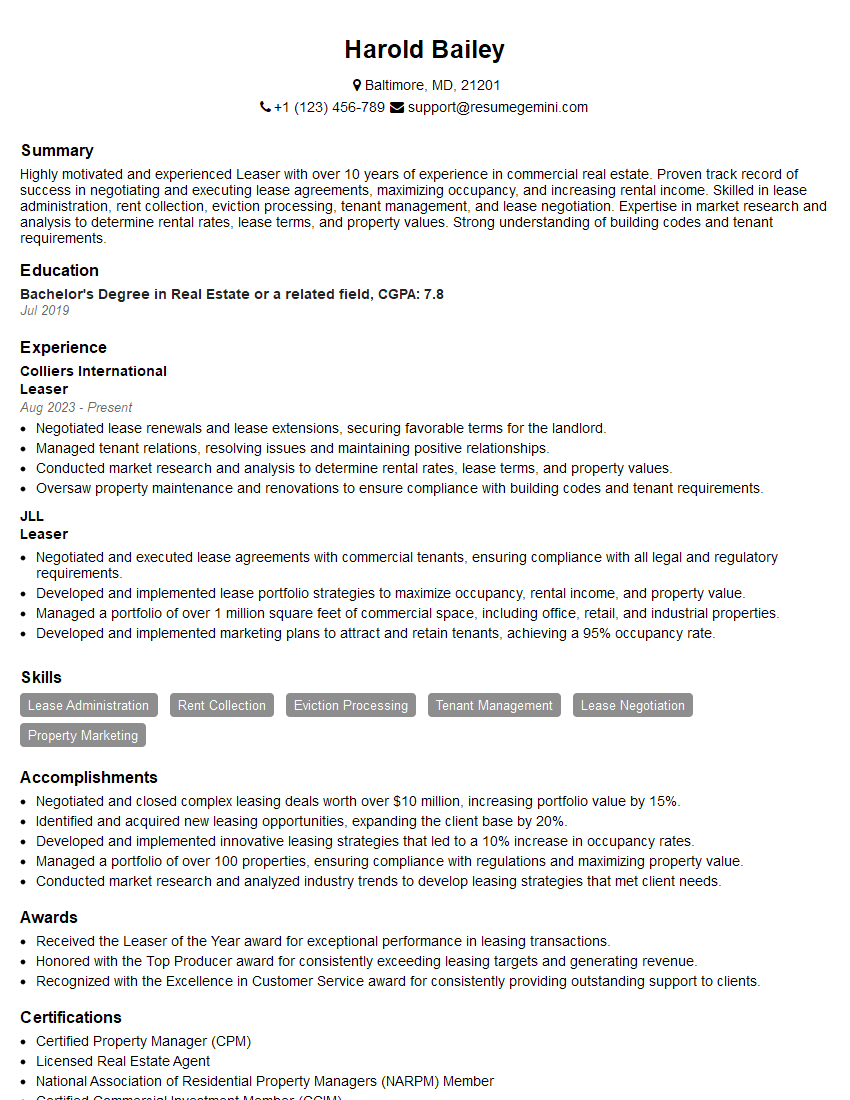
Are you gearing up for a career shift or aiming to ace your next interview? Look no further! We’ve curated a comprehensive guide to help you crack the interview for the coveted Leaser position. From understanding the key responsibilities to mastering the most commonly asked questions, this blog has you covered. So, buckle up and let’s embark on this journey together.
Acing the interview is crucial, but landing one requires a compelling resume that gets you noticed. Crafting a professional document that highlights your skills and experience is the first step toward interview success. ResumeGemini can help you build a standout resume that gets you called in for that dream job.






Essential Interview Questions For Leaser
1. What is the primary purpose of leasing?
The primary purpose of leasing is to provide businesses and individuals with a flexible and cost-effective alternative to purchasing assets.
- Leasing offers various advantages, such as:
- Conserving capital and cash flow
- Accessing the latest equipment and technology without large upfront investments
- Predictable lease payments that can be budgeted and planned for
- Tax benefits in some cases
2. What are the key factors to consider when evaluating a lease agreement?
Payment structure:
- The amount and frequency of lease payments
- Any upfront fees or security deposits
Lease term:
- The length of the lease agreement
- Renewal options and termination provisions
Asset condition and maintenance:
- The condition of the leased asset
- Responsibility for maintenance and repairs
Taxes and insurance:
- Who is responsible for paying property taxes and insurance premiums
Default and remedies:
- Consequences in case of missed lease payments or other breaches
3. How do you determine the appropriate lease term for a particular asset?
The appropriate lease term depends on several factors, including:
- The useful life of the asset
- The expected usage and wear and tear
- The industry norms for leasing similar assets
- The lease terms offered by different lessors
- The financial implications of longer or shorter terms, such as the impact on cash flow and depreciation
4. What are the different types of lease structures?
The main types of lease structures include:
- Operating lease: A short-term lease where the lessor retains ownership of the asset and the lessee has the option to return it at the end of the term.
- Capital lease: A long-term lease where the lessee assumes ownership of the asset at the end of the term or has the option to purchase it at a nominal price.
- Sale-leaseback: A transaction where the lessee sells an asset to a lessor and then leases it back, allowing the lessee to free up capital while retaining use of the asset.
- Leveraged lease: A complex lease structure where a lessor uses debt financing to acquire the leased asset and the lease payments are used to repay the debt.
5. How do you negotiate favorable lease terms for your clients?
Negotiating favorable lease terms involves:
- Understanding the client’s needs and objectives
- Researching the market and comparable lease transactions
- Building a strong relationship with the lessor
- Preparing well-structured lease proposals
- Being willing to compromise and find mutually beneficial solutions
6. What are the legal and regulatory considerations in lease transactions?
Lease transactions are subject to various laws and regulations, including:
- The Uniform Commercial Code (UCC)
- State and federal tax laws
- Bankruptcy laws
- Environmental laws
- Industry-specific regulations
It is essential to understand these legal and regulatory considerations to ensure compliance and mitigate potential risks.
7. How do you stay up-to-date with the latest trends and best practices in leasing?
To stay up-to-date, I regularly engage in:
- Attending industry conferences and workshops
- Reading publications and articles on leasing
- Networking with professionals in the field
- Seeking mentorship and guidance from experienced lessors
8. How do you manage relationships with clients and lessors?
Building and maintaining strong relationships is crucial. I focus on:
- Communicating effectively and transparently
- Responding promptly to inquiries and requests
- Providing excellent customer service
- Being proactive in identifying and addressing potential issues
- Nurturing long-term partnerships based on trust and mutual respect
9. What are the ethical considerations in leasing?
Ethical considerations are paramount in leasing. I adhere to:
- Fair and honest dealings with clients and lessors
- Disclosure of all material information
- Avoiding conflicts of interest
- Compliance with all applicable laws and regulations
- Maintaining confidentiality of sensitive information
10. How do you measure your success as a Leaser?
I measure my success based on several metrics:
- Client satisfaction and retention
- Number of successful lease transactions closed
- Value of lease transactions facilitated
- Contribution to the growth and profitability of the company
- Positive feedback and referrals from clients and industry peers
Interviewers often ask about specific skills and experiences. With ResumeGemini‘s customizable templates, you can tailor your resume to showcase the skills most relevant to the position, making a powerful first impression. Also check out Resume Template specially tailored for Leaser.
Career Expert Tips:
- Ace those interviews! Prepare effectively by reviewing the Top 50 Most Common Interview Questions on ResumeGemini.
- Navigate your job search with confidence! Explore a wide range of Career Tips on ResumeGemini. Learn about common challenges and recommendations to overcome them.
- Craft the perfect resume! Master the Art of Resume Writing with ResumeGemini’s guide. Showcase your unique qualifications and achievements effectively.
- Great Savings With New Year Deals and Discounts! In 2025, boost your job search and build your dream resume with ResumeGemini’s ATS optimized templates.
Researching the company and tailoring your answers is essential. Once you have a clear understanding of the Leaser‘s requirements, you can use ResumeGemini to adjust your resume to perfectly match the job description.
Key Job Responsibilities
A Leaser plays a pivotal role in managing the leasing activities of a company. They are responsible for acquiring, managing, and disposing of leased assets, ensuring compliance with lease agreements, and maximizing the value of lease transactions. Key job responsibilities include:
1. Asset Acquisition and Management
- Identify and acquire suitable assets for leasing, including vehicles, equipment, and real estate.
- Negotiate and finalize lease agreements with customers, ensuring favorable terms and conditions.
- Monitor lease payments and ensure timely collection of rent.
- Manage asset maintenance and repairs to maintain optimal asset condition.
2. Lease Administration
- Maintain accurate lease records and documentation.
- Monitor lease compliance and ensure adherence to contractual obligations.
- Prepare and issue lease accounting reports.
- Resolve lease disputes and negotiate lease modifications when necessary.
3. Risk Management
- Assess and mitigate risks associated with lease transactions.
- Monitor market conditions and adjust lease strategies as needed.
- Stay current on industry best practices and legal regulations related to leasing.
4. Customer Relationship Management
- Build and maintain strong relationships with customers.
- Understand customer needs and provide customized lease solutions.
- Respond promptly to customer inquiries and resolve issues.
Interview Tips
To ace a Leaser interview, it’s essential to prepare thoroughly. Consider the following tips:
1. Research the Company and Industry
- Learn about the company’s leasing portfolio, target market, and competitive landscape.
- Stay informed about industry trends and best practices in leasing.
2. Practice Common Interview Questions
- Prepare answers to common interview questions such as “Tell me about yourself,” “Why are you interested in leasing?” and “Describe your experience in lease negotiation.”
- Use the STAR method (Situation, Task, Action, Result) to structure your responses.
3. Showcase Your Skills and Experience
- Highlight your knowledge of leasing principles, accounting practices, and risk management techniques.
- Demonstrate your ability to build and maintain customer relationships.
4. Prepare Questions for the Interviewer
- Asking thoughtful questions shows your interest and engagement.
- Consider questions about the company’s leasing strategy, growth plans, or recent industry developments.
5. Dress Professionally and Be Respectful
- First impressions matter. Dress appropriately and arrive on time for your interview.
- Be respectful of the interviewer’s time and questions.
Next Step:
Armed with this knowledge, you’re now well-equipped to tackle the Leaser interview with confidence. Remember, preparation is key. So, start crafting your resume, highlighting your relevant skills and experiences. Don’t be afraid to tailor your application to each specific job posting. With the right approach and a bit of practice, you’ll be well on your way to landing your dream job. Build your resume now from scratch or optimize your existing resume with ResumeGemini. Wish you luck in your career journey!