Feeling lost in a sea of interview questions? Landed that dream interview for Malt House Kiln Operator but worried you might not have the answers? You’re not alone! This blog is your guide for interview success. We’ll break down the most common Malt House Kiln Operator interview questions, providing insightful answers and tips to leave a lasting impression. Plus, we’ll delve into the key responsibilities of this exciting role, so you can walk into your interview feeling confident and prepared.
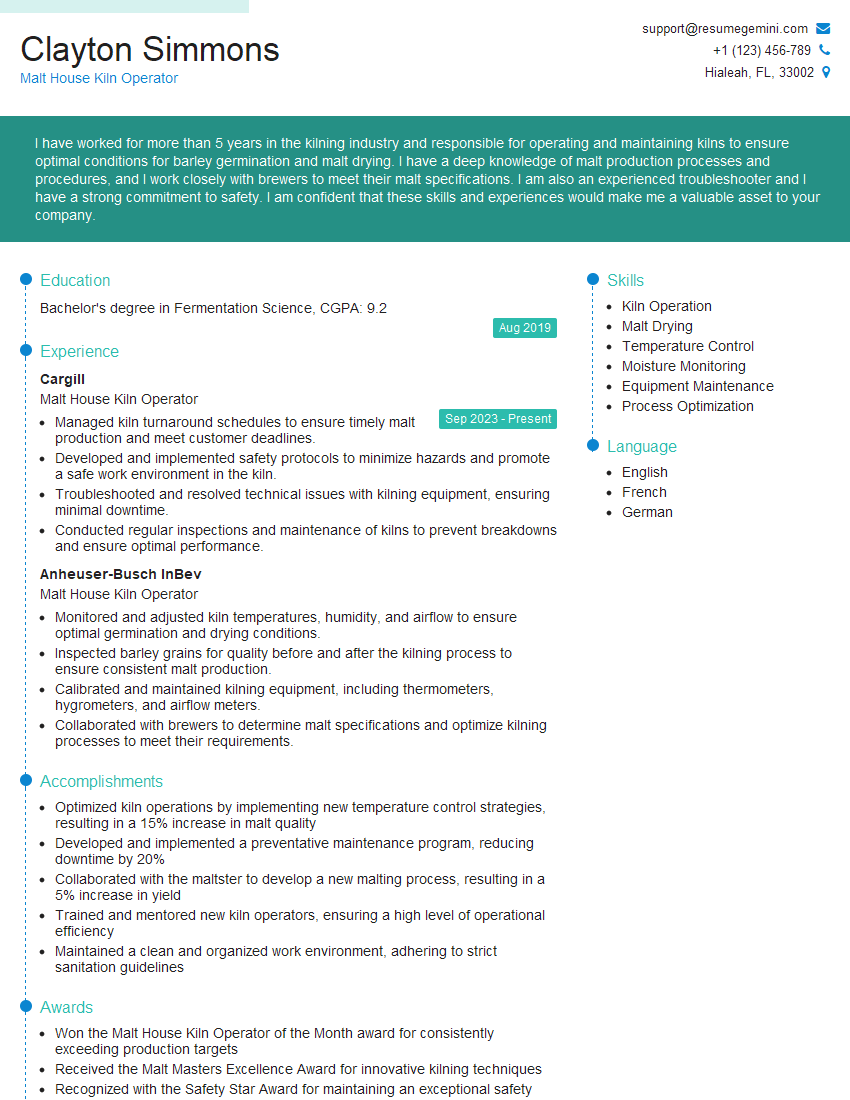
Acing the interview is crucial, but landing one requires a compelling resume that gets you noticed. Crafting a professional document that highlights your skills and experience is the first step toward interview success. ResumeGemini can help you build a standout resume that gets you called in for that dream job.






Essential Interview Questions For Malt House Kiln Operator
1. Explain the key steps involved in the malting process?
- Steeping: The barley is soaked in water to initiate germination.
- Germination: The barley is allowed to germinate, which activates enzymes that break down the starch in the grain.
- Kilning: The germinated barley is dried in a kiln to stop germination and stabilize the malt.
2. What is the purpose of the steeping process?
Water absorption and enzyme activation
- The steeping process allows the barley to absorb water, which is necessary for germination.
- It also activates enzymes that break down the starch in the grain, which is essential for the production of sugars during fermentation.
3. What are the ideal conditions for barley germination?
- Temperature: 10-15°C (50-59°F)
- Humidity: 90-95%
- Oxygen: Adequate supply of oxygen
- Time: 4-6 days
4. How do you monitor and control the temperature and humidity levels during kilning?
- Use sensors to measure temperature and humidity levels.
- Adjust the kiln settings (e.g., airflow, burner output) to maintain desired conditions.
- Monitor the malt regularly to ensure proper drying and prevent over- or under-kilning.
5. What are the different types of kilns used in the malting process?
- Traditional floor maltings: Requires manual labor and takes longer but produces high-quality malt.
- Pneumatic maltings: Uses fans to circulate air and reduce labor requirements.
- Vertical kilns: Automated and efficient but may produce less uniform malt.
6. How do you calculate the moisture content of malt?
- Weigh a sample of malt before and after drying in an oven.
- Calculate the moisture content as the difference in weight divided by the original weight and multiplied by 100.
7. What are the common problems encountered during malting and how do you troubleshoot them?
- Problem: Slow or uneven germination
- Troubleshooting: Check steeping conditions, seed quality, and enzyme activity.
- Problem: Mold or bacterial growth
- Troubleshooting: Sanitize equipment, control humidity, and monitor for contamination.
8. What are the key safety procedures to be followed in a malting facility?
- Wear appropriate personal protective equipment (PPE).
- Follow lockout/tagout procedures for machinery.
- Maintain a clean and organized work environment.
- Be aware of potential hazards, such as slippery floors and heavy equipment.
9. What are the industry standards and regulations that apply to the malting process?
- American Malting Barley Association (AMBA) standards
- Institute of Brewing and Distilling (IBD) guidelines
- Food and Drug Administration (FDA) regulations
- Occupational Safety and Health Administration (OSHA) regulations
10. How do you stay up-to-date with the latest advancements in malting technology?
- Attend industry conferences
- Read trade publications
- Network with other malt house operators and experts
Interviewers often ask about specific skills and experiences. With ResumeGemini‘s customizable templates, you can tailor your resume to showcase the skills most relevant to the position, making a powerful first impression. Also check out Resume Template specially tailored for Malt House Kiln Operator.
Career Expert Tips:
- Ace those interviews! Prepare effectively by reviewing the Top 50 Most Common Interview Questions on ResumeGemini.
- Navigate your job search with confidence! Explore a wide range of Career Tips on ResumeGemini. Learn about common challenges and recommendations to overcome them.
- Craft the perfect resume! Master the Art of Resume Writing with ResumeGemini’s guide. Showcase your unique qualifications and achievements effectively.
- Great Savings With New Year Deals and Discounts! In 2025, boost your job search and build your dream resume with ResumeGemini’s ATS optimized templates.
Researching the company and tailoring your answers is essential. Once you have a clear understanding of the Malt House Kiln Operator‘s requirements, you can use ResumeGemini to adjust your resume to perfectly match the job description.
Key Job Responsibilities of a Malt House Kiln Operator
A Malt House Kiln Operator is responsible for the proper operation and maintenance of the kiln, ensuring that the malt is dried and kilned to the desired specifications. Key job responsibilities include:
1. Operating the Kiln
Operate the kiln to dry and kiln the malt, ensuring that the malt reaches the desired moisture content, colour, and flavour.
- Monitor and adjust kiln temperature, humidity, and airflow to achieve the desired drying and kilning results.
- Unload the kiln and transfer the malt to the appropriate storage or packaging area.
2. Maintaining the Kiln
Maintain the kiln and its components to ensure optimal performance and prevent breakdowns.
- Inspect and clean the kiln regularly to remove any debris or obstructions.
- Perform routine maintenance and repairs to ensure the kiln is in good working order.
3. Monitoring the Drying Process
Monitor the drying process and make adjustments as needed to ensure that the malt is dried evenly and to the desired specifications.
- Take samples of the malt during the drying process to check its moisture content, colour, and flavour.
- Make adjustments to the kiln settings or the drying process based on the results of the samples.
4. Ensuring Safety
Ensure the safety of themselves and others in the workplace.
- Follow all safety procedures and regulations.
- Report any safety hazards or concerns to the appropriate supervisor or manager.
Interview Tips for Malt House Kiln Operators
To ace an interview for a Malt House Kiln Operator position, it is important to prepare thoroughly and showcase your skills and experience. Here are some interview tips and hacks:
1. Research the Company and the Position
Research the company and the specific position you are applying for. This will help you understand the company’s culture, values, and the specific requirements of the job.
2. Highlight Your Skills and Experience
Highlight your relevant skills and experience in your resume and cover letter. Use specific examples to demonstrate your abilities in operating, maintaining, and monitoring kilns.
3. Prepare for Technical Questions
Be prepared to answer technical questions about the kilning process, kiln maintenance, and safety procedures. Practice answering these questions clearly and concisely.
4. Show Your Passion for the Industry
Express your passion for the malting industry and your desire to contribute to the production of high-quality malt. Explain how your skills and experience align with the company’s goals.
5. Ask Insightful Questions
Prepare thoughtful questions to ask the interviewer. This demonstrates your interest in the position and the company, and it gives you an opportunity to learn more about the job and the organization.
Next Step:
Armed with this knowledge, you’re now well-equipped to tackle the Malt House Kiln Operator interview with confidence. Remember, preparation is key. So, start crafting your resume, highlighting your relevant skills and experiences. Don’t be afraid to tailor your application to each specific job posting. With the right approach and a bit of practice, you’ll be well on your way to landing your dream job. Build your resume now from scratch or optimize your existing resume with ResumeGemini. Wish you luck in your career journey!