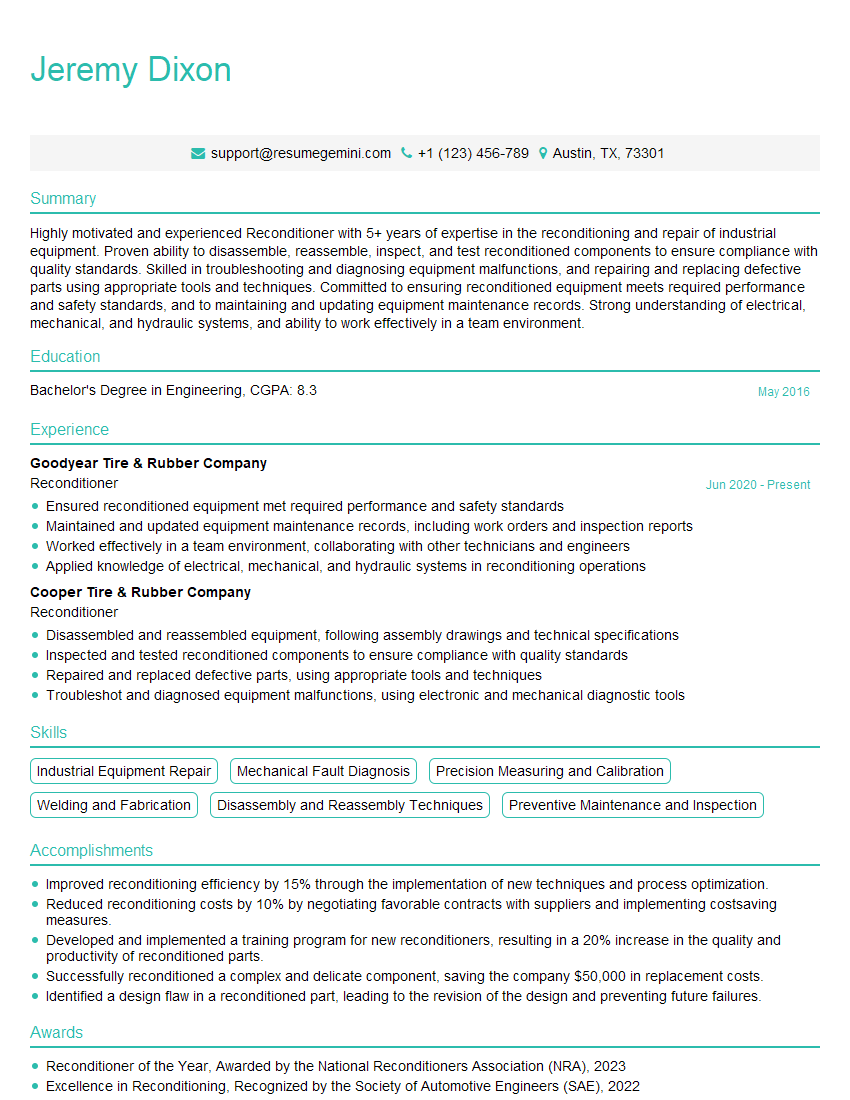
Are you gearing up for a career in Reconditioner? Feeling nervous about the interview questions that might come your way? Don’t worry, you’re in the right place. In this blog post, we’ll dive deep into the most common interview questions for Reconditioner and provide you with expert-backed answers. We’ll also explore the key responsibilities of this role so you can tailor your responses to showcase your perfect fit.
Acing the interview is crucial, but landing one requires a compelling resume that gets you noticed. Crafting a professional document that highlights your skills and experience is the first step toward interview success. ResumeGemini can help you build a standout resume that gets you called in for that dream job.






Essential Interview Questions For Reconditioner
1. Describe the step-by-step process of reconditioning a vehicle.
The reconditioning process involves several steps, including:
- Inspection: Examining the vehicle for damages, mechanical issues, and cosmetic flaws.
- Cleaning: Cleaning the interior and exterior of the vehicle thoroughly.
- Repair: Fixing any mechanical issues identified during the inspection.
- Detailing: Removing scratches, dents, and paint imperfections.
- Polishing: Enhancing the paint finish and providing a glossy shine.
- Waxing: Protecting the paint from UV rays and environmental elements.
- Final inspection: Verifying the quality of the reconditioning work and ensuring customer satisfaction.
2. What are the different types of paint finishes?
Glossy finish
- Provides a high-shine, mirror-like appearance.
- Requires regular waxing to maintain the shine.
Matte finish
- Has a non-reflective, flat appearance.
- More resistant to scratches and swirls.
Metallic finish
- Contains metallic pigments that reflect light.
- Creates a depth and shimmer effect.
Pearlescent finish
- Similar to metallic finishes but with added mica pigments.
- Shifts colors depending on the viewing angle.
3. How do you determine the severity of a scratch or dent?
To determine the severity of a scratch or dent, I consider the following factors:
- Depth: The depth of the scratch or dent in relation to the paint surface.
- Length: The length or size of the scratch or dent.
- Location: The location of the scratch or dent on the vehicle’s body.
- Type of paint: The type of paint finish on the vehicle.
4. What are the common causes of paint damage?
Common causes of paint damage include:
- Scratches from abrasive objects like tree branches or car wash brushes.
- Dents from hail or impact with other objects.
- UV rays and environmental elements like acid rain.
- Improper washing or detailing techniques.
- Chemical spills or bird droppings.
5. How do you protect paint from future damage?
To protect paint from future damage, I recommend the following measures:
- Regular washing and waxing.
- Using high-quality car care products.
- Avoiding harsh chemicals and abrasive cleaners.
- Parking in shaded areas or using car covers.
- Applying ceramic coatings or paint protection films.
6. What are the safety precautions to consider when working with automotive chemicals?
When working with automotive chemicals, I prioritize the following safety precautions:
- Wearing appropriate protective gear, such as gloves, eye protection, and respirators.
- Working in well-ventilated areas.
- Storing chemicals properly and away from ignition sources.
- Following manufacturer’s instructions and MSDS (Material Safety Data Sheets).
- Being aware of potential hazards and knowing how to respond to emergencies.
7. How do you stay updated on the latest reconditioning techniques and products?
To stay updated on the latest reconditioning techniques and products, I engage in the following activities:
- Attending trade shows and industry events.
- Reading trade magazines and online forums.
- Participating in online training and webinars.
- Consulting with manufacturers and suppliers.
- Experimenting with new products and techniques.
8. How do you handle customer complaints or dissatisfaction with the reconditioning work?
In case of customer complaints or dissatisfaction, I take the following steps:
- Listen attentively to the customer’s concerns.
- Inspect the vehicle and assess the issue.
- Explain the reconditioning process and the limitations.
- Offer solutions or remedies within reason.
- Maintain a professional and courteous demeanor.
9. What are your strengths as a reconditioner?
My strengths as a reconditioner include:
- Excellent attention to detail and precision.
- Strong knowledge of paint finishes and repair techniques.
- Ability to work independently and as part of a team.
- Commitment to delivering high-quality results.
- Excellent customer service skills.
10. What are your career goals and aspirations?
My career goals as a reconditioner are:
- To continuously improve my skills and stay updated with the latest industry trends.
- To contribute to the success of the organization by delivering exceptional reconditioning services.
- To advance my career and take on leadership roles in the future.
- To earn recognition for my expertise and craftsmanship.
- To make a positive impact on the automotive industry.
Interviewers often ask about specific skills and experiences. With ResumeGemini‘s customizable templates, you can tailor your resume to showcase the skills most relevant to the position, making a powerful first impression. Also check out Resume Template specially tailored for Reconditioner.
Career Expert Tips:
- Ace those interviews! Prepare effectively by reviewing the Top 50 Most Common Interview Questions on ResumeGemini.
- Navigate your job search with confidence! Explore a wide range of Career Tips on ResumeGemini. Learn about common challenges and recommendations to overcome them.
- Craft the perfect resume! Master the Art of Resume Writing with ResumeGemini’s guide. Showcase your unique qualifications and achievements effectively.
- Great Savings With New Year Deals and Discounts! In 2025, boost your job search and build your dream resume with ResumeGemini’s ATS optimized templates.
Researching the company and tailoring your answers is essential. Once you have a clear understanding of the Reconditioner‘s requirements, you can use ResumeGemini to adjust your resume to perfectly match the job description.
Key Job Responsibilities
Reconditioners play a vital role in maintaining the quality of products and equipment within organizations. Their responsibilities encompass the following key areas:
1. Inspection and Assessment
Reconditioners thoroughly inspect and assess used products or equipment to determine their condition, identify defects, and recommend necessary repairs or replacements.
- Visually inspect products or equipment for damage, wear, and corrosion.
- Use diagnostic tools and techniques to evaluate the functionality and performance of equipment.
2. Cleaning and Disassembly
They carefully clean and disassemble products or equipment to prepare them for reconditioning. This involves:
- Removing dirt, grease, and other contaminants using specialized cleaning agents and techniques.
- Disassembling components to access damaged or worn parts.
3. Repair and Replacement
Reconditioners perform necessary repairs and replacements to restore products or equipment to their original or desired condition. This includes:
- Replacing worn or damaged parts with new or refurbished components.
- Repairing or reconditioning existing parts to restore their functionality.
4. Reassembly and Testing
Once repairs and replacements are complete, reconditioners carefully reassemble products or equipment and conduct thorough testing to ensure proper functionality and performance. This involves:
- Reassembling components according to specifications and industry standards.
- Conducting operational testing to verify the equipment’s functionality and adherence to safety regulations.
Interview Tips
To ace a reconditioner interview, candidates should thoroughly prepare and showcase their relevant skills and experience. Here are some key tips and hacks:
1. Research the Company and Industry
Familiarity with the company’s business, products, and industry trends demonstrates your interest and enthusiasm for the role. Researching the industry also provides insights into current best practices and technological advancements.
- Visit the company’s website and read industry publications.
- Attend industry events and connect with professionals in the field.
2. Highlight Relevant Skills and Experience
Emphasize your technical skills in product inspection, repair, and testing. Quantify your experience by providing specific examples of successful reconditioning projects you have completed.
- Use action verbs and industry-specific jargon to describe your abilities.
- Prepare examples that showcase your problem-solving and decision-making skills.
3. Demonstrate Attention to Detail and Quality
Reconditioners must possess a keen eye for detail and a commitment to quality. Highlight your ability to identify and resolve issues accurately and efficiently.
- Provide examples of your meticulous approach to inspection and repair processes.
- Emphasize your adherence to safety regulations and industry standards.
4. Be Prepared to Discuss Equipment and Techniques
Interviewers may ask about your experience with specific types of equipment or reconditioning techniques. Prepare by reviewing industry trends and advancements.
- Research the latest technologies and best practices in reconditioning.
- Be prepared to discuss your knowledge of equipment maintenance and repair.
5. Show Your Passion for the Industry
Express your genuine interest in the reconditioning industry and your desire to contribute to the field. Enthusiasm and a positive attitude can make a lasting impression on interviewers.
- Share your knowledge of industry trends and innovations.
- Explain why you are passionate about reconditioning and how it aligns with your career goals.
Next Step:
Now that you’re armed with a solid understanding of what it takes to succeed as a Reconditioner, it’s time to turn that knowledge into action. Take a moment to revisit your resume, ensuring it highlights your relevant skills and experiences. Tailor it to reflect the insights you’ve gained from this blog and make it shine with your unique qualifications. Don’t wait for opportunities to come to you—start applying for Reconditioner positions today and take the first step towards your next career milestone. Your dream job is within reach, and with a polished resume and targeted applications, you’ll be well on your way to achieving your career goals! Build your resume now with ResumeGemini.