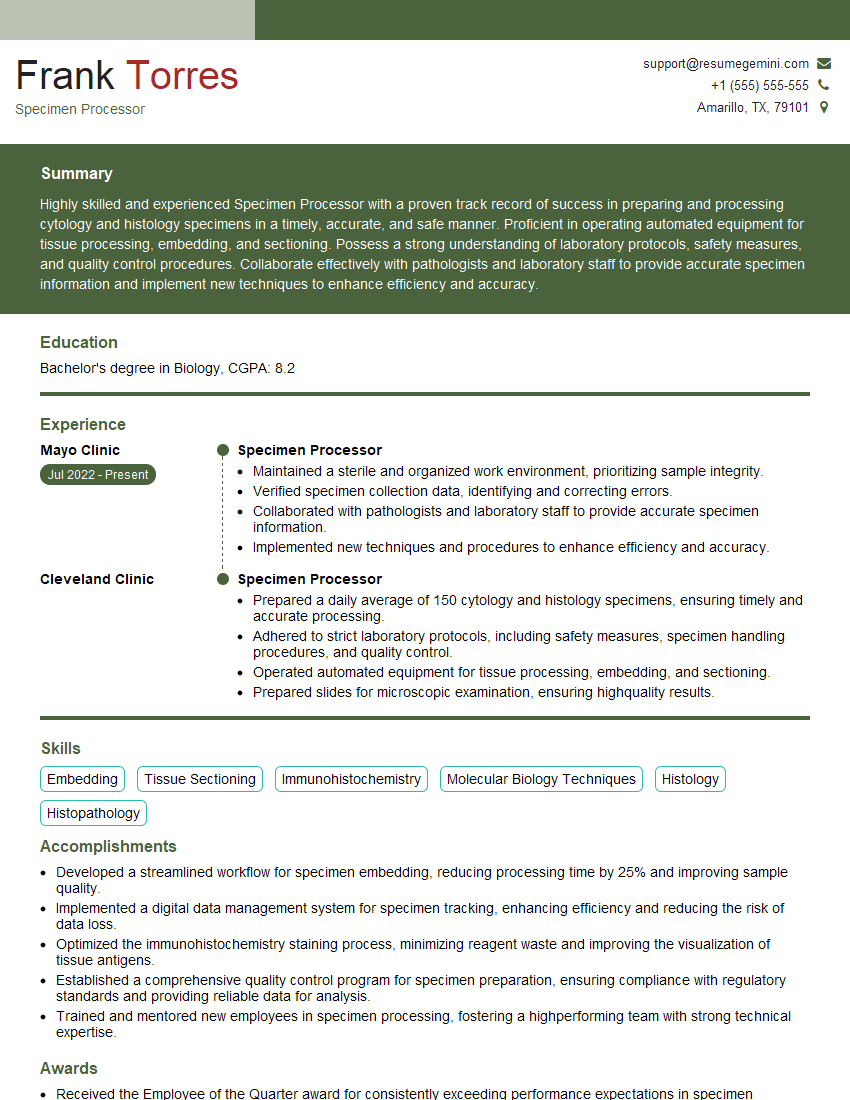
Are you gearing up for a career shift or aiming to ace your next interview? Look no further! We’ve curated a comprehensive guide to help you crack the interview for the coveted Specimen Processor position. From understanding the key responsibilities to mastering the most commonly asked questions, this blog has you covered. So, buckle up and let’s embark on this journey together
Acing the interview is crucial, but landing one requires a compelling resume that gets you noticed. Crafting a professional document that highlights your skills and experience is the first step toward interview success. ResumeGemini can help you build a standout resume that gets you called in for that dream job.






Essential Interview Questions For Specimen Processor
1. Describe your typical workflow as a Specimen Processor?
In my role as a Specimen Processor, I typically follow a well-defined workflow to ensure the proper handling and preparation of specimens.
- Receiving and Accessions: I receive and accession specimens, verifying patient information and ensuring the completeness of the requisition.
- Logging and Tracking: I log specimens into our tracking system, assigning unique identifiers and maintaining accurate records throughout the process.
- Specimen Preparation: I prepare specimens according to established protocols, including grossing, fixation, and embedding. I maintain a clean and organized work area, adhering to strict safety guidelines.
- Quality Control: I perform quality control checks on specimens and materials, ensuring compliance with established standards and identifying any potential issues.
- Shipment and Storage: I package and ship specimens to external laboratories or storage facilities as required, maintaining appropriate temperature and handling conditions.
2. What are the different types of specimens you have processed and how did you handle each type?
- Tissue Specimens: I am experienced in grossing and processing tissue specimens, including biopsies, resections, and surgical specimens. I follow standard operating procedures for handling, fixation, and embedding of tissue specimens.
- Blood Specimens: I have processed blood specimens, performing venipuncture and collection, and preparing blood smears and slides for analysis.
- Cytology Specimens: I have prepared cytology specimens, including Pap smears, fine needle aspirations, and body fluids. I ensure proper collection, fixation, and staining techniques.
- Molecular Specimens: I have handled molecular specimens, such as DNA and RNA samples, following established protocols for collection, storage, and shipping.
3. Explain the importance of proper specimen labeling and documentation.
- Accurate labeling ensures the correct identification of the specimen throughout the processing and analysis process.
- Detailed documentation provides a complete history of the specimen, including collection details, handling procedures, and any special requests.
- Proper labeling and documentation support patient safety, regulatory compliance, and ensure the integrity of diagnostic results.
4. How do you maintain the chain of custody for specimens?
- I follow strict protocols for handling specimens to ensure the chain of custody is maintained.
- I track the movement of specimens at all times, from the point of collection to the final destination.
- I record any transfers or changes in custody in a timely manner, ensuring accountability throughout the process.
5. Describe any proficiency testing or quality control programs you have participated in.
- I actively participate in proficiency testing programs to demonstrate my competency in specimen processing techniques.
- I have successfully completed College of American Pathologists (CAP) proficiency testing programs in histotechnology.
- I regularly participate in internal quality control programs to ensure the accuracy and reliability of my work.
6. How do you stay up-to-date with advances in specimen processing?
- I attend industry conferences and workshops to learn about new technologies and best practices in specimen processing.
- I read scientific literature and subscribe to professional journals to stay informed about advancements in the field.
- I engage in discussions with colleagues and experts to exchange knowledge and insights.
7. What is the significance of specimen orientation and how do you ensure it is maintained?
- Proper specimen orientation is crucial for accurate diagnosis and interpretation.
- I follow established protocols for grossing and embedding specimens to ensure the correct orientation is preserved.
- I use landmarks, ink, and other methods to clearly indicate the orientation of the specimen.
8. Explain how you handle and process specimens that are damaged or compromised.
- I assess the extent of damage and determine if the specimen can still be processed.
- I document the damage and any potential impact on the analysis.
- I consult with pathologists or other medical professionals to determine the best course of action.
9. What is the importance of following established protocols and SOPs in specimen processing?
- Protocols and SOPs ensure consistency and standardization in specimen handling and processing.
- Following SOPs minimizes errors and maintains the quality and integrity of specimens.
- Adherence to protocols helps us meet regulatory requirements and accreditation standards.
10. How do you handle situations where there is a discrepancy between the requisition and the specimen received?
- I compare the requisition to the specimen received and document any discrepancies.
- I contact the ordering physician or healthcare provider to clarify the discrepancy and obtain further instructions.
- I ensure that the correct specimen is processed and the discrepancy is resolved.
Interviewers often ask about specific skills and experiences. With ResumeGemini‘s customizable templates, you can tailor your resume to showcase the skills most relevant to the position, making a powerful first impression. Also check out Resume Template specially tailored for Specimen Processor.
Career Expert Tips:
- Ace those interviews! Prepare effectively by reviewing the Top 50 Most Common Interview Questions on ResumeGemini.
- Navigate your job search with confidence! Explore a wide range of Career Tips on ResumeGemini. Learn about common challenges and recommendations to overcome them.
- Craft the perfect resume! Master the Art of Resume Writing with ResumeGemini’s guide. Showcase your unique qualifications and achievements effectively.
- Great Savings With New Year Deals and Discounts! In 2025, boost your job search and build your dream resume with ResumeGemini’s ATS optimized templates.
Researching the company and tailoring your answers is essential. Once you have a clear understanding of the Specimen Processor‘s requirements, you can use ResumeGemini to adjust your resume to perfectly match the job description.
Key Job Responsibilities
Specimen Processors are responsible for critical tasks related to the processing and preparation of specimens for laboratory testing, ensuring the quality and accuracy of results.
1. Specimen Collection and Preparation
Collects and prepares specimens, including blood, urine, swabs, and tissue samples.
- Verifies specimen identity against patient records.
- Centrifuges, separates, and aliquots specimens as necessary.
2. Specimen Processing and Analysis
Processes specimens using automated and manual techniques.
- Performs basic microscopy and macroscopic examinations.
- Uses laboratory equipment to prepare slides and mount specimens.
3. Quality Control and Compliance
Maintains quality control by following standard operating procedures.
- Participates in proficiency testing programs.
- Verifies the accuracy of test results before release.
4. Laboratory Equipment and Maintenance
Operates and maintains laboratory equipment used in specimen processing.
- Troubleshoots and resolves equipment issues.
- Participates in equipment maintenance and calibration.
Interview Tips
Preparing well for your Specimen Processor interview is crucial. Here are some tips to help you make a great impression.
1. Research the Company and Role
Research the laboratory you’re applying to, its services, and the specific responsibilities of the Specimen Processor role. This knowledge will help you tailor your answers and show enthusiasm for the position.
2. Highlight Your Technical Skills
Emphasize your experience in specimen collection, processing, and analysis techniques. Provide specific examples of your proficiency and accuracy in these areas.
3. Showcase Your Quality Orientation
Stress your commitment to quality control and compliance. Describe how you ensure the accuracy of test results and adhere to established protocols. Quantify your results by providing data or specific examples.
4. Demonstrate Your Equipment Knowledge
Highlight your proficiency in operating and maintaining laboratory equipment. Explain your experience in troubleshooting and resolving issues. Describe your understanding of equipment calibration and maintenance procedures.
Next Step:
Armed with this knowledge, you’re now well-equipped to tackle the Specimen Processor interview with confidence. Remember, a well-crafted resume is your first impression. Take the time to tailor your resume to highlight your relevant skills and experiences. And don’t forget to practice your answers to common interview questions. With a little preparation, you’ll be on your way to landing your dream job. So what are you waiting for? Start building your resume and start applying! Build an amazing resume with ResumeGemini.