Are you gearing up for a career shift or aiming to ace your next interview? Look no further! We’ve curated a comprehensive guide to help you crack the interview for the coveted Water Proofer position. From understanding the key responsibilities to mastering the most commonly asked questions, this blog has you covered. So, buckle up and let’s embark on this journey together.
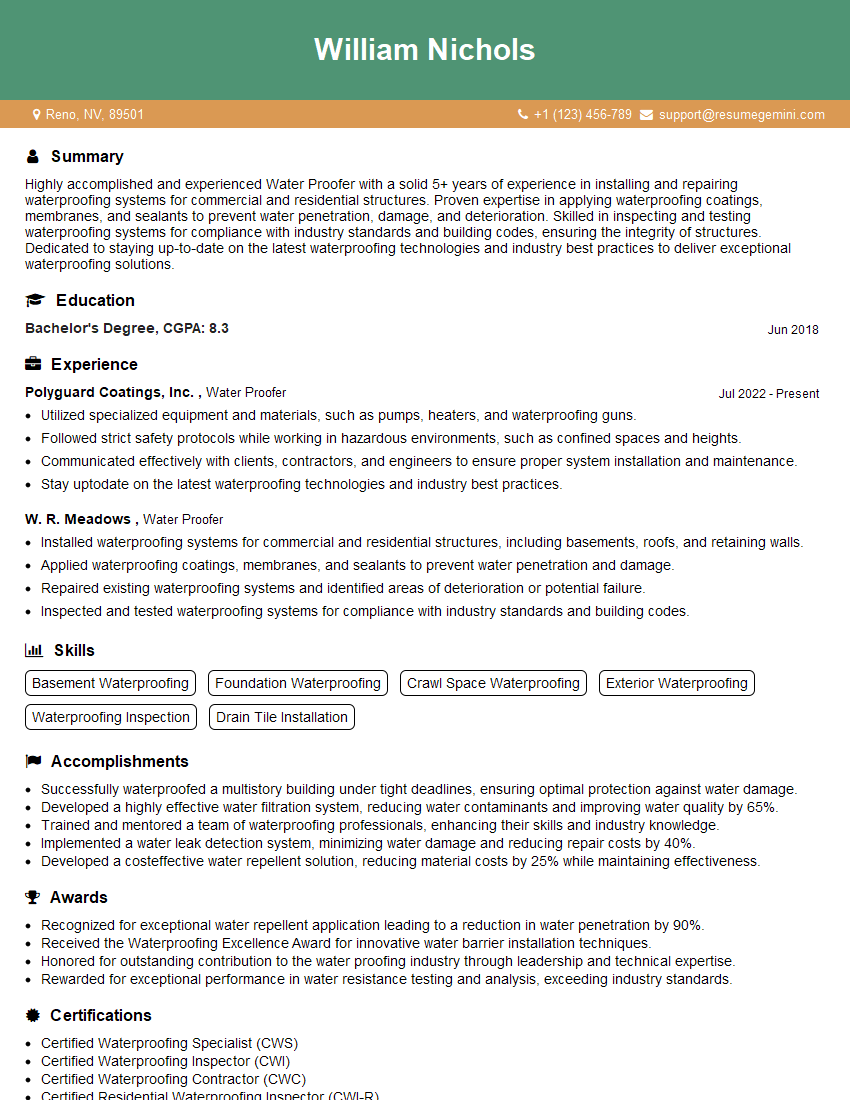
Acing the interview is crucial, but landing one requires a compelling resume that gets you noticed. Crafting a professional document that highlights your skills and experience is the first step toward interview success. ResumeGemini can help you build a standout resume that gets you called in for that dream job.






Essential Interview Questions For Water Proofer
1. What are the different types of waterproofing materials available and their respective applications?
- Bitumen-based membranes: These are made from a mixture of asphalt and polymers and are commonly used for flat roofs and balconies.
- PVC membranes: These are made from polyvinyl chloride and are highly durable and resistant to water, UV radiation, and fire.
- TPO membranes: These are made from thermoplastic polyolefin and are lightweight, flexible, and energy-efficient.
- Liquid-applied membranes: These are applied as a liquid and cure to form a seamless, monolithic membrane.
- Cementitious coatings: These are made from a mixture of cement, polymers, and other additives and are used for waterproofing concrete structures.
2. What are the key considerations when selecting a waterproofing material?
Factors to consider
- The type of structure being waterproofed
- The location and climate
- The budget
- The desired lifespan of the waterproofing system
Specific considerations for different materials
- Bitumen membranes: Suitable for flat roofs with minimal movement
- PVC membranes: Suitable for roofs and balconies with high traffic or exposure to UV
- TPO membranes: Suitable for low-slope roofs in areas with extreme temperatures
- Liquid-applied membranes: Suitable for complex shapes or difficult-to-access areas
- Cementitious coatings: Suitable for concrete structures requiring high durability and resistance to chemicals
3. What are the essential steps involved in waterproofing a concrete structure?
- Surface preparation: Cleaning and repairing the concrete surface to remove any dirt, debris, or cracks
- Priming: Applying a primer to improve adhesion between the waterproofing material and the concrete
- Waterproofing application: Applying the waterproofing material according to the manufacturer’s instructions
- Curing: Allowing the waterproofing material to cure properly to achieve its full strength and effectiveness
- Protection: Installing protective layers, such as screeds or membranes, to prevent damage to the waterproofing system
4. How do you ensure the quality of a waterproofing system?
- Proper planning and design
- Using high-quality materials
- Following manufacturer’s instructions precisely
- Conducting regular inspections and maintenance
- Obtaining necessary certifications and warranties
5. What are the common problems encountered in waterproofing systems and how do you address them?
- Leaks: Identifying the source of the leak and repairing it using appropriate methods
- Blistering: Removing the blisters and applying a new layer of waterproofing material
- Cracking: Filling the cracks with a flexible sealant or applying a new layer of waterproofing material
- Deterioration: Replacing the damaged section of the waterproofing system
6. What are the latest advancements in waterproofing technology?
- Self-healing materials: Materials that can automatically repair small cracks or punctures
- Nanotechnology: Using nanoparticles to enhance the durability and water resistance of waterproofing systems
- Green waterproofing: Using environmentally friendly and sustainable materials and techniques
- Smart waterproofing: Integrating sensors and monitoring systems into waterproofing systems to detect and respond to leaks
7. How do you stay up-to-date with the latest industry trends and best practices?
- Attending industry conferences and workshops
- Reading trade publications and technical articles
- Participating in online forums and discussion groups
- Seeking training and certifications
- Networking with other professionals in the field
8. What is your approach to safety when working on waterproofing projects?
- Identifying potential hazards and taking appropriate precautions
- Following all safety regulations and guidelines
- Using proper personal protective equipment (PPE)
- Maintaining a clean and organized work area
- Being aware of the surrounding environment and potential risks
9. How do you handle customer complaints or concerns regarding waterproofing issues?
- Listening attentively to the complaint and understanding the customer’s perspective
- Inspecting the affected area to assess the issue
- Explaining the cause of the issue and the proposed solution
- Providing a clear and concise estimate for repairs or corrective actions
- Following up with the customer after the issue has been resolved to ensure satisfaction
10. Can you provide an example of a complex waterproofing project you worked on and how you overcame the challenges?
- Describe the project and its unique challenges
- Explain the waterproofing system you designed and implemented
- Discuss the difficulties encountered and how you resolved them
- Highlight the successful outcome of the project
Interviewers often ask about specific skills and experiences. With ResumeGemini‘s customizable templates, you can tailor your resume to showcase the skills most relevant to the position, making a powerful first impression. Also check out Resume Template specially tailored for Water Proofer.
Career Expert Tips:
- Ace those interviews! Prepare effectively by reviewing the Top 50 Most Common Interview Questions on ResumeGemini.
- Navigate your job search with confidence! Explore a wide range of Career Tips on ResumeGemini. Learn about common challenges and recommendations to overcome them.
- Craft the perfect resume! Master the Art of Resume Writing with ResumeGemini’s guide. Showcase your unique qualifications and achievements effectively.
- Great Savings With New Year Deals and Discounts! In 2025, boost your job search and build your dream resume with ResumeGemini’s ATS optimized templates.
Researching the company and tailoring your answers is essential. Once you have a clear understanding of the Water Proofer‘s requirements, you can use ResumeGemini to adjust your resume to perfectly match the job description.
Key Job Responsibilities
Water Proofers are tasked with applying waterproofing materials to surfaces to protect them from water damage and deterioration. Their key responsibilities include:
1. Surface Preparation
Preparing surfaces prior to waterproofing application involves:
- Cleaning and degreasing surfaces to remove dirt, oil, and other contaminants
- Inspecting surfaces for cracks, gaps, or damage, and repairing them
- Priming surfaces to ensure proper adhesion of waterproofing materials
2. Waterproofing Application
Water Proofers apply a variety of waterproofing materials to surfaces, including:
- Liquid-applied membranes
- Sheet membranes
- Cementitious coatings
- Paints and sealers
The choice of waterproofing material depends on the type of surface, the level of moisture exposure, and the desired performance characteristics.
3. Quality Control
Water Proofers ensure the quality of their work by:
- Inspecting surfaces after waterproofing application to ensure proper coverage and adhesion
- Conducing water testing to verify the effectiveness of the waterproofing system
- Documenting all work performed and providing reports to clients
4. Maintenance and Repair
Water Proofers also perform maintenance and repair work on existing waterproofing systems, including:
- Inspecting waterproofing systems for signs of damage or deterioration
- Repairing cracks, leaks, or other damage to waterproofing systems
- Providing preventive maintenance to extend the lifespan of waterproofing systems
Interview Tips
To ace an interview for a Water Proofer position, candidates should prepare thoroughly and highlight their skills and experience. Here are some interview tips:
1. Research the Company and Position
Familiarize yourself with the company’s website, industry reputation, and specific requirements for the Water Proofer position. This will help you tailor your answers and demonstrate your interest in the opportunity.
2. Practice Answering Common Interview Questions
Prepare for common interview questions related to your skills, experience, and motivations. Practice answering them concisely and confidently. Some common questions to prepare for include:
- Tell me about your experience in waterproofing applications.
- Describe your understanding of different waterproofing materials and their uses.
- How do you ensure the quality of your waterproofing work?
- What are the challenges you have faced in waterproofing projects and how did you overcome them?
- Why are you interested in working as a Water Proofer for our company?
3. Emphasize Your Skills and Experience
Highlight your relevant skills and experience in your resume and during the interview. Quantify your accomplishments whenever possible to provide concrete evidence of your abilities.
4. Dress Professionally and Arrive on Time
First impressions matter, so dress professionally for the interview and arrive on time. This demonstrates your respect for the interviewer and the company.
5. Ask Thoughtful Questions
At the end of the interview, ask thoughtful questions about the company, the position, or the industry. This shows that you are engaged and interested in the opportunity.
Next Step:
Now that you’re armed with the knowledge of Water Proofer interview questions and responsibilities, it’s time to take the next step. Build or refine your resume to highlight your skills and experiences that align with this role. Don’t be afraid to tailor your resume to each specific job application. Finally, start applying for Water Proofer positions with confidence. Remember, preparation is key, and with the right approach, you’ll be well on your way to landing your dream job. Build an amazing resume with ResumeGemini